The short answer
If it has to be a purebred Mastiff puppy, buy from a Dogs Australia registered breeder and ask for both parents' hip and elbow scores. We could find only 4 Australian Mastiff breeders with their own websites, none of them published a price when we read them in November 2026, and we could not find an active Mastiff club website, so ask breeders directly. If you are open to an adult or a mastiff cross, adopt: rescues and pounds list large mastiff-type dogs at their standard fee, for example $500 for an adult dog at RSPCA NSW. Fees are reference figures read on 11 November 2026, not quotes; fees change, so check with the rescue. Either way, plan for drool, a big food bill and a dog that Dogs Victoria says lives 8 to 10 years on average.
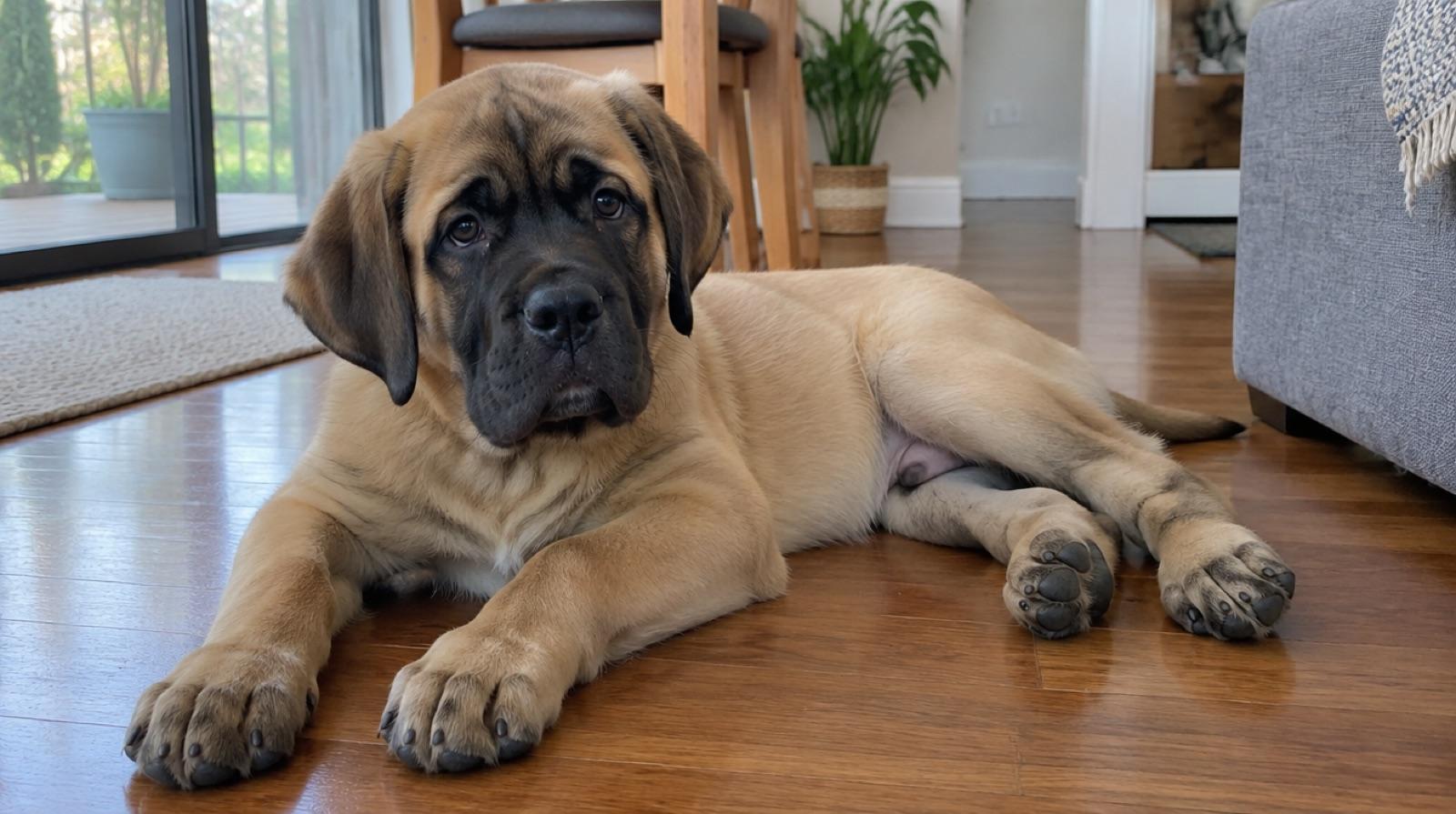
Should you adopt or buy a Mastiff?
It depends on whether it has to be a purebred puppy. Purebred Mastiffs are rare across the rescues we aggregate, so if you want a Mastiff puppy from hip and elbow scored parents, a registered breeder is the realistic route, and you may wait. If what you want is a big, calm, gentle house dog, adult mastiffs and mastiff crosses do come through rescues and pounds, and an adult comes with a known size, drool level and temperament.
The RSPCA Australia Knowledgebase suggests the RSPCA or a reputable rescue first, and if you go to a breeder, making sure they are registered, visiting where the puppies were born and meeting the parents. Our guide to adopting a dog in Australia covers the rescue process step by step.
| Route | Reference cost | What you usually get | Main risk |
|---|---|---|---|
| Dogs Australia registered breeder | No breeder website we read publishes a price; ask | A purebred Mastiff puppy with a pedigree, ideally from hip and elbow scored parents | Few breeders; testing varies, so ask |
| General rescue or pound | The standard fee, for example $500 for an adult dog at RSPCA NSW | Mastiffs and mastiff crosses, desexed, microchipped and vaccinated | Purebreds are rare; “mastiff” labels are loose |
| Classified ad or social media | Anything | Anything from an untested litter to a puppy that does not exist | Scams, no health guarantee |
Reference only, not quotes. Figures read on 11 November 2026; breeders and rescues set their own prices and change them, so check with them.
How much is a Mastiff puppy from a registered breeder?
There is no published figure to quote. Most Mastiff kennels we found have a listing-site page only, and we could find just 4 Australian Mastiff breeders with their own websites. We read all 4 in November 2026, and none published a puppy price; they show past litters, their dogs and contact details. We also could not find an active Australian Mastiff club website, so there is no club guide price either.
Prices on listing sites and classified ads are left out, because we cannot check who is selling. So the honest answer is: ask each breeder, and compare what the price includes, such as vaccinations, microchip, a vet check, Limited or Main Register papers and puppy insurance.
| Who published it | Reference figure | Read |
|---|---|---|
| Breeders, own websites (4 read) | No price published | 11 Nov 2026 |
| Australian Mastiff clubs | We could not find an active club website; no price found | 11 Nov 2026 |
| RSPCA NSW, adult dog | $500 | 11 Nov 2026 |
| RSPCA NSW, under 12 months | $620 | 11 Nov 2026 |
Reference only, not quotes. Fees change, so check with the rescue. RSPCA NSW says its fees ensure pets are desexed, microchipped, vaccinated and health-checked.
How is a Mastiff different from a Bullmastiff, Cane Corso or Dogue de Bordeaux?
On paper, clearly. Each is a separate breed with its own Dogs Australia standard, and all four sit in Group 6 (Utility). The table uses only what each standard says.
| Breed | Size in the standard | Colours | Muzzle |
|---|---|---|---|
| Mastiff | Not specified | Apricot, fawn or brindle | Muzzle to whole head as 1:3 |
| Bullmastiff | Dogs 64 to 69 cm, 50 to 59 kg; bitches 61 to 66 cm, 41 to 50 kg | Any shade of brindle, fawn or red | Short, about one third of the length from nose to occiput |
| Cane Corso | Males 64 to 68 cm, 45 to 50 kg; females 60 to 64 cm, 40 to 45 kg | Black, greys, fawns, stag red, dark wheat, and brindles | Muzzle to skull about 1:2 |
| Dogue de Bordeaux | Dogs 60 to 68 cm, at least 50 kg; bitches 58 to 66 cm, at least 45 kg | Self-coloured, all shades of fawn from mahogany to Isabella | At most one third of the head |
Sources: Dogs Australia breed standards for each breed, read 11 November 2026.
Dogs Australia's Mastiff profile adds the history: Mastiffs were later bred with Regency Bulldogs to produce the Bullmastiff, and a Mastiff's body should be longer than a Bullmastiff's, with a black mask in every colour. In rescue, “mastiff” is often a description of a big, heavy-headed dog rather than a pedigree, so read the listing and meet the dog. If you are weighing up the Italian breed, our Cane Corso guide covers it in full, and our Bullmastiff guide covers the gamekeeper's dog.
Which health tests should a Mastiff breeder show you?
Hips and elbows for both parents, at the least. Dogs Australia's Mastiff profile says most breeders have their breeding animals scored for hip and elbow dysplasia, some have eye and heart checks as well, and recommends only buying from breeders that at least have the hips and elbows done. Dogs Victoria says the breed's health problems may include bone disorders and eye problems.
| Check | Who asks for it | What to ask for |
|---|---|---|
| Hip score | Dogs Australia profile (minimum); Royal Kennel Club (good practice) | Both parents' scores |
| Elbow score | Dogs Australia profile (minimum); Royal Kennel Club (good practice) | Both parents' results |
| Eyes | Dogs Australia profile (some breeders); Royal Kennel Club (best practice) | Recent eye certificates |
| Heart | Dogs Australia profile (some breeders) | Whether the parents had a heart check, and the result |
| Genetic diversity | Royal Kennel Club (good practice) | How the breeder chooses mates to limit inbreeding |
Sources: Dogs Australia, Dogs Victoria and the Royal Kennel Club (UK), read 11 November 2026. This is a buying checklist, not veterinary advice. Our Mastiff health guide covers what these conditions mean once you own one.
Bloat is the emergency to know. Cornell University's College of Veterinary Medicine says gastric dilatation-volvulus (GDV) is a life-threatening condition that occurs suddenly and that large, deep-chested dogs are most at risk. If your dog retches with nothing coming up, has a swollen belly or is restless and drooling more than usual, call or go to your nearest vet now. Our dog bloat (GDV) guide covers the signs and what to ask your vet about prevention.
See the Mastiffs listed right now
Mastiffs and mastiff crosses from the rescues, shelters and council pounds we aggregate, with each rescue's notes on children, other dogs and time alone. Every listing links to the rescue, where you apply directly.
How long do Mastiffs live?
Often under 10 years. Dogs Victoria gives an average life span of 8 to 10 years, and the Royal Kennel Club lists under 10 years. In a study of 584,734 UK dogs from breed registries, veterinary groups, insurers, welfare charities and universities (McMillan and colleagues, 2024), the Mastiff's median lifespan was 9.0 years, among the shortest of the breeds studied. That is a UK population, but it sits within Dogs Victoria's range.
For an adopter, that cuts both ways. A puppy gives you the most years. An adult from rescue gives you fewer, but with the size, nature and health already known. Our senior dog adoption guide covers what to expect from an older dog.
How much exercise does a Mastiff need, and how fast does it grow?
Moderate exercise as an adult; patience as a puppy. The Royal Kennel Club in the UK rates the Mastiff at up to 1 hour of exercise a day and lists it as suited to a large house and a large garden. Mastiffs grow for a long time: in a study of 12 breeds (Hawthorne and colleagues, Journal of Nutrition, 2004), the four English Mastiff puppies took about 23 weeks to reach half their adult weight, the longest of the breeds studied, and the large and giant breeds took about 11 to 15 months to reach 99 per cent of adult weight.
Dogs Australia's profile says the Mastiff grows at an exceptionally fast rate, so it is important to keep portion sizes up in the early years, and that an adult does not eat as much as you might expect for its size. Ask your breeder and vet how much walking and feeding suit a growing puppy, and avoid long runs and jumping out of cars while the joints are growing. The dog exercise calculator shows the Kennel Club breed ratings side by side, with RSPCA advice for puppies and hot days.
Can a Mastiff cope with an Australian summer?
Constant panting, rapid breathing, pale or red gums, drooling, vomiting, weakness or dizziness on a hot day can be heatstroke. Start cooling the dog with cool or room-temperature water and get to a vet immediately.
Yes, with planning. The RSPCA Knowledgebase on heatstroke says to exercise dogs at the coolest times of day, to give a cool, shaded, well-ventilated area and water at all times, to avoid hot surfaces, to keep dogs lean because overweight dogs overheat faster, and never to leave a dog in a car. A heavy giant dog in a hot backyard needs real shade and airflow, not just a kennel. Our dogs in hot weather guide has the full first aid and state hot-car rules.
What does a Mastiff cost to keep?
More than an average dog. The Animal Medicines Australia Pets in Australia 2025 release estimated that dog-owning households spent $2,520 a year on average, for dogs of every size. Dogs Australia's Mastiff profile names vet costs as one downside of the breed, because medicines dispensed by size can be expensive, and says flea and heartworm prevention also adds up. That national figure is a survey average, not a quote, and a Mastiff's bills may well sit above it.
The dog cost calculator estimates the first year for a giant dog, and our giant-breed ownership guide covers space, drool and day-to-day life.
Is a Mastiff restricted anywhere in Australia?
No state or territory list names the Mastiff. The restricted or prohibited breeds named in state law are the American Pit Bull Terrier, Japanese Tosa, Dogo Argentino, Fila Brasileiro and Perro de Presa Canario, and the ACT has no restricted breeds. The Tasmanian Government goes further and names the Mastiff and Bullmastiff among breeds that “are not restricted but can look similar to and be mistaken for restricted breed dogs”.
Councils can still assess an individual dog's behaviour and declare a dog dangerous or menacing, whatever its breed. With a dog this big, early training and socialisation matter for that reason too. Our Staffy vs pit bull guide has the state-by-state law in full, and best guard dogs in Australia covers the guardian breeds honestly.
What do Mastiffs in rescue look like?
Mostly adults and crosses. Across the rescues, shelters and council pounds we aggregate, a purebred Mastiff is listed only now and then, while big mastiff-type crosses are more common. We could not find a Mastiff-only rescue in Australia that is currently operating, so the general rescues and pounds are where these dogs turn up. An alert on the Mastiff breed page matters more than checking once.
An adult from a rescue or foster home has finished growing, so you can see its full size, how it is with strangers and how much it drools, along with notes on children, other dogs and time alone. For a first-time giant-dog owner, that is worth a lot.
How do Mastiff puppy scams work?
Never pay a deposit for a Mastiff puppy you have not seen with its mother. A good breeder, says Dogs Australia's Mastiff profile, will let you see the dam and litter with no problems.
Scamwatch says scammers set up fake websites and fake social media and marketplace profiles to sell popular breeds and pets that do not exist, that a very cheap pet is likely a scam, and that being told to pay by unusual methods, such as money order, gift cards or cryptocurrency, is a warning sign.
- No breeder number. The Queensland Government says not to buy a puppy from a person who does not have a valid breeder identification number (BIN). NSW, Victoria, South Australia and the ACT also require an identifying number in puppy ads. Look it up on the official register, not through a link the seller sends.
- A membership number you cannot check. Ask for the breeder's Dogs Australia membership number and check it with the state body yourself.
- No hip and elbow scores. Dogs Australia's profile recommends only buying from breeders that at least have the hips and elbows done.
- The wrong breed. “Mastiff” in an ad can mean anything big. Ask which breed is on the pedigree, and compare the parents with the standards above.
- Payment before viewing. Scamwatch advises inspecting in person before you pay. A seller who wants a deposit, will only send the puppy and never lets you visit does not let you do that.
Our guide to puppies for sale in Australia has the full state-by-state table of breeder numbers and what to do if you have already paid.
When is a registered breeder the better choice?
Rescue is not right for everyone. A registered breeder makes sense if you want a purebred Mastiff puppy from scored parents, if you want to show, or if you have watched the rescue listings for months and no adult has suited your home.
- Registration. Check the membership number with Dogs Australia or your state body, and your state's breeder number on the official register.
- Health results for both parents: hips and elbows at the least, and ask about eyes and heart.
- The mother, in person, and where the puppies are raised. In some cases the sire may be there too, Dogs Australia's profile says.
- Answers to your questions. The profile says a good breeder will answer all your questions.
- A written contract covering health, papers and whether the breeder will take the dog back if you cannot keep it.
Is a Mastiff the right dog for you?
The Dogs Australia standard asks for a “Large, powerful, well-knit frame. A combination of grandeur and courage”, with a temperament that is “Calm, affectionate to owners, but capable of guarding. Usually indifferent with strangers; timidity is unacceptable.” Be honest about five things.
| Question | What the sources say |
|---|---|
| Drool | Renowned for it; not the breed for you if you cannot handle slobber (Dogs Australia profile) |
| Training | Be prepared for at least weekly training classes for the first year or so (Dogs Victoria) |
| Grooming | Short coat, a few minutes a day (Dogs Australia profile); once a week (Royal Kennel Club) |
| Space | Large house and large garden (Royal Kennel Club) |
| Lifespan | 8 to 10 years on average (Dogs Victoria) |
Not sure a giant breed fits? The what dog breed is right for me quiz and the adoption readiness check each take a few minutes, and big dog breeds compares the Mastiff with other large and giant dogs.
Find a Mastiff near you
Mastiffs and mastiff crosses listed by rescues, by city:
- Mastiffs for adoption in Sydney
- Mastiffs for adoption in Melbourne
- Mastiffs for adoption in Brisbane
- Mastiffs for adoption in Perth
- Mastiffs for adoption in Adelaide
Local guides to adopting a Mastiff, with the rescues that serve each city: Sydney, Melbourne, Brisbane, Gold Coast, Sunshine Coast, Perth, Adelaide, Auckland.
Weighing up other giant breeds? Our Bullmastiff, Cane Corso, Great Dane, Newfoundland, Saint Bernard and Irish Wolfhound guides cover the same questions, and the Belgian Malinois guide covers a very different working dog. The large dogs in Sydney and in Melbourne are worth a look too.
Frequently asked questions
Should I adopt or buy a Mastiff puppy?▼
Buy from a Dogs Australia registered breeder if it has to be a purebred Mastiff puppy, because purebred Mastiffs are rare across the rescues we aggregate, and we could find only a few Australian Mastiff breeders with their own websites. Ask for both parents' hip and elbow scores. Adopt if you are open to an adult or a mastiff cross: large mastiff-type dogs are listed by rescues and pounds, and an adult's size, temperament and health are already known.
How much is a Mastiff puppy in Australia?▼
We could not find an active Australian Mastiff club website, and none of the 4 breeders whose own websites we read in November 2026 published a price. Breeders give prices when you ask, so ask what they charge and what it includes. For comparison, RSPCA NSW listed $500 for an adult dog and $620 for a dog under 12 months. These are reference figures read on 11 November 2026, not quotes; fees change, so check with the rescue.
What health tests should a Mastiff breeder show me?▼
Hip and elbow scores for both parents, at the least. Dogs Australia's Mastiff profile says most breeders have their breeding dogs scored for hip and elbow dysplasia and some have eye and heart checks as well, and recommends only buying from breeders that at least have the hips and elbows done. The Royal Kennel Club in the UK lists hip and elbow testing as good practice and eye testing as best practice.
What is the difference between a Mastiff and a Bullmastiff?▼
They are separate breeds with separate Dogs Australia standards. The Bullmastiff standard sets heights of 64 to 69 cm and weights of 50 to 59 kg for males, with a muzzle about one third of the length from nose to occiput, and allows any shade of brindle, fawn or red. The Mastiff standard leaves size unspecified, sets muzzle to whole head as 1:3, and allows apricot, fawn or brindle. Dogs Australia's Mastiff profile says Mastiffs were later bred with Regency Bulldogs to produce the Bullmastiff, and that a Mastiff's body should be longer than a Bullmastiff's.
Is a Mastiff the same as a Cane Corso or Dogue de Bordeaux?▼
No. Dogs Australia has a separate standard for each. The Cane Corso is an Italian breed with a muzzle about half the length of the skull and colours including black and greys. The Dogue de Bordeaux is a French breed that is self-coloured in shades of fawn from mahogany to Isabella. The Mastiff asks for apricot, fawn or brindle with a square-looking head.
How long do Mastiffs live?▼
Often under 10 years. Dogs Victoria gives an average life span of 8 to 10 years, the Royal Kennel Club lists under 10 years, and in a 2024 study of UK dogs (McMillan and colleagues, Scientific Reports) the Mastiff had a median lifespan of 9.0 years, among the shortest of the breeds studied.
Is a Mastiff restricted in Australia?▼
No state or territory list names the Mastiff. The Tasmanian Government names the Mastiff among breeds that are not restricted but can look similar to restricted breeds. Councils can still assess an individual dog's behaviour, so a large dog that is well trained and socialised matters for legal as well as practical reasons.
How much exercise does a Mastiff need?▼
Moderate exercise as an adult, and very little forced exercise as a puppy. The Royal Kennel Club in the UK rates the Mastiff at up to 1 hour a day. Mastiffs take a long time to grow: in a study of 12 breeds (Hawthorne and colleagues, 2004), English Mastiff puppies took about 23 weeks to reach half their adult weight, so ask your breeder and vet how much exercise suits a growing puppy.
Are Mastiffs good with children?▼
The breed is known for a gentle nature, but size matters. Dogs Victoria calls Mastiffs loving, gentle and extremely loyal, and Dogs Australia's profile calls the breed extremely gentle and loving for its size. Even so, supervise children with any dog this big, and Dogs Victoria says to be prepared for at least weekly training classes for the first year or so.
Do Mastiffs drool?▼
Yes, a lot. Dogs Australia's Mastiff profile says the breed is renowned for drool, that if you cannot handle dogs that slobber this is not the breed for you, and that many owners keep cloths in every room. Plan for it before you commit.
Where can I see Mastiffs for adoption right now?▼
The Mastiff breed page on LocalPetFinder shows Mastiffs and mastiff crosses listed by the rescues, shelters and council pounds we aggregate, with a page for each major city. Every listing links to the rescue, where you apply directly. Set an alert, because purebred Mastiffs come up only now and then.
Sources
- Dogs Australia: Mastiff breed standard
- Dogs Australia: Mastiff breed profile
- Dogs Australia: Bullmastiff breed standard
- Dogs Australia: Cane Corso breed standard
- Dogs Australia: Dogue de Bordeaux breed standard
- Dogs Victoria: Mastiff
- Royal Kennel Club (UK): Mastiff
- McMillan and others (2024), Scientific Reports: lifespan of UK dogs by breed
- Hawthorne and others (2004), Journal of Nutrition: growth in 12 breeds
- Cornell University College of Veterinary Medicine: Gastric dilatation-volvulus
- Tasmanian Government: Restricted breed FAQs
- RSPCA Australia Knowledgebase: How can I protect my dog from heatstroke?
- Animal Medicines Australia: Pets in Australia 2025 media release
- Queensland Government: Puppy farms and puppy scams
- Scamwatch: Buying and selling scams
- RSPCA NSW: Adoption fees
- RSPCA Australia Knowledgebase: Where should I go for a new companion animal?
Keep reading
Mastiffs listed by rescues
Mastiffs and mastiff crosses listed right now by the rescues and pounds we aggregate across Australia.
Living with a giant breed
Space, drool, car and bed size, and the running costs of sharing a home with a Mastiff.
Mastiff health issues
Hips, elbows, eyes and the other conditions to watch for as a Mastiff ages.
Cane Corso: adopt or buy?
The Italian guardian mastiff, its law questions, health checks and scams.