The short answer
If it has to be an Irish Wolfhound puppy, buy from a Dogs Australia registered breeder and ask for the litter's written liver shunt test and the parents' heart, hip and elbow results. No Australian Irish Wolfhound club publishes a price, and none of the breeders whose own websites we read in November 2026 published one, so ask several breeders directly. If you are open to an adult or a Wolfhound cross, adopt: the state clubs have rescue officers, and general rescues charge their standard fee, for example $500 for an adult dog at RSPCA NSW. Fees are reference figures read on 11 November 2026, not quotes; fees change, so check with the rescue. Whichever you choose, plan for a giant dog that usually lives well under 10 years.
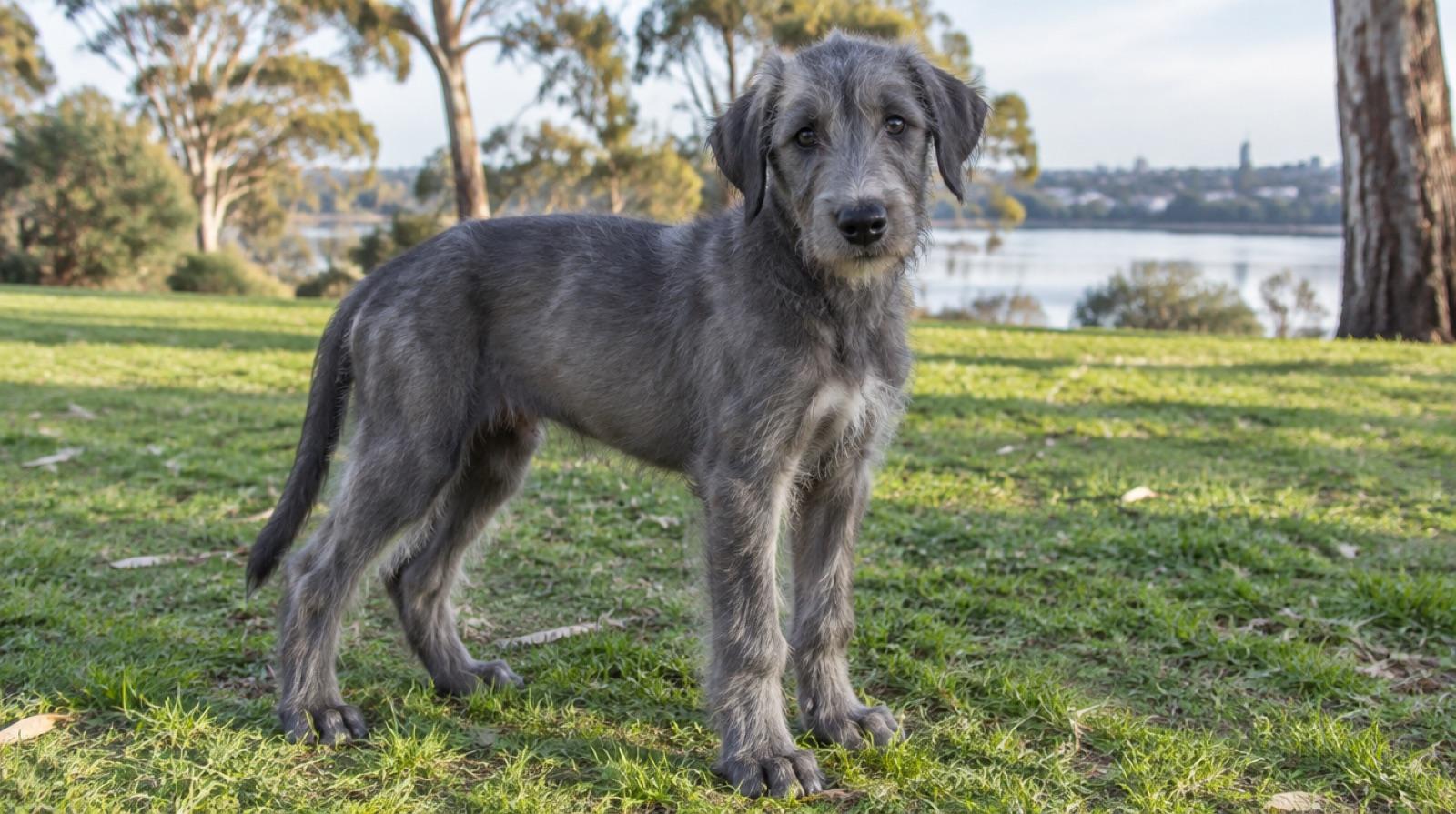
Should you adopt or buy an Irish Wolfhound?
It depends on whether it has to be a puppy. Purebred Irish Wolfhound puppies are rare across the rescues we aggregate, and the Irish Wolfhound club site says there are only around 24 breeders across Australia, so if you want a puppy from health-tested parents, a registered breeder with a waiting list is the realistic route. If what you want is the dog (the calm house manner, the size, the gentle sighthound nature), an adult Wolfhound or Wolfhound cross from rescue comes with a known size, temperament and health record, which matters a great deal in a breed with a short life.
The RSPCA Australia Knowledgebase suggests the RSPCA or a reputable rescue first, and if you go to a breeder, making sure they are registered, visiting where the puppies were born and meeting the parents. Our guide to adopting a dog in Australia covers the rescue process step by step.
| Route | Reference cost | What you usually get | Main risk |
|---|---|---|---|
| Dogs Australia registered breeder | No breeder website we read publishes a price; ask | A purebred puppy with a pedigree, a written liver shunt result, ideally from heart, hip and elbow checked parents | Testing varies, so ask; waiting lists |
| Breed club rescue officer | Ask the club | Surrendered or pound Wolfhounds, usually adults | Few dogs, and no set timetable |
| General rescue or pound | The standard fee, for example $500 for an adult dog at RSPCA NSW | Wolfhounds and crosses, desexed, microchipped and vaccinated | Purebreds are rare; unknown parent health |
| Classified ad or social media | Anything | Anything from an untested litter to a puppy that does not exist | Scams, no health guarantee |
Reference only, not quotes. Figures read on 11 November 2026; breeders and rescues set their own prices and change them, so check with them.
How much is an Irish Wolfhound puppy from a registered breeder?
There is no published figure to quote. No Australian Irish Wolfhound club publishes a price. The club site shared by the Irish Wolfhound Clubs of NSW, SA and Queensland says only that “Your new Irish Wolfhound puppy may cost more from a reputable breeder”, because there is a huge cost in raising a healthy litter and you are also buying the breeder's ongoing support.
In November 2026 we read the own websites of 9 Australian Irish Wolfhound breeders, found through the club breeder lists and state body directories. None published a puppy price. One says its pet price includes desexing, a microchip, vaccinations and a puppy pack, but gives no figure; the others show past or planned litters and contact details. Prices on listing sites are left out, because we cannot check who is selling. So the honest answer is: ask each breeder, and compare what the price includes.
| Who published it | Reference figure | Read |
|---|---|---|
| Breeders, own websites (9 read) | No price published | 11 Nov 2026 |
| Australian Irish Wolfhound clubs | No price published | 11 Nov 2026 |
| RSPCA NSW, adult dog | $500 | 11 Nov 2026 |
| RSPCA NSW, under 12 months | $620 | 11 Nov 2026 |
Reference only, not quotes. Fees change, so check with the rescue. RSPCA NSW says its fees ensure pets are desexed, microchipped, vaccinated and health-checked.
Two things a pet buyer should expect for the money. The club site says a pet puppy should come on the Limited Register (orange) pedigree papers, which certify a purebred Irish Wolfhound that cannot be shown, bred from or exported, and that the puppy's pedigree should be complete with no blanks; ask to see five generations. It also says the mother should generally be over two and have had a maximum of three litters.
Which health tests should an Irish Wolfhound breeder show you?
The liver shunt test first, then heart, hips and elbows. The Irish Wolfhound Club of NSW code of ethics makes it mandatory that all litters are tested for portosystemic shunt (liver shunt) and that only puppies clear of it are sold. The club health page says to ask for a written copy of the test by a vet, and that it rings alarm bells if a breeder does not have it.
| Check | Who asks for it | What to ask for |
|---|---|---|
| Liver shunt (portosystemic shunt) | NSW club code (mandatory for all litters); SA club code; Victorian club breeder by-laws | A written result for your puppy from the breeder's vet |
| Heart | SA club code: a full heart scan on all breeding dogs before they are bred | The parents' heart results and who did the scan |
| Hips and elbows | SA club code (its 2015 code says compulsory for breeding hounds from 1 January 2025) | Both parents' scores |
| DNA parentage | Irish Wolfhound Club of Victoria breeder by-laws | Confirmation the litter's parentage was DNA verified |
| Eyes | Royal Kennel Club (UK), best practice | Recent eye certificates, if done |
Sources: Irish Wolfhound Club of NSW, Irish Wolfhound Club of SA, Irish Wolfhound Club of Victoria and the Royal Kennel Club (UK), read 11 November 2026. This is a buying checklist, not veterinary advice. Our Irish Wolfhound health guide covers what these conditions mean once you own one.
Testing lowers risk; it does not remove it. Bone cancer, heart disease and bloat have no puppy test like the liver shunt test. Dogs Australia's breed profile says a Wolfhound that has health problems before its time will most often have bone cancers, heart problems or bloat, and that breeders have made concerted efforts to reduce these. A 2007 review of the published research by Urfer, Gaillard and Steiger in Veterinary Quarterly found the diseases reported most often were dilated cardiomyopathy (a disease of the heart muscle), osteosarcoma (bone cancer), gastric dilatation and volvulus (bloat) and the osteochondrosis group of joint conditions, with liver shunt also important.
The club health page says bone cancer is a known cause of death for many Irish Wolfhounds, particularly as they age, that heart disease is another common cause and regular heart checks help pick up symptoms early, and that pneumonia is a medical emergency in this deep-chested giant, with a treatment protocol for Irish Wolfhounds that your vet should know. The same review reported that routine castration of males was associated with a higher osteosarcoma risk, so the timing of desexing is a question to raise with your vet and breeder.
Bloat needs its own word because it is an emergency. The club calls it an extreme emergency that needs veterinary attention. In a US study that followed 1,914 dogs of 11 large and giant breeds, Irish Wolfhounds among them, the four giant breeds had 26 cases of bloat per 1,000 dog-years (Glickman and others, 2000). If your dog retches with nothing coming up, has a swollen belly or is restless and drooling, call or go to your nearest vet now. Our dog bloat (GDV) guide covers the signs and what to ask your vet about prevention.
See the Irish Wolfhounds listed right now
Irish Wolfhounds and Wolfhound crosses from the rescues, shelters and council pounds we aggregate, with each rescue's notes on children, other pets, fencing and time alone. Every listing links to the rescue, where you apply directly.
How long do Irish Wolfhounds live?
Usually well under 10 years, and owners should go in knowing that. The figures from each source:
| Source | What it says |
|---|---|
| Urfer, Gaillard and Steiger (2007), review of published studies | Mean lifespan estimates of 4.95 to 8.75 years; the authors note many estimates are biased by dogs still alive at the end of a study |
| Dogs Australia breed profile | Six to eight years on average; over 10 “not unheard of” with good management and luck |
| Irish Wolfhound Club of Victoria | Hounds can live between 7 and 10 years |
| Royal Kennel Club (UK) | Under 10 years |
That has two practical meanings. A puppy gives you the most years, but they are still few. An adult from rescue gives you fewer years, with the size, nature and health already known. Neither choice is wrong, and our senior dog adoption guide covers what to expect when you take on an older dog.
How big does an Irish Wolfhound get?
Very. The Dogs Australia breed standard asks for a dog “of great size and commanding appearance, very muscular, strongly though gracefully built”. It sets a minimum height of 79 cm for dogs and 71 cm for bitches, with dogs averaging 81 to 86 cm, and a minimum weight of 54.5 kg for dogs and 40.5 kg for bitches. Recognised colours are grey, brindle, red, black, pure white, fawn or any colour that appears in the Deerhound, and the coat is rough and hard, especially wiry.
Growth is slow. The Irish Wolfhound Club of Victoria says a Wolfhound usually reaches full height between 18 and 24 months of age but may not reach full maturity until 3 years or later. Dogs Australia's profile says the breed is low maintenance once mature, at around two to three years: a weekly brush and a monthly wash is a good guide.
How much exercise does an Irish Wolfhound need?
Regular exercise as an adult, and a lot of care as a puppy. The Royal Kennel Club in the UK rates the breed at more than 2 hours of exercise a day and lists it as suited to a large house, a large garden and the country. Dogs Australia's profile paints a quieter adult that spends much of its day finding a cosy spot to snooze and enjoys a daily walk. Both can be true: a fit adult Wolfhound needs room to move every day, then rests.
Puppies are different. The Irish Wolfhound Club of Victoria says plenty of rest is needed, particularly for puppies, and the club site says a growing Wolfhound's joints need a lot of care because of their fast growth: teach children never to climb on a puppy's back, pull or drag it about or stand it on two legs. The dog exercise calculator shows the Kennel Club breed ratings side by side, with RSPCA advice for puppies and hot days.
Fencing matters more than distance. Dogs Australia says a fully fenced yard is a must. A sighthound bred to chase may not come back once it sees something run, so let it off lead only in a secure area.
Can an Irish Wolfhound cope with an Australian summer?
Constant panting, rapid breathing, pale or red gums, drooling, vomiting, weakness or dizziness on a hot day can be heatstroke. Start cooling the dog with cool or room-temperature water and get to a vet immediately.
Yes, with planning. The club health page asks owners not to exercise a Wolfhound in the heat of the day. The RSPCA Knowledgebase on heatstroke says to exercise dogs at the coolest times of day, to give a cool, shaded, well-ventilated area and water at all times, to avoid hot surfaces, to keep dogs lean because overweight dogs overheat faster, and never to leave a dog in a car. Our dogs in hot weather guide has the full first aid and state hot-car rules.
What does a giant dog cost to keep?
More than the purchase price, every year. The Animal Medicines Australia Pets in Australia 2025 release estimated that dog-owning households spent $2,520 a year on average, for dogs of every size. A dog with a minimum adult weight of 54.5 kg eats more, needs a bigger bed, crate and car, and costs more at the vet than an average dog, because many medicines are dosed by weight. That figure is a national survey average, not a quote, and a Wolfhound's bills may well sit above it.
Add the breed's own risks: heart, bone cancer and bloat treatment can all be costly, so price up pet insurance before you bring a puppy home. The dog cost calculator estimates the first year for a giant dog, and our giant-breed ownership guide covers space, fencing and day-to-day life.
What do Irish Wolfhounds in rescue look like?
Mostly adults and crosses. Across the rescues, shelters and council pounds we aggregate, a purebred Irish Wolfhound is listed only now and then, so an alert on the Irish Wolfhound breed page matters more than checking once.
The breed clubs run their own rescue help. The Irish Wolfhound Club of Victoria says it provides a rescue service for dogs that have been surrendered, abandoned or identified in pounds, and fundraises to care for them. The Irish Wolfhound Club of NSW committee lists a puppy referral and rescue officer, and the SA and Queensland clubs say they have rescue officers for abandoned Wolfhounds in their states. If you would take an adult, tell your state club; that is often how a surrendered Wolfhound finds a home.
An adult has finished growing, so you can see its full size, how it behaves in a house and how it gets on with children and other pets. For a first-time giant-dog owner, that knowledge is worth a lot.
How do Irish Wolfhound puppy scams work?
Never send the whole price in advance for a puppy you have not seen with its mother. The Irish Wolfhound club site says a puppy offered “for adoption” online is a huge red flag.
The club's scam warning page says it is very unlikely there are Irish Wolfhound puppies available for adoption, that a responsible breeder would never advertise puppies on a Facebook group, and never to send the whole price in advance. Scamwatch says scammers set up fake websites and fake social media and marketplace profiles to sell popular breeds and pets that do not exist, and that a very cheap pet is likely a scam.
- “Shunt tested, ready at 8 weeks.” The club lists a seller who says puppies are shunt tested and then ready to go home at 8 weeks as a scam sign. The club site says around 10 to 12 weeks is a nice age to take on a Wolfhound puppy.
- No written liver shunt result. The club says never to buy a puppy without written proof of the test from the breeder's vet.
- A mother bred too young, too old or too often. The club flags females under 2 or over 7 having puppies, and one female with 5 or more litters in her lifetime.
- No breeder number. The Queensland Government says not to buy a puppy from a person who does not have a valid breeder identification number (BIN). NSW, Victoria, South Australia and the ACT also require an identifying number in puppy ads. Look it up on the official register, not through a link the seller sends.
- A membership number you cannot check. Ask for the breeder's Dogs Australia membership number and check it with the state body yourself. The club notes there is no club endorsement process, so do your own checks with every breeder.
Our guide to puppies for sale in Australia has the full state-by-state table of breeder numbers and what to do if you have already paid.
When is a registered breeder the better choice?
Rescue is not right for everyone. A registered breeder makes sense if you want a puppy from liver shunt tested stock and heart and joint checked parents, if you want to show or do lure coursing, or if you have watched the rescue listings and asked the club rescue officers for months and no adult has suited your home.
- Registration. Check the membership number with Dogs Australia or your state body, and your state's breeder number on the official register.
- A club check. The state clubs keep breeder lists; the club site says there is no club endorsement, so a listing is a starting point, not a guarantee.
- Health results: the puppy's written liver shunt test, and the parents' heart, hip and elbow results.
- The mother, in person, and where the puppies are raised. The Irish Wolfhound Club of Victoria lists a chance to visit and view the dogs as the first thing to look for.
- A breeder who stands behind the puppy. The Victorian club asks: will the breeder take a puppy back, or help you place it, if for any reason you cannot keep it?
Is an Irish Wolfhound the right dog for you?
The Dogs Australia standard gives the breed's temperament in five words: “Lambs at home, lions in the chase”. Be honest about five things.
| Question | What the sources say |
|---|---|
| Space and fencing | A fully fenced yard is a must (Dogs Australia profile); large house and large garden (Royal Kennel Club) |
| Training | Obedience training is mandatory given the adult size; short, consistent sessions work best (Dogs Australia profile) |
| Puppyhood | Can be wilful and destructive as a puppy without enough attention (Dogs Australia profile) |
| Guarding | Generally does not make a good guard or security dog (Dogs Australia profile) |
| Lifespan | Six to eight years on average (Dogs Australia profile); under 10 years (Royal Kennel Club) |
Not sure a giant breed fits? The what dog breed is right for me quiz and the adoption readiness check each take a few minutes, and big dog breeds compares the Irish Wolfhound with other large and giant dogs.
Find an Irish Wolfhound near you
Irish Wolfhounds and Wolfhound crosses listed by rescues, by city:
- Irish Wolfhounds for adoption in Sydney
- Irish Wolfhounds for adoption in Melbourne
- Irish Wolfhounds for adoption in Brisbane
- Irish Wolfhounds for adoption in Perth
- Irish Wolfhounds for adoption in Adelaide
Local guides to adopting an Irish Wolfhound, with the rescues that serve each city: Sydney, Melbourne, Brisbane, Gold Coast, Perth, Adelaide.
Weighing up other giant breeds? Our Great Dane, Newfoundland, Saint Bernard, Mastiff and Bullmastiff guides cover the same questions, and the Belgian Malinois guide covers a very different big working dog. The large dogs in Sydney and in Melbourne are worth a look too.
Frequently asked questions
Should I adopt or buy an Irish Wolfhound puppy?▼
Buy from a Dogs Australia registered breeder if it has to be an Irish Wolfhound puppy, because purebred Wolfhound puppies are rare across the rescues we aggregate, and ask for the litter's liver shunt test and the parents' heart and hip and elbow results. Adopt if you are open to an adult or a Wolfhound cross: the state Irish Wolfhound clubs have rescue officers, and an adult's size, temperament and health are already known. Either way, plan for a giant dog with a short life.
How much is an Irish Wolfhound puppy in Australia?▼
No Australian Irish Wolfhound club publishes a price, and none of the breeders whose own websites we read in November 2026 published one. The club site shared by the NSW, SA and Queensland clubs says a puppy may cost more from a reputable breeder, because raising a healthy litter is costly. Ask several breeders what they charge and what it includes. For comparison, RSPCA NSW listed $500 for an adult dog and $620 for a dog under 12 months. These are reference figures read on 11 November 2026, not quotes; fees change, so check with the rescue.
What is the liver shunt test for Irish Wolfhound puppies?▼
It is a vet test of the whole litter for portosystemic shunt, a fault in the blood supply to the liver. The Irish Wolfhound Club of NSW code of ethics makes the test mandatory for all litters and says only puppies clear of the condition can be sold. The club site says never to buy a puppy unless you have written proof of the test from the breeder's vet.
What health tests should an Irish Wolfhound breeder show me?▼
A written liver shunt result for the puppy, plus heart and hip and elbow results for the parents. The Irish Wolfhound Club of SA code (version 1, February 2015) asks breeding members to have a full heart scan done on all breeding dogs before they are bred, and says hip and elbow scoring of breeding hounds will become compulsory from 1 January 2025. The Irish Wolfhound Club of Victoria's breeders page lists a by-law that each litter is tested for portosystemic shunt and its parentage verified by DNA testing. The Royal Kennel Club in the UK adds eye testing as best practice.
How long do Irish Wolfhounds live?▼
Usually well under 10 years. A 2007 review of the published research (Urfer, Gaillard and Steiger, Veterinary Quarterly) found mean lifespan estimates for Irish Wolfhounds of 4.95 to 8.75 years. Dogs Australia's breed profile says six to eight years on average, with ages over 10 not unheard of, and the Irish Wolfhound Club of Victoria says hounds can live between 7 and 10 years.
What health problems do Irish Wolfhounds get?▼
Heart disease, bone cancer and bloat are the big three. Dogs Australia's breed profile says a Wolfhound that has health problems before its time will most often have bone cancers, heart problems or bloat, plus liver shunt and OCD, a joint problem in the shoulder or elbow. The 2007 Urfer review found the most often reported diseases were dilated cardiomyopathy (a heart muscle disease), osteosarcoma (bone cancer), bloat and the osteochondrosis group of joint conditions.
Do Irish Wolfhounds get bloat?▼
Yes, it is one of the main risks. The breed clubs call bloat an extreme emergency that needs veterinary attention, and Irish Wolfhounds were one of 11 large and giant breeds in a US study of 1,914 dogs that found 26 cases of bloat per 1,000 dog-years in the four giant breeds. Signs include retching with nothing coming up, a swollen belly and restlessness: call or go to your nearest vet now.
How much exercise does an Irish Wolfhound need?▼
Daily exercise as an adult, and care with puppies. The Royal Kennel Club in the UK rates the breed at more than 2 hours a day, while Dogs Australia's profile says an adult tends to spend much of its day resting and enjoys a daily walk. The Irish Wolfhound Club of Victoria says plenty of rest is needed, particularly for puppies, and the club site asks owners to protect a growing puppy's joints.
Is an Irish Wolfhound a good guard dog?▼
Not usually. Dogs Australia's breed profile says the breed generally does not make a good guard or security dog, although its size deters most people and it can be protective of house and family. The breed standard's temperament line is 'Lambs at home, lions in the chase', which points to a sighthound's chase instinct rather than guarding.
Do I need a big yard for an Irish Wolfhound?▼
You need a secure one. Dogs Australia's breed profile says a fully fenced yard is a must, and the Royal Kennel Club lists the breed as suited to a large house and a large garden. As a sighthound bred to chase, a Wolfhound should be let off lead only in a fenced area.
Is an Irish Wolfhound puppy 'for adoption' online a scam?▼
Treat it as a red flag. The Irish Wolfhound club site says it is very unlikely there are Irish Wolfhound puppies available for adoption, that a responsible breeder would never advertise puppies on a Facebook group, and never to send the whole price in advance. It also flags a seller who says puppies are shunt tested and then ready to go home at 8 weeks.
Where can I see Irish Wolfhounds for adoption right now?▼
The Irish Wolfhound breed page on LocalPetFinder shows Wolfhounds and Wolfhound crosses listed by the rescues, shelters and council pounds we aggregate, with a page for each major city. Every listing links to the rescue, where you apply directly. Set an alert, and contact your state Irish Wolfhound club's rescue officer, because purebred Wolfhounds come up only now and then.
Sources
- Dogs Australia: Irish Wolfhound breed standard
- Dogs Australia: Irish Wolfhound breed profile
- Irish Wolfhound Clubs of NSW, SA and Qld: Buying a puppy
- Irish Wolfhound Clubs of NSW, SA and Qld: Beware puppy scams
- Irish Wolfhound Clubs of NSW, SA and Qld: Health information
- Irish Wolfhound Club of NSW: Member code of ethics
- Irish Wolfhound Club of SA: Member code of conduct
- Irish Wolfhound Club of Victoria: About the club
- Irish Wolfhound Club of Victoria: About the breed
- Irish Wolfhound Club of Victoria: Victorian breeders and breeder by-laws
- Royal Kennel Club (UK): Irish Wolfhound
- Urfer, Gaillard and Steiger (2007), Veterinary Quarterly: lifespan and disease in the Irish Wolfhound
- Glickman and others (2000), JAVMA: bloat incidence in large and giant breeds
- RSPCA Australia Knowledgebase: How can I protect my dog from heatstroke?
- Animal Medicines Australia: Pets in Australia 2025 media release
- Queensland Government: Puppy farms and puppy scams
- Scamwatch: Buying and selling scams
- RSPCA NSW: Adoption fees
- RSPCA Australia Knowledgebase: Where should I go for a new companion animal?
Keep reading
Irish Wolfhounds listed by rescues
Irish Wolfhounds and Wolfhound crosses listed right now by the rescues and pounds we aggregate across Australia.
Living with a giant breed
Space, fencing, car and bed size, and the day-to-day life of sharing a home with an Irish Wolfhound.
Irish Wolfhound health issues
Heart disease, bone cancer, bloat and the other conditions to watch for as a Wolfhound ages.
Dog bloat (GDV)
The signs of bloat, why it is an emergency, and what to ask your vet about prevention.