The short answer
There are three safe ways to get a puppy in Australia: a rescue or council pound (about $550 to $1,200 at the shelters we checked, usually desexed, microchipped and vaccinated), a Dogs Australia registered breeder (one breed club, the Cocker Spaniel Club of Queensland, tells buyers to expect $3,000 to $4,000 on average; most clubs publish no price), or a breeder who can show the number your state requires. NSW, Victoria, Queensland, South Australia and the ACT all make sellers display an identifying number, and most let you check it online. Never pay for a puppy you have not seen with its mother. Fees and prices are reference figures checked on 9 November 2026, not quotes.
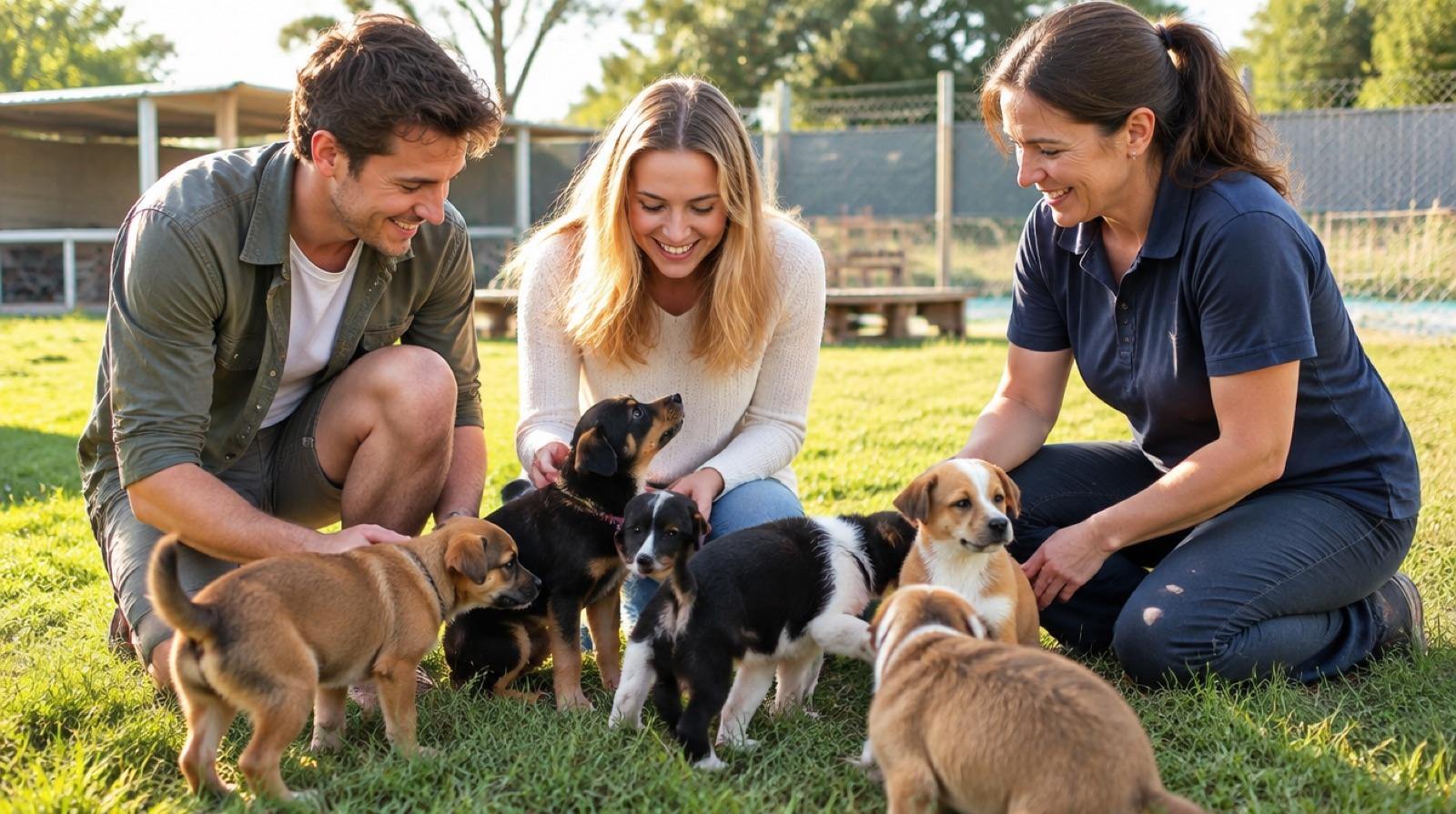
Where do puppies for sale in Australia come from?
Every puppy you can buy or adopt comes from one of six places, and the label on the ad does not always tell you which one:
- Rescues, shelters and council pounds. Puppies from surrendered or stray litters, and pregnant dogs taken into care. They are desexed, microchipped and vaccinated before adoption.
- Registered pedigree breeders. Members of Dogs Australia (the new name of the Australian National Kennel Council) through their state body, such as Dogs NSW or Dogs Victoria. Puppies come with pedigree papers.
- Other home breeders. Anyone whose dog has a litter, from a careful one-off to a backyard breeder with no health testing. Most states now require these sellers to hold a breeder number too.
- Commercial breeding operations. The large end of the market, now capped or licensed in several states (see the table below).
- Pet shops. In Victoria, pet shops can only sell dogs and cats from registered pounds, shelters or foster carers; in Western Australia, only dogs from approved refuges or dog management facilities.
- Owners rehoming a dog. Usually older dogs, but sometimes a young one that did not work out.
Scammers sit across all of these, borrowing the look of a breeder or a rescue to take deposits for puppies that do not exist. The checks below work whichever kind of seller you are dealing with.
Rescue puppies are listed all year, but they are a small share of the dogs rescues have and they tend to be adopted quickly. Most are crossbreeds; popular pedigree and doodle puppies rarely reach rescue. To see what is available near you, look at the puppies listed right now in Sydney or the city links further down.
Rescue, breeder, pet shop or classified: how do they compare?
| Where | Reference cost | What you get | What to check |
|---|---|---|---|
| Rescue, shelter or pound | About $550 to $1,200 for a puppy (fee table below) | Desexed, microchipped, vaccinated, vet checked; often a temperament note | That it is a real rescue: an adoption application, a contract, no deposit before you meet the dog |
| Dogs Australia registered breeder | Varies by breed. Example: $3,000 to $4,000 on average for a Cocker Spaniel (breed club figure) | A pedigree puppy, papers, known parents, usually a waiting list | Prefix or membership number on the Dogs Australia breeder check, your state's breeder number, parents' health certificates |
| Other home breeder | Anything | Anything from a well-raised litter to an untested one | Your state's breeder or source number, the microchip number, the mother in person |
| Pet shop | Set by the shop | In VIC and WA, a dog from a rescue source; elsewhere, ask | Where the puppy came from, and the breeder or supply number shown |
| Online classified or social media | Often below the going rate | The highest scam risk of any channel | Everything above, plus a live video call and no payment before you see the puppy |
Reference figures checked 9 November 2026 against the named rescue fee pages and the Cocker Spaniel Club of Qld. They are not quotes: every rescue and breeder sets its own price, and fees change.
What does each state require of puppy sellers?
Each state runs its own scheme, and the numbers are not interchangeable. A Victorian source number means nothing in Queensland, and NSW no longer accepts a breed club number on its own. Here is what each official page says, checked on 9 November 2026.
| State | Number a seller must show | Can you check it? | Breeding limits and pet shops |
|---|---|---|---|
| NSW | A breeder identification number (BIN) from the NSW Pet Registry in ads for puppies born from 1 December 2025; breed association numbers no longer count | Yes, NSW Buyer Search (BIN status and microchip) | 20 undesexed adult females per premises without an exemption; five litters per female in her life (three by caesarean) |
| VIC | A Pet Exchange Register source number plus each puppy's microchip number, in every sale or give-away ad | Yes, on the Pet Exchange Register | Three or more fertile females bred to sell makes a domestic animal business (for members of an applicable organisation such as Dogs Victoria, 11 or more); 11 to 50 fertile female dogs needs commercial breeder approval. Pet shops sell only dogs from registered pounds, shelters or foster carers |
| QLD | A supply number for any dog born on or after 26 May 2017 that is given away, sold or advertised | Yes, on the Queensland Dog Breeder Register | Puppies sold through pet shops must also carry the breeder's supply number |
| WA | No breeder number scheme in force yet | Not yet | Since 26 May 2025, pet shops need approval and can only sell dogs from approved refuges or dog management facilities. Breeding approvals and sterilisation by age 2 are still listed as provisions to come |
| SA | Names, phone numbers and Dogs and Cats Online (DACO) breeder numbers of everyone involved in breeding and selling | Ask for the DACO number; the puppy is transferred to you in DACO | Everyone breeding to sell, including accidental litters and rescue groups, must register as a breeder |
| TAS | No breeder source-number scheme | No | New Animal Welfare (Dogs) Regulations 2026 commenced 19 August 2026, including breeding standards |
| ACT | A breeding licence number (licensed breeders), or the microchip number plus a seller identifier | Ask Domestic Animal Services on 13 22 81 | A licence is needed to breed dogs or cats; puppy and kitten farms illegal since 2015 |
| NT | No territory-wide breeder number | No | Dogs are regulated by local council by-laws plus the territory's animal protection law |
Sources: NSW Office of Local Government, Agriculture Victoria (Pet Exchange Register), Queensland Dog Breeder Register, WA Government, Dog and Cat Management Board, NRE Tasmania, ACT City Services, NT Law Handbook. This is general information, not legal advice; follow the link for your state before you rely on a detail.
NSW: the 2025 puppy farming rules
NSW changed the most recently. From 1 December 2025, according to the Office of Local Government, every dog breeder needs a free BIN, each female is limited to five litters in her life (or three by caesarean, with vet approval), and a breeding premises needs one staff member for every 20 dogs. A premises can keep no more than 20 undesexed female dogs over six months without an exemption. The OLG's buyer guidance is plain: it does not recommend buying from a breeder who cannot give you identification numbers, or who stops the sale when you ask questions. Use the NSW Buyer Search to confirm the BIN is active and that the microchip number matches the puppy in the ad.
Victoria: the Pet Exchange Register
Every Victorian ad to sell, rehome or give away a dog must show a source number and the puppy's microchip number, on any platform. Agriculture Victoria tells buyers to check the seller's source number on the register before buying, and you can report an ad without one there. Dogs Victoria membership is not a substitute: club breeders need their own source number too. Victorian pet shops can only sell dogs and cats from registered pounds, shelters and foster carers, and must offer a refund or replacement within 7 days if a vet finds the animal unacceptable, according to the pet shops page.
Queensland, South Australia and the ACT
Queensland's supply number covers dogs only: any breeder with a litter born on or after 26 May 2017 needs one within 28 days of the birth, and so do pounds and rescue groups rehoming dogs born after that date. South Australia's Dog and Cat Management Board requires everyone who breeds dogs or cats for sale to register in Dogs and Cats Online, list their DACO breeder number in ads, microchip before sale and give the buyer written details including vaccinations and any known illness. In the ACT, City Services requires a breeding licence, and every ad must show either the licence number or the microchip number and a seller identifier.
See rescue puppies listed near you
Every puppy on these pages comes from a rescue, shelter or council pound we aggregate, with its desexing and microchip details on the profile. Each listing links to the rescue, where you apply directly.
How do puppy scams work, and how do you spot one?
Never send money for a puppy you have not seen with its mother, in person or at least on a live video call. A seller who asks for more money after the first payment, for transport, a crate, insurance or a vet check, is following the standard scam script.
Scamwatch describes the pattern: scammers set up fake websites, social media profiles and marketplace listings offering popular breeds or cute puppies that do not exist. Its advice before you buy is to view the puppy in person by visiting the breeder or seller, ask for a video call if you cannot visit, check that the breeder is legitimate and accredited, and compare prices, because a very cheap puppy is likely a scam.
WA Consumer Protection adds checks that work on any social media seller:
- The page is new or keeps changing its name. Look at the profile's page transparency. Fake pages are renamed to chase whatever breed is popular.
- The photos are not theirs. A reverse image search often finds the same puppy on another breeder's site or another scam page.
- Bank transfer only. A seller who refuses a credit card or PayPal is removing your protection if the puppy never arrives.
- The price is a bargain. Below the going rate for the breed is the hook, not the deal.
Two more checks that the state schemes make possible: ask for the breeder or source number and look it up yourself on the official register (not through a link the seller sends), and ask for the puppy's microchip number. A seller with a real litter has both. A seller who goes quiet when you ask has told you what you need to know.
Buying from a real seller also brings legal protection. WA Consumer Protection notes that under the Australian Consumer Law, a pet sold by a breeder or private seller in trade, or by a pet shop, must match its description and be of acceptable quality.
What do rescue puppies cost?
A rescue puppy typically costs between about $550 and $1,200 at the shelters below (fees checked 9 November 2026, not quotes), and the fee normally covers desexing, microchipping, vaccinations and a vet check. That is work you would otherwise pay a vet for after buying a puppy.
| Rescue | State | Puppy fee | Checked |
|---|---|---|---|
| RSPCA NSW | NSW | $620 (under 12 months); adult dog $500 | 9 Nov 2026 |
| RSPCA Victoria | VIC | $650 to $1,000 (under 6 months), shown on each profile | 9 Nov 2026 |
| RSPCA Queensland | QLD | No standard schedule published; the fee is shown on each animal's profile | 9 Nov 2026 |
| K9 Rescue Group | WA | $700 (6 weeks to 6 months) | 9 Nov 2026 |
| Dogs' Homes of Tasmania | TAS | $550 (six months and under) | 9 Nov 2026 |
| RSPCA ACT | ACT | $700 (under 6 months); $900 to $1,200 for popular breeds and poodle mixes up to 12 months | 9 Nov 2026 |
Fees as published by each rescue on the date shown. They are a reference, not a quote: rescues change fees, run promotions and price some animals individually. RSPCA Queensland and RSPCA South Australia publish no standard fee schedule, so we have not quoted one.
Run the numbers on the whole first year, not just the price tag, with the dog cost calculator. A cheap puppy that still needs desexing, vaccinations and a microchip is not cheap.
When is a registered breeder the better choice?
Rescue is not right for everyone, and pretending otherwise does nobody any good. A registered breeder is a reasonable choice when you need a particular breed for a real reason: a working or sporting role, a size or coat type your household has to have, or a breed you have owned before and know you can manage. It also makes sense if you want a young puppy of a breed that rarely reaches rescue.
If you go that way, check the breeder properly:
- Registration. Enter the breeder's prefix or membership number in the Dogs Australia registered breeder check. Dogs Australia itself notes this confirms membership, not the quality of any puppy.
- The state number. BIN in NSW, source number in Victoria, supply number in Queensland, DACO number in South Australia, licence number in the ACT. Look it up yourself.
- Health tests on both parents. Ask the breed club what to expect. The Golden Retriever Club of Victoria only lists litters where both parents have hip and elbow grading, a heart certificate and a current Australian Canine Eye Scheme certificate. The Cocker Spaniel Club of Qld points out that there is no mandatory health testing regime in Australia for its breed, so ask for copies.
- Meet the mother. Visit, see where the puppies are raised, and be wary of a breeder who wants to meet in a car park.
- A written contract. What happens if the puppy has a health problem, and whether the breeder will take the dog back later.
Not sure which breed fits your life yet? The what dog breed am I quiz is a quick start, and dog or cat? helps if you are still deciding on the species.
Why adopting a puppy is the lower-risk route
Adopting takes most of the risk in this guide off the table. A rescue puppy has usually been vet checked, desexed (or booked in), microchipped and vaccinated before it goes home. Adoption normally runs through an application and a meeting, so you see the puppy before the fee is paid, and the rescue can tell you what it has seen of the puppy's behaviour in care or foster.
The honest catch is speed and choice. Rescue puppies are mostly crossbreeds, and the popular ones go quickly. Two things help: set an alert on the puppies page for your city so you hear about new listings early, and look at dogs of six to 18 months as well. A young adult still has most of its life ahead, and its adult size and temperament are already showing.
Find a rescue puppy near you
- Puppies for adoption in Sydney
- Puppies for adoption in Melbourne
- Puppies for adoption in Brisbane
- Puppies for adoption in Perth
- Puppies for adoption in Adelaide
- Also: Canberra, Hobart, Darwin, Gold Coast and Newcastle.
More guides for first-time adopters: best family dogs, adopting a senior dog and fostering a dog or cat, a good way to try life with a dog before you commit. Thinking about a cat instead? Our guide to kittens for sale in Australia covers the same ground for kittens, and the adoption readiness check is a good five minutes before you apply for either.
Frequently asked questions
Where should I buy a puppy in Australia?▼
From one of three places: a rescue or council pound, a breeder registered with Dogs Australia through its state body, or a breeder who can show the breeder number your state requires. Avoid any seller who will not let you see the puppy with its mother, cannot give you a microchip number, or wants money before you have seen the puppy. Check the seller's number on the official register for your state before you pay anything.
How much does a puppy cost in Australia?▼
A rescue puppy costs roughly $550 to $1,200 at the shelters whose fee pages we checked on 9 November 2026, usually desexed, microchipped and vaccinated. A pedigree puppy from a registered breeder costs more and varies by breed: the Cocker Spaniel Club of Queensland, for example, tells buyers to be prepared to pay $3,000 to $4,000 on average from a Dogs Australia registered breeder (checked 9 November 2026). Most breed clubs publish no price at all. These are reference figures, not quotes. Prices change and every seller sets their own.
What is a puppy farm?▼
A puppy farm is an intensive breeding operation that puts volume ahead of the welfare of the breeding dogs and puppies. Several states now cap it directly: NSW limits a premises to 20 undesexed adult female dogs without an exemption and limits each female to five litters in her life, and Victoria requires anyone with 11 to 50 fertile female dogs who breeds them to sell to be approved as a commercial dog breeder. The ACT says puppy and kitten farms have been illegal there since 2015.
How can I tell if a puppy ad is a scam?▼
Scamwatch says scammers set up fake websites, social media profiles and marketplace listings for pets that do not exist, and that a very cheap price is likely a scam. Its warning signs include an unbelievably low price and a request to pay in unusual ways. WA Consumer Protection adds a few checks: a page created recently or renamed several times, photos that turn up elsewhere in a reverse image search, and a seller who will only take a direct bank transfer. A request for extra money for transport, a crate or insurance after you have paid is the classic next step.
What is a breeder identification number in NSW?▼
It is a free number every NSW dog breeder must hold from 1 December 2025, issued through the NSW Pet Registry. Advertisements for puppies born on or after that date must show it, and numbers issued by dog breeding associations no longer count on their own. The Office of Local Government says buyers can use the NSW Buyer Search to confirm a breeder's number is active and that the microchip number matches the puppy advertised.
What is a Pet Exchange Register source number?▼
It is the number every Victorian advertisement to sell, rehome or give away a dog or cat must display, together with each animal's microchip number. Agriculture Victoria says it applies on Facebook, Gumtree and every other platform, including free-to-good-home ads, and that buyers should check the seller's source number on the Pet Exchange Register before buying. It is a Victorian scheme only.
Do Queensland puppy sellers need a supply number?▼
Yes. Under the Animal Management (Cats and Dogs) Act 2008, anyone who gives away, supplies, sells or advertises a dog born on or after 26 May 2017 needs a supply number, and the Queensland Dog Breeder Register lets the public check one. It applies to dogs only, so there is no Queensland supply number for kittens.
Can pet shops sell puppies in Australia?▼
It depends on the state. In Victoria a pet shop can only sell dogs and cats that came from a registered pound, a registered shelter or a council-registered foster carer. In Western Australia, since 26 May 2025, a pet shop needs a pet shop approval from its local government and can only sell dogs from a refuge or dog management facility that holds a dog supply approval. Other states regulate pet shops differently, so ask any shop where its puppies came from and check the breeder number it shows.
Is it better to adopt or buy a puppy?▼
For most families, adopting is the lower-risk path: the rescue has already desexed, microchipped and vaccinated the puppy and will tell you what it knows about its temperament. Buying from a registered breeder makes sense if you need a specific breed for a reason, such as a sport, a working role or a breed you already know well, and you are willing to check the parents' health certificates and wait for a litter. What does not make sense is paying a stranger online for a puppy you have never seen.
How quickly are rescue puppies adopted?▼
Usually quickly. Puppies are a small share of the dogs rescues list, and they tend to be adopted faster than older dogs. If you want a puppy, see the puppies listed right now on the page for your city, set an alert so you hear about new ones early and apply quickly, and consider a young adult of six to 18 months as well.
What health checks should a breeder show me?▼
It depends on the breed, so ask the breed club. The Golden Retriever Club of Victoria, for example, only lists litters where both parents have hip and elbow grading certificates, a heart certificate and a current Australian Canine Eye Scheme certificate. The Cocker Spaniel Club of Queensland notes there is no mandatory health testing regime in Australia for its breed, which is why you should ask for copies of the tests on both parents before you commit.
What do I do if I paid for a puppy that never arrived?▼
Contact your bank or card provider straight away and ask them to stop or recall the payment, then report the scam to Scamwatch. Scamwatch also suggests changing passwords if you shared account details, and contacting IDCARE, the free identity and cyber support service, on 1800 595 160. Report the ad or profile to the platform it was on so it comes down for the next buyer.
Sources
- Scamwatch: Buying and selling scams (pet scams)
- WA Government: Pet scammers off the leash on social media
- NSW Office of Local Government: Changes to dog breeding laws
- NSW Office of Local Government: Find a responsible breeder
- NSW DPI: Selling or giving away a cat or dog
- Agriculture Victoria: Pet Exchange Register
- Agriculture Victoria: Microchip numbers needed in pet sale advertisements
- Agriculture Victoria: Pet shops
- Queensland Dog Breeder Register: Supply numbers
- WA Government: Stop puppy farming
- Dog and Cat Management Board (SA): Breeding and selling
- NRE Tasmania: Dog welfare
- ACT City Services: Animal welfare (buying, selling and breeding)
- NT Law Handbook: Dogs and other animals
- Dogs Australia
- Cocker Spaniel Club of Qld: Looking for a puppy
- Golden Retriever Club of Victoria: Looking for a puppy
Keep reading
Puppies for adoption in Sydney
Rescue puppies listed across the Sydney shelters we aggregate, each with its rescue, fee and desexing details.
Kittens for sale: adopt or buy?
The same question for kittens: cat breeder rules by state, kitten season, and what rescue kittens cost.
Dog cost calculator
The purchase price is the small part. Estimate food, vet care, insurance and registration for the dog you have in mind.
Adoption readiness check
A short, honest quiz on time, budget, housing and household before you bring a puppy home.