The short answer
You give a rescue animal a temporary home. The rescue keeps ownership, pays for vet care and usually supplies food, bedding and medication, while you provide daily care, transport to the vet and notes on how the animal behaves. Most programs ask that you are 18 or over, have a car and live within reach of the shelter. Placements last from a weekend to several months. You can usually adopt your foster animal if you ask, and some rescues, such as Mornington Peninsula Dog Rescue, run a named foster to adopt option. To start, apply on the foster page of a rescue near you; the table below lists one or two in every state and territory.
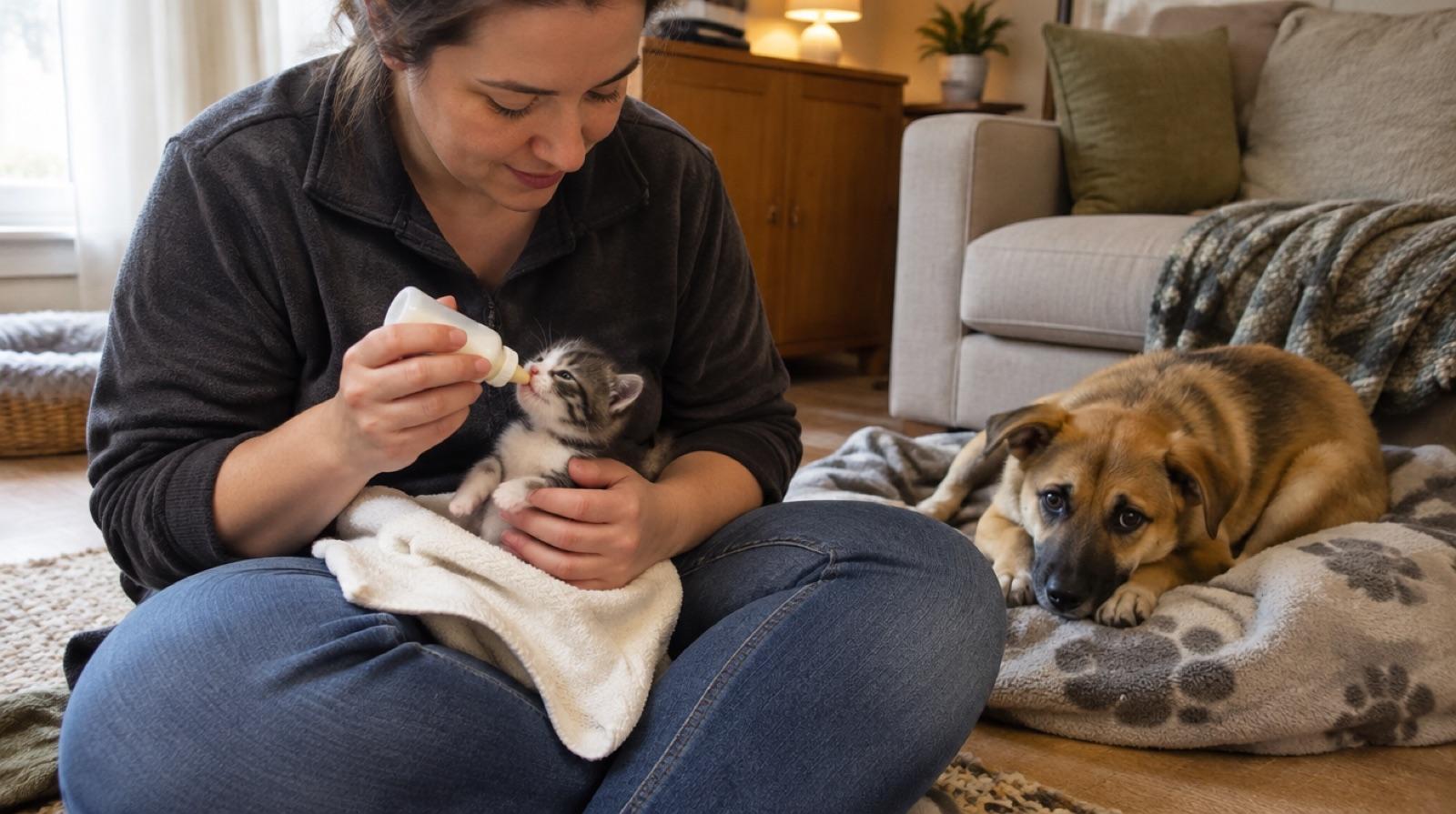
What is fostering a dog or cat?
Fostering is looking after a rescue animal in your own home until it is adopted or ready to be. The animal still belongs to the rescue. The rescue decides on vet treatment, screens adopters and makes the final call on who takes the animal home. You are the person who lives with it every day.
That makes the foster carer more useful than most people realise. An adopter wants to know what a dog or cat is really like: whether it is fine alone, how it is with visitors, whether it uses a litter tray, whether it pulls on the lead. A shelter kennel cannot answer those questions. A foster home can. Some of the rescues we list have no shelter at all: every animal lives with a volunteer carer, and the carer is the person who meets adopters and answers their questions.
If you are not sure yet whether a dog or a cat suits you, fostering is a low-commitment way to find out, and our dog or cat quiz is a quick first step.
Who pays for what?
The rescue covers the big costs. The rescues in the state table below that set out costs on their foster page all cover or support vet care, and most supply food as well. What the carer covers varies, so read the program's page and ask before the animal arrives.
| Cost | Usually paid by | What the rescues say |
|---|---|---|
| Vet care and medication | The rescue | RSPCA Victoria: all vet care is covered. AWL NSW: covers vet costs and supplies flea and worm treatment. ACT Rescue and Foster: vet costs covered. |
| Food | Usually the rescue | RSPCA NSW, RSPCA Victoria, RSPCA WA, RSPCA South Australia, Dogs' Homes of Tasmania and Ten Lives all list food as supplied. Best Friends Felines asks carers to buy food. |
| Bedding, bowls, litter, leads | Varies | RSPCA South Australia supplies litter, leads and crates. AWL NSW asks cat and kitten carers to provide bowls, a litter tray, toys and bedding. |
| Transport to the vet or shelter | You | Nearly every program asks for your own car. RSPCA WA says animals are not allowed on public transport. |
| Insurance | You, where asked | RSPCA South Australia asks carers to hold contents insurance. |
From each rescue's foster page, checked 9 November 2026. Programs change; the rescue's current page is the final word.
Which rescues run foster programs in each state?
This is not a full list. We include a rescue only where its own website confirms it runs a foster program, and we checked each page on 9 November 2026. Many smaller foster-based rescues not named here also need carers; the rescues listing animals on our city pages are a good place to look.
| State | Rescue | Animals | What its page says |
|---|---|---|---|
| NSW | RSPCA NSW | Dogs, cats, kittens and other animals | 18 or over, own transport for emergencies, everyone at home agrees. Supplies food, bedding, supplies, medication and vet support. |
| NSW | Animal Welfare League NSW | Cats, kittens, medium to large dogs | 18 or over with a car and licence, within 70 minutes of Kemps Creek or a branch. Covers vet costs. |
| VIC | RSPCA Victoria | Dogs, cats and other animals | All vet care covered, plus food and supplies. Resident dogs need a meet and greet at the shelter. Carers get priority to adopt. |
| VIC | Mornington Peninsula Dog Rescue | Dogs | Runs both standard fostering and a Foster-to-Adopt option. |
| QLD | RSPCA Queensland | Puppies, kittens, dogs, cats | 18 or over with reliable transport; landlord approval if renting. Application, short online training and photos of your property. All supplies and support provided. |
| QLD | Best Friends Felines | Cats and kittens (Brisbane) | All vet costs covered, including vaccines, desexing and microchipping. Carers buy the food and need a reliable car. |
| WA | RSPCA WA | Puppies, kittens, dogs, cats | Typically only in the Perth and Peel regions. Own car needed. Supplies food, medication and equipment. |
| SA | RSPCA South Australia | Dogs, cats and other animals | 18 or over, contents insurance, transport to O'Halloran Hill. Supplies food, litter, vet and behaviour support. |
| TAS | Dogs' Homes of Tasmania | Dogs | 18 or over, secure yard, landlord approval if renting. Supplies food, bedding and approved vet care, with 24/7 guidance. |
| TAS | Ten Lives Cat Centre | Cats and kittens (Hobart) | Supplies food, litter, bedding, medicines and vet care, with 24-hour support. |
| ACT | ACT Rescue and Foster | Dogs | Canberra, Queanbeyan and Yass only. Must have owned a dog as an adult, secure fencing, own vehicle. Vet costs covered. |
| NT | RSPCA Darwin Regional Branch | Puppies, kittens, dogs, cats | Most needs carers for bottle-fed babies, shy animals, older and hard-to-adopt animals, and animals recovering from infections. |
Checked 9 November 2026 on each rescue's own foster page. Requirements and the animals needing care change through the year.
How do I apply to foster?
The steps are similar everywhere. Here is how the programs above describe them.
- Fill in the rescue's foster application. It asks about your home, household, other pets, hours and what kind of animal you can take.
- Send photos of your home and yard. RSPCA Queensland, RSPCA WA and Dogs' Homes of Tasmania all ask for them, especially for dogs.
- Do the training. RSPCA Queensland runs a short online course, and RSPCA South Australia asks carers to attend training sessions.
- Get your own pets ready. RSPCA NSW asks that existing pets are vaccinated, desexed and treated for parasites, and may ask you to bring them to meet the foster animal.
- Wait for a match. Dogs' Homes of Tasmania says a suitable match can come quickly or take several months. Being approved does not mean an animal arrives the next day.
Before you apply, be honest with yourself about time and money with our adoption readiness check. The questions are the same ones a rescue will ask.
Fostering cats and kittens
Cats and kittens are where the need is usually biggest, because kittens arrive in litters and cannot be adopted until they are old enough to be desexed. AWL NSW says kittens usually stay in foster for 2 to 8 weeks. That short, defined stay makes kitten fostering a good first placement for many people.
Kittens are not all easy, though. Bottle-fed kittens, the ones taken in without their mother, are among the most demanding placements: RSPCA Darwin says kittens under 4 weeks can need feeding as often as every two hours, overnight included. Shy or semi-wild kittens need patient handling to become adoptable pets. Adult cats are quieter work and often suit people who are out during the day.
Expect to keep foster cats indoors. AWL NSW requires it, and Ten Lives asks carers to keep a daily diary of each cat's health. Browse current cats from the rescues we track in Sydney, Melbourne, Brisbane, Perth and Adelaide.
Fostering a dog
Dogs go into foster for many reasons. Dogs' Homes of Tasmania lists stress in kennels, recovery from surgery, mothers with puppies, puppies finishing their vaccinations, long-stay dogs needing a break and greyhounds leaving racing. RSPCA Darwin adds dogs that need to learn basic manners.
The dogs that need carers most are often not the ones people ask for. AWL NSW says puppies and small dogs are adopted quickly while medium and large dogs stay longest, and it points out that a big dog is not always a high-energy one: many of its dog carers live in apartments. ACT Rescue and Foster says most of its dogs are medium sized, often Staffies, Bull Arabs and working breeds.
Older dogs are a strong case for fostering too, because a kennel is hard on them and they tend to wait longer. Our senior dog adoption guide covers what living with an older dog is like.
Can I foster to adopt, or try before I adopt?
Sometimes, and it is worth being clear about what each rescue offers.
- Named foster to adopt programs. A few rescues place an animal with you as a foster with adoption in mind. Mornington Peninsula Dog Rescue runs a Foster-to-Adopt option alongside standard fostering.
- Fostering as a trial. RSPCA South Australia lists a “test run” among its reasons to foster: a chance to trial an animal before committing. Best Friends Felines calls cat fostering like try before you buy.
- Trial periods built into adoption. Canberra Street Cat Alliance adopts out its cats on a two-week trial and fully refunds the adoption fee if the trial is unsuccessful.
- Keeping a standard foster. RSPCA Victoria gives carers priority to adopt; RSPCA WA and AWL NSW let carers apply to adopt their foster animal.
The honest part: in most standard programs the rescue needs carers to hand animals on, so the next one can come out of the shelter. If you want to keep the animal, say so at the start. A rescue can then match you with an animal that suits your home for life. Ask whether the normal adoption fee applies if you keep your foster animal, and note that AWL NSW says that adopting a foster animal can mean you cannot foster again if it does not get on with other animals.
Is fostering right for me?
Fostering suits people who love animals but cannot commit to one for 10 or more years: renters on short leases, people who travel, older people, families wanting to see how a pet fits before adopting. It is less suited to anyone who would struggle to give an animal back. Most carers say the goodbye is hard, and the rescues say so too.
If you are ready to adopt rather than foster, the same rescues list their animals with us. The ones listing older dogs are also the ones to ask about fostering.
Frequently asked questions
How does fostering a dog or cat work?▼
You give a rescue animal a temporary home until it is adopted or ready for adoption. The rescue keeps ownership, decides on vet treatment and chooses the adopter. You provide daily care, a routine, transport to vet visits and honest notes on how the animal behaves at home. Placements run from a weekend to several months, depending on the animal and the rescue.
Do I have to pay for vet bills when I foster?▼
Usually not. Of the rescues in our state table that set out costs on their foster page, every one says it covers or supports veterinary care, and most also supply food, bedding and medication. Ask before the animal arrives which vet to use, who approves treatment and what to do after hours, because that is the detail that matters most in an emergency.
Is fostering free?▼
Mostly, but not entirely. Vet care is covered by the rescue, and usually food too. You pay for your own petrol to vet visits, and some programs ask for more: Best Friends Felines in Brisbane asks carers to buy their foster cat's food, AWL NSW asks cat and kitten carers to provide bowls, a litter tray, toys and bedding, and RSPCA South Australia asks carers to hold contents insurance. RSPCA WA says there are no notable costs beyond fuel for transport.
Can I foster if I rent?▼
Usually yes, with your landlord's permission. RSPCA Queensland, Dogs' Homes of Tasmania and ACT Rescue and Foster all ask renters for landlord approval, and ACT Rescue and Foster asks for a permission letter. A foster animal lives in your home like a pet, so the same pet rules in your lease apply. Our renting with pets guide explains the rules in each state.
Can I foster if I work full time?▼
Often yes. RSPCA Victoria says it tries to match animals to all kinds of homes, including people who work full time, and adult cats suit working carers well. Very young kittens and dogs that cannot be left alone are a different matter, so tell the rescue your hours and let it match you to an animal that fits.
Can I adopt the dog or cat I foster?▼
Usually, if you ask. RSPCA Victoria gives the foster carer priority to adopt at the end of the placement, RSPCA WA says carers can go through the normal adoption process, and AWL NSW says it is fine in most situations. ACT Rescue and Foster says some carers fall in love and adopt their foster dog. Ask the rescue whether its normal adoption fee applies.
What is foster to adopt?▼
A foster to adopt placement is one where you take an animal home as a foster with adoption in mind, so you can see how it settles before you commit. Mornington Peninsula Dog Rescue in Victoria runs a named Foster-to-Adopt option, and RSPCA South Australia describes fostering as a chance to trial an animal before adopting. Not every rescue offers it, so ask.
Can I try a cat before I adopt?▼
Some cat rescues build a trial into adoption. Canberra Street Cat Alliance adopts its cats out on a two-week trial and fully refunds the adoption fee if the trial is unsuccessful. Best Friends Felines in Brisbane describes fostering as like try before you buy. Elsewhere, fostering a cat is the closest thing to a trial, and you should tell the rescue at the start if you hope to keep it.
How long does a foster placement last?▼
Anything from a weekend to several months. AWL NSW says kittens usually stay 2 to 8 weeks and cats and dogs at least 2 weeks. Dogs' Homes of Tasmania offers fostering for a weekend, a few weeks or until adoption. Foster-based rescues such as ACT Rescue and Foster keep a dog in foster for as long as it takes to find a home, which can be many months.
How do I foster kittens?▼
Apply to a rescue or shelter that fosters cats and say you can take kittens. Most kittens go into foster because they are too young to be desexed and adopted, and they come back when they are old enough. Bottle-fed kittens are the most demanding: RSPCA Darwin says kittens under 4 weeks can need feeding as often as every two hours, overnight included.
What if fostering does not work out?▼
Call the rescue and it will take the animal back. AWL NSW says it will always have a spot at the shelter for a foster animal that needs to come back for any reason. Tell the rescue why, so it can find a better fit next time. A foster that does not work is not a failure on your part.
Who can become a foster carer in Australia?▼
Most programs ask that you are 18 or over, have your own transport and live within reach of the shelter. AWL NSW asks carers to live within 70 minutes of its Kemps Creek shelter or a branch, RSPCA WA says foster care is typically only available in the Perth and Peel regions, and ACT Rescue and Foster only takes carers from the Canberra, Queanbeyan and Yass region. Some programs also ask for experience: ACT Rescue and Foster asks that you have owned a dog as an adult.
Sources
- RSPCA NSW: Foster care
- Animal Welfare League NSW: Foster care
- RSPCA Victoria: Become a foster carer
- Mornington Peninsula Dog Rescue: Foster-to-Adopt
- RSPCA Queensland: Become a foster carer (application page)
- Best Friends Felines: Fostering information
- RSPCA WA: Foster care
- RSPCA South Australia: Foster care
- Dogs' Homes of Tasmania: Foster a dog
- Ten Lives Cat Centre: Foster
- ACT Rescue and Foster: Foster
- RSPCA Darwin Regional Branch: Foster
- Canberra Street Cat Alliance: Adopt
Keep reading
Senior dog adoption in Australia
Older dogs wait longest for a home and often settle fastest. What to expect, what it costs, and the seniors programs we could confirm.
Renting with pets in Australia
A foster animal counts as a pet under your lease. The landlord rules and deadlines in every state.
Kitten blues and adoption regret
Second thoughts after bringing a new cat home are common. What helps, and when to talk to the rescue.
Adoption readiness check
A short quiz on time, money, housing and household. Useful for fostering too.