The short answer
The kitten blues are common and almost always temporary. You adopted a cat you wanted, paid a fee of $220 for a cat or $270 for a kitten at RSPCA NSW, and now the cat is under the bed and you feel flat, or worse, sorry you did it. That gap between the picture in your head and a scared animal in a new house is the whole problem. Australian rescues plan for it: the RSPCA Knowledgebase suggests one room for a couple of days, International Cat Care says settling takes several days to a week or two, and Animal Welfare League NSW says some pets need up to three months. Give it the weeks, lean on the rescue's post-adoption support, and if it truly does not fit, rehoming through the rescue or our rehoming page is a responsible option that most people never need.
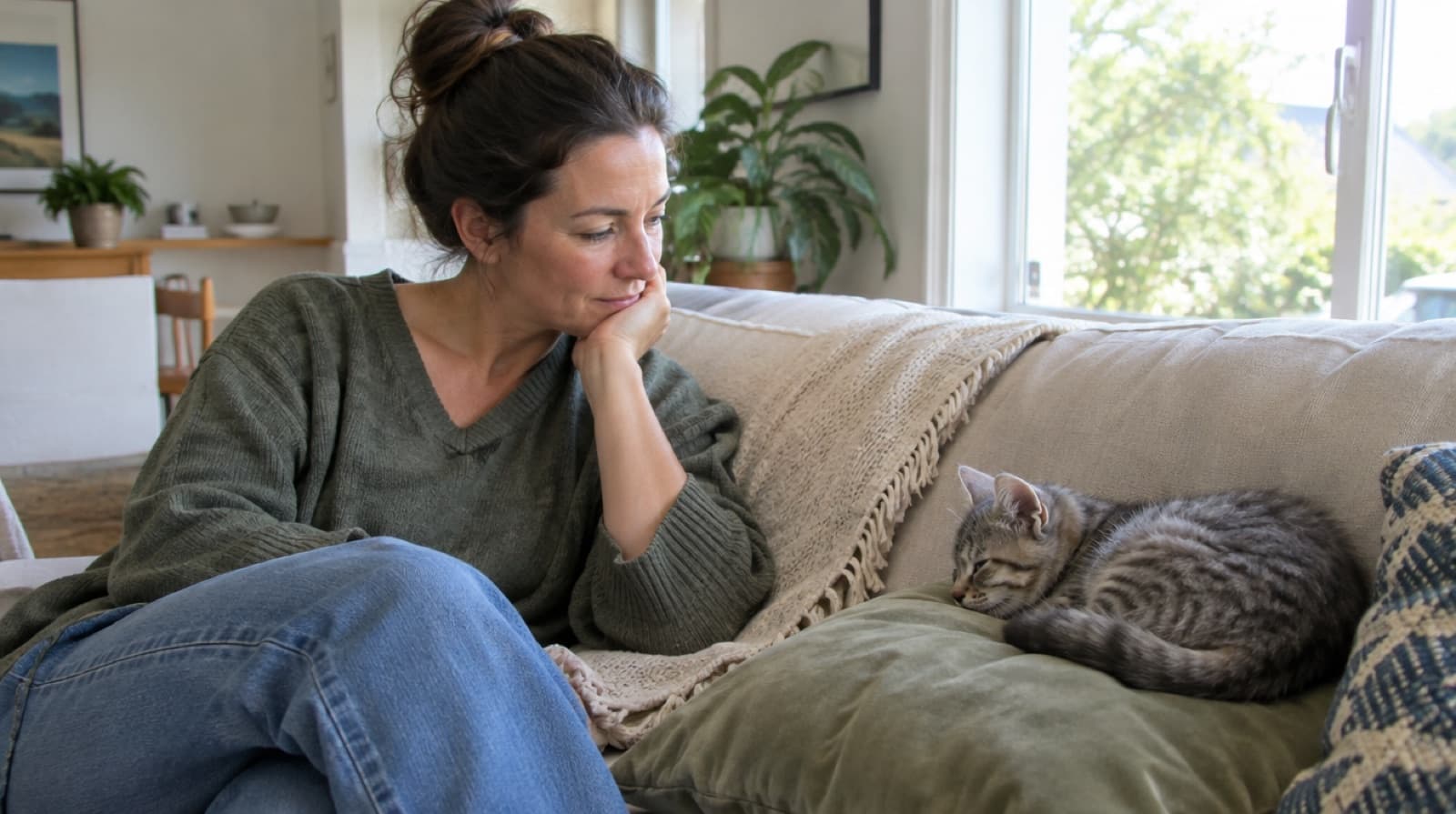
What are the kitten blues?
The kitten blues is the name people give to a low, anxious or regretful mood in the first days or weeks after adopting a kitten or cat. It is not a clinical term. It is a pattern that a great many new owners recognise the moment someone puts words to it.
It usually feels like this. You wanted this cat for months. You picked the name, bought the litter tray, the scratching post and the good food. Then the cat arrived, bolted under the bed, and has not come out. The house is quiet in a way that feels heavy rather than calm. You lie awake wondering if you have made a mistake, and then you feel guilty for even thinking it.
Some people get the opposite version. The kitten is loud, climbs the curtains at 3am, and the sheer relentlessness of it makes them want their old life back. Both are the same thing: a gap between the cat you imagined and the animal in front of you, which has not had time to become that cat yet.
Why does it happen after a cat you actually wanted?
It happens because wanting a cat and living with a frightened new cat are two different experiences, and the second one arrives first. A few things land at once.
The sunk cost hits straight away. You have paid an adoption fee, bought the gear, and maybe taken a day off work. At RSPCA NSW that fee is $220 for a cat and $270 for a kitten; at the Cat Protection Society of NSW it is $150 per cat or kitten. That money and effort make a quiet, hiding cat feel like a bad purchase rather than a scared animal. It is neither. The fee covered desexing, microchipping and vaccination, which you would have paid for anyway, and it is not a measure of the relationship.
The cat is not itself yet. A rescue cat arrives from a shelter pen or a foster home into a house full of new smells and new people. The RSPCA Knowledgebase suggests confining a new cat to one room for a couple of days before giving gradual access to the rest of the home. A cat that hides is doing exactly what a sensible cat does. You are judging a relationship before it exists.
The adrenaline drops. Adoption day is exciting. You tell everyone. Day three is a litter tray, a food bowl that may or may not have been touched, and a hissing lump under the doona. The dip after any big, anticipated event is normal, and bringing an animal home is a big one.
The commitment becomes real. A cat is a long commitment, and in daylight that was the point. Standing in the kitchen at midnight, that stretch of years can feel like a weight rather than a gift. It settles back into a gift. It just takes a few weeks.
You are tired. Many kittens are loudest at dawn and after dark, right when you are trying to sleep. Three bad nights will flatten anyone's mood, with or without a cat.
How common is it?
Common enough to have a name and a steady stream of people searching for it at 2am. We will not give you a percentage, because nobody has measured it properly and we do not invent numbers. What we can point to is how Australian rescues write their advice.
Animal Welfare League NSW tells adopters that some pets may need up to three months to fully settle. The Cat Protection Society of NSW tells new owners to keep the cat completely indoors for at least a month. RSPCA NSW publishes a post-adoption support phone line. Rescues build that kind of advice because the early weeks are hard for a lot of people, not a few. If you are feeling it, you are the reader those pages were written for, not the exception.
When does it usually lift?
For most people the kitten blues lift within a few weeks, at about the point the cat stops hiding and starts behaving like it lives there. Your mood tends to track the cat's progress, so it helps to know what the rescue and welfare bodies say about how long that progress takes.
| Who | What they say about settling in |
|---|---|
| RSPCA Australia Knowledgebase | Confine the new cat to one room for a couple of days, then give gradual access to the rest of the home. |
| International Cat Care | Settling takes from several days to a week or two depending on the cat. Wait two to three weeks before letting an adult cat outside. |
| Cat Protection Society of NSW | Keep a new cat completely indoors for at least one month. |
| Animal Welfare League NSW | Some pets may need up to three months to fully settle. |
Notice the spread. A confident adult cat may be on your lap inside a week. A shy kitten from a crowded shelter may need the full three months. Neither is a verdict on you. Pick a date four weeks out, write it on the fridge, and agree with yourself not to judge anything before then.
The turning points are small and easy to miss. The cat eats while you are in the room. It uses the tray without drama. It sits a metre away instead of under the bed. One morning it chooses to be near you. Most people find the blues are gone before they notice they left.
What about regret after a second cat?
Regret after bringing home a second cat is its own version of the kitten blues, and it is usually about the first cat, not the new one. Your resident cat hisses, hides, goes off its food or simply stops coming to you. You feel you have betrayed the animal that trusted you, for a stranger that does not seem to want to be there either.
International Cat Care's introducing-cats guidance is built on slow, scent-first introductions: the new cat in its own room, bedding and smells swapped between the two, and face-to-face time only once both cats are calm about the smell. Rushing that sequence is the most common cause of the fighting that makes people regret the decision.
Slow it right down, go back a step whenever either cat is tense, and most pairs reach tolerance or real friendship. Some never become mates and live parallel lives in the same house, using different rooms and different windowsills. That is also a fine outcome. If you are weighing a second cat and have not committed yet, our adoption readiness check is a blunt five-minute way to test whether your household has the room, time and patience for it.
How do you get through the first weeks?
The goal is to make the first month boring for the cat and bearable for you. These are the things that make the biggest difference.
- Set up one room and leave the cat in it. Food, water, a litter tray away from the food, a hiding spot and a bed. Sit in the room and read or scroll. Let the cat come to you on its own schedule. This is the RSPCA Knowledgebase advice, and it works because it shrinks the new world down to a size the cat can cope with.
- Keep the doors shut. The Cat Protection Society of NSW says at least one month indoors; International Cat Care says two to three weeks before an adult goes outside. A cat let out early does not know where home is. Losing a cat in week one is the one way the kitten blues become real grief.
- Lower the bar. Success in week one is the cat eating, drinking and using the tray. It is not cuddles, purring or playing. Those come later and they come faster if you stop reaching for them.
- Put the fee out of your head. It bought desexing, a microchip and vaccinations the cat needed. It has nothing to say about whether the two of you will get on.
- Protect your sleep. A hard play session and a meal last thing at night help a kitten sleep through. If you need to shut the bedroom door for a week, do it. A rested owner is a patient owner.
- Use the rescue. They have done this hundreds of times. RSPCA NSW offers post-adoption support by phone on (02) 9770 7555. Animal Welfare League NSW offers a 14-day veterinary service for shelter-linked conditions. Every rescue would rather hear “is this normal?” in week two than nothing at all.
- Tell one person how you feel. Say it out loud to a friend with a cat. Almost everyone who has adopted has a version of this story, and hearing theirs takes the shame out of yours.
- Note one good thing a day. The cat ate. The cat blinked slowly at you. The cat did not hiss. It sounds twee, and it is the single easiest way to see progress that your mood is hiding from you.
When should you call someone instead of waiting it out?
There are two separate questions here, and they have different answers. Is the cat okay? And are you okay?
For the cat. Hiding is normal. Not eating or drinking, not using the tray, or a sudden change in a cat that had been settling are not things to wait on. The Cat Protection Society of NSW tells adopters not to delay calling if they are concerned, because behavioural problems can be signs of health problems. International Cat Care says the same: any concerning change in behaviour is a reason to seek veterinary advice. Ring your vet or the rescue. Never give a cat any medicine from your own cupboard; many human products are dangerous to cats, and the vet is the only person who should decide what a cat takes.
For you. A flat week or two around a new animal is the kitten blues. A low mood that lasts beyond a few weeks, that feels heavier than “I am not sure about this cat”, or that lands on top of a history of depression or anxiety, is something else. Talk to your GP or a mental-health service. A new pet can be the thing that tips an already stretched life over the edge, and that is not the cat's fault and it is not yours. It does need more than a settling-in guide, and asking for help is the responsible move for both of you.
What if you genuinely cannot keep the cat?
If, after a real settling-in period, the cat is a genuine mismatch for your home, talk to the rescue you adopted from before you do anything else. Before that conversation, it helps to be honest about which kind of problem you have.
| Usually week-two nerves | Usually a genuine mismatch |
|---|---|
| The cat hides and will not come to you yet. | A household allergy confirmed by a doctor that is not manageable. |
| The cat is loud at night and you are tired. | A landlord or body corporate rule you cannot get around. |
| The cat is not affectionate and you feel nothing back. | A resident cat or dog that is still unsafe with the new cat after a slow, proper introduction. |
| You feel flat, guilty or overwhelmed. | A change in your life, health or work that means nobody can care for the cat. |
If your list sits on the left, give it the month. If it sits on the right, here is the order to do things in.
- Ring the rescue. Ask what happens if it does not work out. We found no written return window on the RSPCA NSW, Cat Protection Society of NSW or Animal Welfare League NSW sites, so the policy is a conversation. RSPCA NSW runs a Rehoming Assistance portal alongside its support line. Rescues would always rather take a cat back, or help you place it, than lose track of it.
- If the rescue cannot help, rehome it yourself, properly. List the cat with photos, an honest description and a fee, and screen the people who reply. Our owner rehoming page exists for exactly this, and the cat stays with you until the right home is found.
- Never take the shortcuts. No unscreened “free to good home” post, no leaving the cat outside to fend for itself, no drop-off at a park or carpark. Every one of those ends badly for the cat, and the rescue route exists so you never have to.
One honest note from our side of the fence. Across the rescues we aggregate, adult cats and kittens are listed year-round, and the great majority are moggies much like the one under your bed. There is no shortage of cats needing homes, so there is no reason to keep a cat that is truly wrong for your household out of guilt, and no shortage of good homes a well-screened rehome can reach. But most of the people who get this far are not in that position. They are in week two, with a cat that will be asleep on the end of the bed by week six, wondering what all the worry was about.
Frequently asked questions
What are the kitten blues?▼
Kitten blues is the everyday name for a low, anxious or regretful mood in the first days and weeks after adopting a kitten or cat. It is not a medical diagnosis. It is the gap between the cat you imagined and a frightened animal that has not had time to settle, mixed with lost sleep and the sudden weight of a long commitment. It usually lifts as the cat relaxes into the house.
How long do the kitten blues last?▼
For most people the feeling fades within a few weeks, about the same time the cat stops hiding and starts behaving like it lives there. International Cat Care says a cat takes from several days to a week or two to settle, and Animal Welfare League NSW says some pets may need up to three months. Your mood tends to track the cat's progress, so give it at least a month before you judge anything.
Is it normal to regret adopting a kitten?▼
Yes. Wanting a cat and living with a scared new cat are two different experiences, and the second one arrives first. Regret in week one or two is common enough to have a name and a steady stream of people searching for it. It does not mean you chose the wrong cat or that you are a bad owner. It means the relationship has not started yet.
Why is my new cat hiding and not eating?▼
Hiding is normal for a cat in a strange house, and the RSPCA Knowledgebase suggests confining a new cat to one room for a couple of days so it has a small, safe space to start from. Not eating or drinking is different. The Cat Protection Society of NSW tells adopters not to delay calling if they are concerned, because behaviour problems can be signs of health problems. If your cat has not eaten or used the tray in a day or so, ring your vet or the rescue.
How long does a rescue cat take to settle in Australia?▼
The Australian rescue advice runs from a few days to a few months. The RSPCA Knowledgebase suggests one room for a couple of days, then gradual access to the rest of the home. International Cat Care puts full settling at several days to a week or two. The Cat Protection Society of NSW says keep a new cat completely indoors for at least one month, and Animal Welfare League NSW says some pets need up to three months. A confident adult may be on your lap in a week; a shy shelter kitten may need the full three months.
I regret getting a second cat. What should I do?▼
Slow the introduction right down. Second-cat regret is usually about the resident cat hissing, hiding or sulking, and most of that comes from the two cats meeting too soon. International Cat Care's introducing-cats guidance keeps the new cat in its own room and swaps scent between the two before they ever see each other. Done slowly, most pairs reach tolerance or friendship. Some never become mates and simply share a house, and that is a fine outcome too.
Can I return a cat to the rescue I adopted from?▼
Ask the rescue directly, and ask early. We found no written return window on the RSPCA NSW, Cat Protection Society of NSW or Animal Welfare League NSW sites, so the policy is a conversation, not a form. RSPCA NSW offers post-adoption support by phone and a Rehoming Assistance portal. Most rescues would far rather hear from you in week two than find the cat in a pound in month three.
What if I genuinely cannot keep the cat?▼
Talk to the rescue first. If they cannot take the cat back, list it for owner rehoming with a fee and screening, for example through the rehoming section on this site. Never give a cat away through an unscreened classified, never leave it outside to fend for itself, and never drop it at a park. Across the rescues we aggregate, cats and kittens are listed year-round, so there is no shortage of homes for a well-presented rehome and no reason to keep a cat that is truly wrong for your household out of guilt.
Should I let my new cat outside to cheer it up?▼
No, not yet. The Cat Protection Society of NSW says keep a new cat completely indoors for at least one month, and International Cat Care says wait two to three weeks before letting an adult cat outside. A cat let out early does not know the way home. Losing a cat in week one turns the kitten blues into real grief, so keep the doors shut and build the bond indoors first.
Sources
- RSPCA Australia Knowledgebase: How can I help my cat adjust to a new home?
- Animal Welfare League NSW: Adopt
- Cat Protection Society of NSW: Settling in your new cat
- International Cat Care: Introducing cats
- International Cat Care: Problem behaviour in cats
- RSPCA NSW: Adopt and foster FAQs (post-adoption support)
Keep reading
Domestic Shorthair colours and patterns explained
Most rescue cats are moggies. What your tabby, tortie or tuxedo colouring is called, and what it does and does not say about the cat.
Kittens for adoption in Sydney
Kittens listed across the Sydney rescues we aggregate, refreshed regularly, with fees and desexing status on each profile.
Rehome a cat responsibly
List a cat for owner rehoming with a fee and screening, after you have spoken to the rescue you adopted from.
Adoption readiness check
A short, honest quiz on time, budget, housing and household before you bring another animal home.