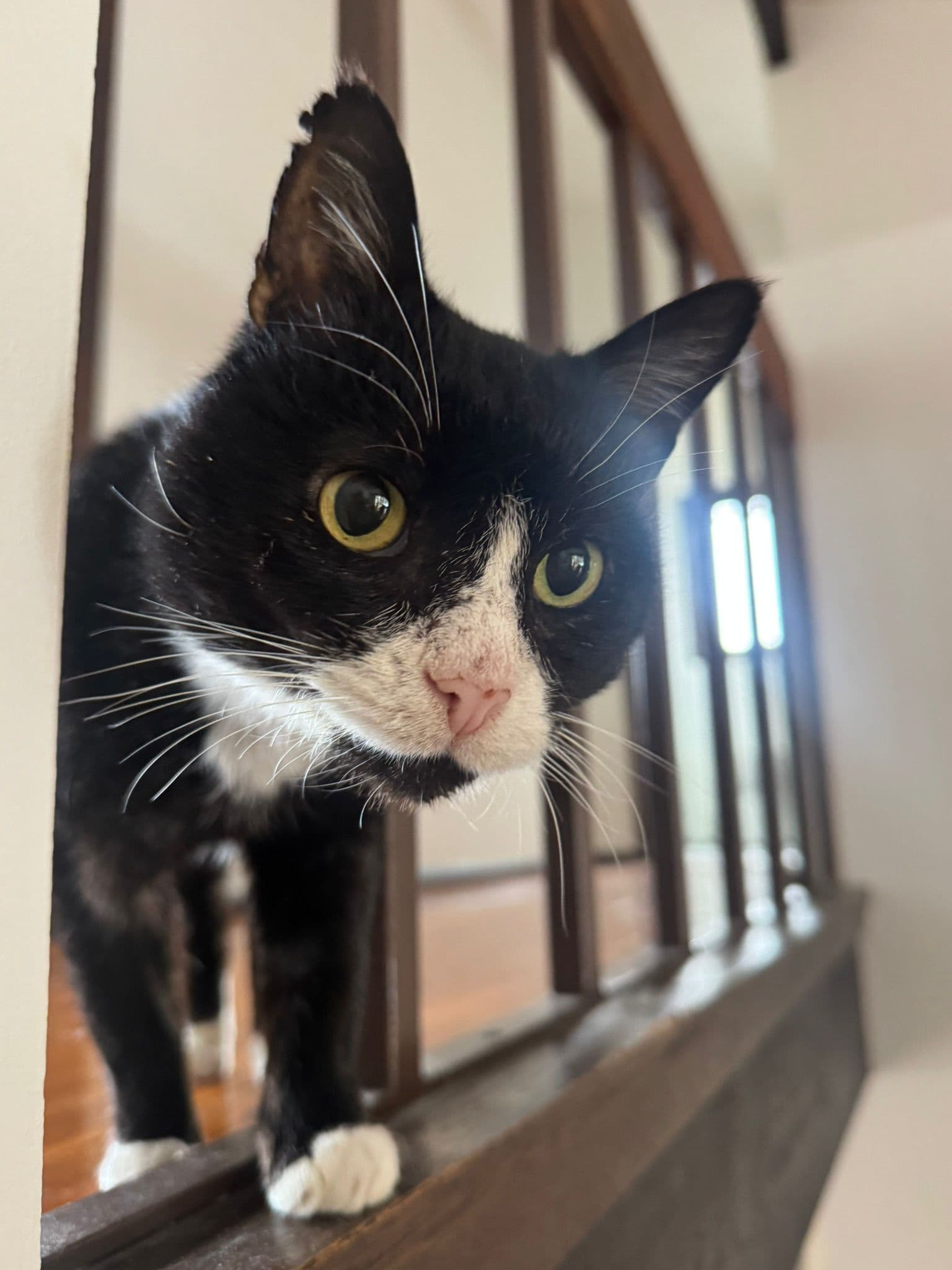
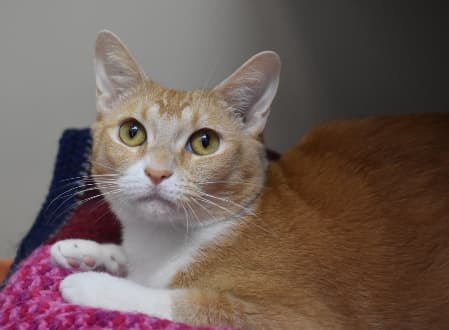
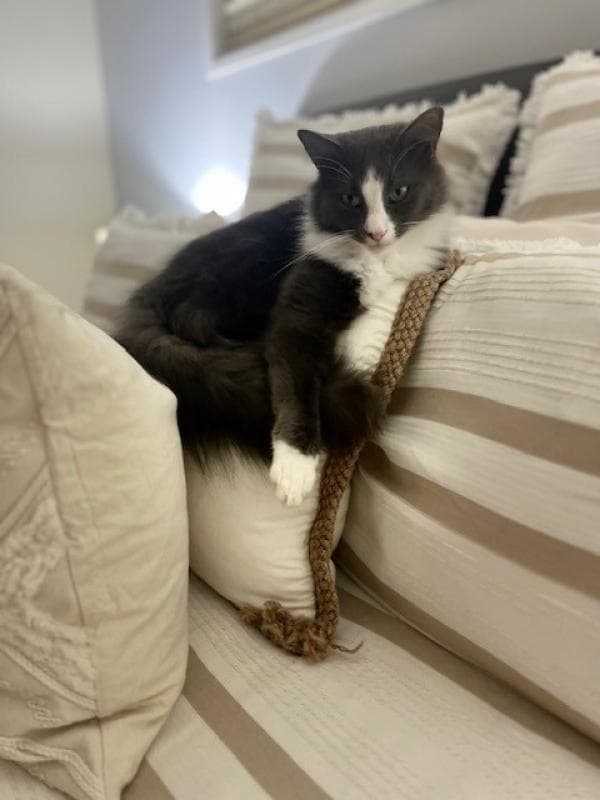
Cinnabon
2.5 years • Domestic Shorthair
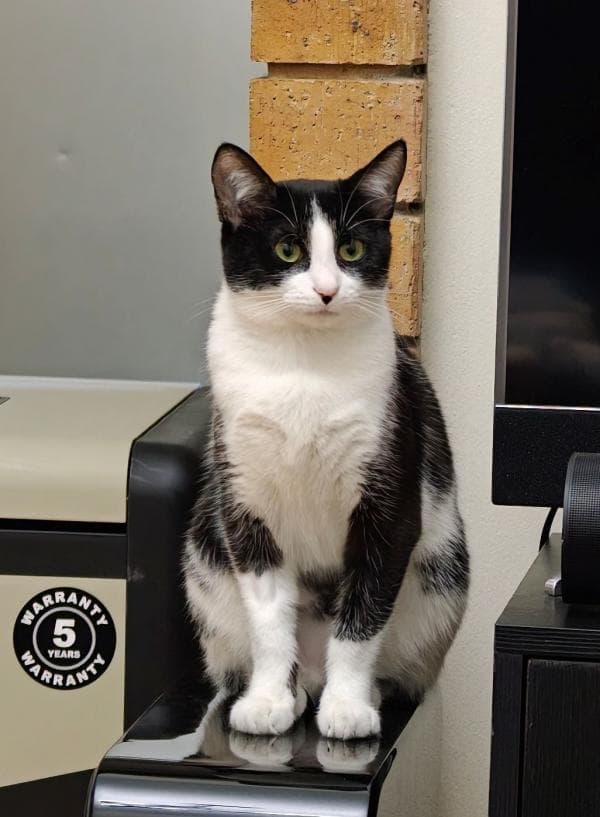
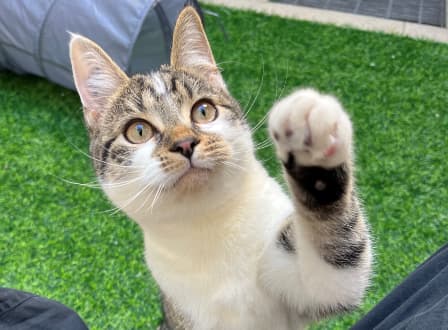
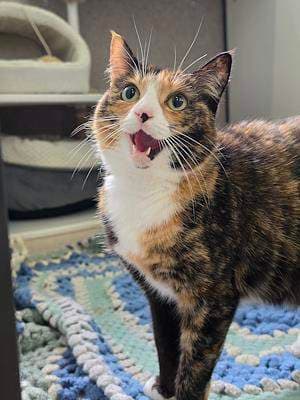
Muffin
4 years 9 months • Domestic Long Hair
“Special needs” covers a wide range of Sydney rescue cats, and most of them are far easier to live with than the label suggests. It includes FIV-positive or FeLV-positive cats, blind or deaf cats, three-legged and amputee cats, cats managing chronic but stable conditions like diabetes, kidney disease, or ongoing dental and skin issues, and cats a rescue has simply flagged as needing a little extra care or a quieter home. When a rescue lists a cat as special needs, the condition is disclosed up front so you know exactly what you're taking on.
FIV-positive cats are the most overlooked of all, and it's largely a misunderstanding. FIV is slow-acting, hard to transmit between cats in a calm household, and an indoor FIV-positive cat frequently lives a full, normal lifespan. Blind and deaf cats map their homes quickly and behave like any other cat once settled. Three-legged cats run, jump, and climb without missing a beat. Across the board, special needs cats tend to be strikingly affectionate, partly because they've often waited longest and bond hard with the person who finally chooses them. If you want to read more, our guide to FIV-positive cats in Sydney goes deeper on what living with one really involves.
Adopting a special needs cat is an honest commitment, so it's worth being clear-eyed. FIV-positive cats need to be kept indoors to protect them and other neighbourhood cats. A cat with a chronic condition may need ongoing vet care, a prescription diet, or daily medication, and those costs add up over the years. Many Sydney rescues reduce or waive fees for special needs and long-waiting cats to help. Whatever the cat's history, every one listed here arrives desexed, vaccinated, microchipped and vet-checked, with FIV/FeLV status and any condition fully disclosed before you decide.
Understanding FIV and FeLV
FIV (Feline Immunodeficiency Virus) and FeLV (Feline Leukaemia Virus) are the two conditions that scare adopters most, and both are widely misunderstood. Neither can infect humans or dogs. FIV is slow-acting and hard to transmit between cats, spreading mainly through deep bite wounds during serious fights rather than through shared bowls, grooming or casual contact. A desexed FIV-positive cat living indoors with other calm cats frequently reaches a normal lifespan, and many multi-cat homes include one with no trouble at all.
FeLV is more contagious between cats and generally carries a more guarded outlook, so a FeLV-positive cat is usually placed as the only cat or with other FeLV-positive cats, and kept indoors. The key point for both viruses is the same: keeping the cat indoors protects it and protects the neighbourhood cat population. Every cat listed here has its FIV and FeLV status tested and disclosed before you decide, and your vet can talk you through what a positive status means for your particular household. Our guide to FIV-positive cats in Sydney covers this in more detail.
Life with a blind, deaf or three-legged cat
Sensory and mobility differences sound daunting and turn out to be some of the easiest special needs to live with. Cats navigate largely by scent, whiskers and memory, so a blind cat maps a home within days and moves around confidently as long as you keep the furniture in consistent places and do not leave hazards out. A deaf cat behaves like any other once you learn to approach where it can see you rather than startling it from behind, and many owners use gentle vibration or a hand signal to get attention.
Three-legged and amputee cats are perhaps the biggest surprise of all, running, jumping and climbing with barely a hitch. All of these cats do best kept indoors, where the environment is predictable and safe, which suits the way Sydney rescues place cats anyway. Beyond a few small adjustments, they play, purr and cuddle exactly like any other cat.
Chronic conditions and ongoing vet care
Some special needs cats manage a stable, lifelong condition such as diabetes, chronic kidney disease, hyperthyroidism, or ongoing dental or skin issues. These cats can live well for years, but they are the ones to budget for honestly, because they may need a prescription diet, regular bloodwork, or daily medication. Ask the rescue exactly what the cat's care routine looks like and roughly what it costs before you apply.
Your local vet handles routine and ongoing management, and for anything that needs specialist input, Sydney has the Small Animal Specialist Hospital (SASH), a multi-location referral hospital with 24/7 emergency cover. We are not able to give doses or a treatment plan here, and you should never medicate a cat without veterinary advice, but a good relationship with your vet is the single most useful thing for a cat with a chronic condition.
Reduced fees and where these cats come from
Special needs cats are frequently the longest-waiting animals in a rescue, so many Sydney and NSW rescues reduce or waive the adoption fee to help them find homes. Even with a reduced fee, the cat still arrives desexed, vaccinated, microchipped and vet-checked, with its condition fully disclosed. You will still register the cat once for life through the NSW Pet Registry: free for a desexed cat from an eligible pound, shelter or approved rehoming organisation, otherwise $74.
The cats here come from established Sydney and NSW rescues, including the cat-only Cat Protection Society of NSW in Newtown, RSPCA NSW at Yagoona, Sydney Dogs and Cats Home, and the Animal Welfare League NSW. Because they are usually fostered, the rescue can tell you exactly what day-to-day care the cat needs. Apply directly through the rescue that lists them.
Living with a diabetic or renal cat
Two of the more common chronic conditions in special needs cats are diabetes and chronic kidney disease, and both are manageable with a vet-led routine. A diabetic cat is typically stabilised on a consistent diet and daily insulin given at set times, with periodic monitoring so the dose stays right. It sounds intimidating, but many owners find the twice-daily routine becomes second nature, and some diabetic cats even go into remission with good management.
A cat with kidney disease is usually supported with a prescription renal diet, plenty of easy access to water, and regular bloodwork to track how the kidneys are coping. Neither condition should be self-managed; the diet, medication and monitoring all come from your vet. What you can do before adopting is ask the rescue exactly what the cat's current routine and costs look like, so you take it on with clear eyes rather than a surprise.
Insurance and pre-existing conditions
It is worth understanding up front that pet insurance generally will not cover a condition the cat already has when you take out the policy, since pre-existing conditions are excluded across the industry. For a special needs cat with a known diagnosis, that means the ongoing care for that condition usually comes out of pocket, so it is better to budget for it directly than to assume insurance will step in.
Insurance can still be worthwhile for unrelated future problems, and you can compare Australian providers to see what a policy would and would not cover for your particular cat. The practical takeaway is simple: ask the rescue what the disclosed condition costs to manage year to year, factor that into your budget, and treat any insurance as cover for the unexpected rather than the known.
Fostering-to-adopt and preparing your home
If you are drawn to a special needs cat but unsure you can meet its needs, ask the rescue about a foster-to-adopt arrangement. Many Sydney and NSW rescues will let you live with the cat for a trial period, with their support, before finalising. It is a low-pressure way to learn the cat's routine, confirm it fits your household, and build confidence with any medication or care the cat needs.
Preparing the home is mostly about making life predictable and safe: keep the layout consistent for a blind or deaf cat, provide easy-access litter trays and resting spots for a cat with mobility limits, and keep every special needs cat indoors where the environment is controlled. Line up your local vet, and know that Sydney's SASH provides 24/7 emergency and specialist backup if you ever need it. With that groundwork, a special needs cat settles into an ordinary, happy life, and tends to repay the effort with unusual devotion.
Special Needs Cat Adoption FAQ
What does special needs mean for a rescue cat?
It means the cat has a condition the rescue has flagged and disclosed, and needs a little extra care as a result. That covers a wide range: FIV-positive or FeLV-positive cats, blind or deaf cats, three-legged and amputee cats, and cats managing chronic but stable conditions like diabetes, kidney disease, or ongoing dental and skin issues. Many need nothing more than an indoor home and routine care. When a Sydney rescue lists a cat as special needs, the condition is explained up front so you know exactly what you are taking on.
Can I adopt an FIV-positive cat if I have other cats?
Usually yes. FIV is slow-acting and hard to transmit between cats in a calm household, since it mainly spreads through deep bite wounds during serious fights rather than through shared bowls, grooming, or casual contact. Desexed cats living together indoors rarely fight that seriously, and many multi-cat homes include an FIV-positive cat with no issue. Introduce new cats slowly and keep everyone indoors. If you're unsure, talk to your vet and the rescue about your specific household.
Are special needs cats expensive?
It depends entirely on the condition. FIV-positive, blind, deaf, and three-legged cats often cost no more than any other cat once settled, since they simply live as indoor cats. Cats with chronic conditions like diabetes or kidney disease do carry ongoing costs, whether a prescription diet, regular bloodwork, or daily medication, so budget for that before adopting. Many Sydney rescues reduce or waive adoption fees for special needs cats to make it easier, and the rescue will tell you what to expect for that particular cat.
Can a blind or deaf cat live a happy life?
Yes, and most people are surprised by how normal these cats seem. Cats rely heavily on scent, whiskers, and memory, so a blind or deaf cat maps out a home quickly and moves around confidently once settled. Keep furniture in consistent places, keep the cat indoors, and approach a deaf cat where it can see you rather than startling it. Beyond those small adjustments they play, purr, and cuddle like any other cat.
Are these special needs cats for sale in Sydney?
Not for sale, for adoption, which is usually the better deal. Every cat here comes from a Sydney or NSW rescue, not a breeder or classified seller, and the adoption fee already includes desexing, vaccination, microchipping and a FIV check. That fee is generally $200 to $220 for an adult, and many special needs cats have reduced or waived fees on top of that. Against a breeder with none of the vet work done, adopting a fully vetted special needs cat is a fraction of the cost, and the condition is disclosed openly so there are no surprises.
Where can I find special needs cats for adoption near me in Sydney?
LocalPetFinder lists special needs cats available for adoption from rescues across Sydney and New South Wales, including the Inner West, Eastern Suburbs, Northern Beaches and Western Sydney, with cat rescues like the Cat Protection Society of NSW, RSPCA NSW and Sydney Dogs and Cats Home. These cats are often the longest waiting, so browse the cats above and apply directly through the rescue, which can talk you through the specific care that cat needs.