The short answer
Most kittens in Australia are born in the warm months, and rescues take in large numbers of them every year, so adopting is the easiest and safest route: about $150 to $450 at the rescues we checked, usually desexed, microchipped and vaccinated. For a pedigree breed, use a breeder registered with a cat council who can show the number your state requires (NSW, Victoria, South Australia and the ACT all set rules for kitten ads). Pedigree kittens cost far more; the Russian Cat Council of Australia, for example, puts Russian kittens at $1,000 to $1,600, and most councils publish no price. Never pay for a kitten you have not seen with its mother. All figures are references checked on 9 November 2026, not quotes.
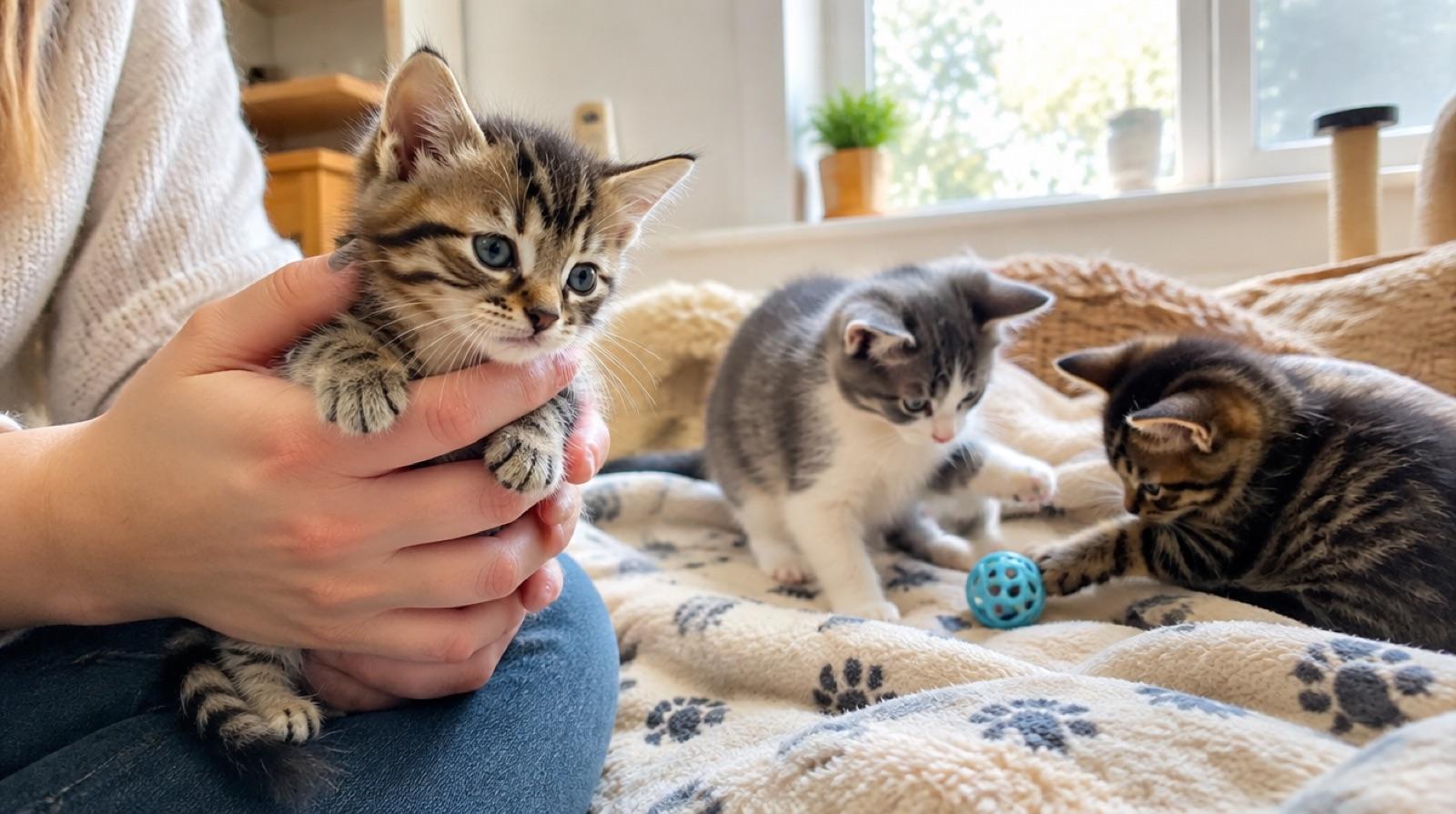
Where do kittens for sale in Australia come from?
Kittens reach buyers through six routes, and an ad rarely makes clear which one you are looking at:
- Rescues, shelters and council pounds. Kittens from stray and surrendered litters, often raised in foster homes. They are desexed, microchipped and vaccinated before adoption.
- Registered pedigree breeders. Members of a cat council such as ANCATS (Australian National Cats), the Australian Cat Federation or the Co-Ordinating Cat Council of Australia, or a state body such as the Feline Association of South Australia.
- Accidental litters. An undesexed pet cat has kittens and the owner advertises them. Most states now require these sellers to follow the same advertising rules as breeders.
- Backyard breeders. People breeding popular-looking cats for sale without registration or health testing.
- Pet shops. In Victoria, a pet shop can only sell cats from registered pounds, shelters or foster carers.
- Owners rehoming a cat. Usually adults, sometimes a young cat that did not suit its first home.
Then there are fake sellers, who copy the look of a breeder or a rescue to take payment for kittens that do not exist. The checks further down work whoever you are dealing with.
Why there are so many rescue kittens
Cats are seasonal breeders. RSPCA NSW explains that cats start breeding when the days lengthen, around August, and a queen can breed from about 4 months old and have up to two litters a season. Kittens then reach its shelters in big numbers from mid-October and keep arriving through spring, summer and most of autumn. RSPCA South Australia describes the same pattern: kittens arrive in waves, unlike the steady trickle of puppies. So if you want a kitten, the warm months are when rescues most need adopters, and the kittens pages show it.
Rescue, breeder, pet shop or classified: how do they compare?
| Where | Reference cost | What you get | What to check |
|---|---|---|---|
| Rescue, shelter or pound | About $150 to $450 for a kitten (fee table below) | Desexed, microchipped, vaccinated, vet checked, often foster-raised | That it is a real rescue: an application, an adoption contract, payment after you meet the kitten |
| Registered pedigree breeder | Varies by breed. Example: $1,000 to $1,600 for a Russian Blue (cat council figure); most councils publish none | A pedigree kitten, papers, known parents, usually a waiting list | Cat council membership, your state's number, the parents' health testing |
| Accidental or backyard litter | Anything, sometimes free | An undesexed, often unvaccinated kitten | Your state's ad number, the microchip number, the mother in person |
| Pet shop | Set by the shop | In Victoria, a cat from a rescue source; elsewhere, ask | Where the kitten came from, its vaccination certificate |
| Online classified or social media | Often below the going rate | The highest scam risk of any channel | Everything above, plus a live video call and no payment before you see the kitten |
Reference figures checked 9 November 2026: rescue fees from each rescue's own page (fee table below); the Russian Blue range from the Russian Cat Council of Australia. We found no Australian cat council page that publishes a Maine Coon price, so we do not quote one here. Not quotes: every seller sets its own price. Breed-by-breed detail is in our Maine Coon, Ragdoll and Bengal price guides.
What does each state require of kitten sellers?
Cat rules differ more between states than dog rules do. Some states require a number in every kitten ad and some have no scheme at all, and Queensland's well-known supply number covers dogs only. Here is what the official pages say, checked on 9 November 2026.
| State | What a kitten ad must show | Desexing and breeders |
|---|---|---|
| NSW | A microchip number, a breeder identification number or a rehoming organisation number (since 1 July 2019); cat breeders may use their recognised breeder number. Check it on the NSW Buyer Search | No sale before 8 weeks. The owner of a non-desexed cat over 4 months must pay an annual permit |
| VIC | A Pet Exchange Register source number plus each kitten's microchip number, including free-to-good-home ads. Check the source number on the register | Pet shops may only sell cats from registered pounds, shelters or foster carers, from 8 weeks |
| QLD | No state number for cats (the supply number is dogs only) | No state law requiring cats to be desexed; some councils do |
| WA | No source-number scheme | Cat Act 2011: cats must be microchipped, sterilised and registered by 6 months; breeding a litter needs a local government permit; a kitten must be microchipped and sterilised (or come with a prepaid sterilisation voucher) before it is sold |
| SA | Names, phone numbers and DACO breeder numbers of everyone involved in breeding and selling | Anyone breeding cats for sale, including accidental litters, must register as a breeder; cats born after 1 July 2018 desexed before 6 months or within 28 days of purchase |
| TAS | No source-number scheme | Cats over 4 months must be desexed, unless kept for breeding by a registered breeder or cat breeding permit holder, or a vet certifies desexing would harm the cat |
| ACT | The breeding licence number (licensed breeders), or the microchip number plus a seller identifier | A licence is needed to breed cats; a cat must be desexed from 3 months unless the keeper holds a permit |
| NT | No territory-wide scheme | Set by council by-laws; in Alice Springs, for example, premises where a cat is allowed to breed must be licensed |
Sources: NSW DPI, NSW Office of Local Government (cat permits), Agriculture Victoria, Queensland Dog Breeder Register, Queensland Government, WA Government, Dog and Cat Management Board, Cat Management Act 2009 (Tas), ACT City Services (cats), NT Law Handbook, Alice Springs by-laws. General information, not legal advice; follow the link for your state before you rely on a detail.
The two checks that work in every state
Wherever you live, ask for the kitten's microchip number and look up any breeder or source number yourself on the official register, not through a link the seller sends. The NSW Office of Local Government puts it bluntly: it does not recommend buying from a breeder who cannot provide identification numbers, or who suddenly stops the sale when you ask questions. That advice travels well.
See rescue kittens listed near you
Every kitten on these pages comes from a rescue, shelter or council pound we aggregate, with its desexing and microchip details on the profile. Each listing links to the rescue, where you apply directly.
How do kitten scams work, and how do you spot one?
Never pay for a kitten you have not seen with its mother, in person or at least on a live video call. A request for more money after the first payment, for a crate, transport, a vet check or insurance, is the scam showing itself.
Scamwatch says scammers set up fake websites, social media profiles and marketplace listings for popular breeds and pets that do not exist. Its advice: view the kitten in person by visiting the breeder or seller, ask for a video call if you cannot visit, check the breeder is legitimate and accredited, and compare prices, because a very cheap kitten is likely a scam. Kitten scams lean on the most wanted breeds, which is why our Maine Coon and Ragdoll guides cover the breed-specific versions.
The red flags worth knowing:
- A shipping company you have never heard of. WA ScamNet names fake kitten websites linked to fake pet transport companies, and its pet scam warnings describe sellers who keep asking for more money for crates, shipping, insurance or vaccines.
- A new or renamed page. WA Consumer Protection advises checking a profile's page transparency: a page created recently or renamed several times is a warning sign.
- Photos that appear elsewhere. Run a reverse image search on the kitten and the seller's profile pictures.
- Bank transfer only. WA Consumer Protection warns about sellers who will not take a credit card or PayPal, which give you more protection if the kitten never arrives.
- “Hypoallergenic” kittens. ASCIA says all cat breeds can cause allergies, so a seller promising an allergy-free breed is selling a claim, not a fact.
- No numbers. No microchip number, and no breeder or source number in a state that requires one.
If you have already paid, contact your bank straight away, report it to Scamwatch, and report the page to the platform it was on. Scamwatch also points people to IDCARE (1800 595 160) if they shared personal or account details.
What do rescue kittens cost?
A rescue kitten typically costs between about $150 and $450 at the rescues below (fees checked 9 November 2026, not quotes), and the fee normally covers desexing, microchipping, vaccination and a vet check. Desexing alone is a real cost if you buy an undesexed kitten privately.
| Rescue | State | Kitten fee | Checked |
|---|---|---|---|
| RSPCA NSW | NSW | $270 (under 6 months); adult cat $220 | 9 Nov 2026 |
| Cat Protection Society of NSW | NSW | $150 per cat or kitten, $250 for two | 9 Nov 2026 |
| RSPCA Victoria | VIC | $235 to $400 (under 5 months), shown on each profile | 9 Nov 2026 |
| Sunshine Coast Animal Refuge (SCARS) | QLD | Kittens from $250 | 9 Nov 2026 |
| Cat Haven | WA | $425 (8 weeks to 6 months) | 9 Nov 2026 |
| Ten Lives | TAS | $450 for a kitten | 9 Nov 2026 |
| RSPCA ACT | ACT | $375 (under 6 months) | 9 Nov 2026 |
Fees as published by each rescue on the date shown. A reference, not a quote: rescues change fees, run promotions and price some cats individually. RSPCA South Australia publishes no standard fee schedule, so we have not quoted one.
Two kittens are often easier than one: they play with each other instead of your ankles, and some rescues discount a pair, as the Cat Protection Society of NSW does. Sydney readers can browse bonded pairs as well as single kittens.
When is a registered cat breeder the better choice?
Rescue is not the right answer for everyone. A registered breeder is a reasonable choice if you have set your heart on a specific pedigree breed for its known look and temperament, because pedigree kittens rarely reach rescue. It also suits buyers who want to show or who already know a breed well.
If that is you, check the breeder before you pay anything:
- Cat council registration. Ask which council the breeder is registered with and confirm it with that council. ANCATS has a public “Check a Member” lookup.
- The state number. Microchip or breeder number in NSW, source number in Victoria, DACO number in South Australia, licence number in the ACT. Look it up yourself.
- Health testing on the parents. Ask what the breed club recommends and ask to see the results. A breeder doing the work will show you without being pushed.
- Meet the mother and the kittens where they are raised, in person or on a live video call you start.
- A written contract covering desexing, health problems and whether the breeder will take the cat back.
Not sure what kind of cat suits you? Try the what cat breed am I quiz, or dog or cat? if you are still deciding on the species.
Why adopting a kitten is the lower-risk route
A rescue kitten has usually been vet checked, desexed (or booked in), microchipped and vaccinated before it goes home, and many are raised in foster homes where carers see how they handle people, children and other pets. You meet the kitten before you pay, through an application and an adoption contract, which removes the scam risk in this guide almost entirely. The cost of desexing and first vaccinations is already inside the fee.
If a kitten feels like a lot of work for your household, look at young adult cats too. A cat of one or two still has a long life ahead, its personality is already clear, and it is usually cheaper to adopt. Our guide to kitten blues is honest about the first few weeks with a new kitten.
Find a rescue kitten near you
- Kittens for adoption in Sydney
- Kittens for adoption in Melbourne
- Kittens for adoption in Brisbane
- Kittens for adoption in Perth
- Kittens for adoption in Adelaide
- Also: Canberra, Hobart, Darwin, Gold Coast and Newcastle.
If allergies are a worry, read our guide to hypoallergenic cats first, and if you are not ready to commit, fostering a kitten through a rescue is a way to help during kitten season. Weighing up a puppy instead? Our guide to puppies for sale in Australia covers dog breeder rules and puppy farms, and the adoption readiness check takes five minutes before you apply.
Frequently asked questions
Where is the best place to get a kitten in Australia?▼
For most people, a rescue, shelter or council pound. Australian shelters take in large numbers of kittens every warm season, and a rescue kitten comes desexed, microchipped and vaccinated. If you want a particular pedigree breed, buy from a breeder registered with a cat council such as ANCATS, the Australian Cat Federation or the Co-Ordinating Cat Council of Australia, who can also show the number your state requires. Avoid any seller you cannot visit and who wants money first.
How much does a kitten cost in Australia?▼
A rescue kitten costs about $150 to $450 at the rescues whose fee pages we checked on 9 November 2026, usually desexed, microchipped and vaccinated. A pedigree kitten from a registered breeder costs much more: the Russian Cat Council of Australia, for example, says Russian kittens are generally priced between $1,000 and $1,600. Most cat councils publish no price for their breeds. These are reference figures, not quotes.
When is kitten season in Australia?▼
Roughly spring to autumn. RSPCA NSW says cats start breeding when the days lengthen, around August, and that kittens arrive at its shelters in big numbers from mid-October through spring, summer and most of autumn. RSPCA South Australia describes kittens arriving in waves, unlike the steady trickle of puppies. That is when rescues have the most kittens to rehome.
How do I know if a kitten ad is a scam?▼
Scamwatch says scammers set up fake websites and social media profiles for pets that do not exist, and that a very cheap price is likely a scam; its advice is to view the pet in person, or on a video call if you cannot visit. WA ScamNet has named fake kitten websites linked to fake pet transport companies, and describes sellers asking for extra money for a crate and shipping. If you cannot see the kitten with its mother, live, before you pay, walk away.
Do kitten sellers need a breeder number?▼
In several states, yes. NSW ads must include the kitten's microchip number, a breeder identification number or a rehoming organisation number. Victorian ads need a Pet Exchange Register source number and the microchip number. South Australian ads need the DACO breeder numbers of everyone involved, and ACT breeders need a breeding licence. Queensland's supply number is for dogs only, so it does not apply to kittens.
How old should a kitten be before it leaves its mother?▼
At least 8 weeks. The NSW Office of Local Government says breeders may only sell puppies or kittens after they are 8 weeks old, and Victoria's pet shop rules set the same minimum for cats. Many pedigree cat breeders keep kittens longer than that, which is normal and a good sign.
Is any kitten breed hypoallergenic?▼
No. The Australasian Society of Clinical Immunology and Allergy (ASCIA) says that as all cats have sebaceous glands, all cat breeds can cause allergies, and that includes hairless cats. A seller promising an allergy-free kitten is making a claim no allergist would. The only reliable test is time with the specific cat, so talk to your doctor before you commit.
Should I adopt a kitten or an adult cat?▼
It depends on your home. A kitten needs supervision, play and training for months, and its adult personality is still forming. An adult cat from a rescue arrives with its temperament known, is often calmer, and is usually cheaper to adopt. If you have a busy household or work long hours, an adult or a pair of kittens is often an easier fit than a single kitten.
Can I return a kitten I bought from a breeder in NSW?▼
Under the NSW Breeding Code, a buyer can return a kitten within 3 days and receive a 50% refund if it is not acceptable for any reason, according to NSW DPI. In Victoria, a registered pet shop must refund or replace an animal within 7 days if a vet supports a health problem, and refund 75% if it is returned within 3 days for any other reason. A rescue will usually take a cat back if the adoption does not work, so ask about it before you sign.
Is it better to buy a pedigree kitten or adopt a moggy?▼
For most households a moggy, the Australian name for a mixed-breed cat, makes a fine pet and costs a fraction of a pedigree kitten. Buy a pedigree if you want a breed's known look and temperament and you will check the breeder's registration and health testing. Adopting is the faster and lower-risk route if what you want is a healthy, friendly cat.
Where can I see rescue kittens near me right now?▼
LocalPetFinder lists kittens from the rescues, shelters and council pounds we aggregate in each city, refreshed regularly. Start with the kittens page for Sydney, Melbourne, Brisbane, Perth or Adelaide, set an alert so you hear about new kittens early, and apply directly with the rescue from the listing.
Sources
- Scamwatch: Buying and selling scams (pet scams)
- WA Government: Pet scammers off the leash on social media
- NSW DPI: Selling or giving away a cat or dog
- NSW Office of Local Government: Find a responsible breeder
- NSW Office of Local Government: Breeder responsibilities
- NSW Office of Local Government: Non-desexed cat and dog fees
- NSW DPI: Buying or adopting a cat
- Agriculture Victoria: Pet Exchange Register
- Agriculture Victoria: Pet shops
- Dog and Cat Management Board (SA): Breeding and selling
- Tasmanian Legislation: Cat Management Act 2009
- ACT City Services: Animal welfare (buying, selling and breeding)
- NT Law Handbook: Dogs and other animals
- NT Legislation: Alice Springs (Animal Management) By-laws 2008
- Queensland Government: Laws for pet owners
- WA Government: Laws for responsible cat owners
- WA ScamNet: Pet scams
- RSPCA NSW: Kitten season
- RSPCA South Australia: SA kitten season
- ASCIA: Pet allergy
- Russian Cat Council of Australia: Buying a Russian
Keep reading
Kittens for adoption in Sydney
Rescue kittens listed across the Sydney shelters we aggregate, each with its rescue, fee and desexing details.
Puppies for sale: adopt or buy?
The same question for puppies: dog breeder numbers by state, puppy farm rules, and what rescue puppies cost.
Kitten blues and adoption regret
Feeling overwhelmed in the first weeks is common. What helps, and what rescues advise while a new cat settles.
What cat breed am I?
A quick quiz on energy, coat and household to see which kind of cat suits you before you start looking.