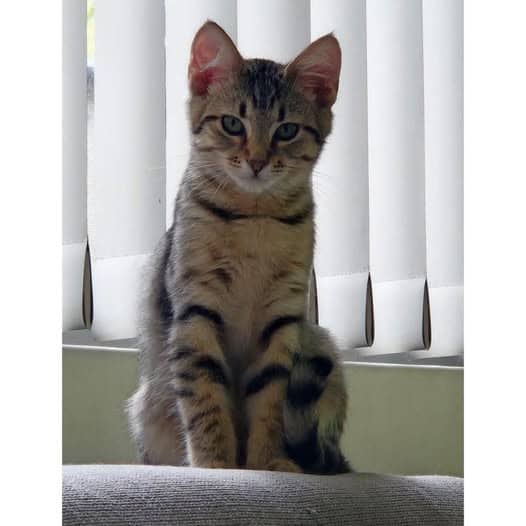
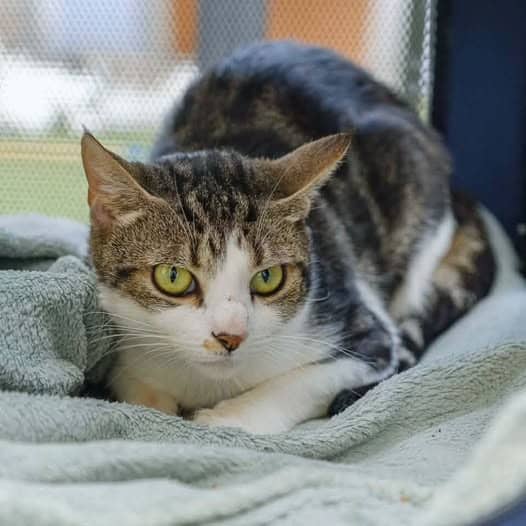
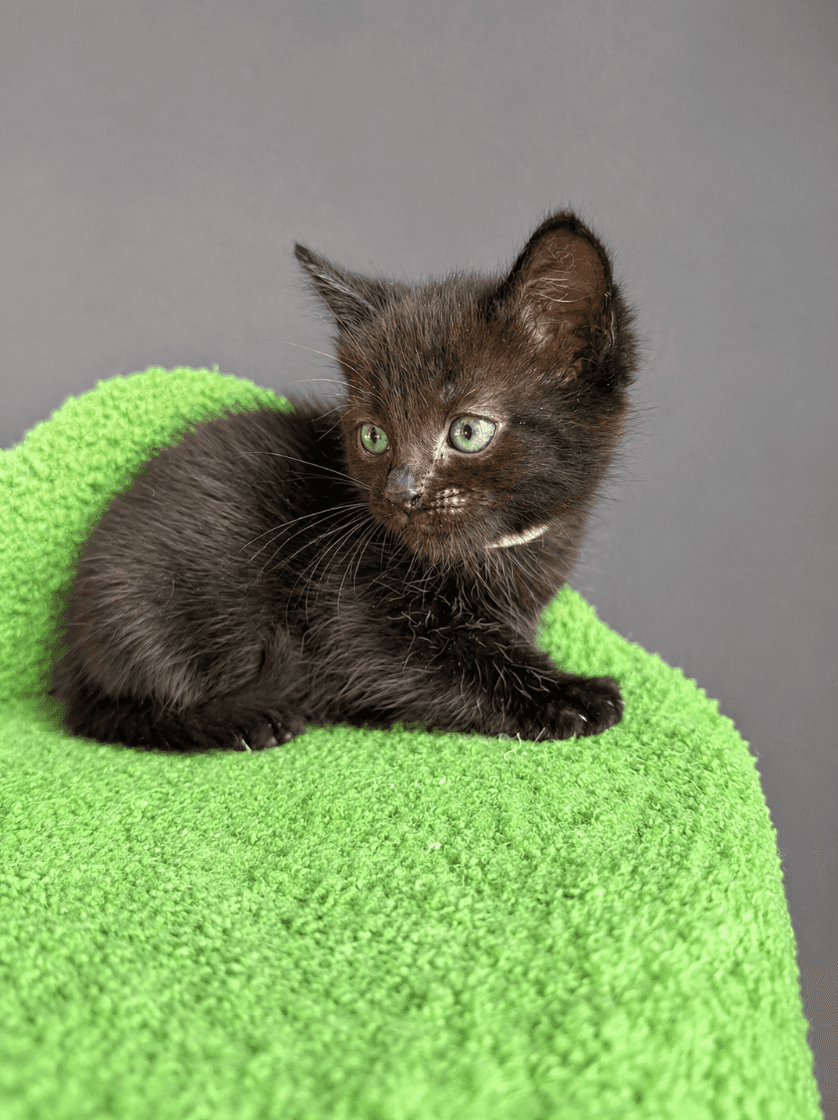
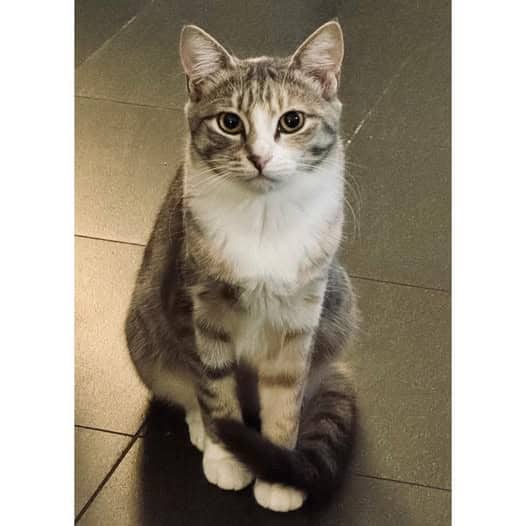
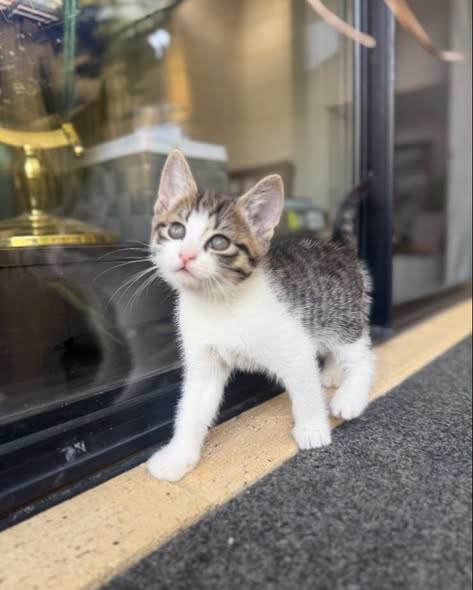
Bambi
8 weeks • Domestic Shorthair
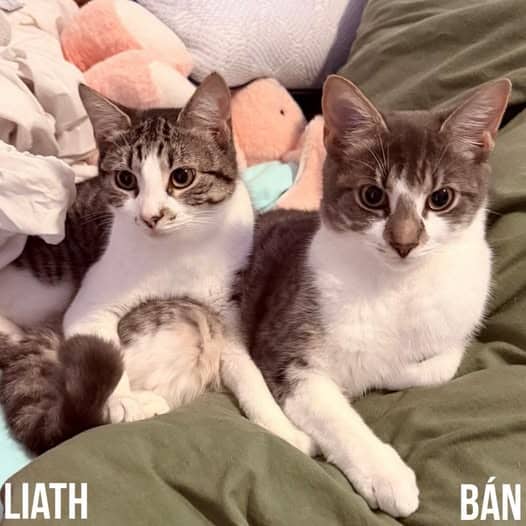
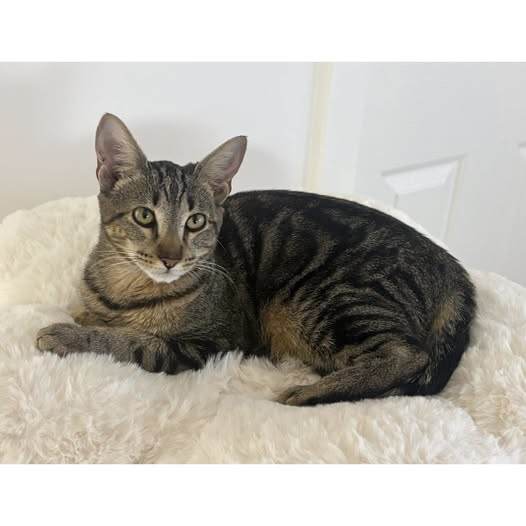
Benedict
1 month • Domestic Shorthair
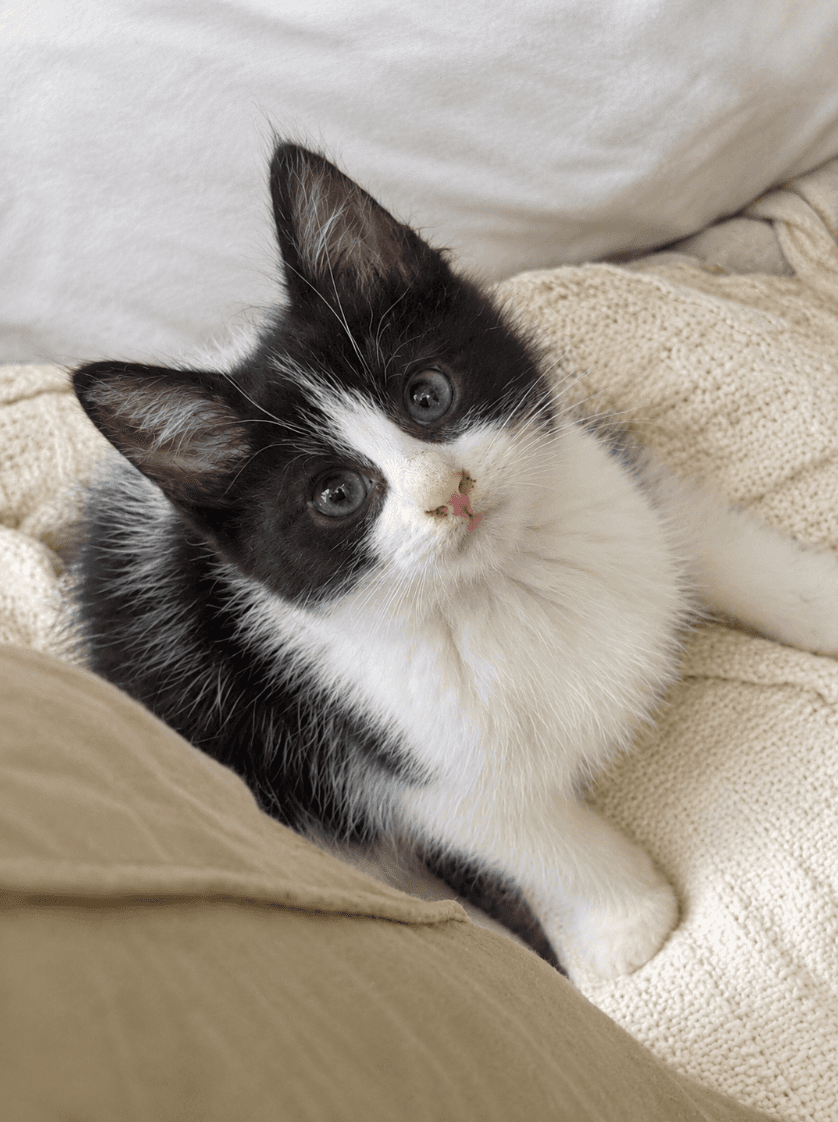
Bertie
6 weeks • Domestic Shorthair
Get notified about new kittens in Perth
We will email you when new rescue kittens become available in Perth, so you can be among the first to meet them.
Browse Perth Kittens by Coat and Colour
Pedigree kittens almost never reach rescue. What you will find in Perth is domestic short and medium hairs in every colour, so the useful way to narrow the list is by coat. Each card opens the Perth page for that type, all ages included, where you can set an alert for new arrivals.
Domestic Short Hair kittens →
Nearly every rescue kitten is one. Short, easy-care coats in every colour, and the widest choice on any given day.
Domestic Medium Hair kittens →
A little more fluff, a little more brushing. The next most common coat in rescue after the short hairs.
Tabby kittens →
The classic striped coat, in grey, brown and ginger. Tabbies make up a large share of every kitten season.
Tuxedo kittens →
Black with white chest and paws. Popular, so a tuxedo kitten tends to be adopted quickly once listed.
Black kittens →
Often the last to be chosen and some of the sweetest cats in care. A black kitten usually waits longest for a home.
Ginger kittens →
Orange tabbies, mostly male. Outgoing and food-motivated as a rule, and in steady demand.
Calico kittens →
White with patches of orange and black, almost always female. Striking, and rarely in care for long.
Tortoiseshell kittens →
Mottled black and orange without the white. Torties have a reputation for big personalities.
Kitten adoption in Perth is highly competitive. Kittens are often listed and adopted within days, especially during the warmer months when kitten season peaks. The cats below are typically under 12 months old and come from Perth and Western Australia cat rescues or from owners rehoming them. Rescue kittens have all started vaccinations and most are desexed before adoption.
Adopting a kitten is rewarding but a real commitment. Plan for 15+ years of care, multiple vet visits in the first year, and the energy that comes with a young cat. Kittens climb, chew, and play hard. Two kittens adopted together actually settle faster and entertain each other better than a single kitten alone, which is why many rescues offer pair discounts.
Perth kitten adoption fees are typically a few hundred dollars (the exact fee is on each profile), including desexing, first vaccinations, worming, microchipping, and a vet check. Listings update regularly. If you do not see one you love, check back tomorrow. New kittens come in constantly during the warmer months.
What to Expect in Your Kitten's First Year
Kittens grow fast, and the cat you bring home changes almost weekly. In the first few months they are all instinct and energy, learning to hunt, pounce, and climb by practising on everything in reach. By around six months most kittens have settled into a recognisable personality, though the playful, boisterous phase continues well into their second year. Understanding these stages helps you set realistic expectations rather than being surprised when a sweet ten-week-old turns into a furniture-scaling teenager.
Expect real energy. A healthy kitten will sprint, wrestle, and get the zoomies at unpredictable hours, often early morning or late at night. This is normal and passes as they mature, but it means the first year rewards households that can offer plenty of interactive play. Short, frequent play sessions with a wand toy tire a kitten out far more effectively than leaving them alone with a basket of toys, and a tired kitten sleeps through the night more reliably.
The first year also carries the heaviest vet schedule of a cat's life. Kittens need a course of vaccinations spaced a few weeks apart, worming and flea treatment, and a desexing procedure if the rescue has not already done it before adoption. Most Perth and Western Australia rescues desex before rehoming, but always confirm what has been done and what is still due. Booking in with your local vet early means you have a professional who knows your kitten from the start.
Nutrition matters more in this stage than at any other. Growing kittens need food formulated for their life stage, fed more frequently than an adult cat, because their small stomachs cannot hold a full day's energy in one sitting. Your vet can advise on portions and how to transition to adult food as your kitten approaches twelve months. Getting the foundation right in year one sets up fifteen or more years of good health.
Kitten-Proofing Your Home
A curious kitten treats your home as a playground and an obstacle course, so a little preparation prevents most accidents. Before your kitten arrives, walk through each room at their eye level and look for hazards. Loose cords, dangling blind pulls, small objects that could be swallowed, and gaps behind appliances where a kitten might hide or get stuck are the usual culprits. Securing or removing these early is far easier than chasing a kitten out of trouble later.
Kittens chew and bat at almost anything, which makes some common household items genuinely dangerous. Many indoor plants are toxic to cats, and lilies in particular are extremely dangerous, so check any greenery before bringing a kitten home. Keep medications, cleaning products, and human foods that are unsafe for cats well out of reach. If you are ever unsure whether something has been eaten, call your vet rather than waiting to see what happens.
The essential supplies are straightforward: a litter tray placed somewhere quiet and easy to reach, a scratching post so your kitten learns where it is acceptable to scratch, food and water bowls kept apart from the litter, and a few safe toys. A cat carrier is worth buying before adoption day so the trip home is calm and secure. A tall cat tree or some vertical climbing space gives a kitten a legitimate outlet for the urge to climb and a safe perch to survey the room.
Because Perth rescues rehome kittens as indoor or contained cats, your home is their whole world, so enrichment is part of proofing it. A window perch, a rotating selection of toys, and a couple of cardboard boxes go a long way. Give your kitten a small, quiet room to settle into for the first few days rather than the run of the whole house, then expand their territory gradually as their confidence grows.
The Real Cost of Raising a Kitten
The adoption fee is the smallest part of owning a cat, but it is also the best value. A Perth kitten adoption fee, usually a few hundred dollars, already covers desexing, the first vaccinations, worming, microchipping, and a vet check. Buying a kitten privately with none of that done typically costs far more and leaves those procedures still ahead of you. Adoption front-loads the veterinary work into one modest fee.
Beyond adoption, budget for the setup: a litter tray and litter, food bowls, a scratching post, a carrier, a bed, and some toys. These are mostly one-off purchases that last for years. The ongoing costs are food, litter, flea and worm prevention, and annual vet checkups. A young cat is generally cheap to run once the first year of vaccinations is behind you, so the main variable is how much you choose to spend on food and extras.
The first year does cost more than later years because of the vaccination course and, if not already done, desexing. After that, a healthy indoor cat mostly needs an annual checkup and routine parasite prevention. Setting aside a small amount each month, or taking out pet insurance while your kitten is young and has no pre-existing conditions, spreads the cost of the occasional unexpected vet visit and takes the sting out of emergencies.
Think of the total commitment across the cat's whole life rather than just the upfront fee. A kitten adopted today may be with you for fifteen or twenty years, and the costs of food, litter, and routine care add up steadily over that time. It is a modest ongoing expense for most households, but it is a genuine one, and going in with clear eyes is part of being a good adopter.
One Kitten or Two? The Case for Pairs
It sounds counterintuitive, but for most households two kittens are easier than one. A single kitten has enormous energy and no natural outlet for it during the hours you are at work or asleep, which is when the furniture-climbing and midnight zoomies tend to happen. Two kittens burn that energy on each other, wrestling and chasing until they collapse together for a nap, which usually means less destruction and fewer demands on you.
Kittens also learn important social skills from each other. Play-fighting with a sibling teaches bite inhibition and boundaries in a way a human hand cannot, so paired kittens are often better mannered as adults. They comfort each other during the stressful first days in a new home, settle faster, and are less prone to the loneliness and attention-seeking behaviour that single kittens in busy households can develop.
The extra cost of a second kitten is smaller than people expect. Many Perth and Western Australia rescues actively encourage pair adoption and offer a reduced fee for two, and the marginal running cost is mostly a little more food and an extra litter tray. You still need the rule-of-thumb one litter tray per cat plus one spare, and separate feeding spots, but two cats do not need double the space or double your attention.
A pair is not right for everyone, and a single kitten can absolutely thrive with an engaged owner who offers plenty of play. But if you both work full time, or you simply want your kitten to have company, adopting two together is one of the kindest and most practical choices you can make. If you already have a calm resident cat, that companion can serve a similar role for a single new kitten introduced slowly.
Litter Training and Early Socialisation
The good news about litter training is that kittens are hardwired for it, and most arrive already using a tray reliably. Cats instinctively bury their waste, so your job is mainly to provide an appropriate tray, keep it clean, and place it somewhere quiet and easy to reach. Use a low-sided tray a young kitten can climb into, keep it away from food and water, and scoop daily. Accidents in the first days are usually about a tray that is hard to find, not a training failure.
If a previously reliable kitten starts having accidents, resist the urge to scold. Cats do not connect punishment with the act, and stress only makes toileting problems worse. Sudden changes in toilet habits can also signal a health issue, so a kitten that strains, cries in the tray, or stops using it is worth a call to your vet. Rule out medical causes first, then look at whether the tray is clean, quiet, and welcoming.
Socialisation is the other great gift you give a young kitten. The early months are when a kitten learns what is normal and safe, so gentle, positive exposure to handling, household sounds, visitors, and the cat carrier pays off for life. Let your kitten approach new things at their own pace, reward calm curiosity with treats and praise, and never force an interaction. A well-socialised kitten grows into a confident, easygoing adult.
Handling every day, especially of paws, ears, and mouth, makes future grooming, nail trims, and vet visits far less stressful. Practise short, calm carrier trips so the carrier becomes ordinary rather than a signal of something scary. If children are part of the household, teach them to sit quietly and let the kitten come to them, and to respect the kitten's signals when it wants to stop. Kind, consistent early experiences are the foundation of a friendly cat.
Bringing Your Kitten Home
The trip home sets the tone, so keep it calm. Bring your kitten home in a secure carrier rather than loose in the car or in your arms, and drive gently and quietly. A carrier feels enclosed and safe to a nervous kitten, and it is also the responsible way to travel. Have the carrier ready before adoption day so the whole process is smooth from the moment you collect your new cat.
Resist the urge to give a new kitten the run of the whole house on day one. A single quiet room with a litter tray, food and water, a bed, and somewhere to hide is far less overwhelming than an entire home, and it lets the kitten build confidence in a small, manageable space. Sit with it quietly, let it approach you, and do not force interaction while it is finding its feet.
Expect a settling-in period of anything from a few days to a couple of weeks. Some kittens bounce out of the carrier ready to explore, while others hide under the bed at first, and both are normal. As your kitten grows bolder, open up the rest of the house gradually rather than all at once, so each new area is a manageable step rather than a flood of new territory.
Keep the early days low-key. Hold off on visitors, loud gatherings, and big changes while your kitten adjusts, and keep feeding times and the litter tray consistent so the world feels predictable. If you have other pets, introduce them slowly and under supervision rather than face to face on the first day. A patient, gentle start builds the trust that turns a wary kitten into a confident, affectionate cat.
Where Perth rescue kittens come from
Most of the kittens we list for Perth come through Perth Rescue Angels, a volunteer, foster-based cat rescue across the metro area. Its kittens live in foster homes, and some wait in pet-store adoption corners, which is why a listing name can include a store and suburb. The rest come mainly from Cat Haven, Western Australia's largest cat shelter, on Lemnos Street in Shenton Park, and from the foster network at SAFE Perth.
Kitten numbers climb through the warmer months, when unplanned litters arrive, and thin out in winter. If you want a kitten in the cooler months, be ready to apply quickly, or look at a teenage kitten of six to twelve months, whose personality is easier to read.
What a kitten costs in Perth
Perth's two biggest cat rescues publish their prices. Perth Rescue Angels lists $400 for a cat up to 8 months old, with $50 off when you adopt a pair, and notes that its fees are a guide and can change. Cat Haven charges $425 for a kitten from 8 weeks to 6 months and $230 for a teenager of 6 to 12 months. Both fees include desexing, a microchip, vaccination and a vet check, and Perth Rescue Angels includes flea and worm treatment as well.
In WA that desexing is not optional extra value: the Cat Act 2011 requires every cat to be sterilised by six months of age, so a privately bought kitten still has that bill ahead of it. Adopting two kittens together is often the better plan anyway, since a pair keeps each other busy, and the pair discount softens the second fee.
WA's Cat Act: microchip, sterilise, register
Western Australia's cat law is strict, and unlike Victoria it covers desexing. Under the Cat Act 2011, every cat must be microchipped, sterilised and registered with its local government by six months of age, and a kitten cannot be sold or handed to a new owner until it is microchipped. A vet can certify an exemption only on health grounds. Rescue kittens arrive microchipped and, once old enough, sterilised, which leaves council registration to you.
Registration fees are set by each council and are lower for a sterilised cat, so check your own council rather than a single Perth figure; the City of Perth's pets and animals page is one example. Some councils also have cat containment or prohibited-area rules under the Cat Act, so confirm your council's local law before you plan for an outdoor cat.
Spotting a fake kitten listing
WA ScamNet has warned about fake kitten websites and fake transport companies that charge crate, shipping, vet-check or travel-insurance fees for a kitten that does not exist. The WA microchip rule is your best check: a kitten must be chipped before it changes hands, so ask for the microchip number before you pay anything, and never pay a deposit or delivery fee for a kitten you have not met. Report anything suspicious to WA ScamNet or Scamwatch.
The first weeks at home in Perth
Book a vet visit in the first week to finish the vaccination course and set up year-round flea and worm prevention. The paralysis tick is not established in WA, so tick prevention only becomes a question if you take your cat east to Queensland or coastal New South Wales.
Perth summers are long and hot, so give an indoor kitten a cool room, fresh water and shade, and never leave one in a parked car. Keeping a kitten indoors or in a secure enclosure from the start is much easier than containing a roaming adult later, and it keeps a young cat off the roads. If your kitten becomes suddenly unwell after hours, Animal Emergency Service in Cannington and Osborne Park and The Animal Hospital at Murdoch University are both open 24 hours.
Kittens in Perth apartments and rentals
An indoor kitten suits apartment living well, provided it has climbing space, scratching posts and daily play to burn off energy. Before you apply, check that your lease or your strata by-laws allow a cat, because a rescue will ask and a confirmed placement protects the kitten from being returned. If you are out for long days, two kittens adopted together usually settle better in a unit than one kitten alone.
Kitten Adoption FAQ
Tap a question to expand
How much does it cost to adopt a kitten in Perth?▼
Should I adopt one kitten or two?▼
When is kitten season in Perth?▼
Are rescue kittens in Perth indoor only?▼
What supplies do I need before bringing a kitten home?▼
How do I introduce a new kitten to my existing cat?▼
What should I feed a rescue kitten?▼
Are these kittens for sale in Perth?▼
Where can I find free kittens for adoption near me in Perth?▼
Where can I find kittens for adoption near me in Perth?▼
Towns near Perth
Adoptable cats in towns near Perth, with any pets based in that town listed first.