The short answer
A Bengal kitten from a registered Australian breeder is about $1,500 to $3,500, with some breeders above that. When we checked in October 2026, most registered-breeder listings sat between $2,950 and $3,600. The fee should cover desexing, vaccinations, a microchip, and DNA and heart screening on the parents. Since 1 March 2025 Bengals cannot be imported, so every kitten sold here is Australian bred. The cheaper route is rescue: Bengals and Bengal crosses reach shelters more often than most pedigree cats because their energy surprises buyers, and a rescue charges its normal cat fee, roughly $150 to $270 in NSW.
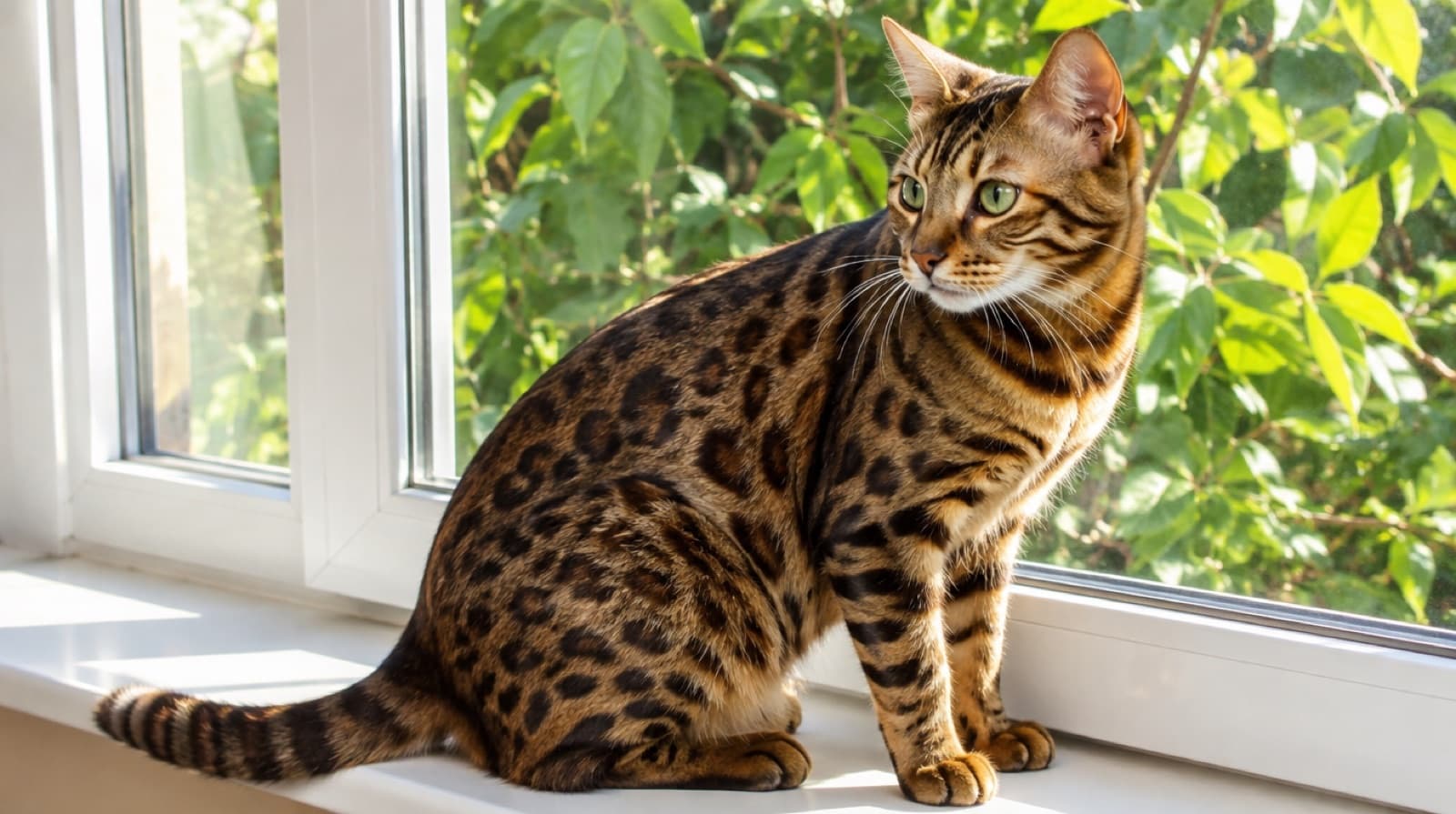
What does a Bengal kitten cost from a registered breeder?
About $1,500 to $3,500 for a pet-quality kitten, and some registered breeders ask more. No registry or insurer publishes a Bengal price, so that is an editorial range drawn from registered-breeder listings and pet-retail price guides we read in October 2026. The breeder listings we read mostly sat between $2,950 and $3,600, and one retail price guide quoted as much as $5,000 for a kitten. Show-quality kittens and the less common colours sit at the top of the range or above it.
The price moves with three things. The first is what the kitten comes with, covered below. The second is the colour and how closely the rosettes match the standard. The third is supply. Since 1 March 2025 no new Bengals can enter Australia, so every breeder works from lines that were already here, and prices tend to hold rather than fall.
Retired breeding adults are sometimes rehomed by breeders for less than a kitten. If you want the breed but not the kitten stage, ask. The same cat a few years older is often a better fit for a working household anyway.
What should that price include?
A registered breeder's fee should cover the kitten's own vet work and the parents' health screening. If any of these is missing, the kitten is not cheaper, it is just unfinished, and you will pay for the gap yourself. Ask for paperwork on each point before you pay a deposit:
- Desexing before the kitten leaves, or a signed agreement for when it happens.
- Vaccinations to date, with the vet card, and a microchip already registered.
- DNA clearance on the parents for the two inherited conditions Bengal breeders test for: PRA-b, a form of progressive retinal atrophy that causes blindness, and PK deficiency, a red blood cell disorder. A kitten from two clear parents cannot inherit either.
- Heart screening on the parents by a veterinary cardiologist, because heart disease is the condition responsible Bengal breeders watch for most closely. A DNA test does not replace this scan.
- Registration papers from a recognised body, showing the kitten's pedigree and the breeder's prefix.
In New South Wales there is also a legal backstop. Under the NSW Breeding Code, a buyer who returns a kitten to the breeder within 3 days receives a 50% refund, as set out on the NSW DPI buying a dog or cat page. Three days is not long, so book your own vet check for the day you bring the kitten home.
How do you check a breeder is actually registered?
You look the breeder up yourself, on the registry's own site, rather than trusting a logo on an advert. Australia has several cat registries and a breeder only needs to belong to one, so ask which one and then check that list:
- ANCATS (Australian National Cats Inc) runs a public Check a Member lookup. Type the breeder's name or prefix and see whether they appear.
- The Australian Cat Federation (ACF) is a federation of state cat bodies. Its member list tells you which state body to contact to confirm a breeder.
- The Co-Ordinating Cat Council of Australia (CCCA) is a national council with its own affiliates and breed standards.
- Cats Australia is the TICA charter club in Australia, so a breeder working under TICA rules will usually be found here.
A breeder who will not say which body they are registered with, or who names one and does not appear on it, is not a registered breeder. Walk away however good the photos are. Also ask to see the kitten with its mother, in the home where it was raised, before any money changes hands.
Are Bengal cats legal in Australia? The import ban and the state rules
Two separate sets of rules apply: a federal rule on bringing Bengals into the country, and state rules on keeping them once they are here. Read both before you buy, and read them again if you plan to move interstate with the cat.
Federal: no Bengal imports since 1 March 2025
From 1 March 2025 Bengal cats are no longer permitted to enter Australia. Since 2013 an importer had needed to prove a Bengal was five generations removed from the Asian leopard cat, and the Department of Climate Change, Energy, the Environment and Water (DCCEEW) announced in December 2024 that this exemption would end. The department's live import list now states that the fifth-generation exemption no longer applies. In practice, every Bengal kitten offered in Australia today was bred here, and an advert offering to import one for you is either out of date or a scam.
State by state: keeping a Bengal
Keeping a Bengal is governed by each state's biosecurity or pest-animal law. We opened the primary pages on 18 October 2026 and found three states that are clear:
- Victoria: the prohibited pest animal schedule under the Catchment and Land Protection Act excludes both the domestic cat (Felis catus) and the Felis catus x Prionailurus bengalensis cross, so Bengal hybrids are not prohibited (Agriculture Victoria).
- Queensland: the domestic cat and the Prionailurus bengalensis x Felis catus cross are not prohibited matter, and the state places no restriction on cats as pets (Queensland Government).
- Tasmania: the Cat Management Act 2009 defines a cat as Felis catus or a hybrid of that species, and there is no restriction on bringing cats into Tasmania.
For New South Wales, South Australia and Western Australia we could not find a page that sets out a Bengal-specific rule. Do not assume that means anything either way. Check your state's biosecurity or declared-animal list before buying an early-generation Bengal, and ask the breeder in writing how many generations the kitten is from the Asian leopard cat. Most pet Bengals from registered breeders are many generations removed, which is the type the rules are least concerned with.
Whatever the state, the ordinary cat laws still apply to a Bengal: microchipping, desexing where your state or council requires it, council registration, and any local cat curfew or containment rule. A Bengal is a domestic cat in the eyes of your council.
How do Bengal kitten scams work?
The same way puppy scams do, with a prettier photo. A seller you found through a search or a social post offers a rosetted kitten at a fraction of the price above. The kitten is interstate, so you cannot visit. You pay a deposit, then a transport fee, then a crate fee or a vet certificate fee, and the kitten never arrives because it never existed.
The scale is real. In March 2018 the ACCC reported more than $310,000 lost to puppy scams in the previous 12 months, across 584 reports, with scammers asking for transport or medical costs before delivery. Kitten scams follow the same script, and a pedigree with a high headline price is the ideal bait because a “bargain” still looks plausible at a thousand dollars.
Scamwatch's current guidance is short: view the pet in person, ask for a video call if you cannot, compare the price with other sellers, and treat a very cheap pet as a likely scam. Add the registry check above and you have closed almost every door a scammer uses. A real registered breeder will let you visit, will show you the mother, and will not ask you to pay a courier before you have met the cat.
Can you adopt a Bengal in Australia instead?
Yes, and more often than with most pedigree cats. Purebred cats of any breed are rare in rescue, but Bengals reach shelters and rescue groups at a higher rate than their numbers suggest, for a simple reason: buyers fall for the coat and then meet the cat. A Bengal is high energy, vocal and demanding. It climbs the fridge, opens cupboards, talks back and wants interactive play several times a day. When the novelty wears off and the household cannot keep up, the cat is surrendered, often as a young adult.
Across the rescues we aggregate, Bengals and Bengal crosses do appear, and young adults are the most common age. They rarely wait long, so the practical move is to set an alert on our adoptable Bengals and crosses page and act when one is listed. Bengal crosses, which carry the spotted or marbled coat on a calmer domestic temperament, come up more often than purebreds and suit most homes better.
You pay the rescue's standard cat fee, not a breed premium. The NSW rescues below publish their fees on their own sites; rescues in other states publish theirs. In every case the fee buys more vet work than a breeder's price does per dollar.
| Route | Typical cost (AUD) | What it includes |
|---|---|---|
| Registered breeder, pet-quality kitten | About $1,500 to $3,500, some above | Desexing, vaccinations, microchip, pedigree papers, parents' DNA and heart screening |
| RSPCA NSW | Kitten (under 6 months) $270; cat (over 6 months) $220 | Desexing, microchipping, vaccinations, health checks |
| Cat Protection Society of NSW | $150 per cat or kitten; $250 for two | Vet check, desexing, microchip, first vaccination, flea and worm treatment |
| Animal Welfare League NSW | Kittens (6 months and under) $270; adults (7 months to 8 years) $230; seniors (8 years and over) $170 | Desexing, microchipping, vaccination, free lifetime registration |
Breeder figures are an editorial range read in October 2026. Rescue fees are from each organisation's own page or manual, read 18 October 2026, and can change.
If you are in Sydney, the Sydney cat adoption listings show every cat the local rescues currently have, including any Bengal types. Filter by breed and check back; rescue inventory changes daily.
Is a Bengal the right cat for you?
Only if you want a cat that behaves more like a small working dog than a lap cat. Before the price, the rules or the route, be honest about the following, because they are the reasons Bengals land in rescue in the first place.
- Energy. A Bengal needs real play, with a wand toy or a chase game, several times a day, every day, for years. A bored Bengal makes its own entertainment and you will not like it.
- Enrichment. Tall cat trees, shelves it is allowed to climb, puzzle feeders and rotating toys are not extras for this breed. They are the minimum.
- Noise. Bengals are vocal and persistent. If a cat that talks back at 5am would wear you down, this is not your breed.
- Containment. Keep a Bengal indoors, or give it a cat-proofed outdoor space such as a catio. A roaming Bengal is a theft target, a danger to wildlife and a nuisance to neighbours, and some councils require cat containment anyway.
- Company. Bengals do best with another active cat or a cat-friendly dog, and badly in a home that is empty ten hours a day.
- Years. You are signing up for a long life of the above. If that reads as a joy, you are the home a surrendered Bengal is waiting for. If it reads as a burden, choose a calmer cat and save everyone the regret.
Still unsure? Our adoption readiness check walks through time, space and budget before you fall for a coat. And if a spotted cat with a calmer engine sounds better, a Bengal cross or a spotted tabby moggy gives you the look without the full Bengal workload.
Frequently asked questions
How much does a Bengal kitten cost in Australia?▼
Registered breeders typically list pet-quality Bengal kittens at about $1,500 to $3,500, and some ask more than that. When we checked in October 2026, most registered-breeder listings sat between $2,950 and $3,600. The price normally covers desexing, vaccination, microchipping and the parents' health testing. Show-quality kittens and rare colours cost more.
Why are Bengal cats so expensive?▼
The price reflects a small breed with heavy health-testing costs. A responsible breeder pays for DNA tests on the parents, a heart scan by a veterinary cardiologist, and the kitten's own desexing, vaccinations and microchip before it leaves. Since the federal import ban of 1 March 2025, no new Bengals can enter Australia, so breeders can only work with lines already here.
Can I import a Bengal cat into Australia?▼
No. From 1 March 2025 Bengal cats are no longer permitted to enter Australia. Between 2013 and that date an importer could bring in a Bengal if they proved it was five generations from the Asian leopard cat. That exemption no longer applies, so every Bengal sold here now is Australian bred.
Are Bengal cats legal to own in Australia?▼
Owning a Bengal is a state matter, and the three states whose rules we could confirm do not treat Bengal hybrids as prohibited: Victoria, Queensland and Tasmania. For New South Wales, South Australia and Western Australia we could not find a Bengal-specific page, so check your state's biosecurity or declared-animal list before buying an early-generation Bengal. Ordinary cat laws on microchipping, desexing and council registration apply everywhere.
How do I check a Bengal breeder is registered?▼
Ask which body the breeder is registered with and check it yourself. ANCATS has a public Check a Member lookup, the Australian Cat Federation lists its state member bodies, the Co-Ordinating Cat Council of Australia lists its affiliates, and Cats Australia is the TICA charter club. A breeder who cannot name a registry, or whose name does not appear, is not a registered breeder whatever the advert says.
Can I return a Bengal kitten in NSW if something is wrong?▼
Under the NSW Breeding Code, a buyer who returns a kitten to the breeder within 3 days receives a 50% refund. That is a short window, so book a vet check for the first day or two after pickup. Rescues have their own policies, so ask what happens if the adoption does not work out before you sign.
How much does it cost to adopt a Bengal from a rescue?▼
You pay the rescue's standard cat fee, not a breed premium. In NSW, RSPCA NSW charges $270 for a kitten under 6 months and $220 for a cat over 6 months, Cat Protection Society of NSW charges $150 per cat or $250 for two, and Animal Welfare League NSW charges $270 for kittens, $230 for adults and $170 for seniors. All three include desexing, microchipping and vaccination.
Why do Bengals end up in rescue?▼
Mostly because the cat turned out to be more work than the buyer expected. Bengals are high energy, vocal and demanding, and a bored Bengal will climb, chew and yell. Buyers who wanted the coat but not the workload surrender them, often as young adults. Across the rescues we aggregate, Bengals and Bengal crosses do appear, and they rarely wait long.
Is a cheap Bengal kitten advertised online a scam?▼
Treat it as one until proven otherwise. Scamwatch's guidance is to see the pet in person, ask for a video call if you cannot, compare the price with other sellers, and assume a very cheap pet is a scam. A Bengal kitten offered well under $1,500 by a seller who wants a deposit and a transport fee before you meet the cat fits the pattern exactly.
Sources
- DCCEEW: New policy for importing Bengal cats
- DCCEEW: Live import list
- Agriculture Victoria: Declared prohibited pest animals (PDF)
- Queensland Government: Keeping exotic animals as pets
- Tasmanian legislation: Cat Management Act 2009
- ANCATS (Australian National Cats Inc)
- Australian Cat Federation: member bodies
- Co-Ordinating Cat Council of Australia
- Cats Australia (TICA charter club)
- Scamwatch: Buying and selling scams
- ACCC: Don't fall for a scammer's puppy dog eyes (2018)
- NSW DPI: Buying a dog or cat
- RSPCA NSW: Adoption fees
- Cat Protection Society of NSW: Cats for adoption
- Animal Welfare League NSW: Adopt
Keep reading
Bengals and Bengal crosses in rescue
Every Bengal and Bengal-type cat currently listed across the Australian rescues we aggregate.
Maine Coon price in Australia
What a Maine Coon kitten costs from a registered breeder and how the giants turn up in rescue.
Ragdoll cat price in Australia
Breeder prices, the scam pattern and why Ragdoll crosses are easier to find than you think.
Cats for adoption in Sydney
Browse every cat listed by the Sydney rescues we aggregate, filtered by breed, age and size.