The short answer
A Bengal is uncommon in Melbourne rescue but turns up more often than many pedigrees, usually as a young adult surrendered for being too much cat, so set an alert and be ready for a rescue's questions about the time you can offer. Adoption runs about $145 to $400 for an adult, already desexed, vaccinated and microchipped, far below a breeder price. If you buy instead, check the seller's Pet Exchange Register source number and ask about HCM and eye testing first. The honest part is the energy: a Bengal is one of the most active, intelligent and demanding breeds there is, needing daily interactive play, climbing space, enrichment and ideally a catio or a companion. Get that right and you have a spectacular, engaging cat; get it wrong and it becomes frustrated and destructive.
What a Bengal is
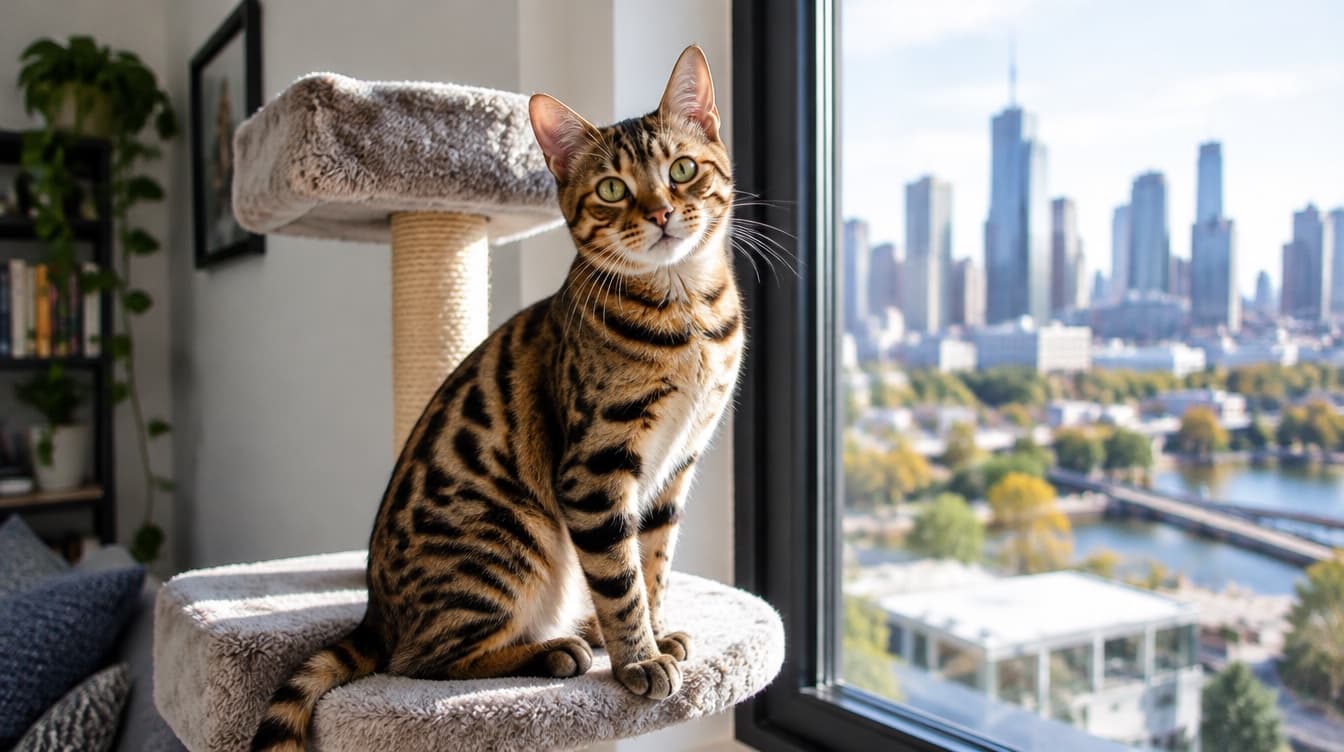
The Bengal is a medium to large, muscular, athletic cat developed to carry the striking wild look of its distant Asian leopard cat ancestry on a domestic cat temperament. The coat is short, dense and famously soft, in spotted or marbled patterns often with a glittered sheen, and the cat moves with a powerful, prowling grace. The domestic Bengal kept as a pet is many generations removed from any wild ancestor and is an ordinary domestic cat in law and in nature, just an exceptionally active and clever one.
Temperament is where the wild look meets a very busy brain. Bengals are among the most intelligent, energetic and curious of all cats: they climb everything, open cupboards and taps, play fetch, often love water, and demand interaction and stimulation. They bond strongly with their people and can be affectionate on their own terms, but they are confident, busy and sometimes mischievous, and they are emphatically not a quiet, low-key lap cat.
How Bengals end up in rescue
A Bengal is a deliberate, expensive purchase, but it reaches rescue more often than many pedigrees, and almost always for one reason: the energy and the needs were underestimated. People fall for the stunning leopard look and bring home a kitten without realising they have taken on one of the most demanding cats there is, and when the adult Bengal climbs the curtains, raids the kitchen, yowls for attention and shreds the furniture out of sheer boredom, it is surrendered as too much to handle. Add the ordinary reasons any cat is surrendered, a move, an allergy, a relationship breakdown or an owner who becomes unwell, and Bengals and spotted crosses reach Melbourne rescue, often as young adults who simply need a home set up for their energy.
Where to adopt a Bengal in Melbourne
A Bengal is uncommon in general rescue, so a wide alert net and honesty about what you can offer are essential. These are the main groups rehoming cats around Melbourne:
- RSPCA Victoria runs adoption centres at Burwood East and RSPCA Peninsula at Pearcedale, with published cat fees and a steady flow of cats. Browse at rspcavic.org.
- Lort Smith runs an adoption centre at Campbellfield with its own animal hospital behind every cat, at lortsmith.com.
- The Lost Dogs' Home, the long-established North Melbourne shelter, rehomes cats as well as dogs, at dogshome.com.
- Animal Aid at Coldstream and the Australian Animal Protection Society at Keysborough rehome cats across the outer east and south-east, at animalaid.org.au and aaps.org.au.
- Second Chance Animal Rescue, a Victorian foster-based rescue, lists cats at secondchanceanimalrescue.com.au.
Many of these rescues also appear on PetRescue, and LocalPetFinder brings Melbourne listings together so you do not have to check each site by hand. Be wary of any group calling itself a Bengal rescue that asks for money before you have confirmed a real address, a current adoptable list and charitable status. Browse any Bengal or spotted cross currently listed from Melbourne rescues on the Melbourne Bengal listings, and for the full process read our Melbourne cat adoption guide.
What it costs: adopt versus buy
Adopting is far cheaper than buying, and the cat arrives already vetted. RSPCA Victoria publishes adult cat fees of $145 to $400 and kitten fees of $235 to $400, with seniors often free, and other Melbourne rescues sit in a similar range. That fee covers desexing, vaccination, microchipping, a FIV check, worming, flea treatment and a vet check.
A purebred Bengal kitten from a breeder, by contrast, is one of the more expensive cats and commonly runs well into four figures or several thousand dollars, and you still pay for the vet work afterwards. The rescue fee is not really the cat's price, it part-covers the vet work already done, which is why a rescue cat usually works out cheaper than a free kitten you then have to desex, vaccinate and microchip yourself. Budget also for the enrichment a Bengal needs, from a cat enclosure to a steady supply of toys and climbing furniture. Our Melbourne cat adoption costs guide breaks down setup and yearly costs.
The enrichment and health reality
Meeting a Bengal's needs is a genuine, daily commitment. This is an athletic, clever cat that needs interactive play every day, tall climbing furniture and vertical space, puzzle feeders, a rotation of toys, and real mental stimulation, far more than an average cat. Many do best with a secure outdoor cat enclosure to burn energy safely, or with a second cat of similar energy for company, and a lot of Bengals love water and will play in a sink or a shower tray. A Bengal that does not get enough outlet becomes vocal, frustrated and destructive, which is exactly what sends so many to rescue.
On health the breed has known inherited conditions worth asking a breeder or rescue about, including hypertrophic cardiomyopathy, a form of progressive retinal atrophy affecting the eyes, and patellar luxation. Bengals are otherwise an athletic, robust breed. A rescue Bengal or spotted cross arrives vet-checked, so ask the rescue what the in-care assessment found, and pet insurance is worth having.
Victorian rules for a new cat owner
The domestic pet Bengal is an ordinary domestic cat, and the usual Victorian cat rules apply. Under the Domestic Animals Act 1994, administered through Agriculture Victoria, cats aged three months and over must be registered with your local council, renewing each year by 10 April, and a desexed and microchipped cat attracts a substantially reduced fee set by your council. A cat registered with a Victorian council for the first time must already be microchipped, and a rescue cat arrives chipped, so just move the record into your name. Many Victorian councils also set cat curfews or containment rules, which suit a Bengal well given it is safest contained. If you buy from a breeder, confirm the cat is a domestic pet Bengal rather than a very early-generation hybrid.
Browse adoptable Bengal cats in Melbourne
A Bengal is uncommon in rescue but turns up more often than many pedigrees, usually as a young adult. Browse any currently listed from Melbourne rescues and set an alert.
See Available Bengal Cats →If you have been searching “Bengal kittens for sale”
Plenty of people land here after looking for a Bengal kitten to buy, and for this breed adoption has a real advantage, because an adult rescue Bengal lets you see the energy and temperament you are taking on, where a kitten is a gamble on a very demanding cat. Before you buy, it is worth slowing down: this valuable breed is a frequent target for scams, and under Victoria's Pet Exchange Register scheme anyone advertising a cat or kitten for sale, or even to give away, must show the animal's microchip number and a source number, and it is an offence to advertise without them. Find both numbers in the ad, check the source number on the Pet Exchange Register before any money changes hands, ask a genuine breeder about HCM and eye testing and the kitten's generation, meet the kitten in person, and never pay a deposit by bank transfer for a kitten you have not seen, because the ACCC Scamwatch records pet deposit scams using purebred kittens as a lure.
Adoption is the safer path: a rescue Bengal is real, you can meet it, it arrives desexed and vetted, and it costs a fraction of a breeder price. Because the breed is uncommon in rescue, register your interest with several groups, be honest that you can meet the enormous energy and enrichment needs, and be patient; the right cat does come up.
Is a Bengal right for you?
Be honest about the commitment. A Bengal is a spectacular, intelligent, engaging cat for the right home, a person or household that is active, home often, and ready to provide daily play, climbing space, enrichment and ideally a secure outdoor run or a companion cat. But it is one of the most demanding breeds there is, and it is unhappy, loud and destructive when under-stimulated, which is why so many are surrendered. If you can give it the time, the enrichment and the space, a rescue Bengal is an extraordinary companion. If you want a calm, independent, low-maintenance cat, a different breed will suit you both far better.
Frequently Asked Questions
Where can I adopt a Bengal cat near me in Melbourne?
Watch the main Melbourne cat rescues and set an alert, because a Bengal is uncommon in rescue but turns up more often than many pedigrees, usually as a young adult surrendered for being too much cat. RSPCA Victoria (Burwood East and Pearcedale), Lort Smith's adoption centre at Campbellfield, The Lost Dogs' Home in North Melbourne, Animal Aid at Coldstream, Second Chance Animal Rescue and the Australian Animal Protection Society at Keysborough all rehome cats, and a Bengal or spotted cross occasionally comes through any of them. Be application-ready, and be prepared for a rescue's questions about the time and enrichment you can offer, because this breed needs a lot of both.
Why do Bengal cats end up in rescue?
Almost always because the energy was underestimated, not because of anything wrong with the cat. The Bengal is one of the most active, intelligent and demanding cats there is, and people drawn to the stunning wild look often do not realise how much exercise, play, climbing and mental stimulation it needs. A bored Bengal becomes loud, destructive and stressed, knocking things over, opening cupboards and climbing everything, and that cat gets surrendered as too much to handle. In a home set up for its needs, the same cat is spectacular. Bengals and spotted crosses reach Melbourne rescue for this reason more than any other.
How much does it cost to adopt a Bengal versus buy one in Melbourne?
Adopting through a Melbourne rescue costs about $145 to $400 for an adult cat or $235 to $400 for a kitten, and seniors are often discounted or free. That fee covers desexing, vaccination, microchipping, a FIV check, worming, flea treatment and a vet check. A purebred Bengal kitten from a breeder costs far more, commonly well into four figures and often several thousand dollars, and you still pay for the vet work afterwards. A rescue Bengal or spotted cross gives you the look and the lively nature for a fraction of the price, and an adult lets you see the energy level before you commit.
How do I check a Bengal kitten advertised for sale in Victoria?
Look for two numbers in the advertisement: the kitten's microchip number and a Pet Exchange Register source number. In Victoria, anyone advertising a cat or kitten for sale or to give away must display both, and it is an offence to advertise without them. You can check the source number on the Pet Exchange Register website before you pay anything, and a listing missing either number is a red flag. A genuine Bengal breeder should also screen the parents for HCM and the PRA eye condition and be clear about the generation the kitten is. Never pay a deposit by bank transfer for a kitten you have not seen in person.
How much exercise and enrichment does a Bengal need?
A great deal, and this is the single most important thing to understand. A Bengal is an athletic, clever, high-energy cat that needs daily interactive play, plenty of vertical climbing space, puzzle feeders and toys, and genuine mental stimulation, far more than an average cat. Many Bengals love water and will play in a sink or shower, and most do best with a secure outdoor cat enclosure, a catio, to burn energy safely, or with a feline companion of similar energy. Without enough outlet a Bengal becomes frustrated and destructive. If you want a calm, low-key cat, this is not the breed.
Is a Bengal legal to keep as a pet in Victoria?
The Bengal kept as a domestic pet, which is many generations removed from its wild ancestor, is a domestic cat, and the ordinary Victorian cat rules apply to it in the same way as any other cat. Very early-generation hybrids, bred directly from a wild ancestor, are a different matter and can be subject to restrictions in various jurisdictions, but these are not the cats you adopt from rescue, which are ordinary domestic Bengals and spotted crosses. If you buy from a breeder, confirm the generation and that the cat is a domestic pet Bengal, and if you are ever unsure, check with Agriculture Victoria or your council.
What health should I know about with a Bengal?
A few are worth understanding. The breed has known inherited conditions including hypertrophic cardiomyopathy, a heart condition responsible breeders screen for, a form of progressive retinal atrophy that affects the eyes, and patellar luxation affecting the kneecaps. Bengals are otherwise an athletic, generally robust breed. A rescue Bengal or spotted cross arrives vet-checked, so ask the rescue what the in-care assessment found, and talk to your own vet about the individual cat. Pet insurance is worth having.
I keep seeing Bengal kittens for sale. Is adopting really an option?
It is, and for this breed adoption has a real advantage, because an adult rescue Bengal lets you see the energy and temperament you are taking on, where a kitten is a gamble on a very demanding breed. The for-sale listings are easy to find, which makes buying feel like the default, but this valuable breed is a frequent target for scams and backyard breeding, so a cheap Bengal kitten or a deposit request for a kitten you have not met is a warning sign rather than a bargain. In Victoria, any advertisement to sell or give away a cat must display the microchip number and a Pet Exchange Register source number, so check that number on the Pet Exchange Register before paying anything. Adoption costs a fraction of a breeder price and gives a vet-checked cat a home. Register your interest, be honest about the time and enrichment you can offer, set alerts, and be patient.
Keep reading
Adoptable Bengal Cats in Melbourne
Live listings of any Bengals and spotted crosses available from Melbourne rescues.
Best Cat Rescues in Melbourne
The verified shelters and foster rescues to set alerts with across Victoria.
Melbourne Cat Adoption Guide
The full process, from application to bringing a rescue cat home.
Cat Adoption Costs in Melbourne
Adoption fees, setup gear, yearly costs and Victorian council registration.