The short answer
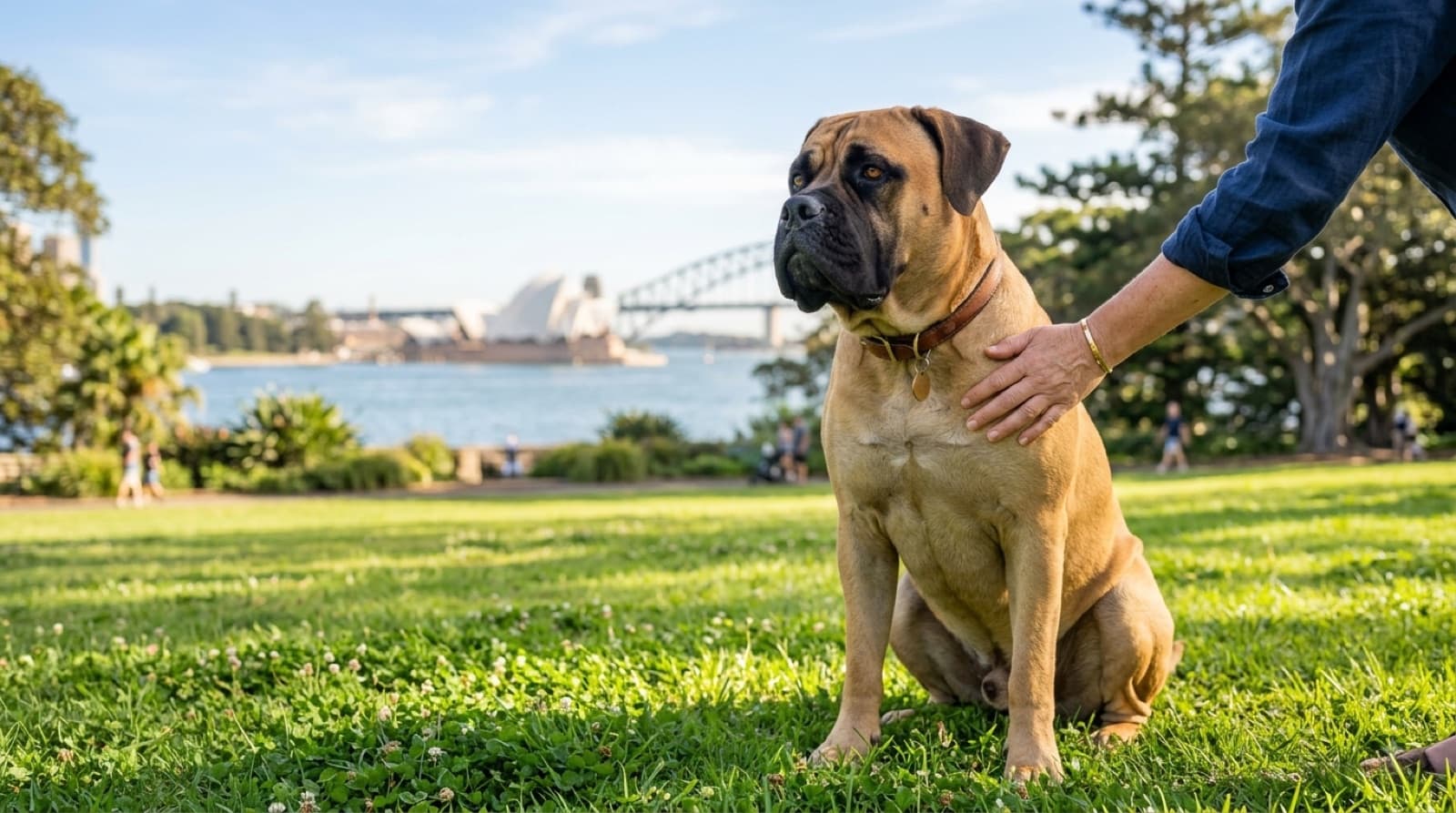
Mastiffs, Bullmastiffs and mastiff crosses come into Perth rescue steadily, and the adoption fee is modest at $300 to $600 for an adult. The breed is not restricted in WA and is legal to own and rehome normally. What it asks for is a home built for a giant. This is a 50-to-70 kilogram guardian that is gentle and low-energy indoors but needs real space, secure fencing, an experienced and confident owner, careful socialisation, and a substantial budget, because everything from food to vet bills scales with the size. It is very heat-sensitive in the Perth summer and it drools, and its lifespan is short, around 7 to 10 years. Give it what it needs, and a Mastiff is one of the gentlest, most devoted companions there is. It is not a first-dog or apartment breed.
Mastiffs are not a restricted breed in WA
The word “mastiff” makes some Perth adopters nervous about the law, so it is worth clearing up first. The English Mastiff and the Bullmastiff are legal to own, register and rehome across WA under the Dog Act 1976. Neither is on the restricted list.
WA restricts five specific breeds, which are prohibited from import into Australia and cannot be sold, bought or given away: the American Pit Bull Terrier, Dogo Argentino, Fila Brasileiro, Japanese Tosa and Perro de Presa Canario. A restricted-breed dog must be sterilised, muzzled and leashed in public, and kept in an approved enclosure. That is the legal reason you will never see one of those five on a WA adoption list. The Mastiff and Bullmastiff carry none of those conditions. The plain-English rules for WA dog owners are set out by the Department of Local Government, Sport and Cultural Industries.
Why Mastiffs end up in Perth rescue
Understanding why these gentle giants reach rescue is the best preparation for adopting one, and the reasons are almost always about the scale of the dog rather than its temperament.
Underestimated size and space. A Mastiff puppy grows into an enormous adult, and the space it needs indoors and out, the strength required to handle it on a lead, and the sheer presence of a 60 kg dog in the home catch owners off guard. A giant dog does not fit every home.
Cost. Everything scales with the size. A Mastiff eats a lot, and giant-breed veterinary care, larger medication doses and any surgery all cost more than for an average dog. Owners who did not budget for a giant breed can find the ongoing cost unmanageable.
Housing. Many rentals and strata schemes are wary of giant guarding breeds, so an owner who moves into a place that will not accept the dog sometimes has to surrender out of necessity rather than choice.
The drool, and the short lifespan. Mastiffs slobber, which surprises some owners, and the breed's short lifespan and the cost and heartbreak of giant-breed health problems play a part in surrenders too.
The dogs themselves, when well raised, are gentle, calm and devoted. What a rescue Mastiff needs is a home genuinely built for a giant guardian, with the space, experience and budget the breed requires, not a different temperament. Ask the rescue about the dog's temperament, its socialisation history, and how it is with people and other animals.
Where to adopt a Mastiff in Perth
A handful of shelters and rescues account for most of the giant breeds in the Perth pipeline. They differ in style (large metro shelter versus foster-based rescue) and in process. Mastiffs come through less often than Staffies, so set up alerts on every rescue you would consider. Fees and current availability change, so check each site directly.
1. Dogs' Refuge Home WA
A dogs-only, not-for-profit shelter at Shenton Park in inner Perth, running since 1935 and one of the oldest animal welfare agencies in the country. It has a pro-life policy (no euthanasia on economic grounds) and houses well over a hundred dogs, so large and giant breeds including mastiffs turn up on the floor. Adoption includes desexing, vaccination, microchipping and a vet check. Listings at dogshome.org.au.
2. RSPCA WA
The state body, with its Animal Care Centre at Malaga in Perth's north. Adoptions are by appointment, and every animal is health- and behaviour-checked before it is listed, which is exactly the assessment that matters with a giant guardian breed. Adoption includes desexing, vaccination, microchipping and a vet workup. Apply at rspcawa.org.au.
3. SAFE Perth
A Perth-metro, no-kill, foster-based rescue running since 2005 with hundreds of volunteer foster carers. It pulls dogs due for euthanasia from pounds and vets across the south-west. Because the dogs live in foster homes rather than a shelter, the carer can tell you a great deal about how a big dog is with people, children and other animals, which is invaluable for a giant breed. More at safeperth.com.au.
4. SAFE
WA's largest foster-based rescue, founded in 2003, with a branch and foster network that reaches across regional WA and the metro area. Another foster-care model, so a dog comes with a carer who knows it. Larger breeds appear on their list from time to time. Details at safe.org.au.
There are smaller WA rescues too, often run by volunteers out of foster homes, and giant-breed dogs sometimes come through them. A quick way to see many rescues at once is PetRescue, a national aggregator that lists animals from hundreds of member rescues in one searchable place. Whatever the source, verify any rescue through a real address, a current adoptable-dog list and charitable status before sending money. Browse the current Mastiffs, Bullmastiffs and mastiff crosses on the Perth Mastiff listings.
What a Mastiff costs to adopt and keep in Perth
The adoption fee runs about $300 to $600 for an adult Mastiff and $400 to $800 for a puppy, and it already includes desexing, vaccination, microchipping, worm and flea treatment and a vet check, which would cost far more if you paid for them separately.
The real cost of a Mastiff is the ongoing one, because everything scales with the size. Budget for council registration (a sterilised, microchipped dog gets a reduced fee, set by your local council rather than a single Perth-wide figure), secure fencing, and a strong harness and lead. Then plan yearly costs toward the higher end, roughly $2,500 to $3,500, because a giant dog eats a lot and giant-breed veterinary care, larger medication doses and any surgery all cost more. Because the breed carries real health risks, pet insurance taken out while the dog is young is genuinely worthwhile. Register once the dog is 3 months or older, and check your council's current fee via the WA Government dog ownership hub.
Browse adoptable Mastiffs in Perth
Mastiffs, Bullmastiffs and mastiff crosses come into WA rescue steadily and need experienced homes with space. Browse live listings across Perth.
See Available Mastiffs →The giant-breed health picture
A Mastiff is a wonderful dog, but adopting one responsibly means going in with eyes open about giant-breed health. None of this is a reason not to adopt. It is a reason to keep the dog lean, insure it young, and know your nearest emergency vet. Always take medical decisions with your own vet rather than acting on a checklist.
Bloat (gastric dilatation-volvulus). The single most urgent giant-breed emergency. A deep chest can twist on itself, cutting off blood flow, and it is fatal within hours without surgery. Learn the signs: a swollen, tight belly, unproductive retching, restlessness and distress. If you see them, get to an emergency vet immediately. The RSPCA Australia Knowledgebase is a good plain-English starting point on prevention and warning signs.
Hip and elbow dysplasia and joint disease. Giant breeds carry a higher burden of developmental joint problems, and the weight makes any joint issue harder on the dog. Responsible breeders screen for hips and elbows through databases such as the Orthopedic Foundation for Animals, though with a rescue dog you rarely have that history, which is another reason to keep the dog at a healthy weight and manage exercise. Do not over-exercise a growing puppy, because it damages developing joints.
Cancer and a short lifespan. Giant breeds age fast and have an elevated lifetime cancer risk, and a Mastiff commonly lives only 7 to 10 years. Prompt veterinary attention to any new lump or change is worth it. The Australian Veterinary Association is a useful guide to finding a vet and thinking about preventive care.
Heat sensitivity. A large, heavy, often dark-coated dog struggles in the Perth summer more than most breeds, which brings us to the WA-specific safety section below.
Keeping a Mastiff safe in Perth: heat, snakes and 1080
Perth has a Mediterranean climate, with hot dry summers and mild wet winters. For a giant, heavy-coated guardian, three safety habits matter more here than the tick worry people bring over from the east coast.
Summer heat and hot ground. Perth summers run long stretches in the mid-30s to 40°C. A big, heavy Mastiff overheats faster than a lean dog, and the risk is real. Walk in the cool of early morning or late evening, carry water, and use the back-of-your-hand test on the pavement or sand first. If it is too hot for your hand, it is too hot for paws. Never leave a dog in a parked car. Heatstroke is an emergency: get to a vet immediately.
Snakes. Dugites, gwardars and tiger snakes are common around Perth's bushland corridors, wetlands and the Swan and Canning river foreshores, and bites spike in the warmer months from roughly September to April. A curious dog that disturbs a snake can be bitten, and a bite from these highly venomous species needs an emergency vet fast. Keep your dog on lead and out of long grass on warm-weather walks.
1080 baiting. Fox and feral-cat baiting with 1080 (sodium fluoroacetate) runs across many WA reserves, forests and bushland under the state Western Shield program. The WA Government advises that all baited areas must be treated as dangerous to pet dogs at all times, and 1080 is lethal to dogs, including through a poisoned carcass. Watch for “1080 POISON RISK” signage, keep your dog leashed and under control in reserves, and know your nearest 24/7 emergency vet before you head out.
Perth's round-the-clock emergency hospitals include Perth Vet Emergency at Cannington, The Animal Hospital at Murdoch University, and WAVES at Success. On paralysis ticks, WA is the opposite of the east coast: the paralysis tick is not established here, so the local risk is low. The one time to think about it is before you travel east to the Queensland, NSW or Victorian coast, when you should ask your vet about tick prevention. For general parasite prevention (fleas, worms, heartworm), your vet will recommend a routine product.
What a Mastiff is like to live with
For a prepared owner, a well-raised Mastiff or Bullmastiff is a magnificent companion. They are famously gentle, calm and steady, deeply devoted and affectionate with their family, and often patient and loving with their own children. They are low-energy indoors, content to be a large, warm presence at your feet, and they are natural guardians, watchful and aloof with strangers while soft as anything at home. The Bullmastiff was developed as a gamekeeper's night dog, bred to be brave and protective but under control rather than aggressive, and the English Mastiff shares the same steady guarding character.
The other side is everything that comes with a giant guardian: the space, the strength, the cost, the drool, the heat sensitivity, and the socialisation and training a powerful dog needs. This is a dog for a committed, experienced household with room, not for someone wanting a low-cost, low-effort or apartment pet. Match the breed to your genuine situation and a rescue Mastiff will repay you with years, however precious and few, of gentle, devoted companionship.
Frequently Asked Questions
Where can I adopt a Mastiff or Bullmastiff in Perth?
Start with the established WA shelters and foster-based rescues. Dogs' Refuge Home WA at Shenton Park and RSPCA WA at Malaga both take large and giant breeds, and Mastiffs, Bullmastiffs and mastiff crosses come through when they are surrendered. SAFE and SAFE Perth are foster-based options that pull dogs from pounds across the state, and a foster carer can tell you a lot about how a big dog is with people and other animals. PetRescue lists animals from hundreds of Australian rescues in one place. Because a Mastiff is a giant, powerful dog, careful matching matters more than speed, so set alerts across the rescues and apply through the one holding the dog whose temperament suits your home.
Are Mastiffs or Bullmastiffs restricted in Western Australia?
No. Neither the English Mastiff nor the Bullmastiff is a restricted breed in WA, and both are legal to own, register and rehome normally. The five restricted breeds under WA law are the American Pit Bull Terrier, Dogo Argentino, Fila Brasileiro, Japanese Tosa and Perro de Presa Canario. A Mastiff is not among them. Like any dog in WA it must be microchipped by 3 months of age and registered with your local council. As a giant guarding breed, a Mastiff still benefits from an owner who prioritises training, socialisation and secure fencing, and it is worth checking any strata by-laws or lease, because some buildings are cautious about very large breeds.
What does it cost to adopt and keep a Mastiff in Perth?
The adoption fee runs about $300 to $600 for an adult and $400 to $800 for a puppy, and that already covers desexing, vaccination, microchipping, worm and flea treatment and a vet check. The bigger consideration with a Mastiff is the ongoing cost, because everything scales with the size. A giant dog eats a lot, and giant-breed veterinary care, larger medication doses and any surgery all cost more. Budget for council registration (a sterilised, microchipped dog gets a reduced fee set by your council), secure fencing, and a strong harness and lead, then plan yearly costs toward the higher end, roughly $2,500 to $3,500. Because the breed carries real health risks, pet insurance taken out while the dog is young is genuinely worthwhile.
Are Mastiffs and Bullmastiffs good family dogs?
Well-raised and well-socialised Mastiffs and Bullmastiffs are famously gentle, calm and deeply devoted family dogs, and their steady, low-drama temperament is a big part of the appeal. The cautions are size and strength rather than temperament. A dog of 50 to 70 kg can knock a small child over without meaning any harm, so supervision around young children is sensible, and the natural guardian instinct toward strangers needs early socialisation and training to sit right. A Mastiff suits a family with the space, the experience and the budget for a giant guardian breed, rather than a first-time owner or a small apartment.
How much exercise and space does a Mastiff need?
Less exercise than you might expect for the size, but real space. An adult Mastiff or Bullmastiff is a low-energy dog, often a gentle couch potato, and needs only moderate daily exercise: a couple of gentle walks rather than hard running. Over-exercising a young, growing giant is genuinely harmful to the developing joints, so keep puppy exercise light. What the breed does need is space to move comfortably indoors and a secure yard, which makes it poorly suited to a small unit. In the Perth summer, walk in the cool of early morning or late evening, because a large, heavy, often dark-coated dog overheats quickly.
How long do Mastiffs live?
Sadly, not long. Like most giant breeds, the Mastiff and Bullmastiff have a short lifespan, commonly around 7 to 10 years, and this is one of the hardest parts of loving the breed. Giant dogs age faster and carry a higher burden of the cancers and joint problems that shorten life. Keeping the dog lean, sensible exercise, prompt veterinary attention, and awareness of the bloat signs all improve both the length and the quality of that time. Going in aware that this is a shorter-lived breed helps you make the most of every year, and an adopted adult Mastiff, even at a few years old, still has good years to give.
How do I register a Mastiff with my Perth council?
Register with your local council once the dog is 3 months (12 weeks) or older, and the dog must be microchipped first. WA offers 1-year, 3-year and lifetime registration terms, with annual registrations running to 31 October each year. A sterilised, microchipped dog gets a substantially reduced council fee, and pensioners commonly get a further discount. The exact dollar amount is set by each council, not the state, so check your own council's website for the current figure. Perth spans dozens of local governments, so there is no single citywide fee.
Should I adopt an adult Mastiff or a puppy?
For most people an adult is the wiser choice, and with a giant guardian breed it is doubly true. An adult Mastiff has a temperament a rescue can properly assess, a known adult size, established manners and a lower adoption fee, and you can see whether this individual dog suits your home and experience. A Mastiff puppy grows into an enormous, powerful dog and needs very careful, knowledgeable raising, including managing exercise to protect the growing joints, and it gives you no reliable read on its adult character. Rescues evaluate each dog in foster or shelter care and match carefully, which matters enormously for a giant breed where temperament and handling are everything.
Is a Mastiff a good first dog?
Generally no, and it is fairer to be honest about that. A Mastiff is a giant, powerful guardian breed that needs an experienced, confident owner, committed training and socialisation, real space, and a substantial budget. It is a lot of dog for a first-time owner to get right. A very dedicated first-time owner who has genuinely researched the breed, has the space and budget, and commits to training can succeed and find the breed hugely rewarding, but the stakes are higher than with an easier breed. If this is your first dog, prepare thoroughly, lean on a good trainer, and be guided by a rescue that will match you carefully.
Keep reading
Adoptable Mastiffs in Perth
Live listings of Mastiffs, Bullmastiffs and mastiff crosses, with filters for age, size and household compatibility.
Rottweiler Adoption in Perth
Another large guardian breed in WA rescue: the rescues, the costs, and the training and space it needs.
Dog Registration in Perth
How council registration, microchipping and the desexing discount work under the WA Dog Act 1976.
Perth Dog Adoption Resources
Adoption process, WA dog law, costs and breed guides for Perth adopters.