The short answer
There is no single best dog breed. Match the dog to your life: families often suit Labradors, Golden Retrievers, Cavaliers, Beagles and Staffies; apartments suit retired Greyhounds, Whippets and calm small companions; first-time owners do best with a gentle breed such as the Cavalier, Greyhound or Whippet; active people suit working breeds such as the Kelpie, Border Collie and Vizsla; seniors suit calm small dogs such as the Maltese, Shih Tzu and Bichon Frise; and low-shedding homes suit the Poodle and Bichon (no breed is hypoallergenic). Breed explains only part of behaviour (9% of the variation between dogs in one 2022 study), so a calm adult rescue dog with a known temperament is often the best match of all.
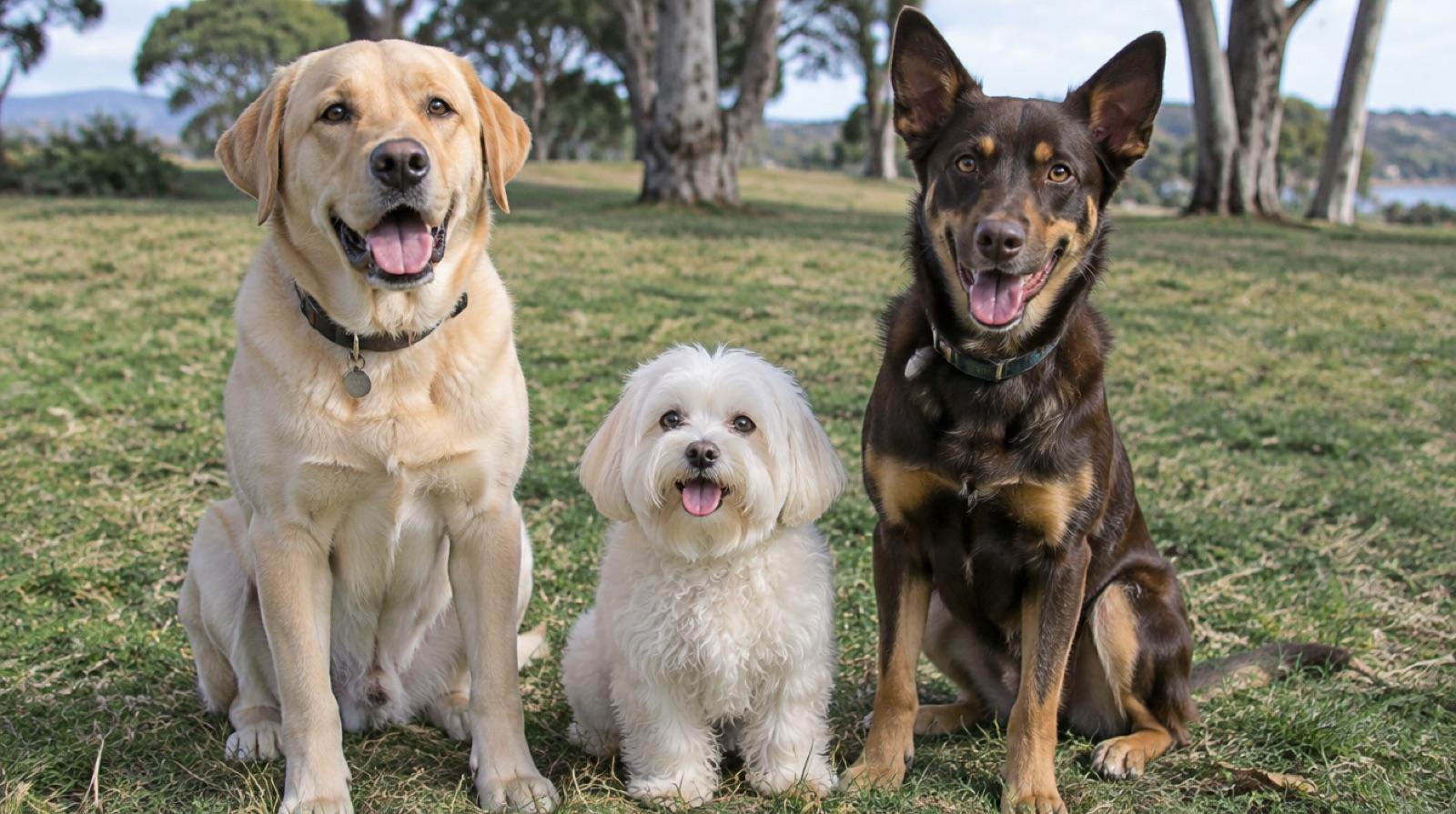
Is there a best dog breed?
Not one that suits everybody. A Kelpie that is a dream for a runner in regional Victoria is a nightmare in a Sydney unit with nobody home all day. A Greyhound that sleeps through a city workday would bore a family that wants a dog to fetch at the beach. The right question is not “which breed is best?” but “which dog fits my life?”
Breed helps with that, but less than most people think. In a 2022 study in Science, researchers combined owner surveys of 18,385 dogs with genetic data from 2,155 of them and found breed explained just 9% of the variation in behaviour between individual dogs. Some traits, such as biddability (how readily a dog takes direction), were more strongly linked to breed than others. In plain words: breed shifts the odds, and the individual dog decides the result.
That is why every row below ends in two places: a breed shortlist, and the rescue dogs listed right now whose foster carers can tell you what they are actually like. The RSPCA Knowledgebase sets out what to think through before you get any pet.
Which dog breeds suit which lifestyle?
Each lifestyle has its own full guide with the breed standards, research and watch-outs. This table is the short version.
Each shortlist summarises the linked guide, which quotes the Dogs Australia breed standards and the research behind it (checked November 2026). They describe tendencies, not promises about one dog.
What makes a breed right for each lifestyle?
Families
Look for a steady, tolerant temperament and a dog sturdy enough for children. The Labrador standard describes a dog that is “intelligent, keen and biddable, with a strong will to please”, and the Golden Retriever standard one that is “biddable, intelligent and possessing natural working ability”. Small is not automatically safer. An adult dog already tested with children is the surest bet; see best family dogs in Australia.
Apartments
Quiet beats small. Greyhounds As Pets WA says retired Greyhounds often sleep 16 to 20 hours a day and adapt well to small homes and apartments. A small dog bred to raise the alarm may bark at every footstep in the corridor, and barking is what causes strata complaints. See best apartment dogs for strata and renting rules, and Greyhound adoption in Australia for the state programs.
First-time owners
Pick a forgiving dog: gentle, not too strong, happy to settle. The Greyhound standard calls the breed “gentle, affectionate and even tempered”. Easy to train is not the same as smart; the cleverest working breeds learn the side gate as fast as they learn “sit”. Read dogs for first-time owners and the easiest dogs to train.
Active people
Australia's own working breeds were made for long days. The Kelpie standard describes “an almost inexhaustible energy”, the Border Collie standard “an instinctive tendency to work”, and the Hungarian Vizsla standard a dog that is “lively, friendly, evenly tempered and easily trained”. They need a job for their brain as well as miles for their legs. On Stanley Coren's ranking of working and obedience intelligence, the Border Collie came first; our smartest dog breeds guide explains what that list measured. See also Border Collie adolescence and Cattle Dog puppies: adopt or buy. In summer, exercise early and late; the RSPCA warns that flat-faced breeds are especially prone to overheating.
Seniors
A calm adult dog with good lead manners lowers the risk of a fall, and an older dog often suits an older owner's pace. Small, gentle companion breeds are the usual picks, and retired Greyhounds are famously quiet indoors. Plan ahead for the dog's care if you go into hospital. See best dogs for seniors and adopting a senior dog.
Low shedding and allergies
Dogs Australia says “non-shedding” breeds simply have a slower-growing coat; those coats need brushing and a clip for life. And no dog is allergy-free: ASCIA says all dog breeds cause allergies, and the main allergen is in saliva, not hair. Read dogs that don't shed and hypoallergenic dogs in Australia before you pay extra for a coat type.
Quiet and calm
Calm, quiet and low energy are three different traits, and a lazy-looking breed can still bark. Age matters more than breed: every puppy is busy. See calm dog breeds and low maintenance dog breeds.
Other questions people ask: guard dogs and the law in each state, the most loyal breeds, the healthiest and longest-living breeds and the cheapest breeds to own. Not sure which lifestyle row is you? The what dog breed am I quiz asks about your home and routine and suggests dog types to look for.
Meet dogs whose temperament is already known
Dogs and puppies from Sydney and NSW rescues, refreshed regularly. Many live in foster homes, so the listing can tell you how the dog behaves with children, cats and being left alone.
See dogs in Sydney →Dog breeds list: the Dogs Australia breed groups
Dogs Australia, the national kennel council (formerly the ANKC), recognises about 200 breeds and keeps a written standard for each. Its breed listing (dated 18 March 2026) sorts them into seven groups. The group tells you what a breed was originally bred to do, which is often the best clue to what it will want to do in your backyard. The table lists the breeds in each group that have a breed page on LocalPetFinder (linked), plus a few others.
Group membership and breed names from the Dogs Australia breed listing, read on 10 November 2026. Each breed's standard is on the Dogs Australia breed standards pages. Our page for the British Bulldog sits at /breeds/english-bulldog.
A few surprises in the groups are worth knowing. The Great Dane, Dalmatian, Poodle and Shih Tzu are all in Non Sporting, not with the big working dogs or the toys. The Boxer and Rottweiler are in Utility. And the Kelpie, Border Collie and Cattle Dog are “Working Dogs” in the original sense: they were bred to move stock all day.
What about Cavoodles, Kelpie crosses and other mixed breeds?
Many of the dogs Australians love most are not on the Dogs Australia list. The Cavoodle, Groodle, Labradoodle and Spoodle are crosses, and so are the working Koolie and the Bull Arab as far as Dogs Australia is concerned. None of them appears on the Dogs Australia breed listing, so none has a Dogs Australia breed standard, and Dogs Australia warns that other registries (it names the MDBA, ABR, Australian Canine Registry and ICBS) are not affiliated with it and cannot issue Certified Pedigrees. A cross can be a wonderful dog; it just does not come with a standard that predicts its size, coat or temperament.
Are crosses healthier? The evidence is mixed. A 2013 study of 5,095 dog deaths in English vet practices found crossbreds outlived purebreds by 1.2 years. A much larger 2024 UK study of more than 584,000 dogs found a median lifespan of 12.7 years for purebreds and 12.0 for crossbreds, with huge differences between individual breeds: small, long-nosed breeds lived longest and flat-faced medium breeds shortest. Our healthiest dog breeds guide goes through both.
Mixed breeds fill Australian rescues, and you can browse them directly: mixed-breed dogs in Sydney, Melbourne or Brisbane.
Why look in rescue first?
Because with an adult rescue dog, the guesswork is already done. A foster carer can tell you whether the dog is house-trained, how it copes alone, whether it pulls on the lead and how it reacts to children and cats. That beats any breed average.
Be relaxed about the label. Shelters name a breed by eye at intake, and in a 2009 study DNA confirmed the agency's named breed as a main breed in only 4 of 16 dogs. Our guide to what breed is my rescue dog covers DNA tests and why behaviour matters more. One legal note: restricted breeds never appear on adoption lists, because in NSW, for example, a restricted dog cannot be sold or given away (NSW Office of Local Government). The guard dog guide sets out each state's rules.
If you do want a particular purebred, buying from a registered breeder is a reasonable choice. Check membership with the Dogs Australia body in your state, ask about the health tests the breed club recommends, meet the mother, and never pay a deposit for a puppy you have not seen; Dogs Australia and Scamwatch both publish what to check. Our puppies for sale: adopt or buy guide has the breeder rules for every state. Before you commit either way, run the numbers in the dog cost calculator and try the adoption readiness check; if you are still torn between species, there is the dog or cat quiz.
Find a dog near you
Each city page lists rescue dogs and puppies, refreshed regularly, with every listing linking straight to the rescue.
| City | All dogs | Family | Apartment | Small | Seniors |
|---|---|---|---|---|---|
| Sydney | Dogs | Family | Apartment | Small | Senior dogs |
| Melbourne | Dogs | Family | Apartment | Small | Senior dogs |
| Brisbane | Dogs | Family | Apartment | Small | Senior dogs |
| Perth | Dogs | Family | Apartment | Small | Senior dogs |
| Adelaide | Dogs | Family | Apartment | Small | Senior dogs |
Looking for one breed? The Sydney breed pages show what is listed right now, for example Greyhounds, Staffies, Kelpies and Labradors. Set an alert and you will hear when a new one is listed.
Frequently asked questions
What is the best dog breed in Australia?▼
There is no single best dog breed; the best dog is the one that fits your home, time and energy. For families, the Dogs Australia standards describe the Labrador and Golden Retriever as biddable and good-natured; for units, retired Greyhounds and Whippets are standouts; for a first dog, the Cavalier King Charles Spaniel, Greyhound and Whippet. Breed only shifts the odds, so a calm adult rescue dog whose foster carer knows it is often the best choice of all.
What is the best dog breed for a family?▼
Labradors, Golden Retrievers, Staffordshire Bull Terriers, Cavaliers, Beagles and Greyhounds all have breed standards that describe a friendly, kindly or affectionate temperament. The most reliable family dog, though, is an adult that a rescue or foster carer has seen around children. Puppies are harder with young children, not easier, and every interaction between dogs and young children needs supervision.
What is the best dog breed for an apartment?▼
A quiet, settled dog of any size. Retired racing Greyhounds are a standout: Greyhounds As Pets WA says they often sleep 16 to 20 hours a day and adapt well to small homes. Whippets and calm small companion breeds such as the Cavalier and Maltese also suit units. High-drive working breeds are the hardest fit. Check your strata by-laws and get your landlord's written approval first.
What is the best dog breed for a first-time owner?▼
A calm, house-trained adult rescue dog is usually the easiest first dog. If you want a breed steer, the Dogs Australia standards describe the Greyhound and Whippet as gentle, affectionate and even tempered, the Cavalier King Charles Spaniel as friendly and non-aggressive, and the Labrador and Golden Retriever as biddable. Avoid starting with high-drive working breeds such as the Kelpie and Border Collie, or with flat-faced breeds.
What is the best dog breed for an active person?▼
Working and gundog breeds suit people who run, hike or train every day. The Dogs Australia standard describes the Kelpie as having almost inexhaustible energy, the Border Collie as having an instinctive tendency to work, and the Hungarian Vizsla as lively and easily trained. These dogs need a daily job as well as exercise, and bored working dogs are a familiar sight in Australian rescue.
What is the best dog breed for seniors?▼
A calm adult or senior rescue dog, small to medium in size, that already walks nicely on a lead. The Dogs Australia standards describe the Maltese as sweet tempered, the Shih Tzu and Cavalier as friendly, the Bichon Frise as gay and happy, the Havanese as affectionate and amiable, and the Whippet as gentle and affectionate, and retired Greyhounds are famously quiet indoors. Choose good lead manners to lower fall risk, and make a written plan for who takes the dog if you go into hospital or care.
Which dog breeds don't shed?▼
None, strictly. Dogs Australia says non-shedding breeds have a slower-growing coat that sheds a few hairs at a time. Coat-holding breeds such as the Poodle, Bichon Frise, Maltese and Shih Tzu drop the least hair but need regular clipping. Short-coated dogs such as the Greyhound and Whippet shed a little but need almost no grooming.
Are there hypoallergenic dog breeds?▼
No. The Australasian Society of Clinical Immunology and Allergy (ASCIA) says all dog breeds cause allergies, although some shed less dander. The main dog allergen is in saliva, not hair. Test your reaction to the individual dog with repeated, long visits, and see a doctor first if anyone at home has asthma.
What is the quietest or calmest dog breed?▼
The breeds whose Dogs Australia standards describe a genuinely calm temperament include the Greyhound (gentle, affectionate and even tempered), the Whippet, the Newfoundland, the Bernese Mountain Dog (docile, of medium temperament) and, among small dogs, the Cavalier, whose standard asks for no tendency to nervousness. Age matters more than breed: any puppy is busy, while an adult whose foster carer has watched it settle every evening is the surest calm dog.
How many dog breeds are there in Australia?▼
Dogs Australia, the national kennel council, recognises about 200 breeds and sorts them into seven groups: Toys, Terriers, Gundogs, Hounds, Working Dogs, Utility and Non Sporting (breed listing dated 18 March 2026). Popular crosses such as the Cavoodle, Groodle and Labradoodle are not on that list, and neither are the Koolie or Bull Arab.
Are mixed-breed dogs healthier than purebreds?▼
The evidence is mixed. A 2013 UK study of 5,095 dog deaths found crossbreds lived 1.2 years longer than purebreds, but a 2024 UK study of more than 584,000 dogs found a median of 12.7 years for purebreds and 12.0 for crossbreds, with big differences between individual breeds. Size and face shape matter a great deal: flat-faced breeds fared worst. Judge the individual dog and its health history.
Can I adopt a purebred dog from a rescue?▼
Yes, sometimes. Purebreds and recognisable crosses come through Australian rescues regularly, especially working breeds, Staffies and retired racing Greyhounds, and some breed clubs help rehome their own breed. Rescue labels are guesses made by eye, though: in a 2009 study, DNA confirmed the agency's named breed as a main breed in only 4 of the 16 dogs it had named a breed for. Check the live breed pages and set an alert.
Sources
- Dogs Australia: Breed listing by group (18 March 2026)
- Dogs Australia: Breed standards
- Dogs Australia: How to choose a puppy
- Dogs Australia: Choosing a breeder
- Dogs Australia: The key to getting grooming right
- Greyhounds As Pets WA: About the breed
- ASCIA: Pet allergy
- Morrill et al. (2022): Ancestry-inclusive dog genomics challenges popular breed stereotypes, Science
- Voith et al. (2009): Comparison of adoption agency breed identification and DNA breed identification of dogs
- O'Neill et al. (2013): Longevity and mortality of owned dogs in England, The Veterinary Journal
- McMillan et al. (2024): Longevity of companion dog breeds in the UK, Scientific Reports
- RSPCA Knowledgebase: What do I need to know before I get a new pet?
- RSPCA Knowledgebase: Brachycephalic dogs
- NSW Office of Local Government: Restricted dogs
- Scamwatch: Buying and selling scams
Keep reading
What dog breed am I?
A short quiz that matches your home, time and energy to the dog types that suit them.
What breed is my dog?
Why shelter breed labels are guesses, what DNA tests can tell you, and why behaviour beats breed.
Puppies for sale: adopt or buy?
Breeder rules in every state, how to check a breeder, and the scam red flags.
Adopting a dog in Australia
The steps, fees and laws to know before you bring a rescue dog home.