The short answer
The breeds whose Dogs Australia standards describe a genuinely calm temperament include the Greyhound (“gentle, affectionate and even tempered”), the Whippet, the Newfoundland, the Bernese Mountain Dog, the Clumber Spaniel and, among small dogs, the Cavalier King Charles Spaniel. But a breed only shifts the odds. Age matters more: a puppy of any breed is busy, and an adult or senior dog whose foster carer has watched it settle every evening is the surest calm dog there is. Rescues list those dogs every week, so ask about the individual dog rather than the label.
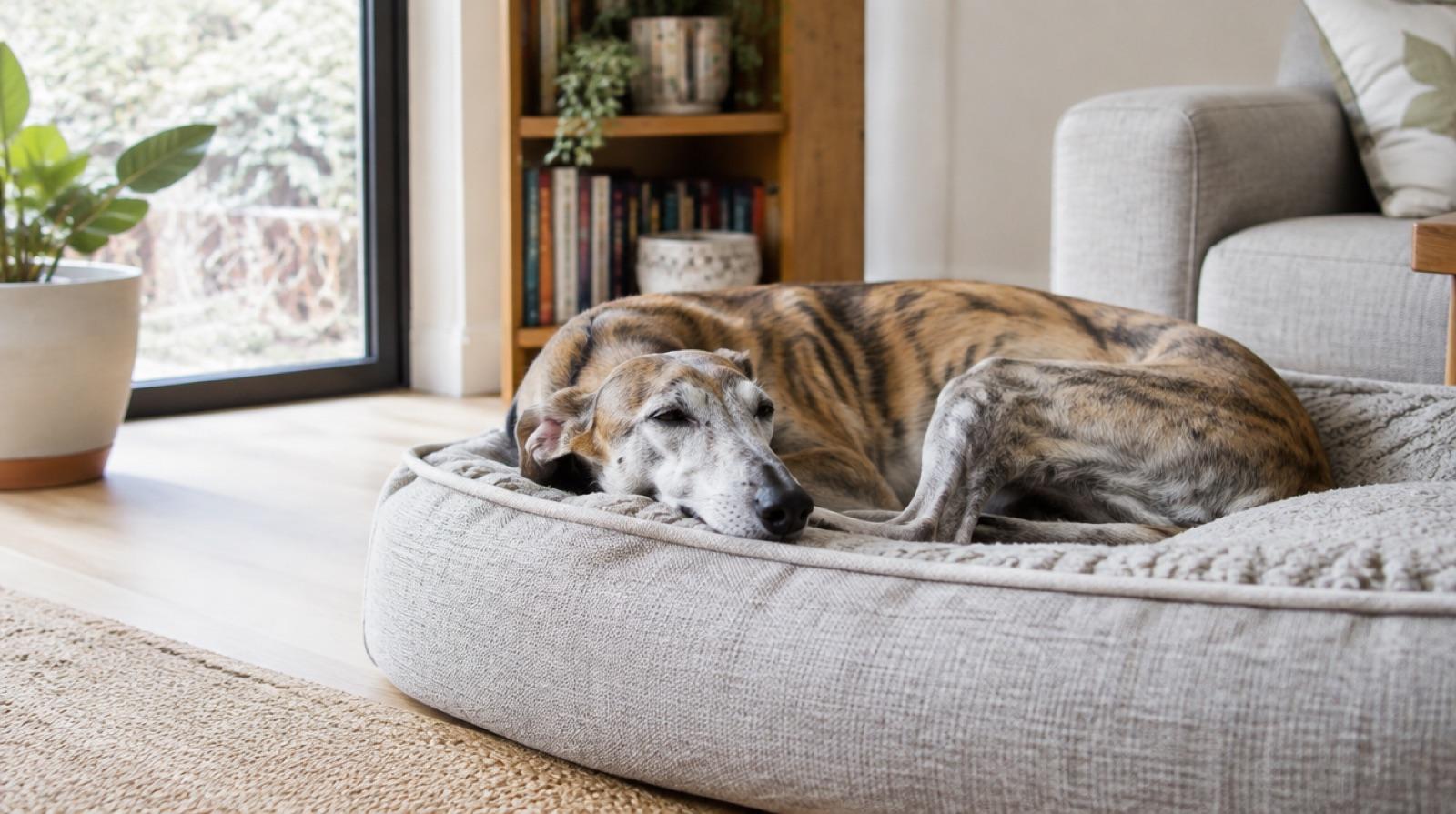
Calm, low energy and quiet: what is the difference?
They are three separate traits, and most lists of calm dogs blur them together.
- Low energy is how much exercise a dog needs. It tells you how long the walk is, and nothing else.
- Calm is how a dog behaves at home: whether it settles when nothing is happening and how quickly it comes back down after something exciting. This is temperament, and it varies a lot within a breed.
- Quiet is about barking. It follows what the breed was bred to do. Scent hounds and guardian breeds were bred to use their voice, which is why some of the most relaxed dogs are also the loudest.
Work out which one you actually need. Someone in a unit with thin walls needs quiet. Someone who works long days needs low energy and calm. A family with young children needs a dog that stays steady when the house gets loud. One list cannot answer all three, so this guide labels each breed by what its standard really says.
Which dog breeds are genuinely calm?
These breeds are described in calm terms in their own Dogs Australia breed standards. The temperament words are quoted from each standard, checked 9 November 2026; the last column is what to ask about before you adopt one.
| Breed | Breed standard says | Worth knowing |
|---|---|---|
| Greyhound | “Intelligent, gentle, affectionate and even tempered” (standard) | Often sleeps 16 to 20 hours a day (GAP WA). Sighthound chase instinct, so check lead rules in your state. |
| Whippet | “Gentle, affectionate, even disposition”; “an ideal companion” (standard) | A smaller sighthound, so ask about its chase drive with cats. |
| Newfoundland | “An exceptionally gentle and docile nature” (standard) | A giant water dog with a heavy coat. Australian heat is the main challenge. |
| Bernese Mountain Dog | “Good-natured”, “placid towards strangers”, “of medium temperament, docile” (standard) | Large, long-coated mountain dog; plan for summer. |
| Irish Wolfhound | “Lambs at home, lions in the chase” (standard) | Very large. Calm indoors, but a sighthound outdoors. |
| Clumber Spaniel | “Steady, reliable kind and dignified”; “a silent worker” (standard) | A gundog, so it still needs daily walks. |
| Cavalier King Charles Spaniel | “friendly, non-aggressive; no tendency to nervousness” (standard) | The usual small-dog answer. Cavoodles and other Cavalier crosses turn up often in rescue. |
| Basset Hound | “Placid, never aggressive or timid. Affectionate” (standard) | Calm, but the same standard notes “a deep, melodious voice”. Not quiet. |
A breed standard describes the ideal dog of the breed, not a guarantee about any individual. Many rescue dogs are crosses, so judge the dog in front of you.
Notice who is on this list. Most of the genuinely calm breeds are sighthounds or large and giant dogs. That runs against the common assumption that a calm dog should be small, and it is one reason big, gentle dogs can wait longer in rescue than they should.
Which breeds only look calm?
Some breeds turn up on calm lists because they are big and slow, or small and sleepy. Their own standards tell a different story.
- Bullmastiff. Big and often still, but its standard describes a dog that is “high spirited, alert and faithful”.
- Pyrenean Mountain Dog. “Quietly confident”, but also “a natural guard dog protecting shepherd and sheep” (standard). Guarding usually means barking.
- St Bernard. “Friendly by nature”, with a temperament described as “calm to lively; watchful” (standard). It can go either way.
- Chow Chow. Low key at home, but “loyal yet aloof” (standard). Reserved is not the same as easygoing.
- Shih Tzu. Small and cuddly, but the standard says “intelligent, active and alert” and “friendly and independent”.
None of these are bad dogs. They are just not the settled, easygoing dog most people mean when they search for a calm breed.
Why flat-faced breeds are not the calm answer
Pugs and French Bulldogs often appear on lists of calm or lazy dogs. Their own standards describe something else: the Pug is “even tempered, happy and lively” (standard) and the French Bulldog “vivacious, deeply affectionate, intelligent” (standard).
What makes many of them seem calm is physical. The RSPCA Knowledgebase explains that flat-faced breeds have a reduced capacity to cool down by panting, and lists breed among the heatstroke risk factors because purebred dogs are more likely to have exaggerated features that make it harder to keep a normal body temperature. A dog that slows down because it cannot breathe and cool well in the heat is not a calm dog; it is a dog with a limit. In an Australian summer that limit needs careful management. They can be loving companions, but low effort is the wrong reason to choose one.
Calm dogs by size
- Small. Harder than people expect, because many small breeds were developed as alert companions or watchdogs. The Cavalier is the most common calm small breed, and a senior small dog from a rescue is often the calmest small dog you can find.
- Medium. The Whippet and the Basset Hound are the classic answers. The Whippet tends to be quiet; the Basset is calm but vocal.
- Large and giant. This is where calm is easiest to find: the Greyhound, Newfoundland, Bernese Mountain Dog and Irish Wolfhound all have gentle temperaments in their standards. The costs are food, vet bills, space and heat, so be honest about all four.
For unit living specifically, the best apartment dogs guide covers barking, strata rules and why a Greyhound often beats a toy breed.
The least calm breeds for most homes
At the other end are the working breeds that make Australian farms run. The Australian Kelpie standard describes a dog that is “extremely alert, eager and highly intelligent” with “an almost inexhaustible energy”. The Border Collie standard describes “an instinctive tendency to work”. Both are superb dogs for an active owner with time to train, and both are a hard match for someone who wants a dog that settles on the couch. Kelpie and Border Collie crosses are common in rescue, so check the listing's energy notes.
Why an adult rescue dog is the surest calm dog
Breed shifts the odds. Age and the individual dog decide the result. A puppy of the calmest breed above will still chew, mouth, zoom around the house and struggle to settle, and adolescence brings its own restless stage. If calm is the trait you care about most, a puppy is the riskiest way to get it.
An adult or senior dog is different, because calmness shows up every day and a foster carer can tell you about it. Does the dog settle in the evening? What does it do when the doorbell rings? How long can it be left? How does it behave after a walk? That is an observation, not a guess from a breed average. It is also why the breed label on a rescue dog matters less than adopters expect: a mixed-breed adult that a foster describes as settled is a safer bet than a purebred puppy from any breed on a calm list.
The RSPCA Knowledgebase suggests thinking about your time, space, budget and lifestyle before choosing any pet, and its guide on where to get a new companion animal starts with shelters and rescues. Older dogs in particular are often the calmest dogs listed. The senior dog adoption guide covers what to expect, the costs, and Seniors for Seniors programs.
Questions to ask a rescue about calmness
- How does the dog react to visitors, the doorbell and other dogs walking past?
- Does it settle by itself in the evening, or does it need a job?
- How long has it been left alone in foster care, and what happened?
- How much exercise does it need before it is relaxed?
- Does it bark, and at what?
Not sure what suits you yet? The what dog breed am I quiz and the adoption readiness check take a few minutes, and the low maintenance dog breeds guide covers grooming and workload.
Browse calm rescue dogs near you
Low-energy and senior dogs listed by the rescues and pounds we aggregate, so you can ask about a specific dog instead of trusting a breed average.
Calm dogs in Sydney →Calm dogs in Melbourne →Find a calm dog near you
- Sydney: low energy dogs, senior dogs and apartment-friendly dogs for adoption
- Melbourne: low energy dogs, senior dogs and apartment-friendly dogs for adoption
- Brisbane: low energy dogs, senior dogs and apartment-friendly dogs for adoption
- Perth: low energy dogs, senior dogs and apartment-friendly dogs for adoption
- Adelaide: low energy dogs, senior dogs and apartment-friendly dogs for adoption
Each listing comes from the rescue or pound that has the dog, and most include notes on energy, other pets and children. Apply through the rescue, and ask the calmness questions above. Choosing between two busy northern breeds instead? See Husky vs Malamute.
Frequently asked questions
What is the calmest dog breed?▼
The retired racing Greyhound has the strongest claim. The Dogs Australia breed standard describes the Greyhound as intelligent, gentle, affectionate and even tempered, and Greyhounds As Pets WA says they often sleep up to 16 to 20 hours a day. The Whippet, described as gentle, affectionate and of even disposition, is a smaller version of the same idea. Age matters as much as breed, though: an adult dog of almost any breed is calmer than a puppy of the calmest one.
Is a calm dog the same as a low-energy dog?▼
No. Low energy is about how much exercise a dog needs. Calm is about how it behaves at home: whether it settles, how fast it recovers after excitement, and whether the doorbell sets it off. Some low-energy dogs are not calm at all. A flat-faced breed may need little exercise because it struggles to breathe and cool down, and a guardian breed may lie around all day and still bark at every passer-by.
What are the quietest dog breeds?▼
Greyhounds and Whippets are the usual answer: gentle sighthounds that tend to be quiet indoors. Quiet does not follow from calm, though. The Basset Hound is described in its Dogs Australia standard as placid, yet the same standard says it has a deep, melodious voice, and the Pyrenean Mountain Dog is a natural guard dog. If barking matters because you share walls, ask the rescue about the individual dog's barking.
What is the calmest small dog breed?▼
Small and calm is a harder combination than people expect. The Cavalier King Charles Spaniel standard describes a friendly, non-aggressive dog with no tendency to nervousness, which makes it a common answer. Many small breeds are described as alert or lively instead: the Shih Tzu standard says active and alert, and the Pug standard says happy and lively. For a reliably calm small dog, an adult or senior rescue dog with a known temperament is a safer bet than any breed.
What are calm large dog breeds?▼
Several large and giant breeds are described as gentle in their Dogs Australia standards. The Newfoundland should have an exceptionally gentle and docile nature, the Irish Wolfhound standard quotes 'lambs at home, lions in the chase', and the Bernese Mountain Dog is good-natured and placid towards strangers. The trade-offs are size, cost, and a heavy coat or big body in Australian heat, so plan for shade, a cool room and walks at the coolest time of day.
Are Greyhounds really calm?▼
Yes, indoors most are. The Dogs Australia standard describes the Greyhound as gentle and even tempered, and Greyhounds As Pets WA says they often sleep up to 16 to 20 hours a day and that one or two short walks is enough for most. They are still sighthounds with a chase instinct, so many must stay on lead in public: Greyhounds As Pets WA says that under Western Australian law Greyhounds must be on a lead in public areas, including off-leash dog parks and beaches.
Are flat-faced breeds like Pugs calm?▼
They can look calm, but often because they cannot keep up much activity. The RSPCA Knowledgebase says flat-faced breeds have a reduced capacity to cool down by panting and are at higher risk of heatstroke. Their own breed standards describe lively dogs: the Pug is happy and lively, and the French Bulldog vivacious. Choosing one because it seems low effort means choosing a breathing and heat risk rather than a calm temperament.
Do calm dogs still need exercise?▼
Yes. Even the calmest breed needs daily walks and something to do, and a bored dog of any breed invents its own work, usually barking, chewing or pacing. The difference with a genuinely calm dog is that once its needs are met it settles quickly. The RSPCA Knowledgebase suggests thinking about time, exercise and costs before you choose any pet.
Is an adult rescue dog calmer than a puppy?▼
Usually, and it is the most reliable way to get a calm dog. Puppies and adolescent dogs are busy by nature whatever the breed. An adult or senior dog in foster care has a track record its carer can describe: whether it settles in the evening, how it reacts to visitors, and how it copes alone. That is an observation rather than a prediction from a breed label.
How do I know if a rescue dog is calm?▼
Ask the foster carer or shelter specific questions rather than reading the breed. How does the dog react to the doorbell and visitors? Does it settle in the evening? How long can it be left alone? What does it do after a walk? A dog in a busy kennel may not show its real temperament, so a dog that has lived in a foster home for a few weeks gives you the most useful answers.
Which dogs are calm with children?▼
Several breed standards describe dogs that are steady and kind. The Labrador is described as having a kindly nature with no trace of aggression, the Golden Retriever as kindly, friendly and confident, and the Cavalier as non-aggressive with no tendency to nervousness. Calm with children is still about the individual dog, its age and its history, so ask the rescue how it has behaved around children and supervise young children with any dog.
What are the least calm dog breeds?▼
Working breeds bred to move stock all day are the opposite of calm for most households. The Dogs Australia standard describes the Australian Kelpie as extremely alert with an almost inexhaustible energy, and the Border Collie as having an instinctive tendency to work. They are excellent dogs for the right active home, but they will not settle in a quiet one without serious daily exercise and training.
Sources
- Dogs Australia: Greyhound breed standard
- Dogs Australia: Whippet breed standard
- Dogs Australia: Basset Hound breed standard
- Dogs Australia: Newfoundland breed standard
- Dogs Australia: Bernese Mountain Dog breed standard
- Dogs Australia: Clumber Spaniel breed standard
- Dogs Australia: Irish Wolfhound breed standard
- Dogs Australia: Cavalier King Charles Spaniel breed standard
- Dogs Australia: St Bernard breed standard
- Dogs Australia: Bullmastiff breed standard
- Dogs Australia: Pyrenean Mountain Dog breed standard
- Dogs Australia: Chow Chow breed standard
- Dogs Australia: Shih Tzu breed standard
- Dogs Australia: Pug breed standard
- Dogs Australia: French Bulldog breed standard
- Dogs Australia: Australian Kelpie breed standard
- Dogs Australia: Border Collie breed standard
- Greyhounds As Pets WA: About the breed
- RSPCA Knowledgebase: How can I protect my dog from heatstroke?
- RSPCA Knowledgebase: What do I need to know before I get a new pet?
- RSPCA Knowledgebase: Where should I go for a new companion animal?
Keep reading
Calm, low energy dogs in Sydney
Dogs the rescues we aggregate describe as low energy, so you can ask about a specific dog.
Senior dog adoption in Australia
Why an older dog is often the calmest choice, what it costs, and Seniors for Seniors programs.
Low maintenance dog breeds
The workload side of the same question: coat, exercise and grooming compared.
Best apartment dogs in Australia
Why quiet and settled beats small, plus strata and renting rules by state.