The short answer
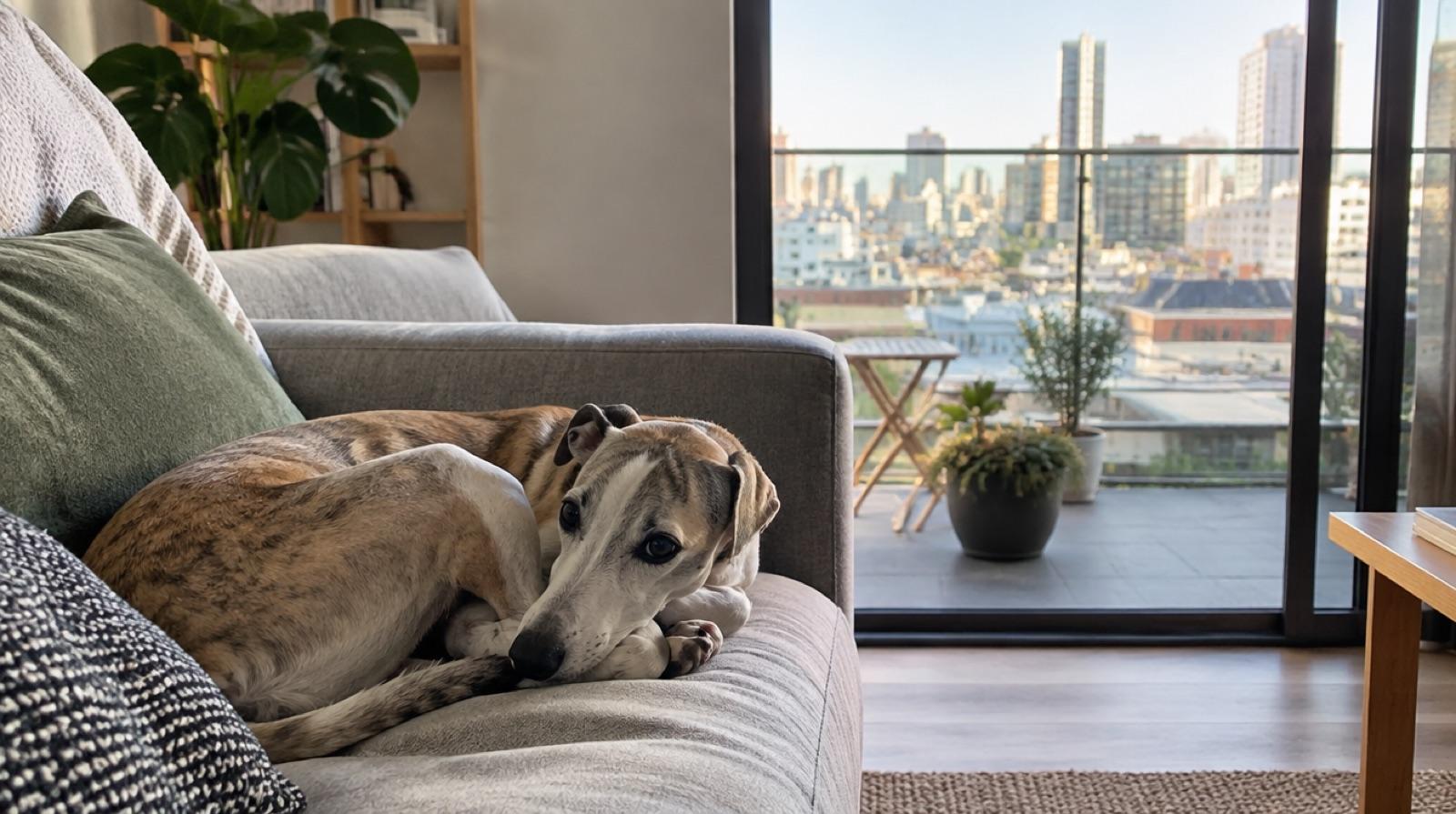
Look for quiet and settled, not small. Barking is what causes trouble with neighbours and strata, and it has little to do with size. Retired racing Greyhounds are a standout: their adoption programs describe dogs that sleep most of the day and do not need a backyard. Whippets and calm small companion dogs such as Cavaliers and Maltese can also suit a unit. High-drive working breeds and flat-faced breeds are the harder picks. An adult dog that is already house-trained beats a puppy. Before you apply, check your strata by-laws and get your landlord's written approval.
What makes a dog good for an apartment?
Four things, in this order.
1. Barking. Noise is what generates complaints from neighbours and strata committees, and in the worst case it is how apartment dogs end up back in rescue. It is also the trait least related to size. RSPCA Australia lists boredom, excitement, distress, territorial defence, fear and anxiety among the reasons dogs bark too much, and a shared corridor gives a watchful dog plenty to react to.
2. Settling. A dog that can lie quietly for an afternoon is comfortable in a small space. A dog that paces needs somewhere to pace. This is temperament, and it is exactly what a foster carer can tell you.
3. Exercise and toileting. Every dog needs walks, but in a unit every toilet trip is a scheduled outing, at 6am and in the rain. That makes an already house-trained adult far easier than a puppy.
4. Floor space. The thing size actually predicts comes last. Most adult dogs spend much of the day asleep and do not use space the way people imagine.
Why Greyhounds are often the best apartment dogs
The Greyhound surprises people. Under the Dogs Australia standard it stands 69 to 76 centimetres at the shoulder, and the standard describes it as “intelligent, gentle, affectionate and even tempered”. Greyhounds As Pets WA, a Western Australian Greyhound adoption program, says Greyhounds often sleep up to 16 to 20 hours a day, generally need only a short daily walk of around 20 minutes, and adapt well to small homes and apartments without needing a backyard.
The Whippet offers a similar profile in a medium frame. Its standard calls it “an ideal companion”, “highly adaptable in domestic and sporting surroundings”, with a “gentle, affectionate, even disposition”.
The trade-offs are real. Sighthounds were bred to chase, so ask the rescue how the dog behaves with cats and small animals, and expect to keep it on lead outside fenced areas. Lead and muzzle rules for pet Greyhounds also differ between states, so check yours. Retired racers come into adoption as adults; see the Greyhounds listed right now.
Apartment dog types compared
| Dog | What the source says | Unit fit | Watch for |
|---|---|---|---|
| Greyhound | Often sleeps up to 16 to 20 hours a day; adapts well to apartments (GAP WA) | Strong | Chase instinct with small pets; state lead and muzzle rules |
| Whippet | “Highly adaptable in domestic and sporting surroundings” (standard) | Strong | Chase instinct; fine, short coat |
| Cavalier King Charles Spaniel | “Gay, friendly, non-aggressive; no tendency to nervousness” (standard) | Good | Long coat needs brushing; uncommon in rescue |
| Maltese | “Sweet tempered and very intelligent” (standard) | Good if quiet | Long coat needs regular grooming; ask about barking |
| French Bulldog, Pug | Higher risk of breathing problems and heat-related illness (RSPCA) | Small, but health is the issue | Summer heat, vet costs |
| Kelpie, Border Collie | “Almost inexhaustible energy” (Kelpie standard); “instinctive tendency to work” (Border Collie standard) | Hard | Noise and damage when under-exercised |
Sources checked 9 November 2026. Unit fit is our editorial summary of those sources, not a rating from the breed bodies. Individual dogs vary.
Small apartment dogs: quiet beats tiny
Plenty of small dogs make lovely unit dogs. The catch is that small and quiet are different traits. Companion breeds such as the Cavalier and Maltese were bred to keep people company, while other small breeds were bred for different jobs, and some individual dogs are quick to bark at every door slam in the building.
So judge the dog in front of you. Ask the rescue what it does when someone walks past the door, when the intercom buzzes and when it is left alone for a few hours. Our small dogs listings show the shelter notes for each dog. If barking does become a problem, RSPCA Australia recommends a vet check and a reward-based behaviourist, rewarding quiet behaviour, and no punishment, which can make barking worse.
The dogs that struggle in apartments
High-drive working breeds. Kelpies, Border Collies, Cattle Dogs and similar dogs were bred to work all day. Without a job and plenty of exercise they find their own, and in a unit that usually means noise or chewed doorframes. Kelpie and Cattle Dog crosses are common in Australian rescue, so the breed is easy to find; the right home is the hard part.
Flat-faced breeds. They look like the obvious small-space choice, but RSPCA Australia says brachycephalic breeds such as Pugs and French and British Bulldogs commonly have lifelong breathing problems, may be unable to exercise normally in warm, humid weather, and have a higher risk of heat-related illness. A top-floor unit in a hot summer is a real risk for these dogs.
Puppies. Not a breed, but the hardest version of apartment life. A young puppy needs to go out many times a day, including overnight, and will cry while it learns to be alone. In a house you open the back door; in a unit you carry the puppy to the lift. If you are set on a puppy, plan the toilet route, talk to your neighbours before it arrives, and choose a lower floor if you can.
Strata, body corporate and renting rules
This is the one place where size can decide the outcome. Check two things before you fall for a particular dog: what your strata or body corporate by-laws say, and, if you rent, whether the landlord will approve the pet.
- NSW: NSW Fair Trading says by-laws that ban all pets are not valid, and an owners corporation can only refuse a pet that causes unreasonable interference. It cannot charge a pet bond or fee, or require insurance.
- Victoria: an owners corporation may have its own rules about pets in common areas, which renters must follow (Consumer Affairs Victoria).
- Queensland: body corporate approval can take longer than the landlord's 14 days to answer, and a body corporate committee decision can be disputed through the Office of the Commissioner for Body Corporate and Community Management (RTA).
- Western Australia: if strata by-laws prohibit pets, a tenant's pet request is automatically refused (WA Consumer Protection).
- SA, Tasmania, the ACT and the NT: strata or body corporate rules still apply on top of the tenancy rules.
Our renting with pets guide sets out each state's landlord rules, deadlines and pet bond limits in full. Get both approvals in writing before you apply for a dog. RSPCA Australia lists landlord permission among the first things to sort out, and many rescues ask renters to show it.
Find an apartment dog near you
Rescue dogs suited to unit living, from the shelters we aggregate in each city.
Why an adult rescue dog suits apartment life
An adult dog takes away the two problems apartments make worst. It is usually house-trained already, and it is past the crying and chewing of puppyhood. Just as important, it comes with information. A foster carer can tell you whether the dog barks at the door, whether it settles when left, and how it copes with lifts, stairs and strangers in the lobby.
Do not overlook senior dogs (our senior dog adoption guide explains the upside) and low-energy dogs either. An older dog that wants a sunny spot and two strolls a day can be the easiest unit dog of all. Mixed breeds count too: judge a Greyhound cross or a small terrier cross on its own temperament, not its label.
Not sure a dog suits your space? Try our dog or cat quiz or the what dog breed am I quiz, and see best family dogs if children share the flat.
Frequently asked questions
What is the best dog for an apartment in Australia?▼
A calm, quiet adult dog that settles when left alone, whatever its size. Retired racing Greyhounds are a strong example: Greyhounds As Pets WA says they often sleep up to 16 to 20 hours a day, adapt well to small homes and apartments and do not need a backyard. Whippets and calm small companion breeds such as the Cavalier King Charles Spaniel also suit units. An assessed adult from a rescue beats any breed list, because the rescue can tell you how that dog behaves at home.
Can you have a big dog in an apartment?▼
Yes, if the dog is calm and quiet and your building allows it. Size matters less than barking and restlessness. A Greyhound stands around 69 to 76 centimetres at the shoulder under the Dogs Australia standard, yet is often happy with short daily walks and a soft bed. The real limit is usually the strata by-laws, the lease and whether you can manage stairs or a lift several times a day.
What are good small apartment dogs?▼
Small dogs that are calm and not prone to alert barking. Companion breeds such as the Cavalier King Charles Spaniel, described in its standard as friendly and non-aggressive, and the Maltese, described as sweet tempered, were bred to live with people. Small is not the same as quiet, though, so ask the rescue how the dog reacts to noise in a hallway and to being left alone.
Are small dogs better for apartments?▼
Not automatically. A small dog takes up less floor space, but floor space matters least of the things that make a dog work in a unit. Barking is what causes trouble with neighbours and strata committees, and some small dogs bark readily. Judge the individual dog's noise level and how well it settles rather than its weight.
Which dogs are hardest to keep in an apartment?▼
High-drive working breeds and dogs that bark to guard. The Dogs Australia standards describe the Kelpie as having almost inexhaustible energy and the Border Collie as having an instinctive tendency to work. Without a job and plenty of exercise, dogs like these can become noisy or destructive, which is harder to manage with shared walls. They are excellent dogs in the right home, usually not a one-bedroom unit.
Can strata ban dogs in Australia?▼
It depends on the state. In NSW, NSW Fair Trading says by-laws that ban all pets are not valid and an owners corporation can only refuse a pet that causes unreasonable interference. In Western Australia, a strata by-law that prohibits pets means a tenant's pet request is automatically refused. Other states sit in between, so read your building's by-laws before you apply for a dog.
Do I need landlord approval for a dog in a rented apartment?▼
Yes. In every state a renter needs to ask the landlord, and in most states the landlord must answer within a set time and can only refuse for set reasons or with a tribunal order. Strata approval can be a separate step. RSPCA Australia also lists written landlord permission among the things to sort out before you get a pet, and rescues often ask to see it.
How much exercise does an apartment dog need?▼
As much as that dog needs, scheduled by you, because there is no backyard to fill the gaps. Every toilet trip means a lead, a lift or stairs and a walk outside, including first thing in the morning and late at night. Calm breeds need less: Greyhounds As Pets WA says one or two walks of 15 to 20 minutes is enough for most Greyhounds.
How do I stop my dog barking in an apartment?▼
Find out why the dog is barking first. RSPCA Australia says dogs bark excessively for reasons including boredom, excitement, distress, territorial defence, fear and anxiety. Its advice is to see your vet, who can refer you to a reward-based behaviourist, to reward quiet behaviour, and not to use punishment, which can make barking worse. Enough exercise and things to chew or sniff also help.
Is a puppy a good idea in an apartment?▼
It is the hardest way to do it. A young puppy needs to go outside many times a day, including overnight, which means carrying it down stairs or through a lobby each time. Puppies also cry and bark while they learn to be alone, and neighbours hear it. An adult dog that is already house-trained and settled removes both problems.
Are French Bulldogs and Pugs good apartment dogs?▼
They are small and affectionate, but RSPCA Australia warns that flat-faced breeds commonly have lifelong breathing problems and a higher risk of heat-related illness. Some cannot exercise normally in warm, humid weather, and some need surgery. In an Australian summer that is a real welfare and cost issue, so learn about brachycephalic health before choosing one.
Are Greyhounds allowed in apartments?▼
A pet Greyhound is treated like any other dog under strata and tenancy rules, so it needs the same landlord and strata approval. What differs by state are the lead and muzzle rules in public places. In Western Australia, for example, Greyhounds As Pets WA says pet Greyhounds no longer need a muzzle in public but must stay on a lead, even in off-leash areas. Check your own state's rules or ask the Greyhound adoption program you adopt from.
Sources
- Greyhounds As Pets WA: About the breed
- Dogs Australia: Greyhound breed standard
- Dogs Australia: Whippet breed standard
- Dogs Australia: Cavalier King Charles Spaniel breed standard
- Dogs Australia: Maltese breed standard
- Dogs Australia: Border Collie breed standard
- Dogs Australia: Australian Kelpie breed standard
- RSPCA Australia Knowledgebase: My dog is barking excessively, what should I do?
- RSPCA Australia Knowledgebase: What do I need to know about brachycephalic dogs?
- RSPCA Australia Knowledgebase: What do I need to know before I get a new pet?
- NSW Fair Trading: Pets in strata
- Consumer Affairs Victoria: Pets in rental properties
- Residential Tenancies Authority (Qld): Renting with pets
- WA Consumer Protection: Renting with pets
Keep reading
Apartment-friendly dogs in Sydney
Rescue dogs suited to unit living, listed by Sydney and NSW shelters and refreshed regularly.
Renting with pets in Australia
When a landlord can say no, the deadlines in each state, pet bonds, and how strata fits in.
Low maintenance dog breeds
Why coat matters more than size, and which dogs are genuinely easy to look after.
Dog or cat quiz
For some apartments a cat is the easier pet. A quick quiz on your time, space and routine.