The short answer
To adopt a greyhound, apply to your state's official program (Greyhounds As Pets in NSW, SA and WA; the Greyhound Adoption Program in Victoria, Queensland and Tasmania) or an independent greyhound rescue. State program fees we read on 9 November 2026 ran from $100 to $300, usually with desexing, vaccination and microchipping included; these are reference figures, not quotes. Pet greyhounds no longer need a muzzle in public in NSW, Victoria, WA, SA or the ACT, and Queensland law does not require one, but Tasmania still does unless the dog has passed an approved program. Most states require a lead in public, including at off-leash parks. Greyhounds are also listed by the general rescues we aggregate, so check the greyhound breed page too.
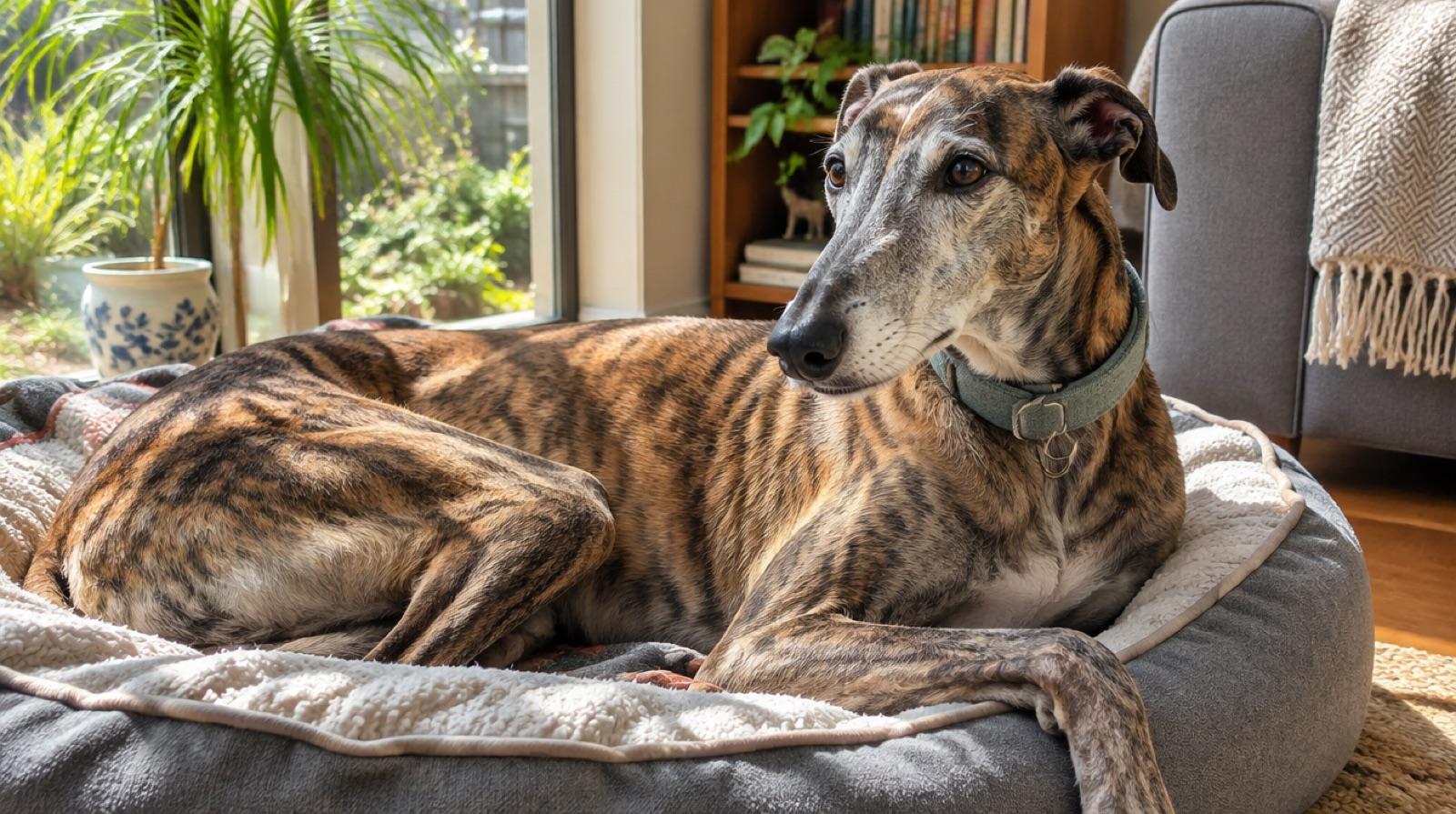
How does greyhound adoption work in Australia?
Every state that races greyhounds runs an adoption program for dogs leaving the industry, and they all work in a similar way. You apply, the program matches you with a dog it has assessed for living with people, children and other animals, you meet the dog, and you take it home, sometimes after a foster or trial period. Dogs normally go home desexed, vaccinated and microchipped, with a collar and lead.
The programs are run by, or linked to, each state's racing body or racing integrity regulator, which is why their names and set-ups differ. In NSW, for example, the regulator is the Greyhound Welfare & Integrity Commission (GWIC), whose rehoming policy lists private adoption, Greyhound Racing NSW's Greyhounds As Pets program, or another rescue as the ways a racing dog can be rehomed. GWIC sets the rules; it does not run adoptions itself.
Alongside the state programs, independent greyhound rescues and general shelters rehome greyhounds too. Greyhounds are one of the breeds listed most often by the rescues and shelters we aggregate, so the greyhound breed page is worth watching whichever route you take.
Which program runs greyhound adoption in each state?
| State | Program and who runs it | Published fee | How it works |
|---|---|---|---|
| NSW | Greyhounds As Pets NSW, coordinated by Greyhound Racing NSW; facilities on the Central Coast and in Western Sydney | $250; $150 for dogs over 7 | Five steps: apply, match, take your dog home, then ongoing support. Dogs are automatically enrolled in the Greenhounds retraining program |
| Victoria | Greyhound Adoption Program (GAP), owned and managed by Greyhound Racing Victoria; adoption centre at Tullamarine | $100; $50 for dogs 6 and over | Meet the dogs at Tullamarine (open Monday to Saturday; the Seymour kennels are closed to the public); every adoption begins with a trial period, and a three-week foster-to-adopt option is offered |
| Queensland | GAP Queensland, part of the Queensland Racing Integrity Commission and independent of Racing Queensland | $100 | Application with photos of your fence, gates and sleeping area; usually one to two weeks; dogs come with a numbered green collar |
| South Australia | Greyhounds As Pets SA, rehoming since 1997 from its centre at Angle Park | $200 standard fee; temporary reduced-fee offers run at times, so check its adopt page | Dogs go home vaccinated, desexed and microchipped, with a coat, collar and lead |
| Western Australia | Greyhounds As Pets WA, run by Racing and Wagering WA at Southern River | $200; $100 with a Seniors Card | Foster to adopt (a four-week trial, muzzled in public during the trial) or straight adoption |
| Tasmania | GAP Tasmania, administered by Tasracing | $300; self-foster adoption $250 | Expression of interest, then a match; a 28-day grace period after adoption |
| ACT | No program: racing and trialling banned since 30 April 2018 | Not applicable | Canberra adopters use NSW programs and rescues |
| Northern Territory | No government program; Greyhound Rehoming Association NT (GRANT) rehomes Darwin greyhounds | $295 | Application, meet the dog, a two-week trial, then adoption |
Read on each program's own pages on 9 November 2026. Fees are a reference, not a quote: programs change fees and run occasional events at different prices. Victorian fee from GAP's cost page and centre details from GAP's contact page; WA fee from Greyhounds As Pets WA; Tasmanian self-foster fee from GAP Tasmania.
What the fee buys is real value. GAP Victoria lists a desexed, vaccinated, microchipped, wormed and flea-treated dog, a temperament assessment and household match, a coat, collar and lead, and lifetime support. GAP Queensland lists a health check with a dental scale and polish, a heartworm test and lifetime microchip registration with Central Animal Records.
See greyhounds listed by rescues right now
General rescues and shelters list greyhounds too, often older dogs or ones already living in foster homes. The breed page shows what is listed today, with an alert for new arrivals.
See greyhounds →Do pet greyhounds need a muzzle, and can they go off lead?
The muzzle rules have changed in most states over the last few years, and the lead rules are stricter for greyhounds than for other dogs in several. These are the rules for pet (retired or non-racing) greyhounds; racing greyhounds stay under the racing rules.
| State | Muzzle in public | Lead and off-leash areas |
|---|---|---|
| NSW | Not required since 1 July 2019 for greyhounds registered as pets on the NSW Pet Registry; the OLG suggests muzzling a newly adopted dog for at least eight weeks | Lead in public. In an off-leash area a muzzle is required unless the dog has completed Greenhounds or Greyhounds As Pets, the only approved retraining programs |
| Victoria | Not required since 1 January 2019 | Leashed at all times in public, including council off-leash areas, unless a council has set aside a greyhound off-lead space |
| Queensland | Not required by the state Act; if a council by-law requires one, GAP accredited greyhounds are exempt | GAP Queensland strongly recommends never letting a greyhound off lead |
| South Australia | Not required since 17 November 2025 | A lead of no more than 2 metres at all times; dog parks and off-leash areas do not apply to greyhounds, except Board-approved greyhound events |
| Western Australia | Not required since 23 December 2021 | On a lead in public places, including off-leash dog parks and dog beaches |
| Tasmania | Required, unless the dog has passed an approved greyhound suitability program (GAP, Brightside, Dogs' Homes of Tasmania or RSPCA Tasmania collar) | A lead of no more than 2 metres in public, collar or not |
| ACT | Not required | Same rules as other dogs; greyhounds must be declared when you register the dog |
Sources, read 9 November 2026: NSW Office of Local Government FAQ; Agriculture Victoria; GAP Queensland FAQ (Animal Management (Cats and Dogs) Act 2008); Dog and Cat Management Board SA; WA DLGSC and Greyhounds As Pets WA; Dog Control Act 2000 (Tas) s 18 and NRE Tasmania; ACT City Services. We found no Northern Territory greyhound-specific rule; Darwin's general dog by-laws apply. Council rules can add to these, so check yours.
Even where the law allows it, think hard before letting a greyhound run free in an unfenced space. They are sighthounds, built to chase what they see at speeds few dogs can match, and recall training is slow. Our Sydney and Melbourne guides to greyhound off-leash rules and recall (and the Melbourne version) cover safe options such as fully fenced private hire yards.
What is a retired racing greyhound like at home?
Calmer than most people expect. The Dogs Australia breed standard describes the Greyhound as “intelligent, gentle, affectionate and even tempered”, and the adoption programs describe dogs that sleep much of the day and need less exercise than their speed suggests.
| Trait | What the sources say |
|---|---|
| Sleep and energy | Greyhounds As Pets WA says greyhounds can sleep for up to 20 hours a day and most need only a 15 to 20 minute walk daily |
| Exercise | RSPCA Australia: generally content with a daily walk and some play totalling around an hour a day; GAP Victoria suggests a couple of short walks of 20 to 30 minutes |
| Chasing | RSPCA Australia: some have a strong instinct to chase, and some can never be safely left alone with small animals |
| Weather | RSPCA Australia: greyhounds do not cope well with very hot or very cold weather |
| House life | RSPCA Australia: some have never been inside a house; introduce glass doors, slippery floors and stairs slowly. Greyhounds As Pets WA: most do not come toilet trained but are generally very clean dogs |
| Settling in | RSPCA Australia: newly adopted dogs can take several months to properly adjust. GAP Queensland compares it to bringing a new puppy home, with milestones at three days, three weeks and three months |
| Size and age | Breed standard height 71 to 76 cm for dogs and 69 to 71 cm for bitches; GAP Tasmania says most are around two years old at adoption, and puts lifespan at twelve to fourteen years |
From the RSPCA Australia Knowledgebase, Greyhounds As Pets WA, GAP Victoria, GAP Queensland and GAP Tasmania, read 9 November 2026. Every dog is an individual; the program's assessment of the actual dog matters more than any breed summary.
The practical upshot: a greyhound suits many apartment dwellers, older adopters and people who work from home, as long as there is a warm bed, a coat for winter, shade and water in summer, and patience for the first few months. It is a poor fit for a home with a free-roaming pet rabbit or a cat, unless the program has matched that specific dog as safe with them. Our Sydney and Melbourne greyhound health guides cover what to discuss with your vet, from teeth to anaesthetic care.
Which independent greyhound rescues are operating?
Independent rescues are usually volunteer-run and foster-based, so a carer has already seen how the dog behaves in a home. These are the ones we could confirm on their own websites on 9 November 2026, with current dogs, posts or events:
| Rescue | Area | Published fee |
|---|---|---|
| Greyhound Rescue | NSW and the ACT; three-week trial, foster to adopt offered | $395; $250 for seniors 8 and over |
| Friends of the Hound | NSW North Coast, Central Coast and Hunter, and south-east Queensland | $425 |
| Gumtree Greys | Melbourne; says it accepts no racing industry funding | Not published on the page we read |
| Greyhound Adoptions WA | Perth; volunteer-run and foster-based | Not published on the page we read |
Fees as published on each rescue's site on 9 November 2026. A reference, not a quote. Other greyhound groups exist; we list only those whose own sites showed current activity when we checked.
General rescues and RSPCA shelters also take in greyhounds, often older dogs or ones surrendered by owners. Those are the greyhounds that appear on our greyhound breed page, which pulls listings from the rescues and shelters we aggregate. We do not list the state programs' dogs, so check their websites directly as well.
What should you ask before you adopt a greyhound?
- Has this dog been assessed with cats, small dogs and children? Tell the program about every animal and child in your home, and visiting grandchildren too.
- What are the muzzle and lead rules where I live? Use the table above, then check your council's rules, and ask whether the dog has the green collar or retraining your state recognises.
- Is there a trial or foster-to-adopt option? Victoria, Western Australia, Tasmania and several rescues offer one.
- What vet work is done, and what is not? Ask about teeth in particular, and request the dog's records for your own vet.
- What support is there after adoption? Most programs offer advice for the settling-in months, and many will take a dog back if things do not work out.
- Can I afford a large dog for twelve years or more? Run the numbers with the dog cost calculator.
Not sure a greyhound is the right dog? The what dog breed am I quiz and adoption readiness check take a few minutes, and our guides to adopting a senior dog and the best apartment dogs compare other calm, low-exercise options.
What is happening to greyhound racing in Tasmania and the ACT?
The ACT banned greyhound racing and trialling from 30 April 2018, so there is no ACT adoption program; ACT City Services says greyhounds now follow the same public-place rules as other dogs and do not need a muzzle. In Tasmania, the Premier announced on 6 November 2025 that legislation had been introduced to end the code by 30 June 2029. The bill passed the House of Assembly, but on 9 November 2026 the Parliament of Tasmania bill page still showed it before the Legislative Council, with no royal assent. Until anything changes, GAP Tasmania keeps rehoming dogs, and Tasmania's muzzle rule still applies to dogs without an approved collar.
Find a greyhound near you
Each page shows greyhounds listed right now by rescues and shelters in that city, and each listing links to the rescue where you apply directly.
- Greyhounds for adoption in Sydney
- Greyhounds for adoption in Melbourne
- Greyhounds for adoption in Brisbane
- Greyhounds for adoption in Perth
- Greyhounds for adoption in Adelaide
Local greyhound adoption guides, with each city's programs, rescues and park rules: Sydney, Melbourne, Brisbane, Gold Coast, Sunshine Coast, Perth, Adelaide.
Open to other calm, big dogs? Browse large dogs in Sydney, Melbourne, Brisbane, Perth, Adelaide or low-energy dogs in Sydney, Melbourne, Brisbane, Perth, Adelaide.
Frequently asked questions
How do I adopt a greyhound in Australia?▼
Apply to your state's greyhound adoption program or an independent greyhound rescue. Each state with racing has an official program: Greyhounds As Pets in NSW, South Australia and Western Australia, the Greyhound Adoption Program (GAP) in Victoria, Queensland and Tasmania. The usual steps are an application, a meeting with dogs the program has assessed, and taking one home, sometimes after a foster or trial period. General rescues and RSPCA shelters list greyhounds too.
How much does it cost to adopt a greyhound?▼
For most dogs, between $100 and $300 through a state program. On 9 November 2026 GAP Victoria listed a flat $100 ($50 for dogs six and over), GAP Queensland $100, Greyhounds As Pets WA $200, Greyhounds As Pets NSW $250 ($150 for dogs over seven) and GAP Tasmania $300. Independent rescues we checked charged more, for example $395 at Greyhound Rescue in NSW. These are reference figures, not quotes, and fees normally include desexing, vaccination and microchipping.
Do greyhounds have to wear a muzzle in Australia?▼
It depends on the state. Pet greyhounds no longer need a muzzle in public in NSW (if registered as a pet, since 1 July 2019), Victoria (since 1 January 2019), Western Australia (since 23 December 2021), South Australia (since 17 November 2025) and the ACT. Queensland's state law does not require one. Tasmania still requires a muzzle unless the dog has passed an approved greyhound suitability program. Racing greyhounds are treated differently.
Can greyhounds go off lead?▼
Mostly not in public. Victoria and South Australia require greyhounds to be on a lead in public including council off-leash areas, Western Australia requires a lead in public including off-leash dog parks and beaches, Tasmania requires a lead in public, and in NSW a pet greyhound must wear a muzzle in an off-leash area unless it has completed an approved retraining program. In the ACT greyhounds follow the same rules as other dogs. Greyhounds are sighthounds, and GAP Queensland strongly recommends never letting one off lead.
Are greyhounds good pets?▼
For many homes, yes. The Dogs Australia breed standard describes the Greyhound as intelligent, gentle, affectionate and even tempered, and Greyhounds As Pets WA says they can sleep up to 20 hours a day. RSPCA Australia says most are content with around an hour of walking and play a day. The cautions are a strong chase instinct in some dogs, sensitivity to heat and cold, and a settling-in period of several months for a dog that may never have lived in a house.
Can a greyhound live with a cat?▼
Some can, some never can. RSPCA Australia says some greyhounds have a strong instinct to chase, and that while some can learn to live with small animals, others can never be safely left alone with them. State programs assess each dog for this: GAP Victoria assesses greyhounds for living with small animals such as cats and dogs, and GAP Queensland uses coaching dogs to evaluate prey drive. Tell the program about every pet you have and follow its match.
How old are retired racing greyhounds?▼
Usually young adults. GAP Tasmania says its dogs are generally around two years old, but range from eighteen months to eight years. That means most still have many years ahead: GAP Tasmania puts the expected greyhound lifespan at twelve to fourteen years. Programs also rehome older dogs, often at a lower fee.
Are greyhounds good in apartments?▼
Often, yes. Greyhounds As Pets WA says retired greyhounds adapt well to small homes and apartments and do not need a backyard, and most need only short daily walks. Check strata or landlord rules first, and remember stairs and slippery floors can be new to an ex-racer; RSPCA Australia advises introducing glass doors, slippery floors and stairs slowly.
Do I need to register a greyhound as a pet?▼
Yes, like any dog, with your state or council. In NSW, registering on the NSW Pet Registry is a requirement under the Companion Animals Act 1998, and the muzzle exemption applies to greyhounds registered as pets. In the ACT, greyhounds must be declared on the dog registration form. Elsewhere register with your local council. GAP Queensland includes lifetime registration with Central Animal Records for the microchip.
Is greyhound racing ending in Tasmania?▼
It is planned to end, but the law had not passed when we checked. The Tasmanian Premier announced legislation in November 2025 to end the code by 30 June 2029. The bill passed the House of Assembly, and on 9 November 2026 the Parliament of Tasmania bill page showed it before the Legislative Council with no royal assent. GAP Tasmania, run by Tasracing, continues to rehome dogs.
Is there a greyhound adoption program in the ACT or NT?▼
Not a government-run one. Greyhound racing and trialling has been banned in the ACT since 30 April 2018, and Canberra adopters usually go through NSW rescues such as Greyhound Rescue, which rehomes across NSW and the ACT. In the Northern Territory, the Greyhound Rehoming Association NT (GRANT) rehomes greyhounds with a two-week trial period and a published fee of $295.
Should I adopt from a state program or an independent rescue?▼
Either can be a good choice. State programs have the most dogs and the lowest fees, and assess every dog for cats, small dogs and children. Independent rescues are usually foster-based, so a carer can describe how the dog lives in a real house, and some, such as Gumtree Greys in Melbourne, say they take no racing industry funding. Apply to more than one if you are flexible.
Sources
- Greyhounds As Pets NSW: Adopt
- Greyhound Racing NSW: Greyhounds As Pets NSW
- Greyhound Welfare & Integrity Commission: Greyhound Rehoming Policy (Sep 2026)
- NSW Office of Local Government: Removal of the muzzling requirement for pet greyhounds, FAQs
- GAP Victoria (Greyhound Racing Victoria): Who we are
- GAP Victoria: How to adopt
- GAP Victoria: How much does it cost to adopt and own a greyhound
- GAP Victoria: Get in touch (Tullamarine and Seymour)
- Agriculture Victoria: Removal of muzzling requirements for pet greyhounds
- GAP Queensland: Adopt a greyhound
- GAP Queensland: Frequently asked questions
- Greyhounds As Pets SA: Adopt
- Dog and Cat Management Board (SA): Greyhounds
- Greyhounds As Pets WA: Adopt
- Greyhounds As Pets WA: Our greyhounds (fees)
- Greyhounds As Pets WA: About the breed
- WA Department of Local Government, Sport and Cultural Industries: Greyhounds
- GAP Tasmania (Tasracing): FAQs
- GAP Tasmania: Expression of interest to adopt
- Dog Control Act 2000 (Tas), section 18
- NRE Tasmania: Greyhound un-muzzling information
- Premier of Tasmania: Next step in phasing out greyhound racing (6 Nov 2025)
- Parliament of Tasmania: Greyhound Racing (Phasing Out) bill 2025
- ACT City Services: Dogs, your responsibilities
- Greyhound Rehoming Association NT: Adopt
- RSPCA Australia Knowledgebase: What should I know about owning a greyhound?
- Dogs Australia: Greyhound breed standard
Keep reading
Greyhounds listed by rescues
Greyhounds listed right now by the rescues and shelters we aggregate across Australia.
Senior dog adoption in Australia
What an older rescue dog costs, seniors discounts, and what to expect in the first weeks.
Greyhound health issues
Anaesthetic care, teeth, thin skin and the cold: what greyhound owners plan for.
Adoption readiness check
A short quiz on time, budget and home set-up before you apply for any dog.