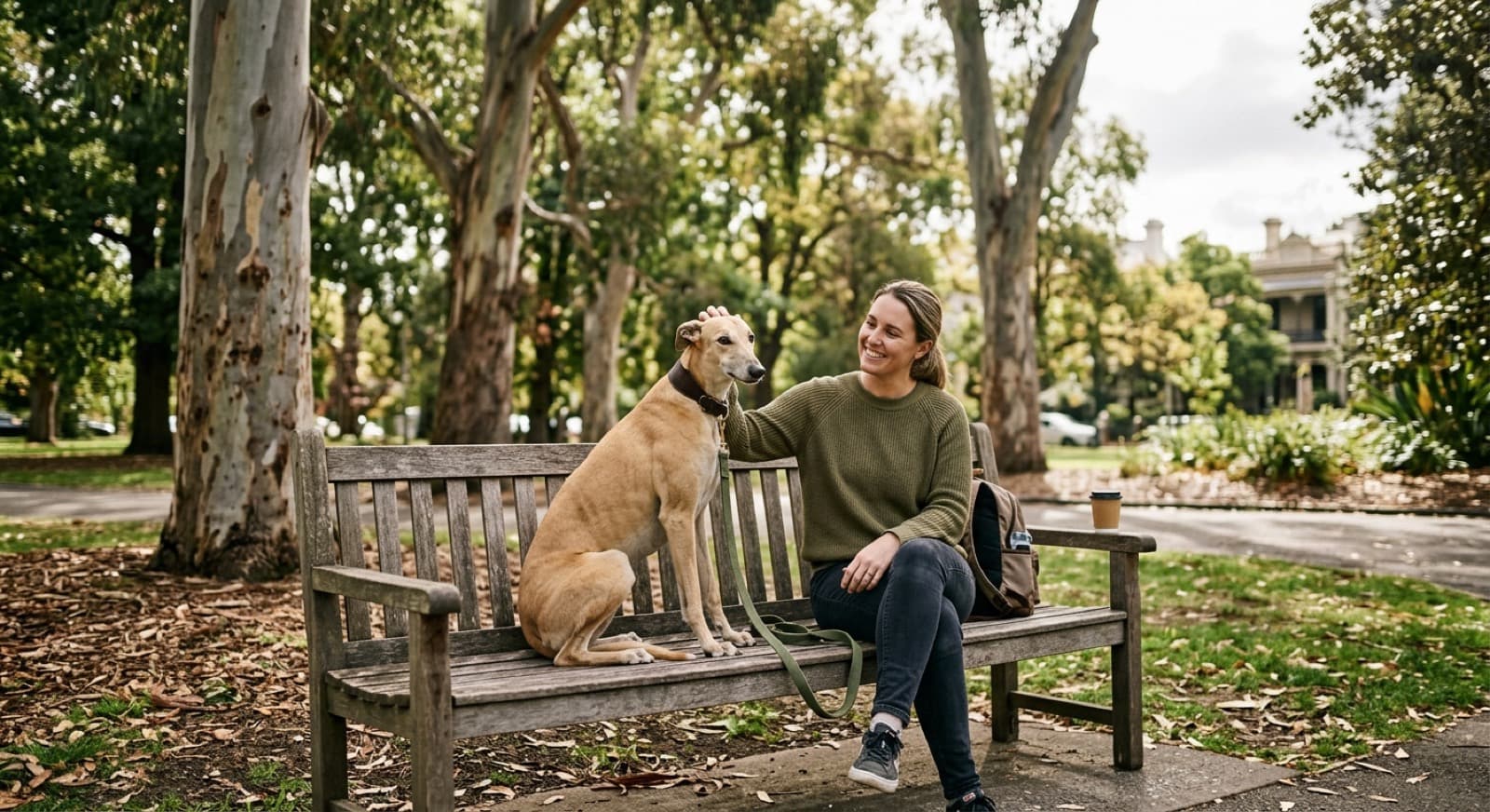
The short answer
Most adoptable greyhounds in Brisbane are retired racing dogs, and the main pathway is Greyhounds as Pets (GAP), the official adoption program run through the Queensland racing industry, backed by RSPCA Queensland, AWLQ and PetRescue. The GAP fee is low, often around $100 or less, and already covers desexing, vaccination, microchipping and a temperament test including cat and small-animal assessment. Two Queensland points are worth knowing up front: a pet greyhound has generally needed to be muzzled in public unless it has passed the Greyhounds as Pets assessment and wears the approved green collar that exempts it, and because the breed is a fast sighthound you should treat it as an on-lead dog in public. Ex-racers are calm and gentle, but they feel the subtropical heat sharply, so this is a cool-of-the-day dog in a Brisbane summer.
The Brisbane greyhound rescue landscape
Queensland has a steady supply of adoptable greyhounds because hundreds of dogs retire from racing each year and rehoming is now the standard pathway. The result is that a calm, well-assessed greyhound is one of the easier dogs to adopt in Brisbane, and the fee is kept deliberately low to encourage it.
1. Greyhounds as Pets (GAP)
The official program for rehoming retired racing greyhounds in Queensland. It fosters and assesses each dog before adoption, includes cat and small-animal testing, and hands over a dog that is already desexed, vaccinated, microchipped, wormed and flea-treated. Many GAP dogs also come with the green-collar muzzle exemption. The fee is low, often around $100 or less. Apply through the Greyhounds as Pets program and meet the available dogs.
2. RSPCA Queensland
The state body runs its main Animal Care Campus at Wacol plus other centres across South East Queensland, and takes in greyhounds and greyhound crosses through the year. Every adoption includes desexing, vaccination, microchipping, a vet workup and a behavioural assessment. Adoption fees are typically $400 to $450 for an adult, all-inclusive. Browse at rspcaqld.org.au.
3. AWLQ and PetRescue
Animal Welfare League Queensland, a long-running no-kill charity with centres around Brisbane and the Gold Coast, rehomes greyhounds from time to time at awlq.org.au. For a broad scan of what is available across the state, PetRescue lists animals from many smaller Queensland rescues in one place at petrescue.com.au, though for greyhounds specifically the Greyhounds as Pets list is usually the deepest and best assessed.
What a greyhound costs: adopt versus buy
The economics of greyhound adoption are unusual. Because most dogs come through a regulated rehoming program, the Greyhounds as Pets fee is kept deliberately low, often around $100 or less and sometimes waived in adoption drives, and it already covers desexing, vaccination, microchipping, worming, flea treatment and a full temperament and cat test. General rescues that list greyhounds charge more like $400 to $450 for an adult, with similar inclusions.
Ongoing costs are similar to other large breeds, with two helpful adjustments: calm greyhounds eat less than most dogs their size, and their modest exercise needs keep day-to-day costs down. Budget for year-round paralysis tick and parasite prevention, essential everywhere in South East Queensland, a warm bed for cool nights given the thin coat, an annual vet check, and pet insurance, which is genuinely worth it because the breed carries a higher risk of a few expensive conditions. Council registration under the Animal Management (Cats and Dogs) Act 2008 is a modest annual fee, substantially reduced for a desexed and microchipped dog, and payable to your council such as Brisbane City Council.
The muzzle and lead rules in Queensland
This is where Queensland differs from some other states, and it is worth getting right. A pet greyhound in Queensland has generally been required to wear a muzzle in a public place unless it has passed the Greyhounds as Pets temperament assessment and wears the approved green collar, which exempts it from the muzzle requirement. Many adopted greyhounds come with that green-collar exemption already in place, so ask the rescue whether the specific dog is exempt. Because these rules can change over time, confirm the current requirement with the Greyhounds as Pets program and your local council, such as Brisbane City Council, before you rely on it.
On the lead, use common sense regardless of the law: a greyhound is a sighthound bred to chase, and even a calm, friendly one can be gone in seconds after a cat or a bird, which at full speed is a serious risk near roads. Keep a greyhound on-lead in public unless you are in a secure, fully fenced space, and let the dog have its sprint in a private yard or a hired dog paddock rather than an open park. The lead is about the breed's speed and prey drive, not its temperament.
Browse adoptable greyhounds in Brisbane
Live listings from Greyhounds as Pets and Queensland rescues. Each profile includes the cat-test result and temperament assessment.
See Available Greyhounds →What ex-racing greyhounds are actually like
The stereotype is wrong in both directions. Greyhounds are neither high-energy racing machines nor damaged dogs. They are calm, sweet-natured animals that have lived a very specific life and now need to learn a different one. Most sleep a great deal, rarely bark, and settle happily into apartments and smaller homes, because a couple of short walks a day suits an adult greyhound. They are sprinters, not endurance runners, and they are affectionate without usually being clingy. Having spent their working lives in kennels around other greyhounds, most are socially easy with other dogs.
The settling-in is the one unusual part. An ex-racer has often never seen stairs, glass doors, slippery indoor floors, mirrors, a television or a washing machine, and has rarely been alone. None of this is difficult, and most dogs learn home life within one to four weeks with calm, patient handling, but knowing it is coming makes the first days much smoother. Keep the first week quiet, introduce the home slowly, use rugs on slippery floors, and expect a lot of sleep while the dog decompresses.
Greyhounds and the Brisbane climate
A greyhound has a very thin coat, little body fat and a large surface area, so it feels both heat and cold more sharply than most breeds. In a subtropical Brisbane summer that makes heat management the priority: walk only in the cool of the early morning or evening, never in the heat of the day, and use the footpath test, pressing the back of your hand to the pavement, because if you cannot hold it there comfortably it is too hot for the dog's paws. Keep air conditioning or a fan available in the hottest hours, provide constant shade and water, and never leave the dog in a parked car.
The thin coat also means a greyhound feels a cool winter night, so a warm bed away from draughts matters even here. Fleas, intestinal worms and heartworm are year-round concerns, and paralysis tick is a serious risk across South East Queensland, so use a vet-recommended prevention plan all year.
Cat compatibility and small-animal testing
This is the single most variable thing about a greyhound. Prey drive is bred into racing lines, and individual dogs range from completely safe with cats to genuinely unsafe around small animals. Greyhounds as Pets cat-tests and small-animal-tests every dog before adoption and records the result on the profile, marking cat-suitable dogs as such. If you have a cat or a small pet, apply only for a greyhound assessed as cat-suitable, and even then introduce them slowly and carefully. Do not assume an untested greyhound will be fine, because the consequences when prey drive triggers can be severe and irreversible.
Frequently Asked Questions
Where can I adopt a greyhound near me in Brisbane?
Most adoptable greyhounds in Queensland are retired racing dogs, and the main pathway is Greyhounds as Pets (GAP), the official adoption program run through the Queensland racing industry, which fosters, assesses and rehomes retired racers. Beyond GAP, RSPCA Queensland (its Animal Care Campus is at Wacol) and Animal Welfare League Queensland (AWLQ) take in greyhounds and greyhound crosses through the year, and PetRescue lists them from many smaller Queensland rescues in one place. Greyhounds are one of the more available dogs in Queensland rescue, so set alerts, apply, and be ready to meet a few dogs.
How much does it cost to adopt a greyhound in Brisbane?
The Greyhounds as Pets program fee is low, often around $100 or less and sometimes waived in adoption drives, and it already covers desexing, vaccination, microchipping, worming, flea treatment and a temperament assessment that includes cat and small-animal testing. General rescues that occasionally list greyhounds, such as RSPCA Queensland or AWLQ, charge more like $400 to $450 for an adult dog with similar inclusions. Either way the fee covers only a fraction of what the rescue has actually spent getting the dog ready for you. Ongoing costs are similar to other large breeds, with the nice twist that calm greyhounds eat less than most dogs their size.
Do adopted greyhounds have to wear a muzzle in Queensland?
Queensland treats greyhounds differently from some other states, so this is worth checking rather than assuming. A pet greyhound in Queensland has generally been required to wear a muzzle in a public place unless it has passed the Greyhounds as Pets temperament assessment and wears the approved green collar, which exempts it from muzzling. Many adopted greyhounds come with that green-collar exemption. Because these rules can change, confirm the current requirement with the Greyhounds as Pets program and your local council before you rely on it, and ask the rescue whether the specific dog is green-collar exempt.
Can a greyhound go off-lead at a Brisbane dog park?
Treat a greyhound as an on-lead dog in public unless you are certain of both the law and the individual dog. Greyhounds are sighthounds bred to chase, and a calm, friendly one can still be gone in seconds after a cat or a bird, which at full speed is a serious risk near roads. Off-lead running is safest in a secure, fully fenced space such as a private yard or a hired dog paddock, where the dog can open up and sprint without risk. Check your local council rules on greyhounds in off-leash areas, and follow the rescue's guidance for the particular dog.
Can a greyhound live with cats?
Some can, some cannot, and it comes down to the individual dog's prey drive rather than the breed as a whole. Greyhounds as Pets cat-tests and small-animal-tests the dogs before adoption and records the result, marking cat-suitable dogs as such. If you have a cat or a small pet, apply only for a greyhound assessed as cat-suitable, and even then introduce them slowly and carefully. A dog that shows a strong prey response should not be placed with cats or small animals, so never assume an untested greyhound will be fine.
What are retired racing greyhounds actually like to live with?
Much easier than most people expect. Greyhounds are calm, quiet, gentle dogs that sleep most of the day and are often called the 45 mph couch potato. They rarely bark, are generally friendly with other dogs from a life spent in kennels, and suit apartments and smaller homes because their exercise needs are modest, a couple of short walks a day for most adults. They are affectionate but not usually clingy. The one adjustment is that an ex-racer has often never seen stairs, glass doors, slippery floors or a television, so the first week or two is about calmly teaching normal home life.
How do greyhounds cope with the Brisbane heat?
They need care, because a greyhound has a very thin coat, little body fat and a large surface area, so it feels heat sharply. On a hot, humid Brisbane day walk only in the cool of the early morning or evening, never in the middle of the day, use the footpath test (if you cannot hold the back of your hand on the pavement comfortably, it is too hot for paws), keep air conditioning or a fan available in the hottest hours, and never leave the dog in a parked car. The thin coat also means they feel cool nights, so a warm bed indoors matters. Year-round paralysis tick and parasite prevention is essential across South East Queensland.
Are greyhounds good with children?
Most ex-racing greyhounds are gentle and tolerant with children, and their calm nature suits family life. Supervision still matters, because the large size and very thin skin mean a greyhound can be hurt by rough handling or knock a small child over by accident, and a sleeping greyhound should be left to rest. The Greyhounds as Pets assessment and the foster carer's notes will tell you how a specific dog is around children, which predicts the fit far better than the breed average.
Why adopt instead of buying a greyhound?
For greyhounds, adoption is clearly the sensible route. Retired racers are plentiful, already desexed, vaccinated, microchipped and temperament-tested including around cats, and the adoption fee is low, often around $100, far below almost any private sale. You also get a dog whose behaviour has actually been assessed rather than a gamble. A greyhound advertised privately or free online has usually had none of that vet work done, so a rehomed dog with a full workup already completed is both cheaper and safer. The ACCC Scamwatch has documented deposit scams for dogs that do not exist, so never send money for a dog you have not met.
Keep reading
Adoptable Greyhounds in Brisbane
Live listings from Greyhounds as Pets and Queensland rescues with cat-test results.
Best Dog Rescues in Brisbane
The verified shelters and foster rescues to set alerts with across South East Queensland.
Registering a Dog in Brisbane
Council registration, microchipping and the Queensland rules for a new dog.
All Brisbane Adoption Guides
Browse every breed and how-to guide for adopting a rescue dog in Brisbane.