The short answer
No study ranks dog breeds by loyalty, so “most loyal” lists are opinion. The Dogs Australia breed standards describe devotion in the Boxer, Kelpie, Australian Cattle Dog, Border Collie, Rottweiler, Dobermann and Labrador, and call the Shetland Sheepdog affectionate to its owner and reserved with strangers. Attachment research tells a bigger story: adult dogs form real attachment bonds with their owners, a 1998 study found little effect of breed on most attachment behaviours, and a 2001 study found shelter dogs began treating a new person as an attachment figure after three short sessions. The catch with a very devoted dog is that it may struggle when left alone, so plan for that.
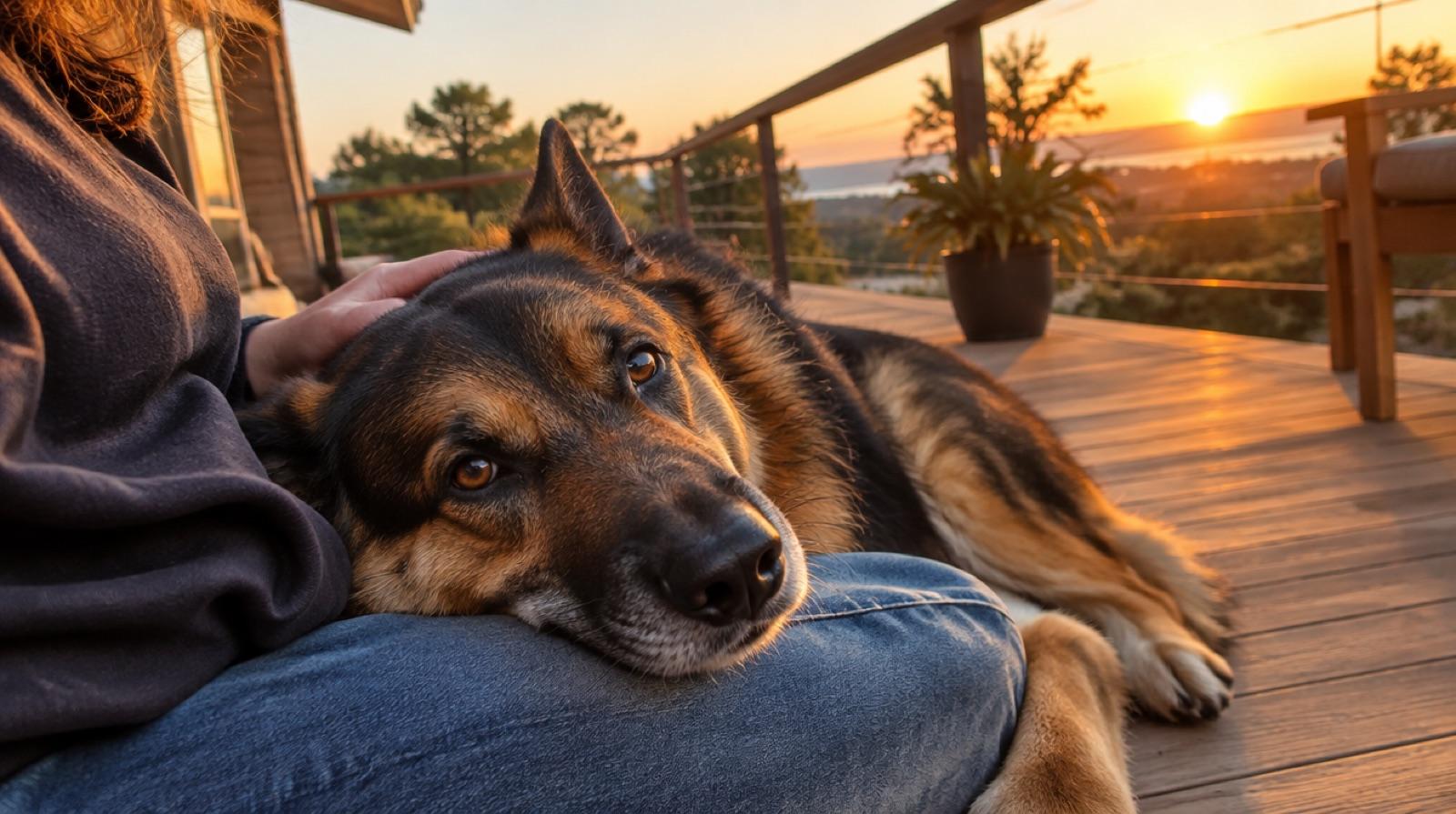
Is there a ranking of the most loyal dog breeds?
No. Unlike intelligence, where psychologist Stanley Coren at least surveyed obedience judges (see our smartest dog breeds guide), there is no published ranking of breeds by loyalty. Loyalty is hard to define and harder to measure. Is it staying close, coming when called, guarding the house, or pining when you leave? Different lists mean different things, and most simply repeat each other.
What researchers do measure is attachment: whether a dog treats a particular person as a source of safety and comfort. That turns out to be the more useful question, and its answer is encouraging for anyone thinking about adopting.
What does research say about dog loyalty?
Dogs attach to their owners much as children attach to parents
In a 1998 study in the Journal of Comparative Psychology, József Topál and colleagues at Eötvös Loránd University put 51 owner and dog pairs through a version of the Strange Situation Test, a procedure developed to study how infants attach to their mothers. In the test, a dog meets a stranger in an unfamiliar room and is briefly separated from and reunited with its owner. Adult dogs showed patterns of attachment behaviour toward their owners, and the researchers compared the bond to child and parent attachment.
Two findings matter for choosing a dog. There was a lot of variation between individual dogs. And the researchers found no effect of gender, age, living conditions or breed on most of the behaviours they measured. On this evidence, loyalty in the attachment sense is a dog trait, not a breed trait.
Breed predicts less than you might think
A much larger 2022 study in Science surveyed the owners of 18,385 dogs and genotyped 2,155 of them. Breed explained just 9% of the variation in behaviour between individual dogs. One of its findings helps untangle what people mean by a loyal dog. In owners' survey answers on sociability with people, Labradors, Golden Retrievers and Siberian Huskies were more likely than an average dog to score in the top quarter, and German Shepherd Dogs less likely. The study also found herding breeds, as a group, were more aloof and more responsive to direction.
So “loves everyone” and “devoted to its own people” are two different things. A friendly retriever greets the plumber like an old friend; a reserved herding dog may stick to its family and ignore the plumber. Both can be deeply attached to the people they live with.
Which dog breeds do the standards describe as loyal?
A breed standard sets out the ideal temperament for a breed. These are the Dogs Australia standards that describe loyalty, devotion or faithfulness in so many words, checked 10 November 2026.
| Breed | Breed standard says |
|---|---|
| Boxer | “renowned from olden times for his great love and faithfulness to his master and household … the soul of honesty and loyalty” (standard) |
| Kelpie | “marked loyalty and devotion to duty” (standard) |
| Australian Cattle Dog | “loyalty and protective instincts make it a self-appointed guardian to the Stockman, his herd and his property” (standard) |
| Border Collie | “its loyal and faithful nature demonstrates that it is at all times kindly disposed towards stock” (standard) |
| Rottweiler | “goodnatured, placid in basic disposition, very devoted, obedient, biddable and eager to work” (standard) |
| Dobermann | “intelligent and firm of character, loyal and obedient” (standard) |
| Labrador Retriever | “adaptable, devoted companion” (standard) |
| Hungarian Vizsla | “his outstanding willingness to keep contact with his master while working is one of his essential qualities” (standard) |
| Shetland Sheepdog | “affectionate and responsive to his owner, reserved towards strangers” (standard) |
| Bullmastiff | “high spirited, alert and faithful” (standard) |
| Shiba Inu | “the temperament is faithful, with keenness in sense and high alertness” (standard) |
| Chow Chow | “loyal yet aloof” (standard) |
A breed standard describes the ideal dog of a breed, not a promise about any one dog. The order is not a ranking.
Notice where the word loyal turns up. The Kelpie, Cattle Dog and Border Collie standards tie loyalty to work: “devotion to duty”, guarding the stockman, being kindly towards stock. The Rottweiler and Dobermann pair it with obedience. The Boxer and the Labrador describe a family companion. All of these are dogs bred to work closely with people, which is much of what loyalty means in practice.
Which breeds are one-person dogs?
“One-person dog” usually describes a dog that is warm with its own people and cool with strangers. Several standards describe that reserve:
- Shetland Sheepdog: “affectionate and responsive to his owner, reserved towards strangers” (standard).
- Australian Cattle Dog: “naturally suspicious of strangers, must be amenable to handling” (standard).
- Chow Chow: “loyal yet aloof” (standard).
- Akita: “dignified, courageous, aloof” (standard).
- Basenji: “can be aloof with strangers” (standard).
None of these standards says the dog bonds with only one member of a family. In most homes a dog attaches to the people who feed, walk and play with it, and it can attach to more than one. If you want a dog that is close to one person in particular, that person needs to be the one doing the daily care and training.
What is the downside of a very loyal dog?
The traits people love in a devoted dog have two common costs.
It may not cope with being left alone
The RSPCA Knowledgebase explains that many dogs become anxious when separated from the person or family group they are attached to. Signs include toileting in the house, destructiveness, excessive barking, digging, pacing and trying to escape. It also says separation anxiety is a mental health issue that needs veterinary treatment, so see your vet if you suspect it.
Australian research links this directly to attachment. A University of Sydney study of 513 Golden Retrievers and Labradors, published in 2018, notes that separation-related behaviours are reported in an estimated 14 to 29% of companion dogs. In its own sample, those behaviours were most strongly correlated with a group of traits that included attachment and attention-seeking behaviour. A dog that follows you from room to room is lovely, until you need to go to work.
The RSPCA's advice is to teach the dog to be calm and relaxed when its person is away: keep departures and returns low-key, reward calm behaviour, build time alone gradually, and give plenty of physical and mental exercise. Start in the first weeks, not after a problem appears.
It may guard what it loves
Devotion and protectiveness often travel together. The Australian Cattle Dog standard says its loyalty and protective instincts make it a self-appointed guardian, and several of the breeds above were developed for guarding. A protective dog needs early, careful socialisation so visitors, tradespeople and children's friends are not treated as threats. Our guard dogs guide explains the difference between a watchdog and a guardian breed and each state's restricted breed and dangerous dog rules.
If what you really want is a devoted dog that is easy to live with, look at the gentler companions in our calm dog breeds guide as well as the working breeds here.
Will an adopted dog be loyal to you?
Yes, and the research here is some of the most encouraging there is for adopters. In a 2001 study, Márta Gácsi and colleagues worked with 60 adult dogs living in two Hungarian shelters, where they had very little contact with people. Forty of the dogs were handled by a new person for three 10-minute sessions; the other 20 were not. In a Strange Situation Test, the handled dogs sought contact with their handler, stayed with them rather than standing at the door, and paid less attention to a stranger. The researchers concluded that the handled dogs' response met the criteria for attachment, and that even adult dogs can form attachments quickly.
They also pointed out the myth this challenges: the belief that a dog must be raised from a young puppy to bond with you, which they said puts people off adopting from shelters.
One honest caution
The same University of Sydney retriever study found separation-related behaviour scores were higher in dogs acquired from pet shops, shelters and rescue organisations than in those from breeders or service organisations. A survey like that cannot say why, and it covered two breeds only. The practical lesson is simple: ask how a rescue dog copes when left alone, and plan its first weeks around building that skill.
Questions to ask the foster carer
- How does the dog behave when left alone, and for how long has it been left?
- Does it follow people from room to room, or settle on its own?
- How does it react to visitors and strangers on walks?
- Does it guard food, toys, its bed or a particular person?
- How quickly did it warm up to the carer when it first arrived?
The RSPCA Knowledgebase recommends starting your search with shelters and rescues. Give a new dog a few quiet days to decompress before you expect much; our free dog training plan starts there.
How do you build loyalty in any dog?
Through the same things that build any relationship: time, predictability and good experiences. The RSPCA says training builds trust and clear communication between caregiver and dog, and that positive reinforcement training enhances the relationship between dog and handler. It also warns that physical punishment and aversive equipment can harm the dog's relationship with people.
- Be the source of good things: meals, walks, play and training rewards.
- Keep a routine so the dog learns what each day looks like.
- Train with rewards for a few minutes most days. Our easiest dogs to train guide and the free dog training course are good starting points.
- Teach time alone early, so devotion never turns into distress.
Still working out what kind of dog suits you? Try the what dog breed am I quiz, the adoption readiness check and the dog cost calculator. New to dogs? Read best dogs for first-time owners first.
Meet a devoted rescue dog near you
Kelpies, Cattle Dogs and dogs of every mix listed by the rescues and pounds we aggregate, with notes from the people who know them.
Kelpies in Sydney →Cattle Dogs in Brisbane →Find a loyal dog near you
- Sydney: Kelpies, Cattle Dogs, Labradors, senior dogs and mixed-breed dogs for adoption
- Melbourne: Kelpies, Cattle Dogs, Labradors, senior dogs and mixed-breed dogs for adoption
- Brisbane: Kelpies, Cattle Dogs, Labradors, senior dogs and mixed-breed dogs for adoption
- Perth: Kelpies, Cattle Dogs, Labradors, senior dogs and mixed-breed dogs for adoption
- Adelaide: Kelpies, Cattle Dogs, Labradors, senior dogs and mixed-breed dogs for adoption
Each listing comes from the rescue or pound that has the dog. Apply through the rescue, and ask the questions above about time alone and strangers before you commit.
Frequently asked questions
What is the most loyal dog breed?▼
No study ranks breeds by loyalty, so any single answer is opinion. Several Dogs Australia breed standards describe devotion in plain words: the Boxer for its great love and faithfulness to his master and household, the Kelpie for marked loyalty, the Australian Cattle Dog, Border Collie, Rottweiler and Dobermann. Attachment research found little effect of breed, so almost any dog can be loyal to its people.
Do some breeds bond with only one person?▼
Some standards describe dogs that are devoted to their own people and reserved with everyone else. The Shetland Sheepdog is affectionate and responsive to his owner, reserved towards strangers, the Chow Chow is loyal yet aloof, and the Australian Cattle Dog is naturally suspicious of strangers. Reserved with strangers is not the same as attached to one person, and most dogs bond with the whole household that cares for them.
Do dogs really love their owners?▼
Research shows dogs form attachment bonds with their owners. In a 1998 study, 51 owner and dog pairs went through a version of the Strange Situation Test used with human infants, and adult dogs showed attachment behaviour toward their owners much like children do toward a parent. The researchers found no effect of breed, sex or age on most of the behaviours they measured.
Will an adopted adult dog be loyal to me?▼
Very likely. In a 2001 study of 60 shelter dogs, 40 were handled by a new person for three 10-minute sessions. In testing, those dogs treated the handler as an attachment figure, which the researchers said suggests even adult dogs can form attachments quickly. That challenges the old idea that a dog only bonds with whoever raised it as a puppy.
Are loyal dog breeds good guard dogs?▼
Some are, which is part of the downside. The Australian Cattle Dog standard calls its loyalty and protective instincts the reason it is a self-appointed guardian of the stockman and his property. A protective, devoted dog needs early socialisation so its guarding stays manageable. Our guard dog guide covers the breeds and each state's laws.
Can a dog be too attached?▼
Yes. The RSPCA Knowledgebase describes dogs that become anxious when separated from the person they are attached to, with signs such as barking, destructiveness, toileting inside, pacing and trying to escape. A study of Australian Labradors and Golden Retrievers found separation-related behaviour was linked to attachment and attention-seeking behaviour. Teach a devoted dog that time alone is safe.
Are male or female dogs more loyal?▼
There is no good evidence either way. The 1998 Strange Situation study found no effect of the dog's sex on most attachment behaviours. Individual personality, history and how the dog is treated matter far more than sex.
Is a Labrador a loyal dog?▼
Its breed standard calls it an adaptable, devoted companion. Labradors also tend to be friendly with everyone: in owner surveys for a 2022 study in Science, Labradors and Golden Retrievers were more likely than an average dog to score in the top quarter for sociability with people. A Labrador is usually devoted to its family and friendly to visitors, rather than a one-person dog.
What is the most loyal small dog breed?▼
Among smaller breeds, the Shetland Sheepdog standard describes a dog that is affectionate and responsive to his owner, and the Shiba Inu standard calls its temperament faithful. Size does not decide loyalty, though. Small rescue dogs of every mix bond strongly with their people, so ask the foster carer how the dog behaves with the people it knows.
How do I build a strong bond with my dog?▼
Spend time, keep a routine and train with rewards. The RSPCA says positive reinforcement training enhances the relationship between dog and handler and builds trust and clear communication. Give a newly adopted dog a few quiet days to settle before you expect much, and let the bond grow from shared walks, play and training.
Why do loyal working breeds end up in rescue?▼
We found no national data on why dogs of particular breeds are surrendered. Breeds such as the Kelpie, Cattle Dog and Border Collie were bred to work all day beside a person, and the RSPCA says excessive barking is usually a sign of an underlying issue such as boredom, loneliness or a dog's exercise and mental needs going unmet, which a busy household can struggle to meet. In rescue, an adult whose foster carer knows its needs is a safer match than a puppy.
Sources
- Topál et al. (1998), Attachment behavior in dogs: a new application of Ainsworth’s Strange Situation Test, Journal of Comparative Psychology (PubMed)
- Gácsi et al. (2001), Attachment behavior of adult dogs living at rescue centers: forming new bonds, Journal of Comparative Psychology (PubMed)
- Morrill et al. (2022), Ancestry-inclusive dog genomics challenges popular breed stereotypes, Science
- van Rooy et al. (2018), Risk factors of separation-related behaviours in Australian retrievers, Applied Animal Behaviour Science
- RSPCA Knowledgebase: What can I do if my dog is anxious when I’m not at home?
- RSPCA Knowledgebase: What causes dogs to bark excessively?
- RSPCA Knowledgebase: Is it important to train my dog?
- RSPCA Knowledgebase: Where should I go for a new companion animal?
- Dogs Australia: Boxer breed standard
- Dogs Australia: Australian Kelpie breed standard
- Dogs Australia: Australian Cattle Dog breed standard
- Dogs Australia: Border Collie breed standard
- Dogs Australia: Rottweiler breed standard
- Dogs Australia: Dobermann breed standard
- Dogs Australia: Labrador Retriever breed standard
- Dogs Australia: Hungarian Vizsla breed standard
- Dogs Australia: Shetland Sheepdog breed standard
- Dogs Australia: Bullmastiff breed standard
- Dogs Australia: Shiba Inu breed standard
- Dogs Australia: Chow Chow breed standard
- Dogs Australia: Akita breed standard
- Dogs Australia: Basenji breed standard
Keep reading
Best guard dogs in Australia
Watchdog or guardian, the breeds described as protective, and each state’s restricted breed laws.
Calm dog breeds
Breeds the standards describe as gentle and settled, and why a known adult is the surest calm dog.
Easiest dogs to train
Biddable breeds, why food motivation helps, and free reward-based training for new owners.
Adopting a dog in Australia
How rescue adoption works, what it costs and what to ask before you apply.