The short answer
The easiest dogs to train are biddable, food-motivated and moderate in drive. The Dogs Australia breed standards call the Labrador Retriever, Golden Retriever and English Springer Spaniel biddable, the Hungarian Vizsla easily trained, and the Boxer willingly tractable; the Poodle, Papillon and Shetland Sheepdog are other common picks. Easy to train is not the same as smart: the Border Collie learns fastest but needs far more work than most beginners can give. Breed explains only part of behaviour, so the easiest dog of all is usually an adult rescue dog whose foster carer can tell you what it already knows.
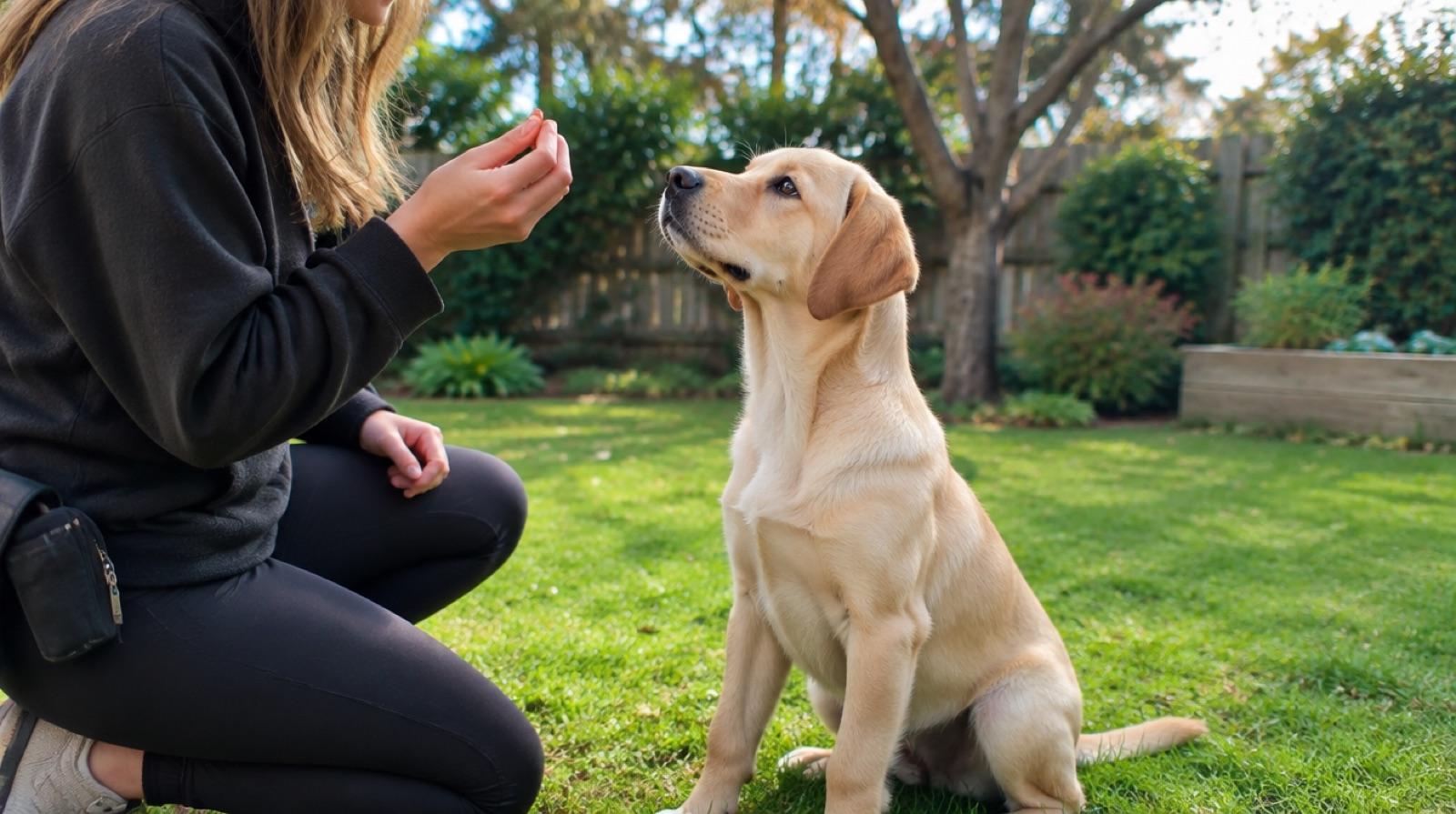
What makes a dog easy to train?
Three things, and only one of them is brains.
- It wants to work with you. Breed standards call this being biddable: willing to take direction. Researchers James Serpell and Yuying Hsu, who studied trainability in 1,563 dogs of 11 common breeds, described it as a dog's willingness to attend to its owner and obey simple commands, together with a high motivation to fetch and low distractibility.
- It cares about rewards. A dog that will work for a piece of food or a game of tug gives you an easy way to tell it “yes, that”. The RSPCA Knowledgebase says training is more effective when the reward is worth more to the dog than the unwanted behaviour.
- Its drive is moderate. A dog that can settle after a walk and a short training session fits a normal household. A dog bred to work all day learns quickly but needs a job, and that is a different kind of commitment.
Serpell and Hsu found highly significant differences between breeds, and an interesting twist: in two breeds with separate field and show lines, the show-bred dogs scored lower for trainability. Lines and individual dogs matter, not just the breed name.
How much does breed really predict?
Less than most breed lists suggest. A 2022 study in Science surveyed the owners of 18,385 dogs and genotyped 2,155 of them. Breed explained just 9% of the variation in behaviour between individual dogs. Biddability, which the authors define as responsiveness to direction and commands, was one of the traits most linked to breed, and dogs with more Border Collie ancestry tended to be more biddable. Even so, biddability varied widely within breeds. A breed tells you the odds; the dog in front of you tells you the answer.
Is easy to train the same as smart?
No, and mixing them up can leave a beginner with more dog than they bargained for. The best known ranking of dog intelligence, psychologist Stanley Coren's survey of obedience judges, measured how quickly breeds learn from people and obey. Our smartest dog breeds guide covers that list and what it measured.
A fast learner is not automatically easy. The Border Collie standard describes a dog that is “readily responsive to training” with “an instinctive tendency to work”. That instinct is the catch. A Border Collie learns new cues quickly and also learns the side gate, the bark that gets you up, and how to herd the children. For a beginner, a dog that learns a little more slowly but is happy to lie down afterwards is the easier dog.
Think of it this way: smart is how fast a dog learns. Easy to train is how fast it learns, multiplied by how much it wants to, divided by how much else it needs from your day.
Which dog breeds are easiest to train?
These breeds combine a standard that describes a willing, responsive dog with a temperament most households can manage. The quotes are from each breed's Dogs Australia standard, checked 10 November 2026.
| Breed | Breed standard says | Plan for |
|---|---|---|
| Labrador Retriever | “intelligent, keen and biddable, with a strong will to please” (standard) | A big appetite. Food rewards work well, so count treats against the daily ration. |
| Golden Retriever | “biddable, intelligent and possessing natural working ability” (standard) | A gundog bred to work, so it needs daily exercise as well as training. |
| English Springer Spaniel | “friendly, happy disposition, biddable” (standard) | Bred to find and flush game, so expect an active dog with a busy nose. |
| Hungarian Vizsla | “lively, friendly, evenly tempered and easily trained” (standard) | The standard adds that he “cannot bear rough treatment”: gentle, reward-based training only. |
| Poodle | “a very active, intelligent, well balanced and elegant looking dog (Standard Poodle)” (standard) | Comes in Toy, Miniature and Standard sizes; the coat needs regular clipping. |
| Shetland Sheepdog | “affectionate and responsive to his owner, reserved towards strangers” (standard) | A small herding dog. Early, gentle socialisation helps with the reserve. |
| Papillon | “an alert bearing and an intelligent and lively expression” (standard) | A toy breed, so keep sessions short and handle a small body with care. |
| Boxer | “his intelligence and willing tractability … make him a highly desirable family dog” (standard) | The standard also says he is “brave and determined when roused”: a strong, bouncy dog. |
A breed standard describes the ideal dog of a breed, not a promise about any one dog.
The retrievers and spaniels stand out for a reason. Gundogs were bred to work closely with a handler, take direction at a distance and bring things back, which is close to a description of an easy training partner. Labrador and Golden Retriever crosses are worth looking for in rescue listings; the city links below show the dogs listed right now. Our Labrador vs Golden Retriever guide compares the two.
Why food motivation matters, and its catch
Reward-based training runs on things the dog wants, and food is the easiest reward to carry. Labradors have a biological head start. A 2016 University of Cambridge study found a change in the POMC gene that is linked to higher food motivation and body weight. It was carried by 22% of 383 UK Labradors and by 76% of 81 Labradors used as assistance-dog breeding stock. The researchers suggested food-motivated dogs may be more likely to be picked for assistance work, where training relies on food rewards. The catch is the same appetite: Labradors with the change were heavier on average, so count training treats as part of the daily food.
Which breeds are easy to train but hard to own?
Several standards describe a dog that is very trainable and also very driven. These dogs reward an owner who loves training and has time every day; they overwhelm one who wanted an easy companion.
- Border Collie: “readily responsive to training”, with an instinct to work (standard).
- Kelpie: “a mild, tractable disposition and an almost inexhaustible energy” (standard).
- German Shepherd Dog: “attentive and easy to train”, but must also possess “instinctive drive” to suit it for watch, protection, service and herding work (standard).
- Weimaraner: an “easily trained steady and passionate hunting dog” (standard).
The working and guarding breeds, and the laws that apply to them, are covered in our guard dogs guide.
Which dog breeds are hardest to train?
The breeds people call stubborn are mostly independent: bred to hunt or guard on their own judgement rather than take instructions. Their standards say so plainly.
| Breed | Breed standard says |
|---|---|
| Basenji | “An intelligent, independent, but affectionate and alert breed” (standard) |
| Afghan Hound | “Dignified and aloof with a certain keen fierceness” (standard) |
| Chow Chow | “Loyal yet aloof” (standard) |
| Akita | “Dignified, courageous, aloof” (standard) |
| Beagle | A hound whose “essential function is to hunt, primarily hare, by following a scent” (standard) |
Harder does not mean impossible. These dogs need better rewards, shorter sessions and a lot of patience with recall, because the smell or the chase is often worth more to them than you are. A Beagle with its nose down is doing exactly what it was bred to do.
One breed people often put on this list does not belong there on its standard. The Siberian Husky standard praises the breed's “intelligence, tractability, and eager disposition”. A Husky's real challenges are exercise and escaping, which our Husky escape and exercise guide covers.
How should you train an easy dog?
The same way as any dog: with rewards. The RSPCA supports reward-based training, where the dog is set up to succeed and then rewarded for the behaviour you want, and calls it the most humane and effective way to train dogs and address unwanted behaviour.
The RSPCA Knowledgebase adds some practical detail worth knowing before you start:
- Dogs repeat what works for them. That includes behaviour you don't like, such as jumping up for attention. Reward the sit instead and the jumping fades.
- Rewards have different values. Dry food is low value for most dogs; small pieces of dog roll or cooked chicken are high value. Save the best rewards for the hardest jobs, such as recall around distractions.
- Yelling can backfire. Some dogs take shouting as attention, so the barking or jumping keeps going.
- Avoid aversive methods and equipment. The RSPCA names shock devices, prong or pinch collars and choke or correction collars, and says aversive methods are inhumane and risk ongoing behaviour problems.
- Puppies need puppy school. The critical socialisation period runs from about 3 to 12 to 14 weeks of age, and the RSPCA highly recommends good puppy classes. For older dogs, it says training classes are offered in most areas.
Even the most biddable breed has to be taught. An easy-to-train dog with no training is just a dog that would have been easy.
Free and low-cost dog training
You don't need to spend much to cover the basics:
- Free dog training: your first 90 days is our step-by-step plan for a newly adopted dog, starting with decompression and moving through house-training, crate, basic commands, lead manners and recall.
- The free dog training course covers 14 commands, from sit and name recognition to settle, leave it and off-lead recall, one lesson at a time.
- Ask the rescue before you adopt what training the dog has had, and whether its foster carer can show you the cues it knows. That handover is free and worth more than a breed label.
- A local reward-based class costs money but gives you an instructor's eye. Watch a class first and look for the reward-based methods described above.
Why an adult rescue dog can be the easiest dog to train
If the goal is a dog that is easy to live with from week one, the strongest option is often not a breed at all but an adult dog in foster care. Many arrive house-trained and already know sit, drop and walking on a lead. Their carers can tell you what motivates them, what they find hard, and how they behave when left alone. That is exactly the information a breed ranking cannot give you, and it is the point the 2022 Science study makes: breed is a weak predictor of an individual dog.
An adult also skips the hardest part of training: the puppy months of toilet accidents, chewing and adolescence. Our first-time owners guide explains why a calm adult is usually the best first dog, and adopting a dog in Australia walks through the process.
Questions to ask about a rescue dog's training
- Which cues does the dog know reliably, and which are still a work in progress?
- Is it house-trained, and does it walk on a loose lead?
- What rewards does it work for: food, toys, praise?
- How does it cope when left alone, and how much exercise does it need to settle?
- Is it food-guarding or toy-guarding, and how does it react to other dogs on walks?
Not sure what fits your life yet? Try the what dog breed am I quiz, the adoption readiness check and the dog cost calculator, or dog or cat if you are still choosing a species.
Browse easy-going rescue dogs near you
Labradors, Golden Retrievers and their crosses listed by the rescues and pounds we aggregate, with notes from the people caring for them.
Labradors in Sydney →Family dogs in Melbourne →Find an easy-to-train dog near you
- Sydney: Labradors, Golden Retrievers, Poodles, family dogs and low-energy dogs for adoption
- Melbourne: Labradors, Golden Retrievers, Poodles, family dogs and low-energy dogs for adoption
- Brisbane: Labradors, Golden Retrievers, Poodles, family dogs and low-energy dogs for adoption
- Perth: Labradors, Golden Retrievers, Poodles, family dogs and low-energy dogs for adoption
- Adelaide: Labradors, Golden Retrievers, Poodles, family dogs and low-energy dogs for adoption
Each listing comes from the rescue or pound that has the dog. Apply through the rescue, and ask the training questions above before you commit.
Frequently asked questions
What is the easiest dog to train?▼
For most beginners, a Labrador or Golden Retriever. Their Dogs Australia breed standards call both biddable, which means willing to take direction, and the Labrador standard adds a strong will to please. They are also keen on food, so rewards work well. The real answer is an individual dog, though: a calm adult rescue dog that already knows the basics is easier than any puppy.
Is the easiest dog to train the same as the smartest dog?▼
No. The best known smartest breeds ranking, Stanley Coren's, measured how quickly breeds learn from people. Easy to train for a beginner also needs moderate drive and an off switch. A Border Collie learns fast but needs hours of work a day, while a Labrador learns a little more slowly and is far easier for a new owner to live with.
What makes a dog easy to train?▼
Three things: it wants to work with you (biddable), it cares about rewards such as food or toys, and its drive is moderate enough that it can settle. Researchers who studied trainability in 1,563 dogs described it as willingness to attend to the owner and obey simple commands, combined with low distractibility.
What are the hardest dog breeds to train?▼
Independent breeds bred to work away from people. The Dogs Australia standards describe the Basenji as intelligent and independent, the Afghan Hound as dignified and aloof, the Chow Chow as loyal yet aloof and the Akita as aloof. Scent hounds such as the Beagle follow their nose. None of these are untrainable; they simply need more patience and better rewards.
Does breed decide how trainable a dog is?▼
Only partly. A 2022 study in Science of more than 18,000 dogs found breed explained just 9% of the variation in behaviour between individual dogs. Biddability, responsiveness to commands, was one of the traits most linked to breed, but it still varied a lot within each breed. Ask about the individual dog.
Why are Labradors so easy to train with food?▼
Partly genetics. A 2016 University of Cambridge study found a change in the POMC gene linked to higher food motivation and weight in Labradors. It was carried by 22% of 383 UK Labradors and by 76% of 81 Labradors kept as assistance-dog breeding stock. The same appetite makes weight gain easy, so count training treats.
What training method should I use?▼
Reward-based training, also called positive reinforcement. The RSPCA supports it and says aversive methods and equipment, such as shock devices, prong collars and choke chains, are inhumane and can cause ongoing behaviour problems. Reward the behaviour you want with something the dog values, such as food, play or praise.
Is it easier to train a puppy or an adult dog?▼
An adult is often easier for a beginner. Adult dogs have bladder control and a longer attention span, and many rescue adults arrive already knowing sit, drop and walking on a lead. Puppies need socialisation during a critical period, which the RSPCA puts at about 3 to 12 to 14 weeks of age, and a lot of supervision.
Can I train my dog for free?▼
Yes, for the basics. Our free dog training plan covers the first 90 days with a newly adopted dog, and the free command course walks through sit, stay, recall and more. A reward-based class is still worth booking if you can, because an instructor can see what you are doing.
What is the easiest small dog to train?▼
Among small breeds, the Papillon, Miniature or Toy Poodle and the Shetland Sheepdog are the usual picks. The Papillon and Shetland Sheepdog both appear in Stanley Coren's top ten for working and obedience intelligence, and the Shetland Sheepdog standard describes a dog that is affectionate and responsive to his owner.
Are Poodle crosses easy to train?▼
Often, but not reliably. A Cavoodle, Groodle or Labradoodle can take after either parent, so trainability varies from dog to dog. With a rescue cross, ask the foster carer what the dog already knows and how it responds to rewards rather than relying on the breed label.
Where can I adopt a dog that is already trained?▼
From a rescue that uses foster homes. Foster carers can tell you which cues the dog knows, whether it is house-trained and how it walks on a lead. The RSPCA Knowledgebase recommends starting a search with shelters and rescues. Browse the adult dogs listed near you and ask about training before you apply.
Sources
- Dogs Australia: Labrador Retriever breed standard
- Dogs Australia: Golden Retriever breed standard
- Dogs Australia: English Springer Spaniel breed standard
- Dogs Australia: Hungarian Vizsla breed standard
- Dogs Australia: Poodle (Standard) breed standard
- Dogs Australia: Shetland Sheepdog breed standard
- Dogs Australia: Papillon breed standard
- Dogs Australia: Boxer breed standard
- Dogs Australia: Border Collie breed standard
- Dogs Australia: Australian Kelpie breed standard
- Dogs Australia: German Shepherd Dog breed standard
- Dogs Australia: Weimaraner breed standard
- Dogs Australia: Basenji breed standard
- Dogs Australia: Afghan Hound breed standard
- Dogs Australia: Chow Chow breed standard
- Dogs Australia: Akita breed standard
- Dogs Australia: Beagle breed standard
- Dogs Australia: Siberian Husky breed standard
- Morrill et al. (2022), Ancestry-inclusive dog genomics challenges popular breed stereotypes, Science
- Serpell and Hsu (2005), Effects of breed, sex, and neuter status on trainability in dogs, Anthrozoös
- Raffan et al. (2016), A deletion in the canine POMC gene is associated with weight and appetite in obesity-prone Labrador Retriever dogs, Cell Metabolism
- RSPCA Knowledgebase: Is it important to train my dog? What sort of training would you recommend?
- RSPCA Knowledgebase: What is reward-based dog training and why does the RSPCA support it?
- RSPCA Knowledgebase: Where should I go for a new companion animal?
Keep reading
Smartest dog breeds
What Coren’s ranking measured, and why the cleverest working dogs need a daily job.
Best dogs for first-time owners
Beginner-friendly breeds, breeds to avoid, and the legal to-do list for a first dog.
Calm dog breeds
Breeds the standards describe as gentle and settled, and why a known adult is the surest calm dog.
Most loyal dog breeds
What research on dog attachment says, the breeds described as devoted, and the downside.