The short answer
No dog breed is hypoallergenic. The Australasian Society of Clinical Immunology and Allergy (ASCIA) says all dog breeds cause allergies, although some do not shed as much dander and so spread less allergen. The main dog allergen is in saliva, not hair. Low-shedding breeds like the Poodle, Bichon Frise and Maltese may suit some allergic people, but a Cavoodle or Groodle can inherit a shedding coat. Choose the individual dog and test it with repeated, long visits, because ASCIA says up to 50% of allergic people do not react straight away. A rescue dog costs a few hundred dollars with the vet work done (reference figures checked 9 November 2026, not quotes). If anyone at home has asthma, see a doctor first.
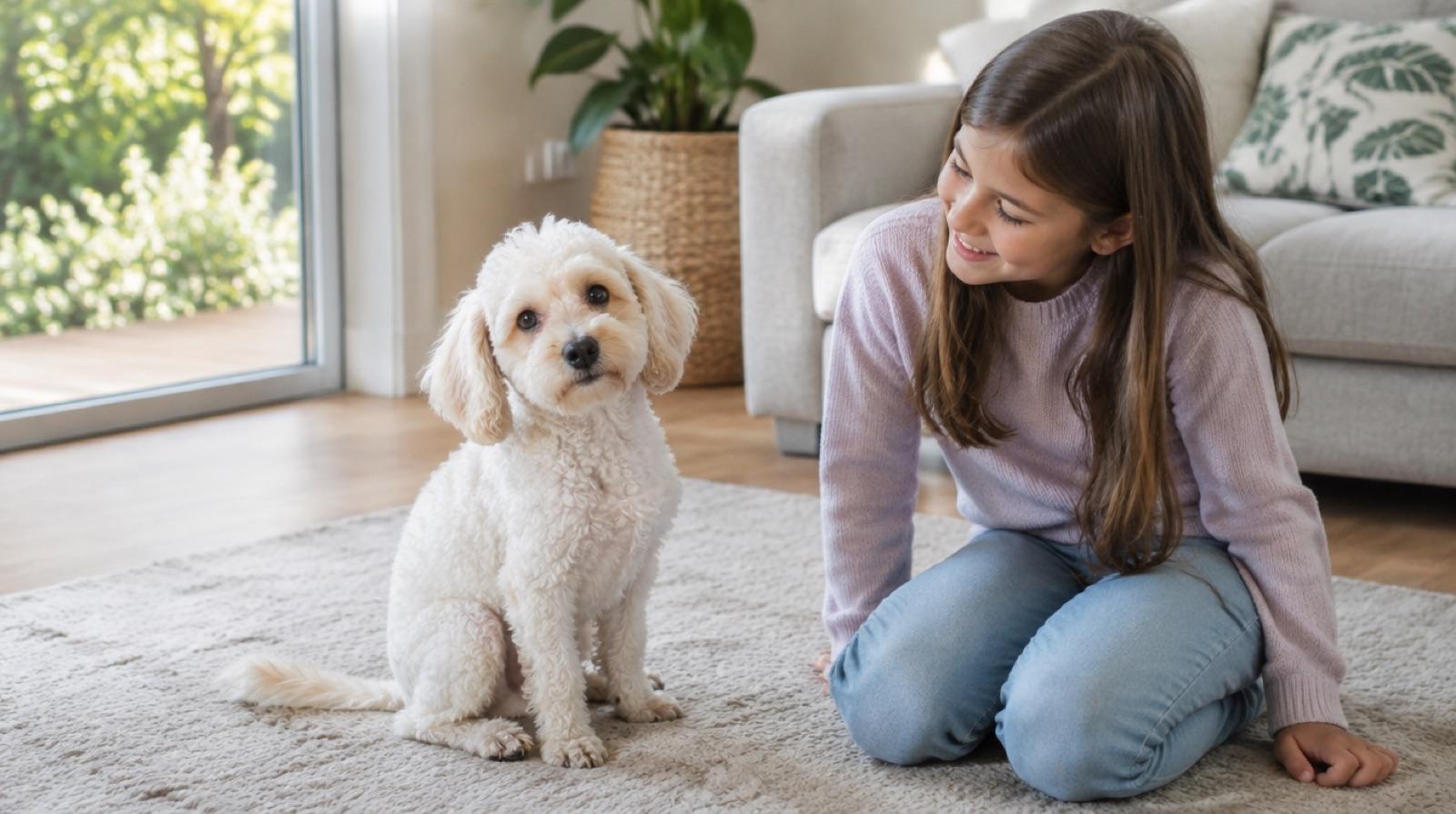
Are any dogs truly hypoallergenic?
No. The Australasian Society of Clinical Immunology and Allergy (ASCIA), the peak body for allergy specialists in Australia and New Zealand, says: “All dog breeds cause allergies, although some do not shed as much dander, and therefore less allergen is spread.” Both halves of that sentence matter. No breed is safe for every allergic person, and a low-shedding dog may still be easier for some.
RSPCA NSW is blunter: so-called hypoallergenic dogs have never been verified in clinical studies as less of an irritant to people. The research that does exist points the same way. A 2012 Dutch study in the Journal of Allergy and Clinical Immunology measured the main dog allergen in coat samples and homes of Labradoodles, Poodles, Spanish Water Dogs and Airedale Terriers against Labradors and other dogs. The so-called hypoallergenic dogs had higher allergen levels in their coats, airborne levels at home were no different, and differences between breeds were small next to the differences within a breed. Floor dust in Labradoodle homes was lower, the one result in their favour. The authors concluded there was no evidence for calling any breed hypoallergenic.
This guide is general information, not medical advice. If anyone in your home has asthma or a diagnosed dog allergy, start with a GP or an allergy specialist, not a breeder or a rescue.
What are you actually allergic to?
Mainly saliva. ASCIA says the main source of dog allergen is saliva, spread by dander (tiny flecks of skin). Hair moves the allergen around your home, which is why shedding matters, but a dog that sheds little and licks a lot can still cause symptoms.
- Reactions can be delayed. ASCIA says up to 50% of people who are allergic to animals do not get symptoms straight away, so a quick pat at a shelter proves very little.
- It may not be the dog. RSPCA NSW notes that people sometimes blame a dog for a reaction with another cause, such as a strong flea treatment, and that a test through your GP is the way to confirm a dog allergy.
- A specialist can test. ASCIA says a clinical immunology/allergy specialist can diagnose pet allergy with skin or blood tests. Its specialist finder lists them by state.
Which breeds get called hypoallergenic, and why?
Breeds whose coats hold their hair. RSPCA South Australia lists the Poodle, Schnauzer, Schnoodle, Maltese, Soft Coated Wheaten Terrier and Bichon Frise as dogs that hardly shed or drool and may suit people with milder allergies, while saying no animal is 100% allergen free. Dogs Australia explains the mechanism: breeds known as non-shedding simply have a slower-growing coat that loses a few hairs at a time, and that reduced shedding can lessen the effect on allergy sufferers.
The coat descriptions below are quoted or summarised from each breed's Dogs Australia breed standard. The rescue column is a general guide to what is common and what is rare in Australian rescue, not a count.
| Breed | Coat (Dogs Australia standard) | In Australian rescue |
|---|---|---|
| Poodle | Very profuse and dense, harsh texture, short hair close, thick and curly. | A few purebreds; Poodle crosses more often. |
| Maltese | Long, silky and straight, with no woolly undercoat. | One of the more common in this group, mostly crosses. |
| Shih Tzu | Long, dense outer coat with a moderate undercoat. | Uncommon, mostly crosses. |
| Miniature Schnauzer | Harsh and wiry, with a dense undercoat. | Occasional, often as crosses. |
| Bichon Frise | Fine and silky, with soft corkscrew curls. | Rare. |
| Yorkshire Terrier | Moderately long, straight, glossy and fine. | Rare. |
| Soft Coated Wheaten Terrier | Soft and silky, loosely waved or loosely curled. | Rare. |
| Portuguese Water Dog | Profuse, wavy or tightly curled, with no undercoat. | Rare. |
Coat wording from the breed standards at dogsaustralia.org.au, checked 9 November 2026. Rescue availability changes daily; the city pages below show the dogs listed right now.
Notice what the coats have in common: long, curly, silky or wiry hair that keeps growing and holds loose hair in place. That is good for your floors and may be good for some allergic people. It also means the coat needs regular brushing and clipping for life, which our guide to dogs that don't shed covers in detail, alongside the short-coated breeds that shed little and need almost no grooming.
Are Cavoodles, Groodles and other oodles hypoallergenic?
No, and their coats are less predictable than either parent breed's. The idea started in Australia. Two University of Sydney geneticists writing in The Conversation explain that in the late 1980s Wally Conron, a breeding manager at Guide Dogs Victoria, crossed a Labrador with a Standard Poodle to try to help people who needed a guide dog but seemed to react to Labrador hair. Labradoodles, and later Cavoodles, Groodles, Spoodles and many other Poodle crosses, took off from there.
The same article sets out why an oodle coat is a gamble. A first-cross puppy gets half its genes from each parent breed. When oodles are bred to each other, any puppy can end up with the Poodle version, the other parent's version or a mix at each coat gene, and a puppy that misses the Poodle versions of the coat genes will have a Labrador-type coat. Littermates can differ.
Coat genetics backs this up. The UC Davis Veterinary Genetics Laboratory, which runs coat DNA tests, says shedding is affected by several genes, two of which (MC5R and RSPO2) have a significant effect, and that a dog with low-shedding versions of both sheds least. A cross can inherit the other parent's versions of these genes, so it can inherit a coat that sheds. A coat test predicts shedding tendency, not whether you will react.
So the honest framing for any oodle is this: some have a tight, low-shedding Poodle-type coat, some shed like the other parent, and many sit in between. And even the most Poodle-like coat still comes with saliva and skin, which is where the allergen lives. Read more in our national Cavoodle health and Cavoodle grooming guides, or browse Cavoodles, Groodles, Labradoodles and Spoodles.
Why an adult rescue dog answers the allergy question better
Because you can test the actual dog. A puppy's adult coat is a prediction, especially in a cross. An adult dog in rescue already has the coat it will keep, and if it lives in foster care, the carer knows how much it sheds on the couch, how often it licks and whether anyone in the house has reacted to it.
The catch is supply. Low-shedding dogs are a small slice of what Australian rescues list, mostly Maltese, Poodle and Shih Tzu crosses, with the occasional purebred Poodle or Schnauzer cross. Staffies, Kelpies and Cattle Dogs are far more common. If you want a low-shedding dog, check the listings often, set an alert, and expect to meet a cross rather than a purebred.
See low-shedding rescue dogs near you
Poodles, Poodle crosses, Maltese, Schnauzers and other low-shedding dogs listed by Sydney and NSW rescues, refreshed regularly. Ask each rescue about longer visits before you apply.
See dogs in Sydney →How do you test whether you react to a particular dog?
Spend real time with that dog, more than once. Because ASCIA says up to half of allergic people do not react straight away, one short meeting is the weakest test you can do. A better plan:
- See your GP first. Confirm it is a dog allergy, and ask what to do if symptoms start. Ask whether a referral to an allergy specialist makes sense.
- Visit more than once, for longer. An hour or more on different days, patting, walking and letting the dog lick your hands. Note how you feel that night and the next morning.
- Ask the foster carer. How much does the dog shed indoors? Does it lick a lot? Has anyone allergic spent time with it?
- Ask about a trial. Some rescues offer foster-to-adopt or a trial period. Ask before you sign, and ask what happens if it does not work out.
- Plan the house first. Decide where the dog will sleep (not the allergic person's bedroom) and which rooms it can use before it arrives.
If you react to every dog you meet, believe the result. ASCIA's first advice for people who are sensitised and get symptoms is not to bring a pet into the home. A failed adoption is hard on the dog as well as on you, so it is kinder to find out first.
Can you live with a dog if you have mild allergies?
Some people do, with their doctor's help. ASCIA lists changes that may help but have not been proven: keep the dog out of the allergic person's bedroom, remove bedroom carpet if possible, keep the dog to one area of the home, use a high efficiency vacuum cleaner and wash the dog weekly. RSPCA NSW suggests similar steps, including a pet-free bedroom, keeping the dog to hard floors that are easy to clean, regular bathing and grooming, and washing bedding often.
ASCIA adds that treatments exist for people who cannot avoid animals, and that allergen immunotherapy (desensitisation) should only be started by a clinical immunology/allergy specialist. Which option suits you is a medical decision for your GP or specialist.
What does a low-shedding dog cost, rescue against breeder?
A rescue dog costs the same whatever its coat. RSPCA NSW, for example, lists $500 for a dog over 12 months and $620 for a puppy under 12 months, with desexing, microchipping, vaccinations and health checks included (fee page checked 9 November 2026; a reference, not a quote). Other rescues set their own fees, so check each listing.
Breeders of Poodles and oodle crosses set their own prices, and we found no breed club or Dogs Australia page that publishes a price, so we do not quote one. What the higher price usually buys is a puppy whose coat and allergy outcome are still unknown. These are reference figures, not quotes; always confirm the current fee with the rescue or seller.
When is a breeder a reasonable choice?
Rescue is not right for everyone. If you have tested yourself against several adult dogs of one purebred breed and want that breed specifically, a registered breeder can be a sound choice, because a purebred's adult coat is more predictable than a cross's. The RSPCA Knowledgebase encourages people to consider adoption first and explains how to find a responsible breeder if you buy.
- Check registration. Dogs Australia (formerly the Australian National Kennel Council) has a registered breeder check by prefix or membership number. It covers purebred breeding, so it cannot vouch for a cross-breed litter.
- Meet the parents, more than once. Spending time with both parents, if possible, is the closest thing to testing an unborn puppy.
- Be wary of guarantees. No one can promise you will not react, or that a cross will not shed. A seller who does is selling marketing.
- Get the return terms in writing before you pay, in case you react after the puppy comes home.
- Watch for scams. Scamwatch warns against unbelievably low prices, unusual payment methods and paying for big-ticket items before seeing them in person.
Breeding and advertising rules also differ by state, so check your state's animal welfare agency for what a sale advertisement must show before you buy.
Find a dog near you
Each page lists low-shedding rescue dogs in that city, refreshed regularly, with every listing linking through to the rescue.
Also listed: Canberra, Hobart, Gold Coast and Newcastle. Before you apply, the adoption readiness check and the dog cost calculator help with the questions a rescue will ask. If a cat is an option, our guide to hypoallergenic cats in Australia covers the same science for cats.
Frequently asked questions
Are there any hypoallergenic dogs?▼
No. The Australasian Society of Clinical Immunology and Allergy (ASCIA) says all dog breeds cause allergies, although some do not shed as much dander and so spread less allergen. RSPCA NSW adds that so-called hypoallergenic dogs have never been verified in clinical studies as less of an irritant. Some allergic people cope better with one particular dog than another, which is why the individual dog matters more than the breed.
What are the best dogs for people with allergies?▼
The best dog is the individual one you have spent real time with and not reacted to. Low-shedding breeds such as the Poodle, Bichon Frise, Maltese, Miniature Schnauzer and their crosses are the usual suggestions, and ASCIA says low-shedding dogs spread less allergen. But no breed is allergy-free, so test the specific dog with repeated, long visits before you commit.
What part of a dog are people allergic to?▼
Mostly saliva. ASCIA says the main source of dog allergen is saliva, which is spread by dander, the tiny flecks of skin a dog sheds. Hair carries the allergen around the home but is not the allergen itself. That is why a dog that sheds little can still cause symptoms, especially if it licks a lot.
Are Cavoodles hypoallergenic?▼
No dog is, and Cavoodles vary more than most. A Cavoodle is a cross, so a puppy can inherit a curly Poodle-type coat, a flatter Cavalier-type coat or something in between, and that cannot be known for certain in a young puppy. A low-shedding coat may help some allergic people, but ASCIA says every dog breed causes allergies. Meet the individual dog, ideally an adult whose coat you can see.
Are Groodles and Labradoodles hypoallergenic?▼
No. The Labradoodle was first bred in Australia in the late 1980s by Guide Dogs Victoria to try to help guide dog users who reacted to Labradors, but a cross can inherit a Labrador or Golden Retriever coat that sheds. A 2012 Dutch study even found higher levels of the main dog allergen in the coats of Labradoodles and Poodles than of Labradors, with no difference in airborne levels at home.
Is a Poodle good for allergies?▼
A Poodle sheds little, which may help some allergic people, but it is not allergy-free. Dogs Australia says breeds known as non-shedding simply have a slower-growing coat that sheds a few hairs at a time, and that reduced shedding can lessen the effect on allergy sufferers. ASCIA still says all dog breeds cause allergies. Test the individual dog first.
Are there hypoallergenic dogs for adoption in Australia?▼
Low-shedding dogs do come up, usually as crosses such as Maltese, Poodle and Shih Tzu crosses, but far less often than Staffies, Kelpies or Cattle Dogs. Purebred low-shedding breeds are uncommon in rescue. See the low-shedding dogs listed right now on the page for your city, set an alert and meet any dog you like in person.
How do I test whether I am allergic to a particular dog?▼
Spend time with that dog more than once, for long stretches, in conditions close to how you would live with it. ASCIA says up to 50% of people allergic to animals do not get symptoms straight away, so a short meeting can give a false all clear. See your GP first, and ask the rescue about extended visits or a trial period.
Can I get a dog if I have asthma?▼
Ask your doctor before anything else. ASCIA says pet allergy is a common cause of asthma and hay fever, and its first advice for people who are sensitised and get symptoms is not to bring a pet into the home. Only your doctor or an allergy specialist can tell you whether living with a dog is safe for you.
How much does a hypoallergenic dog cost in Australia?▼
From a rescue, the same as any dog: RSPCA NSW lists $500 for a dog over 12 months and $620 for a puppy, with desexing, microchipping and vaccinations included (fee page checked 9 November 2026). Breeders of Poodles and oodle crosses set their own prices, and we found no breed club or Dogs Australia page that publishes one, so we do not quote a breeder price. Treat any figure as a reference, not a quote, and confirm with the seller.
What is the difference between hypoallergenic and non-shedding?▼
Non-shedding describes the coat; hypoallergenic describes your immune system's reaction, and no dog can promise that. Dogs Australia says no breed truly stops shedding, while ASCIA says all dog breeds cause allergies. A low-shedding dog may spread less allergen around the home, but it still makes the allergen in its saliva and skin.
Can I live with a dog if I have mild allergies?▼
Some people manage with their doctor's help. ASCIA lists steps that may help but have not been proven: keep the dog out of the allergic person's bedroom, remove bedroom carpet, keep the dog to one area of the home, use a high efficiency vacuum cleaner and wash the dog weekly. Talk to your GP about treatment options before the dog comes home.
Sources
- ASCIA: Pet allergy FAQ (2024)
- ASCIA: Locate a clinical immunology/allergy specialist
- RSPCA NSW: I'm allergic (rehoming assistance)
- RSPCA South Australia: Pets for people with allergies
- Vredegoor et al. 2012, Journal of Allergy and Clinical Immunology: Can f 1 levels in hair and homes of different dog breeds
- The Conversation (Nicholas and Wade, 2020): Australian Labradoodles are more Poodle than Lab
- UC Davis Veterinary Genetics Laboratory: Shedding test
- Dogs Australia: The key to getting grooming right
- Dogs Australia: Breed standards (Poodle, Standard)
- Dogs Australia: Registered breeder check
- RSPCA Knowledgebase: Choosing a pet
- RSPCA NSW: Adoption fees
- Scamwatch: Buying and selling scams
Keep reading
Dogs that don't shed: small, medium and large
Which low-shedding dogs need almost no grooming, which need a clip every six to eight weeks, and the big dog rescue has plenty of.
Hypoallergenic cats in Australia
The same allergy science for cats, including the hairless Sphynx, and which breeds Australian rescues actually have.
Cavoodle grooming
The brushing and clipping routine a low-shedding Cavoodle coat needs for life.
What dog breed am I?
Match your home, time and activity level to dog types before you start meeting dogs.