The short answer
There is no dog that does not shed. Dogs Australia says “non-shedding” breeds simply have a slower-growing coat that sheds a few hairs at a time. Low-shedding dogs come in three kinds. Short, close coats (Greyhound, Whippet, Italian Greyhound, Basenji, Boston Terrier) shed a little and need almost no grooming. Coat-holding breeds (Poodle, Bichon Frise, Maltese, Shih Tzu, Yorkshire Terrier) drop the least hair but mat without brushing and a clip about every six to eight weeks. Wire coats (Schnauzers, many terriers) sit between. Oodle crosses can go either way. For less hair, pick a coat-holder; for less work, pick a short coat.
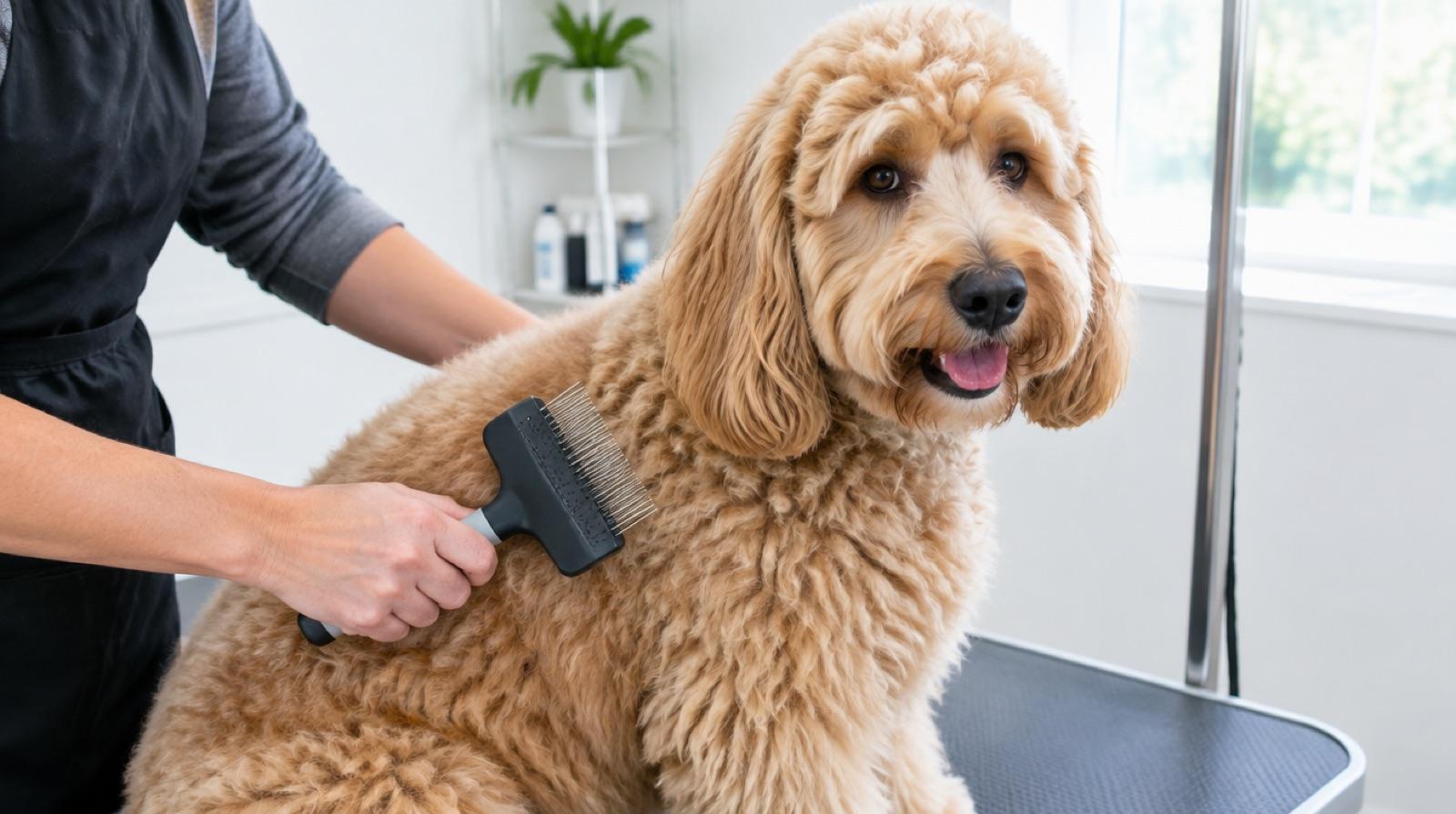
Is there a dog that doesn't shed?
No. Dogs Australia, the national body formerly called the Australian National Kennel Council, puts it plainly: “It is a myth that certain breeds of dogs do not shed their coats.” Breeds known as non-shedding simply have a slower-growing coat, so only a few hairs are shed at a time.
The reason is the hair cycle. Every hair grows, rests and then falls out. Dogs Australia explains that in breeds like the Poodle and the Maltese the growing phase is long, which is why their coats seem to keep growing and need regular trimming. In breeds that seem to shed all the time, the growing phase is short and hairs spend longer resting before they drop. In many curly and long silky coats, the loose hair also gets caught in the coat around it instead of falling to the floor.
That is the whole story in one line: a low-shedding dog does not make less hair, it either grows hair slowly or holds on to it. Holding on to it is what turns into matting and grooming bills.
What are the three kinds of low-shedding dog?
Low-shedding breeds fall into three coat groups, and the group decides how much work the dog is. The coat wording below comes from each breed's Dogs Australia breed standard.
| Coat group | Example breeds | What the standard says | Grooming it needs |
|---|---|---|---|
| Short and close | Greyhound, Whippet, Italian Greyhound, Basenji, Boston Terrier | Greyhound: “fine and close”. Whippet: “fine, short, close in texture”. | An occasional brush or wipe. No clipping. Sheds a little. |
| Coat-holding (curly or long silky) | Poodle, Bichon Frise, Maltese, Shih Tzu, Yorkshire Terrier, Havanese | Poodle: “very profuse and dense”, “thick and curly”. Maltese: long, silky and straight, no woolly undercoat. | Brushing several times a week and a professional clip about every six to eight weeks, for life. |
| Wire | Miniature, Standard and Giant Schnauzer, Border Terrier, Airedale, many terriers | Miniature Schnauzer: “harsh, wiry” with a dense undercoat. | Regular brushing, plus hand-stripping or clipping on a schedule your groomer sets. |
Standards checked at dogsaustralia.org.au on 9 November 2026. Grooming frequencies are typical routines, not rules; your groomer will set one for the individual dog.
Both of the first two groups leave little hair on the couch. Only one of them is low effort. That gap is the thing most lists of non-shedding dogs leave out.
Short coats: low shedding with almost no grooming
These breeds rarely appear on non-shedding lists, because those lists are usually written for allergy sufferers. If you simply want less hair and less work, they are the best answer. Their standards call for short, fine coats: the Greyhound “fine and close”, the Whippet “fine, short, close in texture”, the Italian Greyhound “short, fine and glossy”, the Basenji “short, sleek and close, very fine” and the Boston Terrier “short, smooth, bright and fine in texture”.
They do shed a little, all year. Short stiff hairs can weave into fabric, so if your goal is a hair-free couch rather than a low-effort dog, a coat-holding breed does that job better. But nothing on this page is cheaper or easier to keep tidy. A Smooth Coat Chihuahua is close to this group, though its standard permits an undercoat.
Coat-holding breeds: almost no hair, plenty of grooming
These are the dogs most people picture when they search for a dog that doesn't shed. Their hair keeps growing and the loose hair stays in the coat, which is good for your floors. The cost is a grooming routine that never ends. Dogs Australia notes that breeds like Poodles and Maltese “are groomed on a very regular basis”.
- At home: brush right down to the skin several times a week, paying attention to behind the ears, armpits, collar line and tail base, where mats start.
- At the groomer: a full clip about every six to eight weeks. Skip it and the coat felts into mats against the skin, which is painful and usually ends in a full shave-down.
- The budget: groomer prices vary by city, salon, dog size and coat condition, so ask local salons before you choose a breed. It is one of the biggest running costs of these dogs after food and vet care.
Our national Cavoodle grooming guide sets out the routine week by week, and it applies to most Poodle-type coats.
Wire coats: the middle ground
Wire-coated breeds such as the Miniature Schnauzer and Border Terrier shed little day to day because the dead hair stays in the coat until it is removed. Dogs Australia explains that wire hair reaches its genetic length and loosens in the follicle, and that because pet dogs are not out in the scrub pulling it loose, the coat has to be hand-stripped. Many pet owners have the coat clipped instead; ask a groomer which suits the dog.
Read the standard before you assume a terrier is low-shedding. Several, including the West Highland White, Cairn and Scottish Terrier, are described as double-coated, with a soft undercoat under the harsh outer coat, so expect some undercoat around the house.
Small dogs that don't shed
Small is where the choice is widest, because so many companion breeds have coat-holding coats. Sizes below are from each breed's Dogs Australia standard.
| Breed | Size (standard) | Coat group |
|---|---|---|
| Maltese | Not over 25 cm | Coat-holding |
| Bichon Frise | Under 30 cm | Coat-holding |
| Toy and Miniature Poodle | Under 38 cm (the Standard is 38 cm and over) | Coat-holding |
| Yorkshire Terrier | Up to 3.2 kg | Coat-holding |
| Australian Silky Terrier | 23 to 26 cm | Coat-holding |
| Havanese | 23 to 27 cm | Coat-holding |
| Shih Tzu | Up to 27 cm, 4.5 to 8 kg | Coat-holding, with a moderate undercoat |
| Miniature Schnauzer | 33 to 36 cm | Wire |
| Border Terrier | 5 to 7 kg | Wire, with a close undercoat |
| Italian Greyhound | 32 to 38 cm, 3.6 to 4.5 kg | Short and close |
| Boston Terrier | Up to 11.4 kg | Short and close |
If you want the least work, the Italian Greyhound and Boston Terrier are the small dogs to look at. If you want the least hair, it is the coat-holders, with the grooming that comes with them. In Australian rescue, small low-shedding dogs mostly appear as crosses, especially Maltese, Poodle and Shih Tzu crosses. Browse small dogs in Sydney or small dogs in Melbourne.
Medium dogs that don't shed
Medium is the hardest size to fill. Most low-shedding breeds are small, and most medium dogs in Australian rescue are Kelpies, Cattle Dogs and Staffy crosses with short double or close coats that shed.
| Breed | Size (standard) | Coat group |
|---|---|---|
| Whippet | 44 to 51 cm | Short and close |
| Basenji | 40 to 43 cm, about 9.5 to 11 kg | Short and close |
| Standard Schnauzer | 46 to 48 cm | Wire |
| Soft Coated Wheaten Terrier | 46 to 49 cm, 16 to 20.5 kg | Coat-holding |
| Lagotto Romagnolo | 41 to 48 cm, 11 to 16 kg | Coat-holding (curly, with an undercoat) |
| Portuguese Water Dog | 43 to 57 cm, 16 to 25 kg | Coat-holding, no undercoat |
The Whippet is the medium dog most likely to turn up in rescue, often as a cross. A medium oodle (Spoodle, Groodle or Labradoodle depending on size) is the other common route, with the coat caveat in the next section.
Large dogs that don't shed
Big dog, little hair, almost no grooming: that is the Greyhound. Its standard calls for a coat that is “fine and close”, it never needs clipping, and it stands 69 to 76 cm at the shoulder. It also comes up often in Australian rescue.
The other large low-shedding options all need professional grooming: the Standard Poodle (38 cm and over), the Giant Schnauzer (60 to 70 cm) and the Airedale Terrier (56 to 61 cm, with a hard, wiry coat). Large oodles such as Groodles and Labradoodles can be low-shedding or not, depending on the coat they inherit.
Greyhounds come through both general rescues and Greyhound adoption programs. Browse Greyhounds in Sydney or Greyhounds in Melbourne, and see the Greyhound adoption guide for what living with a retired racer involves.
See the coat before you commit
Low-shedding rescue dogs listed by Sydney and NSW rescues, refreshed regularly. An adult dog shows you the coat it actually has, not the one a puppy might grow.
See low-shedding dogs in Sydney →Do Cavoodles, Groodles and other oodles shed?
Some do, some do not, and you cannot always tell in a puppy. A peer-reviewed study in Science (2009) found that most coat types in the purebred dogs it studied come down to combinations of just three genes, controlling furnishings (the beard and eyebrows), coat length and curl. The UC Davis Veterinary Genetics Laboratory adds that shedding is affected by several genes, with two (MC5R and RSPO2) having a significant effect. A Poodle-type coat comes from the low-shedding versions; a cross can inherit the other parent's versions instead.
University of Sydney geneticists writing in The Conversation put the result simply: when oodles are bred together, a puppy that inherits no Poodle versions of the coat genes has a Labrador-type coat. Littermates can differ. That is why one Cavoodle drops almost no hair and another leaves a Cavalier's worth on the couch.
An adult rescue oodle takes the guesswork out: you can see and feel the coat, and a foster carer can tell you what it does around the house. If allergies are part of your reason for wanting an oodle, read our guide to hypoallergenic dogs in Australia first, because a low-shedding coat is not the same as a low-allergy dog.
Which dogs shed the most?
Double-coated breeds, where a dense, soft undercoat sits under the outer coat. Their Dogs Australia standards spell it out: the Siberian Husky's coat is “double” with a soft, dense undercoat, the Labrador has a “weather resistant undercoat”, the Golden Retriever a “dense water-resisting undercoat” and the Kelpie “a double coat with a short dense undercoat”. Dogs Australia adds that shedding follows sunlight and temperature: outdoor dogs usually shed in spring and warmer weather, while indoor dogs shed smaller amounts all year.
These are some of the most common dogs in Australian rescue, and many are wonderful pets. Just budget for a good deshedding brush and a vacuum, not a groomer.
Shedding is not the same as allergies
If someone at home is allergic, coat type is only part of the answer. The Australasian Society of Clinical Immunology and Allergy says the main source of dog allergen is saliva, spread by dander, and that all dog breeds cause allergies, although some do not shed as much dander and so spread less allergen. A low-shedding dog may help; it does not guarantee anything. Our hypoallergenic dogs guide covers how to test a dog before you commit, and if a cat is an option, see hypoallergenic cats in Australia.
Find a low-shedding dog near you
Each page lists low-shedding rescue dogs in that city, refreshed regularly, with every listing linking through to the rescue. The RSPCA Knowledgebase encourages people to consider adopting first and to think through what a pet needs before they get one, and these listings let you check the coat in person.
Before you apply, the dog cost calculator helps you price in grooming, and the adoption readiness check covers the questions a rescue will ask.
Frequently asked questions
Are there dogs that don't shed at all?▼
No. Dogs Australia says it is a myth that certain breeds do not shed: breeds known as non-shedding simply have a slower-growing coat, so only a few hairs are shed at a time. Every dog loses hair. What changes is how much ends up on your floor, and whether the loose hair falls out or stays caught in the coat.
What are the best non-shedding dog breeds?▼
It depends whether you want less hair or less work. Coat-holding breeds such as the Poodle, Bichon Frise, Maltese and Shih Tzu drop the least hair but need regular clipping. Short, close-coated breeds such as the Greyhound, Whippet, Italian Greyhound, Basenji and Boston Terrier shed a little but need almost no grooming. Wire-coated terriers and Schnauzers sit in between.
What small dogs don't shed?▼
The small breeds that shed least are the Maltese, Bichon Frise, Toy and Miniature Poodle, Shih Tzu, Yorkshire Terrier, Australian Silky Terrier, Havanese and Miniature Schnauzer, all of which need regular grooming. For a small dog that needs almost no grooming, look at the Italian Greyhound or Boston Terrier, which have short, fine coats but still shed a little.
What medium-sized dogs don't shed?▼
The Whippet and Basenji have short, fine, close coats that shed little and need almost no grooming. The Standard Schnauzer, Soft Coated Wheaten Terrier, Lagotto Romagnolo and Portuguese Water Dog are low-shedding medium breeds with coats that need regular brushing and trimming. Medium is the hardest size to fill from rescue, so Whippets and Whippet crosses are often the realistic option.
What large dogs don't shed?▼
The Greyhound is the easiest: its Dogs Australia standard calls for a fine, close coat, it needs no clipping, and Greyhounds come up often in Australian rescue and Greyhound adoption programs. The Standard Poodle and Giant Schnauzer also shed little but need professional grooming. Large oodle crosses vary, because a cross can inherit a shedding coat.
Do non-shedding dogs need more grooming?▼
The coat-holding ones do, for life. Dogs Australia says Poodle and Maltese coats seem to keep growing and need regular trimming. Loose hair stays in the coat and mats unless it is brushed out, so most owners brush several times a week and book a professional clip about every six to eight weeks. Short-coated low shedders need almost none of that.
Do Cavoodles and Groodles shed?▼
Some do. A Cavoodle or Groodle is a cross, and a puppy can inherit a Poodle-type coat, the other parent's shedding coat or something in between. University of Sydney geneticists writing in The Conversation explain that a puppy which misses the Poodle versions of the coat genes gets the other parent's coat. With an adult dog you can see and feel the coat it actually has.
Are non-shedding dogs hypoallergenic?▼
No. ASCIA, the Australasian Society of Clinical Immunology and Allergy, says all dog breeds cause allergies, although some do not shed as much dander and so spread less allergen. The main dog allergen is in saliva, not hair. A low-shedding dog may suit some allergic people, but test the specific dog before you commit.
Which dogs shed the most?▼
Double-coated breeds with a dense undercoat, such as the Siberian Husky, German Shepherd, Labrador, Golden Retriever and Kelpie. Their Dogs Australia standards all call for an undercoat. Dogs Australia also notes that shedding follows sunlight and temperature: outdoor dogs usually shed in spring and warmer weather, while indoor dogs shed smaller amounts all year.
Do Greyhounds shed?▼
A little. A Greyhound's Dogs Australia breed standard calls for a coat that is fine and close, and it needs no clipping, just an occasional brush or wipe down. Because no dog is truly non-shedding, expect some short hairs, but far less work than a coat-holding breed. Greyhounds also come up often in Australian rescue.
How often does a non-shedding dog need a haircut?▼
For coat-holding breeds such as Poodles, Bichons, Maltese, Shih Tzus and most oodles, about every six to eight weeks, plus brushing at home several times a week to stop mats. Wire-coated breeds such as Schnauzers and many terriers are traditionally hand-stripped, which Dogs Australia explains removes the loose dead hair. Short-coated dogs never need a haircut.
Can I find a non-shedding dog at a rescue?▼
Yes, mostly as crosses and Greyhounds. Greyhounds come up often through rescues and Greyhound adoption programs, and low-shedding small dogs in rescue are mostly Maltese, Poodle and Shih Tzu crosses. Purebred Bichons and Yorkshire Terriers are rare. See the low-shedding dogs listed right now on the page for your city.
Sources
- Dogs Australia: The key to getting grooming right
- Dogs Australia breed standard: Greyhound
- Dogs Australia breed standard: Whippet
- Dogs Australia breed standard: Poodle (Standard)
- Dogs Australia breed standard: Maltese
- Dogs Australia breed standard: Schnauzer (Miniature)
- ASCIA: Pet allergy FAQ (2024)
- The Conversation (Nicholas and Wade, 2020): Australian Labradoodles are more Poodle than Lab
- UC Davis Veterinary Genetics Laboratory: Shedding test
- Cadieu et al. 2009, Science: Coat variation in the domestic dog is governed by variants in three genes
- RSPCA Knowledgebase: Choosing a pet
Keep reading
Hypoallergenic dogs in Australia
What ASCIA says about dog allergy, why low-shedding is not allergy-free, and how to test a dog before you adopt.
Cavoodle grooming
What a Poodle-type coat needs every week, every month and every six to eight weeks.
Small dogs for adoption in Sydney
Small rescue dogs listed by Sydney and NSW rescues, including Maltese, Poodle and Shih Tzu crosses.
What dog breed am I?
Grooming time is one answer in a short quiz that matches your life to dog types.