Fish
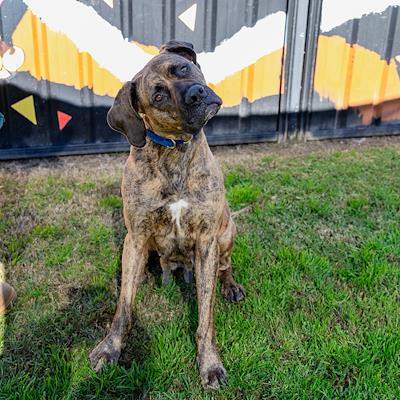
7 months • Stumpy Tail Cattle Dog X Bullmastiff
Bullmastiffs and Mastiffs are giant guardian breeds, originally developed in England to deter poachers without killing them. The modern Bullmastiff weighs forty-five to sixty kilos as an adult and the larger Mastiff variants can exceed seventy kilos. They are calm indoors, low-energy by giant-breed standards, and devoted family dogs with a natural guardian instinct.
Mastiffs come into Sydney rescue when owners underestimate the size, the strength or the cost. A giant breed eats accordingly (often $80 to $150 a week on food alone), needs giant-breed beds and crates, and any health issues come with giant-breed vet bills. The breed is also relatively short-lived (eight to ten years on average), which weights every year of ownership heavily.
A note on Sydney climate and Mastiffs: brachycephalic-adjacent muzzles plus heavy body mass means significant summer heat sensitivity. Walks are dawn-and-dusk affairs through summer, aircon or a cool indoor space is genuinely needed, and never leave a Mastiff in a parked car. Browse the Bullmastiffs and Mastiff crosses listed below from rescues and shelters across Sydney and New South Wales.
Bullmastiffs in Sydney rescue
Bullmastiffs and Bullmastiff crosses come through NSW rescue from time to time, often because the space and cost of a giant dog were underestimated, or because of a move.
With their own people they are usually calm, gentle and devoted guardians, and an adult rescue Bullmastiff with a known temperament can be a very easy dog to live with.
Heat, size and the right home
A heavy, short-faced dog struggles in heat, and Sydney summers are humid. Walks belong in the early morning or after dark, with shade, water and a cool floor indoors.
Think about transport and housing before you apply: a Bullmastiff has to fit in your car for vet visits, and some landlords and strata schemes restrict large breeds.
- Walk only in the cool of the day through summer.
- Deep-chested breeds can suffer bloat, an emergency; ask your vet what to watch for.
- Check rental or strata rules before you apply.
Living with a Bullmastiff in Sydney
The NSW health risk that catches new dog owners out is the paralysis tick, which lives along the east coast and in Sydney's bushland and is a year-round risk here, worst from spring through summer. Its toxin causes a paralysis that can be fatal without veterinary treatment, so year-round prevention and a quick check of your dog's coat after any bushwalk are the answer. Ask your vet which prevention product suits your dog.
Under the NSW Companion Animals Act your dog must be microchipped by 12 weeks and registered once for life through the NSW Pet Registry, a single lifetime fee rather than an annual renewal, and lower for a desexed dog. A rescue dog comes to you already desexed and microchipped. Council leash and off-leash rules vary, so it is worth checking your own council's off-leash areas before you adopt.
If you ever see a dog advertised for sale or free in NSW, the ad must legally display an identification number, either the dog's microchip number or a rehoming-organisation or breeder identification number. Its absence is the clearest sign of a backyard breeder or a scam, and a good reason to adopt through a rescue, where the dog arrives desexed, vaccinated, microchipped, vet-checked and temperament-assessed in a foster home.
Common Bullmastiff health concerns
Breed-associated conditions worth asking any rescue about before you adopt. A good rescue will already know whether a dog has been assessed for these.
Bloat (gastric dilation-volvulus)
A life-threatening emergency; feed two smaller meals rather than one large.
Source: ACVS →Bone cancer (osteosarcoma)
Giant breeds have elevated rates; lifespan-shortening when it occurs.
Source: VCA →Editorial summary for adopters, not medical advice. Ask the rescue about a specific dog's health, and consult your vet for individual guidance.
Breed and regulatory information cross-checked against NSW Office of Local Government (Dogs).
Get notified when a Bullmastiff is listed
We will email you when a Bullmastiff or Bullmastiff cross becomes available for adoption in Sydney, from a rescue or an owner rehoming.
Need to rehome a Bullmastiff?
If you can no longer keep your Bullmastiff, listing it for rehoming on LocalPetFinder connects it directly with adopters across Sydney and NSW, and keeps it out of a shelter. It is free.
List your dog for rehoming →Bullmastiff Adoption Guides
The pre-adoption reading list specific to Bullmastiffs in Sydney and NSW.
Bullmastiff Adoption in Sydney
Where to adopt a Bullmastiff or mastiff in Sydney, what it costs, and why these gentle giants end up in rescue.
Bullmastiff Health Issues to Plan For
Bloat, cancer, hip and elbow dysplasia, heart, heat and the short giant-breed lifespan every owner should know.
Owning a Bullmastiff: The Giant-Breed Reality
Size, strength, space, guardian temperament, drool, heat and cost of living with a giant guardian in Sydney.
Bullmastiff Adoption FAQ
Tap a question to expand.
How many Bullmastiffs are available for adoption in Sydney?
As of October 2026, 6 Bullmastiffs are available for adoption in Sydney across 4 rescues on LocalPetFinder. Listings are refreshed regularly as dogs are adopted and new ones arrive, browse the current Bullmastiffs above and apply directly through the rescue.
Where can I adopt a Bullmastiff near me in Sydney?
LocalPetFinder lists Bullmastiffs available for adoption from rescues across Sydney and New South Wales, including the Inner West, Eastern Suburbs, Northern Beaches, Western Sydney and the Sutherland Shire. Rescues that regularly take in dogs of this type include RSPCA NSW at Yagoona and Animal Welfare League NSW at Kemps Creek, alongside foster-based groups. Listings update regularly, so browse the Bullmastiffs above and apply directly through the rescue.
Are there Bullmastiff rescues near Sydney?
Yes. Several Sydney and NSW rescues regularly have Bullmastiffs and Bullmastiff crosses, including RSPCA NSW, Animal Welfare League NSW, Sydney Dogs and Cats Home, Monika's Doggie Rescue and Maggie's Rescue, plus breed-focused foster networks. A dedicated single-breed rescue is not always active, so the fastest path is to set an alert here and watch the general rescues. Use LocalPetFinder to see which rescues currently have Bullmastiffs available near you.
Where can I adopt a Bullmastiff puppy in Sydney?
Purebred Bullmastiff puppies are uncommon in Sydney rescue and are usually adopted very quickly, so the best strategy is to set an alert here and be ready to apply fast. Most Bullmastiffs in rescue are young adults, older dogs, or Bullmastiff crosses, and these make just as loving a pet as a purebred puppy while often being calmer and already part house-trained. A rescue puppy or young dog costs a few hundred dollars fully desexed, vaccinated and microchipped, against several thousand from a breeder with a waitlist. If you searched "bullmastiff puppies sydney" or "bullmastiff puppies for sale", browse the Bullmastiffs above and set an alert for new arrivals.
Are these Bullmastiffs for sale in Sydney?
Not for sale, for adoption, which is usually the better deal. Every Bullmastiff here comes from a Sydney or NSW rescue, not a breeder or classified seller, and the adoption fee already includes desexing, vaccination and microchipping. That fee is typically a few hundred dollars, against often several thousand from a breeder with none of the vet work done. If you searched "bullmastiff for sale sydney", adopting gets you a vetted dog for a fraction of the price.
Where can I buy a Bullmastiff in Sydney, and should I?
You can buy from a registered breeder, but it is worth weighing against adoption first. A reputable breeder often charges several thousand dollars and may have a waitlist, while a rescue Bullmastiff costs a few hundred dollars fully vetted and may be available now. Be cautious of cheap "for sale" ads on classified sites and marketplaces, which are a known hotspot for scams and backyard breeding. The ACCC Scamwatch has documented deposit scams for pets that do not exist. For most Sydney families, adopting a rescue Bullmastiff is cheaper, faster and gives a dog in need a home.
Are Bullmastiffs good family dogs?
Yes, with the right family. They are calm, patient and loyal to their immediate household. The size is the main caveat; a sixty-kilo dog can knock over a toddler without meaning harm, and the guardian instinct toward strangers needs managing. Older children in confident, structured households are the best match.
How much exercise does a Bullmastiff need?
Surprisingly little compared to working breeds. Forty-five to sixty minutes of walking a day, ideally in two sessions, suits an adult Bullmastiff. They are not running or high-impact dogs; the heavy build means joints take stress badly. Avoid forced exercise in growing puppies (under eighteen months) to protect developing joints.
How much does it actually cost to own a Bullmastiff in Sydney?
A lot. Food alone runs $80 to $150 a week for an adult. Pet insurance premiums on a giant breed are substantially higher than for a medium-sized dog. Vet visits use more anaesthetic and medication. Beds, crates and harnesses are giant-sized and priced accordingly. Budget for at least $4,000 to $6,000 a year in ongoing costs.
How long do Bullmastiffs live?
Eight to ten years on average, sometimes a little longer. This relatively short lifespan for a dog is a key consideration; the breed asks a lot from its owners financially and physically, and the relationship is shorter than with smaller breeds. Adopting an adult through rescue rather than buying a puppy means fewer years of joint-development risk and an assessed adult temperament.
Can a Bullmastiff cope with Sydney's summer?
With care. Bullmastiffs overheat easily in humid weather, so they need short walks in the cool of the day, constant shade and water, and a cool indoor space. Heavy panting, drooling or weakness on a hot day is an emergency and needs a vet.
Are Bullmastiffs good guard dogs?
They are natural guardians and tend to be watchful with strangers, usually without much barking. That instinct is best managed with early socialisation and calm training, so the dog stays relaxed with visitors rather than being encouraged to guard.