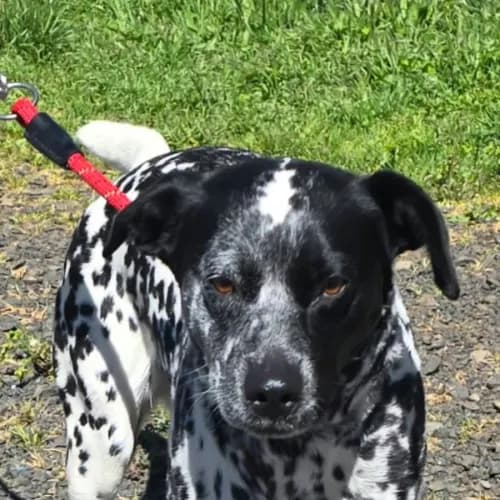
1 Dalmatian available elsewhere in New South Wales
None are listed in Sydney today, but many rescues will adopt to homes across the state if you can travel to meet them.
Get notified when a Dalmatian is listed
We will email you when a Dalmatian or Dalmatian cross becomes available for adoption in Sydney, from a rescue or an owner rehoming.
Similar breeds available in Sydney now
- Bull Arabs in Sydney (11 available)
- Shepherd Mix in Sydney (5 available)
- Pointers in Sydney (5 available)
- American Bulldogs in Sydney (2 available)
The Dalmatian is a striking, athletic dog, famous for its white coat marked with black or liver spots. Most weigh around 20 to 30 kilos and were bred as coach dogs to trot alongside carriages for miles, so they have real stamina and a need to move. A Dalmatian is intelligent, playful and strongly bonded to its people, and the breed can be sensitive and a little goofy, with a long memory and a dislike of being left out of family life.
Dalmatians reach Sydney and NSW rescue often because their energy is underestimated, frequently by buyers drawn to the striking looks rather than the working temperament behind them. A bored, under-exercised Dalmatian can become anxious and destructive. Purebred Dalmatians turn up less often than crosses, so Dalmatian crosses appear more regularly in rescue, and the foster carer or shelter assessment of the individual dog, including any hearing check, matters more than the breed label.
A Dalmatian suits an active owner or family who enjoy running, hiking or dog sports and can commit to daily exercise, training and company. In the right home it is loyal, fun and affectionate. Browse the Dalmatians and Dalmatian crosses currently listed from rescues and shelters across Sydney and New South Wales.
Common Dalmatian health concerns
Breed-associated conditions worth asking any rescue about before you adopt. A good rescue will already know whether a dog has been assessed for these.
Congenital deafness
The breed has notably high rates of inherited deafness; BAER testing detects affected dogs.
Source: OFA →Urinary stones
A unique uric-acid metabolism makes the breed prone to bladder stones; diet and hydration matter.
Ask your vet about this before you adopt.
Editorial summary for adopters, not medical advice. Ask the rescue about a specific dog's health, and consult your vet for individual guidance.
Need to rehome a Dalmatian?
If you can no longer keep your Dalmatian, listing it for rehoming on LocalPetFinder connects it directly with adopters across Sydney and NSW, and keeps it out of a shelter. It is free.
List your dog for free →Dalmatian Adoption Guides
The pre-adoption reading list specific to Dalmatians in Sydney and NSW.
Dalmatian Adoption in Sydney
Where to adopt a Dalmatian or Dalmatian cross in Sydney, the real costs, and the energy behind the spots people underestimate.
Dalmatian Health Issues to Plan For
Congenital deafness and BAER testing, urate bladder stones and the low-purine diet, skin and the checks every Dalmatian owner needs.
Dalmatian Exercise & Energy in Sydney
The coach-dog stamina, how much exercise a Dalmatian really needs, boredom and destruction, and Sydney heat management.
Dalmatian Puppies: Adopt or Buy in Australia?
Adopt or buy a Dalmatian in Australia: the BAER hearing test every puppy needs, the urinary stone question, scam red flags and rescue Dalmatians.
Dalmatian Adoption FAQ
Tap a question to expand.
How many Dalmatians are available for adoption in Sydney?
No Dalmatians are listed in Sydney on LocalPetFinder right now. Availability turns over as dogs are adopted and new ones arrive, so setting an alert is the most reliable way to catch one. Dalmatian crosses are worth considering too.
Where can I adopt a Dalmatian near me in Sydney?
LocalPetFinder lists Dalmatians available for adoption from rescues across Sydney and New South Wales. Places worth checking are the general shelters and foster-based rescues serving your part of Sydney; availability changes daily, so browse the listings above and apply directly through the rescue.
Are there Dalmatian rescues near Sydney?
No Dalmatians are listed in Sydney right now. A dedicated single-breed rescue is not always active, so the most reliable path is to set an alert here and check the general shelters and foster-based rescues serving Sydney. Use LocalPetFinder to see which rescues currently have Dalmatians listed near you.
Where can I adopt a Dalmatian puppy in Sydney?
Purebred Dalmatian puppies are uncommon in Sydney rescue and are usually adopted very quickly, so the best strategy is to set an alert here and be ready to apply fast. Most Dalmatians in rescue are young adults, older dogs, or Dalmatian crosses, and these make just as loving a pet as a purebred puppy while often being calmer and already part house-trained. Each rescue sets its own adoption fee and shows it on the listing; it usually covers desexing, vaccination and microchipping. If you searched "dalmatian puppies sydney", browse the Dalmatians above and set an alert for new arrivals.
Are these Dalmatians for sale in Sydney?
Not for sale, for adoption. Every Dalmatian here comes from a Sydney or NSW rescue or shelter, not a breeder or pet shop. A rescue's adoption fee usually includes desexing, vaccination and microchipping, and each listing shows its own fee. If you searched "dalmatian for sale sydney", adopting gets you a dog a rescue has already vetted.
Where can I buy a Dalmatian in Sydney, and should I?
You can buy from a breeder, but it is worth weighing against adoption first. A breeder sets its own price and may have a waitlist, so ask for the price and what it includes in writing, while a rescue Dalmatian comes vetted and may be available now. Be cautious of cheap "for sale" ads on classified sites and marketplaces, which are a known hotspot for scams and backyard breeding. The ACCC Scamwatch has documented deposit scams for pets that do not exist.
What health problems do Dalmatians have?
Two conditions are worth knowing about. Congenital deafness is more common in Dalmatians than in most breeds, and a dog can be deaf in one or both ears, so a rescue Dalmatian is often hearing-tested and any result is noted on the listing. Deaf dogs live full, happy lives with hand-signal training. The breed is also prone to urate bladder stones, a urinary issue linked to how the breed processes certain proteins, which is managed with diet, plenty of water and veterinary monitoring. A rescue Dalmatian arrives desexed, vaccinated, microchipped and vet-checked. Ask your vet about diet and urinary care.
Are Dalmatians good family dogs?
With an active family, yes. A well-socialised Dalmatian is affectionate, playful and loyal, and many are good with children they are raised alongside. The cautions are energy and exuberance: a young Dalmatian is bouncy and strong, so supervision around small children and early, ongoing training both matter. A deaf Dalmatian can be a wonderful family dog too, with hand-signal training and sensible management. Each rescue notes how the individual dog has gone with children and other animals in foster or shelter care.
How much exercise does a Dalmatian need?
A lot. Plan on at least 90 minutes of real activity a day, and include some mental work through training or games. Dalmatians were bred to trot for miles, so they make excellent running, hiking and cycling companions and need more than a gentle stroll. In a Sydney summer, exercise in the cool of the early morning or evening, carry water, and keep year-round paralysis tick prevention up if you walk in bushland or coastal areas.
How do I train and communicate with a deaf Dalmatian?
The same reward-based approach that works for any dog, adapted to hand signals and body language instead of voice cues. Deaf dogs read visual cues quickly and often bond closely with their handler. Use a torch or a gentle vibration to get attention, keep a deaf dog on lead or in a securely fenced area since it cannot hear traffic or a recall, and teach a reliable hand signal for come and settle. Many Sydney reward-based trainers are experienced with deaf dogs, and rescues can point you to the right support.