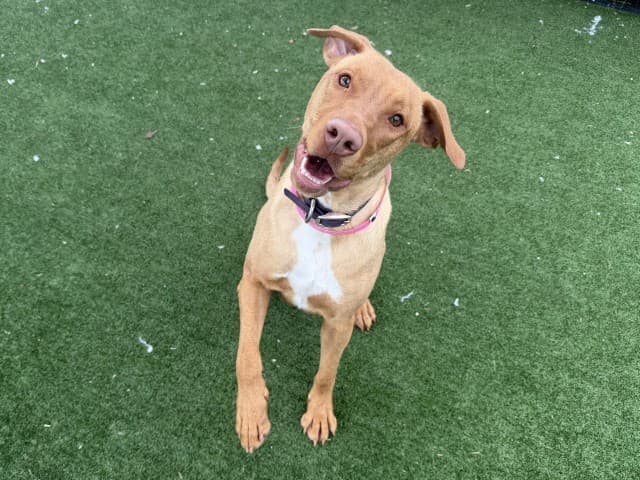
The Vizsla is an athletic, elegant Hungarian pointer with a short, rich golden-rust coat and a lean, muscular build, usually weighing around 20 to 30 kilos. Bred as an all-day hunting companion that works closely with its handler, the Vizsla is fast, tireless and highly trainable, but it is also famously affectionate and people-focused, so much so that the breed is nicknamed the Velcro dog for its need to be physically close to its person. It is a sensitive, intelligent breed that thrives on partnership and activity.
Vizslas reach Sydney and NSW rescue when their exercise needs and their need for company are underestimated. This is a high-energy working breed that does not cope well left alone for long days, and an under-exercised or lonely Vizsla is prone to separation anxiety, restlessness and destructive behaviour. Purebred Vizslas appear alongside Vizsla crosses, and the foster carer or shelter assessment of the individual dog with people, children and other animals matters more than the breed label.
A Vizsla suits an active owner or family who love the outdoors, can give the dog one to two hours of real exercise a day plus mental work, and are home enough that the dog is rarely left alone for long stretches. In the right home it is a devoted, gentle and exhilarating companion. Browse the Vizslas and Vizsla crosses currently listed from rescues and shelters across Sydney and New South Wales.
Get notified when a Vizsla is listed
We will email you when a Vizsla or Vizsla cross becomes available for adoption in Sydney, from a rescue or an owner rehoming.
Need to rehome a Vizsla?
If you can no longer keep your Vizsla, listing it for rehoming on LocalPetFinder connects it directly with adopters across Sydney and NSW, and keeps it out of a shelter. It is free.
List your dog for rehoming →Vizsla Adoption Guides
The pre-adoption reading list specific to Vizslas in Sydney and NSW.
Vizsla Adoption in Sydney
Where to adopt a Vizsla or Vizsla cross in Sydney, the real costs, and the exercise and velcro-companion needs people underestimate.
Vizsla Health Issues to Plan For
Epilepsy, skin and immune conditions, hip dysplasia, eyes, cancer and the checks every Vizsla owner should plan for.
Vizsla Exercise & Training in Sydney
The tireless hunting stamina, the sensitive soft temperament that needs reward-based training, and meeting the needs behind the surrenders.
Vizsla Adoption FAQ
Where can I adopt a Vizsla near me in Sydney?
LocalPetFinder lists Vizslas available for adoption from rescues across Sydney and New South Wales, including the Inner West, Eastern Suburbs, Northern Beaches, Western Sydney and the Sutherland Shire. Rescues that regularly take in dogs of this type include RSPCA NSW at Yagoona and Animal Welfare League NSW at Kemps Creek, alongside foster-based groups. Listings update regularly, so browse the Vizslas above and apply directly through the rescue.
Are there Vizsla rescues near Sydney?
Yes. Several Sydney and NSW rescues regularly have Vizslas and Vizsla crosses, including RSPCA NSW, Animal Welfare League NSW, Sydney Dogs and Cats Home, Monika's Doggie Rescue and Maggie's Rescue, plus breed-focused foster networks. A dedicated single-breed rescue is not always active, so the fastest path is to set an alert here and watch the general rescues. Use LocalPetFinder to see which rescues currently have Vizslas available near you.
Where can I adopt a Vizsla puppy in Sydney?
Purebred Vizsla puppies are uncommon in Sydney rescue and are usually adopted very quickly, so the best strategy is to set an alert here and be ready to apply fast. Most Vizslas in rescue are young adults, older dogs, or Vizsla crosses, and these make just as loving a pet as a purebred puppy while often being calmer and already part house-trained. A rescue puppy or young dog costs a few hundred dollars fully desexed, vaccinated and microchipped, against several thousand from a breeder with a waitlist. If you searched "vizsla puppies sydney" or "vizsla puppies for sale", browse the Vizslas above and set an alert for new arrivals.
Are these Vizslas for sale in Sydney?
Not for sale, for adoption, which is usually the better deal. Every Vizsla here comes from a Sydney or NSW rescue, not a breeder or classified seller, and the adoption fee already includes desexing, vaccination and microchipping. That fee is typically a few hundred dollars, against often several thousand from a breeder with none of the vet work done. If you searched "vizsla for sale sydney", adopting gets you a vetted dog for a fraction of the price.
Where can I buy a Vizsla in Sydney, and should I?
You can buy from a registered breeder, but it is worth weighing against adoption first. A reputable breeder often charges several thousand dollars and may have a waitlist, while a rescue Vizsla costs a few hundred dollars fully vetted and may be available now. Be cautious of cheap "for sale" ads on classified sites and marketplaces, which are a known hotspot for scams and backyard breeding. The ACCC Scamwatch has documented deposit scams for pets that do not exist. For most Sydney families, adopting a rescue Vizsla is cheaper, faster and gives a dog in need a home.
What health problems do Vizslas have?
Vizslas are generally a healthy, athletic breed with a good lifespan. Like most active large dogs they can be affected by hip dysplasia, so joint health is worth monitoring, and the breed can also be prone to epilepsy, to certain eye conditions and to skin allergies, which the warm, humid Sydney climate can aggravate. Their lean build and short coat also mean they feel both heat and cold. A rescue Vizsla arrives desexed, vaccinated, microchipped and vet-checked, and any known issue is noted on the listing. Ask your vet about joint and skin care.
Are Vizslas good family dogs?
Yes, in an active home that suits them. Vizslas are affectionate, gentle and deeply bonded to their people, and many are wonderful with children they are raised alongside. The key is that they need a lot of exercise and a lot of company, so they fit an active, home-a-lot family far better than a busy household that is out all day. They are sensitive dogs that respond best to calm, reward-based training. Each rescue notes how the individual dog has gone with children and other animals in foster or shelter care.
How much exercise does a Vizsla need?
A great deal. Plan on one to two hours of real activity a day, including running, hiking or off-lead exercise in safe areas, plus mental work such as training and scent games. A walk around the block is nowhere near enough, and an under-exercised Vizsla will become anxious and destructive. Sydney bushland tracks and large off-leash reserves suit them well. In summer, exercise in the cool of the early morning or evening, carry water, and keep year-round paralysis tick prevention up if you walk in bushland or coastal areas.
Are Vizslas good for first-time owners?
They can work for a committed first-time owner, but only one who genuinely understands the exercise and companionship the breed needs. Vizslas are trainable and gentle, which helps, but the Velcro nature means they do not tolerate being left alone for long days and can develop real separation anxiety. If you are new to dogs but active and often home, an adult Vizsla from rescue with a known temperament is a good way in, ideally paired with early reward-based training and a plan for the dog's company during the day.