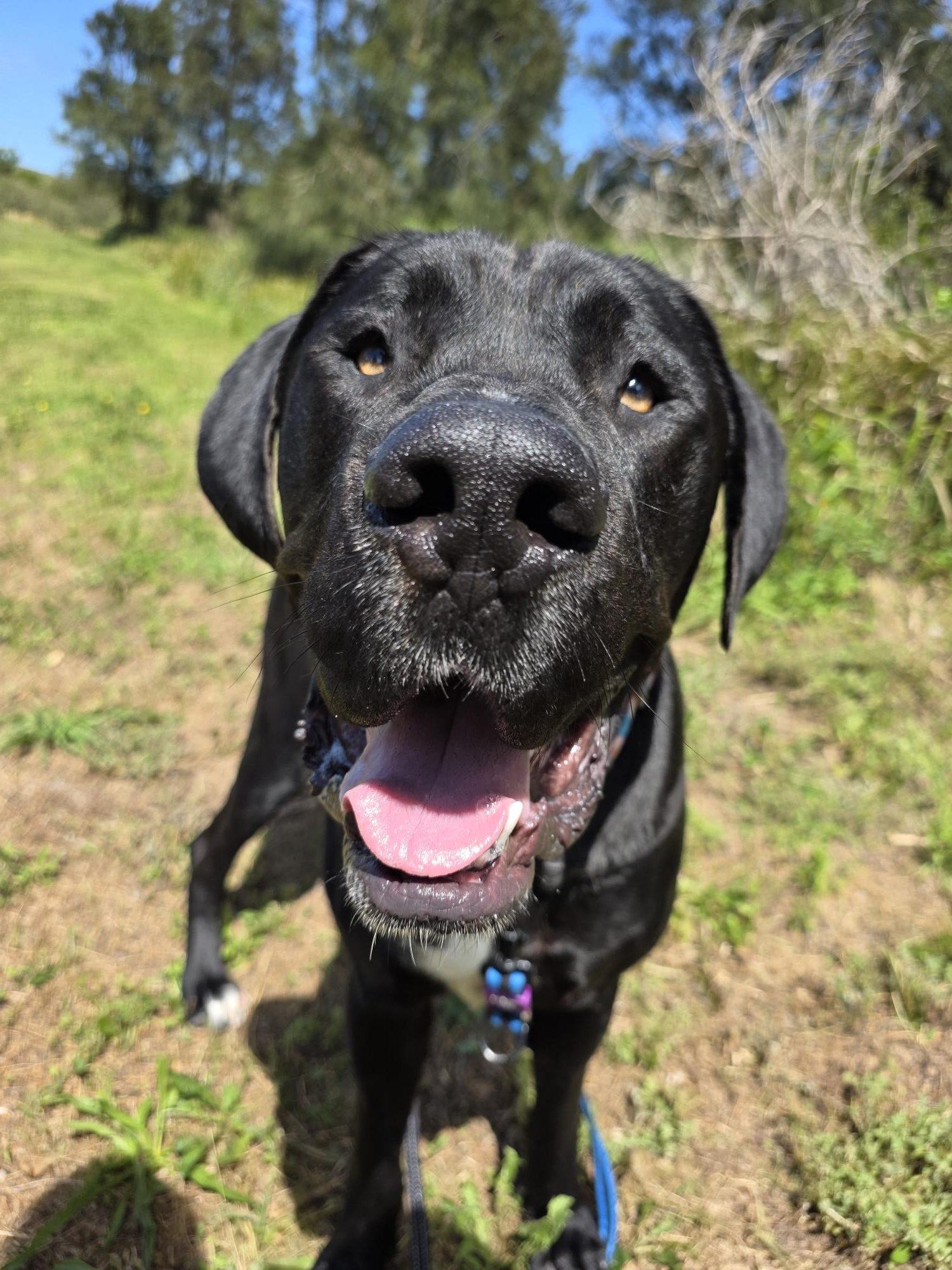

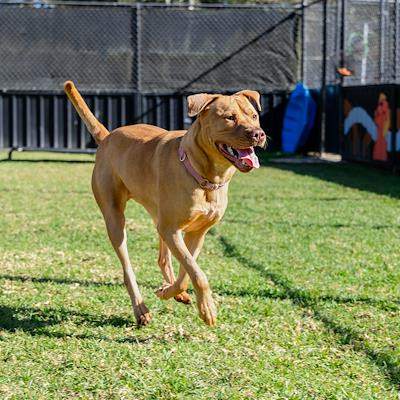
The Great Dane is a giant breed with a deserved reputation as a gentle giant. Despite the towering size, often 50 to 90 kilos and shoulder-high to an adult, the Great Dane is typically calm, affectionate and easygoing, more of a stately couch companion than a tireless working dog. Developed in Germany as a boar hound and estate guardian, the modern Dane is a devoted family dog that tends to think it is a lapdog. The short coat is low-maintenance, but the sheer scale of the dog shapes almost everything about owning one.
Great Danes reach Sydney and NSW rescue when the size, cost and space they need are underestimated, or when a rental or strata cannot accommodate a giant dog. Everything scales up with a Dane, the food, the bedding, the vet and medication costs, and the space, so they are not a casual adoption. Purebred Danes are less common in rescue, so Great Dane crosses appear more often, and the foster carer or shelter notes on the individual dog are the best guide.
A Great Dane suits an owner or family with the space, the budget and the calm home a giant breed needs, who understands the shorter lifespan giant breeds have and takes the serious bloat risk seriously. In the right home it is one of the most gentle and affectionate of all the big breeds. Browse the Great Danes and Great Dane crosses currently listed from rescues and shelters across Sydney and New South Wales.
Great Danes in Sydney rescue
Great Danes are rare in NSW rescue. Across the rescues we track, a Dane or Dane cross is listed only now and then, and they tend to be adopted quickly by people who have been waiting for one. If you want a Great Dane, set an alert and be ready to apply the day one appears, rather than checking back once a month.
When a Dane does come into rescue it is usually for a practical reason rather than a behavioural one. A move into a smaller rental, a change in work or family life, or a vet bill that arrived sooner than expected. That is good news for an adopter, because it often means a settled adult dog with house manners already in place.
Plan around the size before you apply
A Great Dane is gentle, but everything around it is scaled up. Food, preventatives, bedding, a crate and vet medication are all priced by weight, so a giant dog costs more to keep every month than a medium one. Think about transport too: the dog has to fit in your car for a vet trip, and lifting an unwell giant dog is a two-person job.
Housing is the other early question. A Dane can be calm indoors and suits a quiet home well, but many leases and strata schemes have their own pet rules, so read your lease or your strata by-laws and get approval in writing before you apply. A rescue will usually ask.
- Check your lease or strata by-laws and get pet approval in writing first.
- Budget for giant-dog prices on food, preventatives and medication.
- Make sure the dog fits in your car, and plan how you would get an unwell Dane to a vet.
- Deep-chested breeds can suffer bloat, a twisted stomach that is a genuine emergency. Ask your vet what signs to watch for.
Living with a Great Dane in Sydney
Humid coastal NSW summers are hard on a big dog that carries a lot of body mass. Walk early in the morning or late in the evening, keep shade and water available all day, and skip exercise on the hottest afternoons. A Dane does not need long runs, and young Danes in particular should not be pushed hard while they are still growing.
The NSW health risk that catches new dog owners out is the paralysis tick, which lives along the NSW coast and in coastal bushland. RSPCA Australia says that "in the north, paralysis ticks may be found all year round, while in the more southern areas, the season generally begins in spring and finishes in late autumn", and that the season can start earlier after a mild winter (RSPCA Knowledgebase, kb.rspca.org.au, read 13 November 2026). Its toxin causes a paralysis that can be fatal without veterinary treatment, so ask your vet about a registered tick-prevention product and check your dog's coat after any bushwalk.
Under the NSW Companion Animals Act your dog must be microchipped by 12 weeks of age, or before it is sold or given away, and registered for life on the NSW Pet Registry "either by 12 weeks of age or immediately upon transfer (whichever happens first)" (NSW Office of Local Government, checked 13 November 2026). It is a single lifetime fee rather than an annual renewal, and lower for a desexed dog. A rescue dog comes to you already desexed and microchipped. Council leash and off-leash rules vary, so it is worth checking your own council's off-leash areas before you adopt.
Common Great Dane health concerns
Breed-associated conditions worth asking any rescue about before you adopt. A good rescue will already know whether a dog has been assessed for these.
Bloat (gastric dilation-volvulus)
Among the highest-risk breeds; many owners opt for preventive gastropexy. Feed two smaller meals daily.
Source: ACVS →Dilated cardiomyopathy
Heart muscle disease occurs in the breed at elevated rates; cardiac screening is standard.
Ask your vet about this before you adopt.
Hip and elbow dysplasia
Nearly universal in giant breeds; ask the rescue whether a vet has checked the joints.
Source: OFA →Wobbler syndrome
A neck spinal condition causing an unsteady gait, seen in the breed.
Ask your vet about this before you adopt.
Editorial summary for adopters, not medical advice. Ask the rescue about a specific dog's health, and consult your vet for individual guidance.
Breed and regulatory information cross-checked against NSW Office of Local Government (Dogs).
Get notified when a Great Dane is listed
We will email you when a Great Dane or Great Dane cross becomes available for adoption in Sydney, from a rescue or an owner rehoming.
Need to rehome a Great Dane?
If you can no longer keep your Great Dane, listing it for rehoming on LocalPetFinder connects it directly with adopters across Sydney and NSW, and keeps it out of a shelter. It is free.
List your dog for free →Great Dane Adoption Guides
The pre-adoption reading list specific to Great Danes in Sydney and NSW.
Great Dane Adoption in Sydney
Where to adopt a Great Dane or Dane cross, why they end up in rescue, and adopt versus breeder cost.
Great Dane Health Issues
Bloat (GDV) the giant-breed emergency, the short lifespan, heart, bone cancer, and the signs to watch.
Owning a Great Dane: The Giant-Breed Reality
The honest cost, space, strength, short lifespan and care of living with a giant breed in Sydney.
Great Dane Puppies: Adopt or Buy in Australia?
Adopt or buy a Great Dane in Australia? Why we quote no breeder price, hip, heart and eye tests, bloat, lifespan and scam red flags.
Great Dane Adoption FAQ
Tap a question to expand.
How many Great Danes are available for adoption in Sydney?
A small number of Great Danes are listed in Sydney right now; the live count is at the top of this page. They are usually adopted quickly, so it is worth applying early or setting an alert.
Where can I adopt a Great Dane near me in Sydney?
LocalPetFinder lists Great Danes available for adoption from rescues across Sydney and New South Wales. The Great Danes on this page right now are listed by Animal Welfare League NSW, Blue Mountains Animal Care Centre, Sydney Dogs and Cats Home. Places worth checking are the general shelters and foster-based rescues serving your part of Sydney; availability changes daily, so browse the listings above and apply directly through the rescue.
Are there Great Dane rescues near Sydney?
Yes. The Great Danes on this page right now are listed by Animal Welfare League NSW, Blue Mountains Animal Care Centre, Sydney Dogs and Cats Home. A dedicated single-breed rescue is not always active, so the most reliable path is to set an alert here and check the general shelters and foster-based rescues serving Sydney. Use LocalPetFinder to see which rescues currently have Great Danes listed near you.
Where can I adopt a Great Dane puppy in Sydney?
Purebred Great Dane puppies are uncommon in Sydney rescue and are usually adopted very quickly, so the best strategy is to set an alert here and be ready to apply fast. Most Great Danes in rescue are young adults, older dogs, or Great Dane crosses, and these make just as loving a pet as a purebred puppy while often being calmer and already part house-trained. Each rescue sets its own adoption fee and shows it on the listing; it usually covers desexing, vaccination and microchipping. If you searched "great dane puppies sydney", browse the Great Danes above and set an alert for new arrivals.
Are these Great Danes for sale in Sydney?
Not for sale, for adoption. Every Great Dane here comes from a Sydney or NSW rescue or shelter, not a breeder or pet shop. A rescue's adoption fee usually includes desexing, vaccination and microchipping, and each listing shows its own fee. If you searched "great dane for sale sydney", adopting gets you a dog a rescue has already vetted.
Where can I buy a Great Dane in Sydney, and should I?
You can buy from a breeder, but it is worth weighing against adoption first. A breeder sets its own price and may have a waitlist, so ask for the price and what it includes in writing, while a rescue Great Dane comes vetted and may be available now. Be cautious of cheap "for sale" ads on classified sites and marketplaces, which are a known hotspot for scams and backyard breeding. The ACCC Scamwatch has documented deposit scams for pets that do not exist.
Are Great Danes restricted in NSW?
No. The Great Dane is not on the NSW restricted-breed list and is legal to own and rehome normally. Only five breeds are restricted under the Companion Animals Act 1998: the American Pit Bull Terrier, Dogo Argentino, Japanese Tosa, Fila Brasileiro and Perro de Presa Canario. A Great Dane simply needs to be microchipped and registered on the NSW Pet Registry, and desexing lowers the lifetime registration fee. The real considerations with a Dane are practical rather than legal: space, cost and secure, comfortable housing for a giant dog.
What health problems do Great Danes have?
The most urgent is bloat, also called gastric dilatation-volvulus, where the deep chest lets the stomach fill with gas and twist. It is life-threatening and needs emergency surgery, so every Dane owner should learn the signs, a swollen belly, unproductive retching and distress, and act immediately. Danes are also prone to heart disease including dilated cardiomyopathy, to bone cancer, hip issues and a spinal condition sometimes called wobbler. Giant breeds also have shorter lifespans than smaller dogs. A rescue Dane arrives desexed, vaccinated, microchipped and vet-checked. Ask your vet about bloat prevention and heart care.
Are Great Danes good family dogs?
Yes, they are one of the gentlest of the giant breeds and are usually affectionate and patient with the children they live alongside. The main caution is simply the size: a friendly Dane can knock over a toddler without meaning any harm, so supervision around very young children matters, and the dog needs early training so a giant animal has good manners. Each rescue listing notes how the individual dog has gone with children and other animals in foster care.
How much exercise and space does a Great Dane need?
Less exercise than the size suggests, but plenty of space. An adult Dane is happy with a couple of moderate walks a day plus room to stretch out at home, and it is calmer indoors than most large breeds. Growing puppies need careful, gentle exercise to protect developing joints. They need a home with genuine space and sturdy comfortable bedding to keep pressure off the joints. In a Sydney summer, walk in the cooler hours and keep year-round paralysis tick prevention up if you walk in bushland or coastal areas.
How rare are Great Danes in NSW rescue?
Numbers change daily, so it pays to set an alert. Setting an alert on this page means you hear about a new listing as soon as it is published, which is the realistic way to adopt one.
Can a Great Dane live in an apartment?
Some can, because many Danes are calm and sleep for much of the day, but the lease and the strata rules usually decide it before the dog does. Check your lease or strata by-laws and get approval in writing first. Then think about lifts, stairs and how you would move a large, unwell dog, since those matter more in an apartment than the floor space.