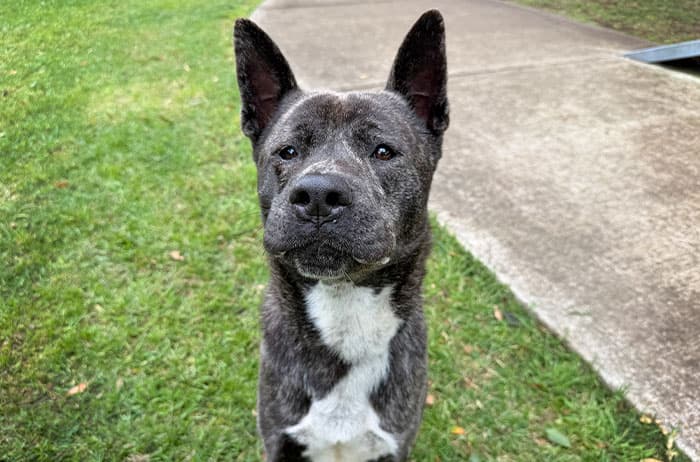
Fredo
1 year 3 months • Akita X American Staffordshire
Similar breeds available in Sydney now
- Bull Arabs in Sydney (11 available)
- Rottweilers in Sydney (9 available)
- Rhodesian Ridgebacks in Sydney (3 available)
- Alaskan Malamutes in Sydney (1 available)
The Akita is a large, powerful spitz breed from Japan, originally bred to hunt big game and to guard, and it carries itself with a calm, dignified confidence. Most weigh around 32 to 50 kilos, with a thick double coat, a broad head and a curled tail. Akitas are deeply loyal, quiet and devoted to their family, but they are also naturally reserved with strangers and have strong guarding instincts, which makes early socialisation and experienced handling essential rather than optional. This is a serious, independent breed.
Akitas reach Sydney and NSW rescue when their guarding temperament, strength and independence are underestimated, or when a family change means the dog needs rehoming. This is not a beginner breed: Akitas can be dog-aggressive, particularly toward dogs of the same sex, and they need confident, consistent leadership. Purebred Akitas appear alongside Akita crosses, and given the temperament, the foster carer or shelter assessment of the individual dog with people, children, cats and other animals matters more than for almost any other breed.
An Akita suits an experienced owner who understands guardian breeds, can commit to early and ongoing socialisation and reward-based training, and can provide secure fencing and a calm, structured home. In the right hands it is a magnificent, loyal and steadfast companion. Browse the Akitas and Akita crosses currently listed from rescues and shelters across Sydney and New South Wales.
Common Akita health concerns
Breed-associated conditions worth asking any rescue about before you adopt. A good rescue will already know whether a dog has been assessed for these.
Hypothyroidism
Endocrine condition seen in the breed; testable with routine bloodwork.
Ask your vet about this before you adopt.
Autoimmune conditions
The breed has elevated rates of immune-mediated diseases affecting eyes, skin, and blood.
Ask your vet about this before you adopt.
Editorial summary for adopters, not medical advice. Ask the rescue about a specific dog's health, and consult your vet for individual guidance.
Get notified when an Akita is listed
We will email you when an Akita or Akita cross becomes available for adoption in Sydney, from a rescue or an owner rehoming.
Need to rehome an Akita?
If you can no longer keep your Akita, listing it for rehoming on LocalPetFinder connects it directly with adopters across Sydney and NSW, and keeps it out of a shelter. It is free.
List your dog for free →Akita Adoption Guides
The pre-adoption reading list specific to Akitas in Sydney and NSW.
Akita Adoption in Sydney
Where to adopt an Akita or Akita cross in Sydney, the real costs, and the guarding temperament and strength people underestimate.
Akita Health Issues to Plan For
Hip dysplasia, autoimmune conditions, thyroid, bloat and the giant-breed checks every Akita owner should plan for.
Akita Temperament & Socialisation in Sydney
The guardian instinct, same-sex dog aggression, why Akitas are not dog-park dogs, and the experienced handling they need.
Akita Puppies: Adopt or Buy in Australia?
Akita puppy or rescue? Akita vs Akita (Japanese), hip and elbow checks, the same-sex dog temperament, why we quote no breeder price, scams and rescue.
Akita Adoption FAQ
Tap a question to expand.
How many Akitas are available for adoption in Sydney?
A small number of Akitas are listed in Sydney right now; the live count is at the top of this page. They are usually adopted quickly, so it is worth applying early or setting an alert.
Where can I adopt an Akita near me in Sydney?
LocalPetFinder lists Akitas available for adoption from rescues across Sydney and New South Wales. The Akitas on this page right now are listed by Campbelltown Animal Care Facility. Places worth checking are the general shelters and foster-based rescues serving your part of Sydney; availability changes daily, so browse the listings above and apply directly through the rescue.
Are there Akita rescues near Sydney?
Yes. The Akitas on this page right now are listed by Campbelltown Animal Care Facility. A dedicated single-breed rescue is not always active, so the most reliable path is to set an alert here and check the general shelters and foster-based rescues serving Sydney. Use LocalPetFinder to see which rescues currently have Akitas listed near you.
Where can I adopt an Akita puppy in Sydney?
Purebred Akita puppies are uncommon in Sydney rescue and are usually adopted very quickly, so the best strategy is to set an alert here and be ready to apply fast. Most Akitas in rescue are young adults, older dogs, or Akita crosses, and these make just as loving a pet as a purebred puppy while often being calmer and already part house-trained. Each rescue sets its own adoption fee and shows it on the listing; it usually covers desexing, vaccination and microchipping. If you searched "akita puppies sydney", browse the Akitas above and set an alert for new arrivals.
Are these Akitas for sale in Sydney?
Not for sale, for adoption. Every Akita here comes from a Sydney or NSW rescue or shelter, not a breeder or pet shop. A rescue's adoption fee usually includes desexing, vaccination and microchipping, and each listing shows its own fee. If you searched "akita for sale sydney", adopting gets you a dog a rescue has already vetted.
Where can I buy an Akita in Sydney, and should I?
You can buy from a breeder, but it is worth weighing against adoption first. A breeder sets its own price and may have a waitlist, so ask for the price and what it includes in writing, while a rescue Akita comes vetted and may be available now. Be cautious of cheap "for sale" ads on classified sites and marketplaces, which are a known hotspot for scams and backyard breeding. The ACCC Scamwatch has documented deposit scams for pets that do not exist.
What health problems do Akitas have?
As a large breed, Akitas can be affected by hip dysplasia and other joint conditions, so joint health is worth monitoring. The breed is also prone to hypothyroidism, to certain autoimmune and eye conditions, and to bloat (gastric torsion), a sudden, life-threatening emergency that giant and deep-chested breeds are at higher risk of, so it is worth learning the warning signs. The thick coat also means skin needs checking in a warm, humid climate. A rescue Akita arrives desexed, vaccinated, microchipped and vet-checked, and any known issue is noted on the listing. Ask your vet about joint care and bloat risk.
Are Akitas good family dogs?
They can be intensely loyal and devoted family dogs, but they are best suited to experienced owners rather than typical first-time family homes. A well-socialised Akita can be gentle and protective with its own family and older children, but the strong guarding instinct, the reserve with strangers and the tendency toward dog aggression mean careful management and supervision are essential. They often do best as the only dog. Each rescue notes how the individual dog has gone with children and other animals in foster or shelter care, which is critical reading for this breed.
Are Akitas good for first-time owners?
Generally no. The Akita is a powerful, independent guardian breed that needs an owner who understands the temperament, can provide firm, consistent, reward-based leadership, and will commit to lifelong socialisation. The strength, the guarding drive and the potential for dog aggression are a lot for a first-time owner to manage. If you are drawn to the breed but new to dogs, spend time with experienced Akita people first, and consider an adult from rescue whose temperament has already been assessed in foster care.
Is the Akita a restricted breed in NSW?
No. The Akita is not on the NSW restricted-breed list and is legal to own and rehome normally. Under the Companion Animals Act 1998, the restricted breeds in NSW are the American Pit Bull Terrier (or Pit Bull Terrier), Dogo Argentino, Japanese Tosa, Fila Brasileiro and Perro de Presa Canario, and a dog declared restricted cannot be sold or given away here. That said, any large, strong guardian breed can be declared a dangerous dog by a council if it behaves aggressively, so responsible ownership, socialisation and secure containment matter both for the dog and to stay onside with the law.