The short answer
An Akita is a large, dignified, protective spitz that suits an experienced owner with secure fencing and usually no other dog of the same sex. If you buy, decide first between the Akita and the Akita (Japanese), then use a Dogs Australia registered breeder who can show both parents' hip and elbow results, and expect a waiting list: Dogs Australia recorded 55 Akita and 33 Akita (Japanese) registrations in 2025. We found no member breeder that publishes a price on its own website, so ask each one. If you adopt, Akitas and Akita crosses reach general rescues, mostly as adults, and the rescue can tell you how the dog behaves with other dogs and visitors. Rescue fees below are reference figures, not quotes; fees change, so check with the rescue.
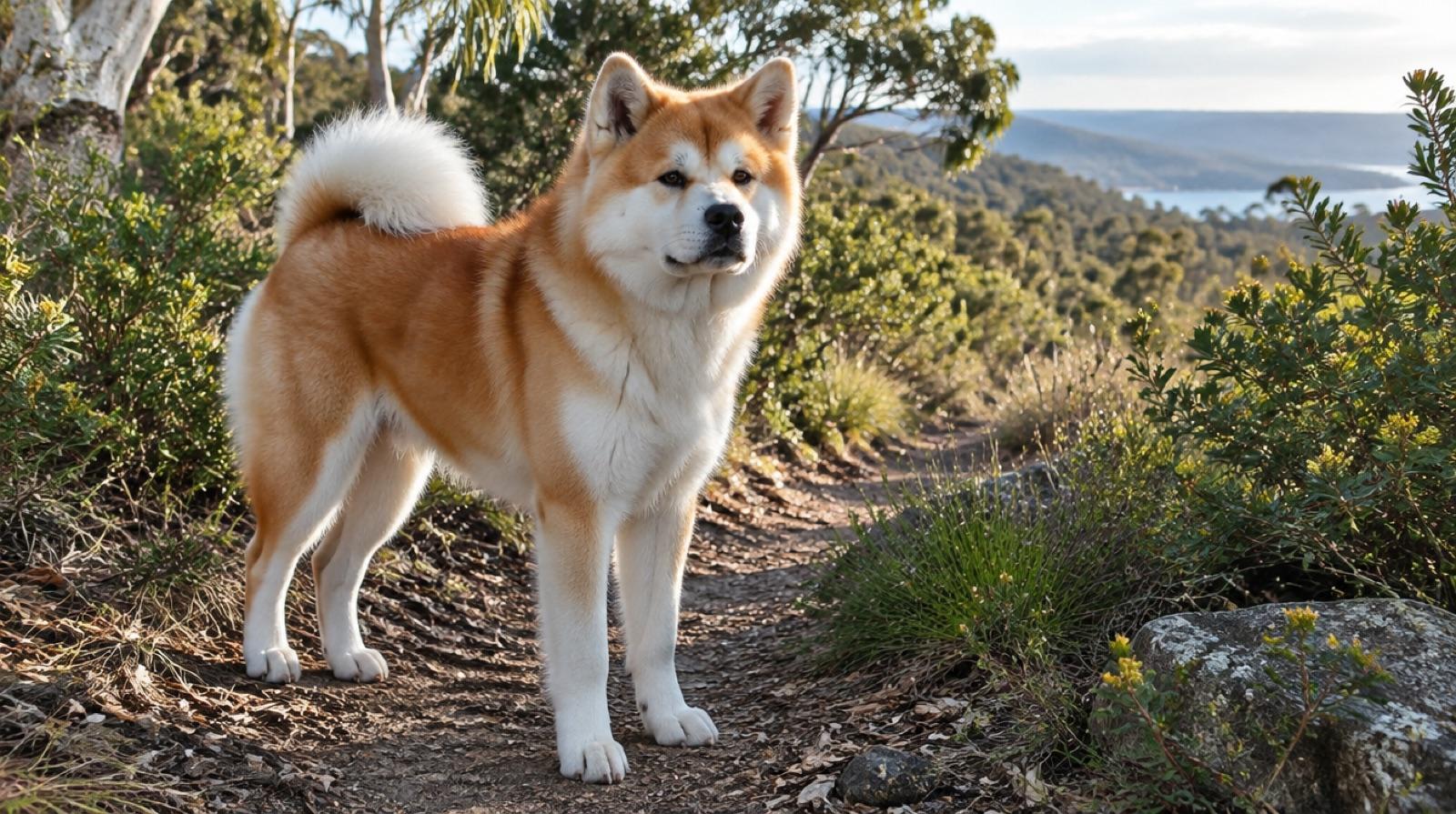
Should you adopt or buy an Akita?
Start with the breed, not the route. The Dogs Australia Akita standard describes a dog that is “large, powerful alert, with much substance and heavy bone”, and a temperament that is “dignified, courageous, aloof” and “tends to show dominance over other dogs, though the trait is not encouraged.” Dogs Victoria calls it a great family dog but recommends guidance from an experienced Akita owner for first-timers, and says the breed can have a high prey drive, so very suitable fencing is a must, as is walking on a lead.
Either route can work. A registered breeder gives you a puppy from health-screened parents and a known breed, but registration numbers are small and you will probably wait. A rescue gives you an adult whose behaviour with other dogs, visitors and children is already known, which matters more with an Akita than with most breeds. The route to avoid is an ad with no parent health results and no clear answer on which Akita it is.
| Route | Reference cost | What you usually get | Main risk |
|---|---|---|---|
| Dogs Australia registered breeder | No member breeder we checked published a price; ask each one | An Akita or Akita (Japanese) puppy with pedigree papers, often on the Limited Register | Small registration numbers and waiting lists |
| General rescue or council pound | The standard fee, for example $395 to $1,000 at the RSPCA rows below | Adult Akitas and Akita crosses, desexed and microchipped | Listings are uncommon; you may wait |
| Online ad or unregistered seller | Any price; a cheap price is a scam warning | Untested parents, a cross sold as purebred, or a puppy that does not exist | Hip and temperament risk unknown, and scams |
Reference figures: the RSPCA NSW, RSPCA ACT and RSPCA Victoria fee pages, read 11 November 2026. They are not quotes; rescues change their fees, so check with them.
Akita or Akita (Japanese): which one is it?
Two breeds, two standards. The Dogs Australia breed listing places both in Group 6 (Utility). Dogs NSW explains that American servicemen took Akitas home from Japan in the late 1940s and early 1950s, that those dogs became the foundation of the American type, and that in 2013 the Australian National Kennel Council accepted the standard of the Japanese Akita as a separate entity. In Australian show rings the American type is shown simply as the Akita, followed by the Akita (Japanese).
| Akita | Akita (Japanese) | |
|---|---|---|
| Standard last updated | 22 February 2017 | 7 February 2013 |
| Height at withers | Dogs 66 to 71 cm; bitches 61 to 66 cm | Dogs 67 cm; bitches 61 cm; 3 cm tolerance either way |
| Colour | “Any colour, except merle, including white brindle or pinto” | Red fawn, sesame, brindle and white; all except white must have urajiro (whitish coat on the sides of the muzzle, the cheeks, the underside of the jaw, neck, chest, body and tail, and the inside of the legs) |
| Temperament (standard) | “Dignified, courageous, aloof, tends to show dominance over other dogs” | “Composed, faithful, docile and receptive” |
| Coat | Coarse, straight outer coat standing off the body; soft, dense undercoat | Harsh, straight outer coat; soft, dense undercoat; long (shaggy) hair is an eliminating fault |
| Average life span (Dogs Victoria) | 10 to 12 years | 10 to 15 years |
From the Dogs Australia Akita and Akita (Japanese) standards and the Dogs Victoria Akita and Akita (Japanese) pages, read 11 November 2026. Neither standard gives a weight.
Numbers are small. Dogs Australia's registration figures show 55 Akitas and 33 Akita (Japanese) registered in 2025, against 91 and 64 in 2018. These are registrations, not every Akita born. In practice, if you want a registered puppy, contact breeders well ahead and expect to wait.
Which health checks should an Akita breeder show you?
The state bodies keep it simple. Dogs Victoria calls the Akita generally healthy but says hip dysplasia and elbow dysplasia may occur and that, due to the size and weight of the breed, it is recommended that parents are screened for both. Dogs NSW says patella and cruciate ligament problems can occur in the breed. We found no Australian Akita club website setting a minimum test list.
| Check | What the sources say | What to ask for |
|---|---|---|
| Hips and elbows | Parents should be screened (Dogs Victoria) | Both parents' hip and elbow scores |
| Knees and cruciate ligaments | Patella and cruciate problems can occur (Dogs NSW) | Whether the parents' knees were checked |
| Sebaceous adenitis (skin) | Seen primarily in Standard Poodles, Akitas and Samoyeds; no DNA test; screening by skin biopsy (OFA, US) | Whether the line has a history of it, and any biopsy results |
| Temperament | Tends to show dominance over other dogs (standard); same-sex pairs do not mix well (Dogs Victoria) | To meet the mother, and how the breeder socialises the litter |
Sources: Dogs Victoria, Dogs NSW and the Orthopedic Foundation for Animals. This is a buying checklist, not veterinary advice.
Bloat. The Akita was one of 11 large and giant breeds in a US study of 1,914 dogs recruited at dog shows, published in 2000, which recorded 23 cases of gastric dilatation-volvulus per 1,000 dog-years across the seven large breeds. Cornell University's vet school calls bloat a life-threatening condition that occurs suddenly, with signs including non-productive retching, a swollen, painful belly and restlessness: go to a vet now if you see them. Our bloat guide covers the signs, and our Akita health guide covers living with these conditions.
How much is an Akita puppy from a registered breeder?
We could not find a published figure. In November 2026 we read the own websites of Akita and Akita (Japanese) breeders that show Dogs Australia state membership, leaving out listing and marketplace sites. None of them published a price for a pet puppy on their own site: some showed recent litters or waiting lists with no price, and one said it had paused breeding. We found no Australian Akita club that publishes a guide price. Prices on listing sites, or from sellers whose sites showed no membership, are not something we quote.
When you ask a breeder for a price, ask what it includes: the parents' hip and elbow scores, vaccinations and microchip, the register type and desexing agreement, and whether the breeder will take the dog back. Budget for what comes after, too. The dog cost calculator gives a first-year figure, and our guides to cheaper vet care and desexing costs help with the rest. Secure fencing may be the biggest one-off cost.
See the Akitas listed right now
Akitas and Akita crosses from the rescues, shelters and council pounds we aggregate. Every listing links to the rescue, where you apply directly.
What do Akitas in rescue look like?
Mostly adults, plus Akita crosses. Akitas come into rescue for the same reasons as other dogs, such as a move or a change in the household, and sometimes because a strong, independent guardian breed was more than the owner expected. With a cross, temperament varies, so the foster carer's or shelter's notes on the individual dog matter more than the label.
That is the advantage of adopting an Akita: you can ask how the dog goes with other dogs (especially of the same sex), with cats, with visitors and with children, and whether it has tested a fence, before you sign anything. Our Akita adoption guide for Sydney and temperament and socialisation guide cover the local side.
What does a rescue Akita cost?
| Rescue | Fee as published | Read |
|---|---|---|
| RSPCA NSW | $620 puppy under 12 months; $500 dog over 12 months | 11 Nov 2026 |
| RSPCA ACT | $395 for dogs over 6 months and under 8 years; $650 for popular breeds and mixes with high adoption demand over 12 months and under 8 years (the page does not say which breeds count as popular) | 11 Nov 2026 |
| RSPCA Victoria | $500 to $1,000 for adult dogs | 11 Nov 2026 |
Reference only, not a quote. These are the fees each rescue published on the date shown; fees change and some dogs are priced individually, so check with the rescue. The fee normally covers desexing, microchipping, vaccinations and a vet check. Read our guide to adopting a dog in Australia.
If no Akita is listed near you, browse large dogs as well: Sydney, Melbourne, Brisbane, Perth, Adelaide.
Is the Akita a restricted breed?
No state or territory list names the Akita or the Akita (Japanese). The lists cover the American Pit Bull Terrier (or pit bull terrier), Dogo Argentino, Fila Brasileiro, Japanese Tosa and Perro de Presa Canario, the ACT has no restricted breeds, and we found no Northern Territory list. The name to keep apart is the Japanese Tosa: a different Japanese breed, on the import ban and every state list. A council officer can still assess an individual dog, and in NSW the Office of Local Government describes how a council can declare a dog restricted. Any dog of any breed can be declared dangerous or menacing after an incident. Our Staffy vs pit bull guide has each state's list in full.
How do Akita puppy scams work?
Never send money for an Akita puppy you have not seen with its mother, in person or at least on a live video call.
Scamwatch warns that scammers set up fake websites, social media profiles and marketplace listings for pets that do not exist, and that a very cheap pet is likely a scam. Dogs Victoria's puppy scam fact sheet adds that fake ads may display microchip, source or membership numbers lifted from legitimate breeders. What to watch for with an Akita:
- No hip or elbow results. “Vet checked” is not the same as screened parents.
- A vague breed. Ask whether the puppy is registered as an Akita or an Akita (Japanese), and check the papers say the same.
- Several puppies ready now. With 55 Akitas and 33 Akita (Japanese) registered in 2025, a seller with litter after litter deserves extra questions.
- Borrowed numbers. A real breeder's membership or source number in an ad proves nothing on its own. Contact the breeder through Dogs Australia or the state body, not the ad.
Our guide to puppies for sale in Australia has the state-by-state table of breeder numbers, how to check each one, and what to do if you have already paid.
When is a registered breeder the better choice?
Rescue is not right for everyone. A registered breeder is a reasonable choice if you want a puppy you can socialise from the start, if you have a household where an adult of unknown history would be a risk (for example another dog of the same sex), or if you have kept guardian or spitz breeds before. Check these before you pay:
- Registration. Ask for the breeder's prefix and membership number and check them with Dogs Australia or the state body. It confirms membership, not puppy quality.
- Hip and elbow scores for both parents, by registered name.
- Which breed: Akita or Akita (Japanese), on the papers.
- The mother, in person, and where the puppies are raised, before any deposit.
- A written contract covering health problems, register type, desexing and return to the breeder.
Is an Akita the right dog for you?
The appeal is real. Dogs Victoria calls the Akita majestic, highly intelligent and exceptionally clean, with no doggy odour and a calm demeanour if socialised well, and Dogs NSW says it will guard but is not a barker. Be honest about four things before you apply. Other dogs: the standard says it tends to show dominance over other dogs, and same-sex pairs are a known problem. Fencing and leads: Dogs Victoria says very suitable fencing is a must, as is walking on a lead. Company: it is not a breed to be left outside to its own resources. Coat: it drops almost its entire coat once or twice a year.
Not sure it fits? Try the what dog breed am I quiz and the adoption readiness check.
Find an Akita near you
Akitas and Akita crosses listed by rescues, by city:
- Akitas for adoption in Sydney
- Akitas for adoption in Melbourne
- Akitas for adoption in Brisbane
- Akitas for adoption in Perth
- Akitas for adoption in Adelaide
Local guides to adopting an Akita, with the rescues that serve each city: Sydney, Melbourne, Brisbane, Perth, Adelaide, Gold Coast.
More adopt-or-buy guides: Shiba Inu, Alaskan Malamute, Husky, Samoyed, Chow Chow, Rottweiler, Maremma.
Frequently asked questions
How much is an Akita puppy in Australia?▼
We could not find a published price. None of the Dogs Australia member breeders of the Akita or Akita (Japanese) whose own websites we read in November 2026 listed a puppy price, and we found no Australian Akita club that publishes a guide price. Ask each registered breeder what they charge and what it includes. Any figure a breeder gives you is their price on the day, not a quote from us.
What is the difference between an Akita and a Japanese Akita?▼
Dogs Australia recognises them as two breeds. Dogs NSW explains that in 2013 the Australian National Kennel Council accepted the standard of the Japanese Akita as separate from the American type, which is shown in Australia simply as the Akita. The Akita standard allows any colour except merle. The Akita (Japanese) standard allows only red fawn, sesame, brindle and white, with whitish urajiro markings on every colour except white, and calls its temperament composed, faithful, docile and receptive.
How big does an Akita get?▼
The Dogs Australia Akita standard gives a height at the withers of 66 to 71 cm for dogs and 61 to 66 cm for bitches. The Akita (Japanese) standard gives 67 cm for dogs and 61 cm for bitches, with a tolerance of 3 cm either way. Neither standard gives a weight.
Are Akitas good with other dogs?▼
Often not with dogs of the same sex. The Dogs Australia Akita standard says the breed tends to show dominance over other dogs, though the trait is not encouraged, and Dogs Victoria says Akitas do not mix with the same sex dog very well and encourages the opposite sex if you are introducing another dog. Dogs Victoria adds that they will co-exist with cats very well if introduced as a puppy.
Are Akitas good family dogs?▼
Dogs Victoria calls the Akita a great family dog, loyal and protective of its family, but recommends guidance from an experienced Akita owner if you are a first-time Akita owner. It says early socialisation is the key, and that the Akita is not a breed to be left outside to its own resources. As with any dog, children and dogs should be supervised.
What health tests should an Akita breeder do?▼
Dogs Victoria says hip and elbow dysplasia can occur and that, because of the Akita's size and weight, it is recommended that parents are screened for both. Dogs NSW adds that patella and cruciate ligament problems can occur in the breed. The US Orthopedic Foundation for Animals lists the Akita among the breeds in which sebaceous adenitis, a hereditary skin disease, is seen primarily, and says screening is by skin biopsy. Ask to see the parents' results.
Are Akitas at risk of bloat?▼
The Akita was one of 11 large and giant breeds in a US study of 1,914 dogs recruited at dog shows, published in 2000, which found 23 cases of gastric dilatation-volvulus per 1,000 dog-years across the seven large breeds. Cornell University's vet school calls bloat a life-threatening condition that occurs suddenly, with signs including non-productive retching, a swollen, painful belly and restlessness: go to a vet now if you see them. Our bloat guide covers the signs.
How long do Akitas live?▼
Dogs Victoria gives an average life span of 10 to 12 years for the Akita and 10 to 15 years for the Akita (Japanese). Dogs NSW says the Akita lives on average for 10 years and that it is not unusual for one to live up to 15.
Do Akitas shed a lot?▼
In bursts. Dogs Victoria says the Akita drops almost its entire coat once or twice a year, when grooming is essential and you will need a good vacuum cleaner, and recommends a bath and a good dog dryer every few months. Otherwise it calls the breed exceptionally clean with no doggy odour.
Is the Akita a restricted breed?▼
No state or territory list names the Akita or the Akita (Japanese), but a council officer can still assess an individual dog, and any dog can be declared dangerous or menacing after an incident. Do not confuse it with the Japanese Tosa, a different Japanese breed that is on the import ban and every state list.
Can I adopt an Akita in Australia?▼
Yes, sometimes. Akitas and Akita crosses reach general rescues and council pounds, usually as adults. Watch the Akita listings, set an alert, and ask the rescue how the dog has gone with other dogs, especially of the same sex, with visitors and with children. You pay the rescue's standard fee, for example $500 for a dog over 12 months at RSPCA NSW, read 11 November 2026: reference only, not a quote, and fees change, so check with the rescue.
How do I avoid Akita puppy scams?▼
Only pay for a puppy you have seen with its mother, in person or at least on a live video call, and ask which of the two breeds it is registered as. Scamwatch says a very cheap pet is likely a scam, and Dogs Victoria warns that fake ads may show microchip, source or membership numbers lifted from real breeders. Registration numbers are small (55 Akitas and 33 Akita (Japanese) in 2025), so an ad with several puppies ready now deserves extra questions.
Sources
- Dogs Australia: Akita breed standard (last updated 22 Feb 2017)
- Dogs Australia: Akita (Japanese) breed standard (last updated 7 Feb 2013)
- Dogs Australia: Breed listing (August 2026)
- Dogs Australia: National Animal Registration Analysis 2018 to 2025
- Dogs NSW: Akita breed information
- Dogs Victoria: Akita breed information
- Dogs Victoria: Akita (Japanese) breed information
- Orthopedic Foundation for Animals: Sebaceous adenitis
- Glickman et al. (2000), JAVMA 216:40-45: Incidence of and breed-related risk factors for gastric dilatation-volvulus in dogs
- Cornell University College of Veterinary Medicine: Gastric dilatation-volvulus (GDV or bloat)
- Scamwatch: Buying and selling scams
- Dogs Victoria: A7 Identifying puppy scams and puppy farms (fact sheet)
- RSPCA NSW: Adoption fees
- RSPCA ACT: Adoption process
- RSPCA Victoria: The adoption process
- NSW Office of Local Government: Restricted dogs
- ACT City Services: Dangerous dogs
Keep reading
Akitas listed by rescues
Akitas and Akita crosses listed right now by the rescues and shelters we aggregate across Australia.
Akita temperament and socialisation
The guardian instinct, same-sex dog issues and the handling an Akita needs.
Akita health issues
Hips, skin, thyroid, bloat and the checks to plan for.
Shiba Inu puppies: adopt or buy?
The smaller Japanese spitz, its health checks and Shibas in rescue.