The short answer
A Maremma Sheepdog is a large Italian livestock guardian, 30 to 45 kg, bred to live with stock and keep predators away by barking and, if pushed, by force. Dogs Australia says it is probably best suited to rural properties and hobby farms and can become a nuisance barker in the suburbs. If you have stock to guard, a Dogs Australia registered breeder who hip scores and raises pups with livestock is a sound route. If you want a suburban pet, think hard first, and if you adopt, ask how the dog was raised. None of the member breeders whose websites we read in November 2026 published a current price, so ask each one. Any fee here is a reference, not a quote; check with the breeder or rescue.
Should you adopt or buy a Maremma?
Start with a different question: do you have something for a Maremma to guard? The Dogs Australia breed standard describes “a shepherd dog used mainly for the protection of flocks and guarding property”, and its temperament section says the dog is “proud and not inclined to submission”, though “devoted to his master and all his entourage”. The Dogs Australia breed page puts it more plainly: “all of the things that make the breed a great stock guardian can make it problematic as a backyard pet”.
If you run sheep, goats, alpacas or poultry, a registered breeder who raises pups with stock is the most reliable route to a working guardian. If you want a large, calm companion on acreage, an adult from rescue whose history you know can work well. The route to avoid is a cheap “Maremma” puppy from an online ad, bought for a suburban yard because it looked like a polar bear cub.
| Route | Reference cost | What you usually get | Main risk |
|---|---|---|---|
| Dogs Australia registered breeder | No member breeder we checked published a current price (November 2026); ask each one | A pedigree puppy; ask for both parents' hip results and how the pups were raised | Few litters; the dog may not suit your property |
| General rescue or council pound | The standard fee, for example $500 to $1,000 at the RSPCA rows below | A Maremma or cross when one is listed, desexed and microchipped | Unknown early raising; few at any one time |
| Online ad with no checkable breeder | Anything, from suspiciously cheap to full price | Unknown parents, unscored hips, a cross, or a puppy that does not exist | Untested parents and scams |
Reference figures: the RSPCA NSW, RSPCA Victoria and RSPCA ACT fee pages, read November 2026. They are not quotes. Breeders and rescues set their own prices and change them, so check with them.
What is a Maremma bred to do?
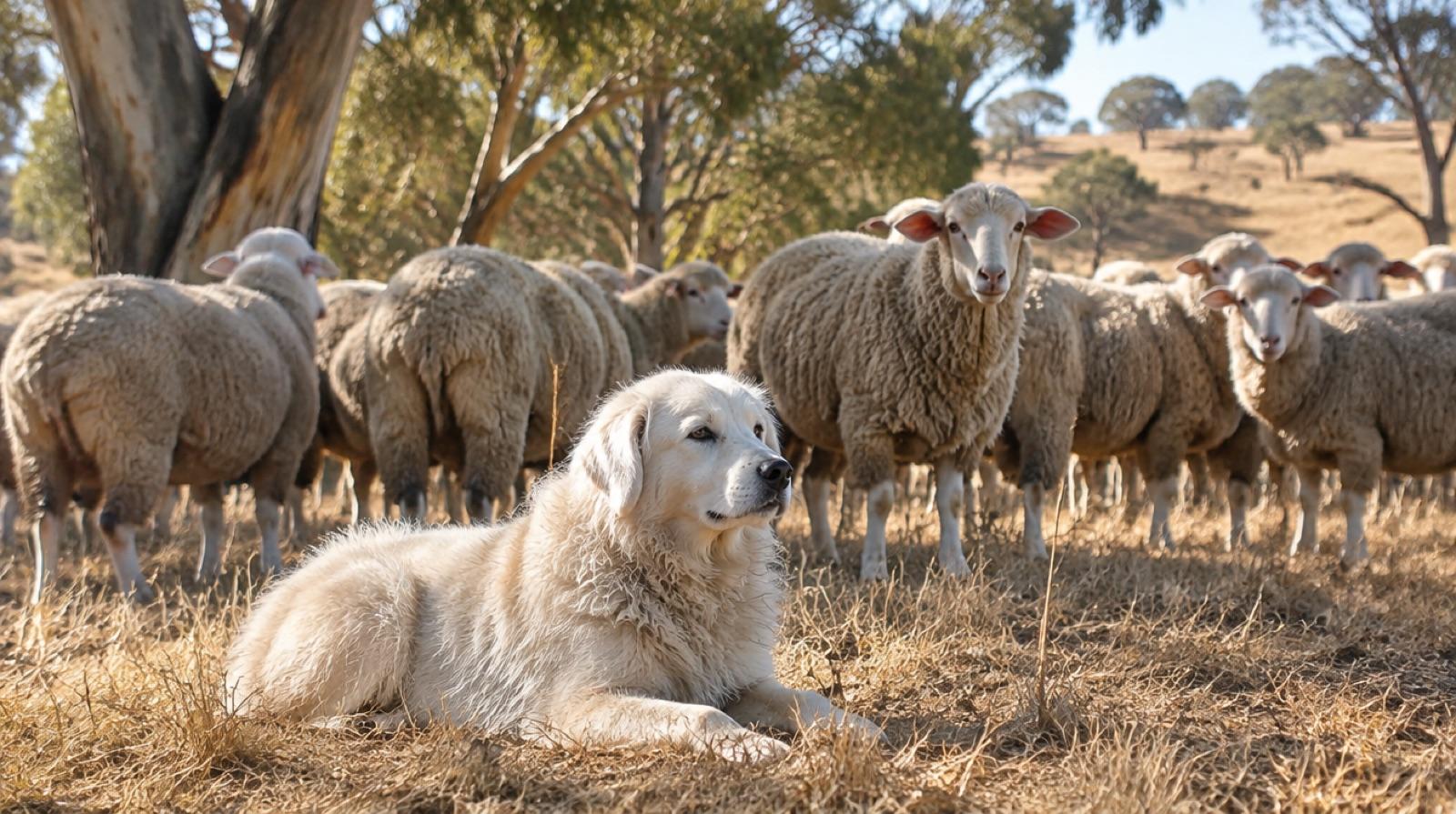
Guard, not herd. The Dogs Australia breed page says the Maremma protects whatever stock it is bonded with by living with them, and keeps predators away by territorial marking, warning barks and, when required, protective behaviour. Its first response is to put itself between the threat and the flock and bark; if a predator persists, it will protect its flock by force. In Australia, it says, you find the breed on rural properties guarding sheep, goats, alpaca and even poultry.
Government and research sources describe the same dog. A 2016 Biosecurity Queensland fact sheet says guardian dogs stay with or near livestock, acting independently of humans, and aggressively repel predators, and names the Maremma among the more common guardian breeds. The National Wild Dog Action Plan says that of the guardian breeds available in Australia, Maremmas are by far the most numerous. A long-term Australian study of farmers using livestock guardian dogs concluded they can remain an effective predator control method with long-term use, while noting that a substantial number of producers have difficulty training and managing them (van Bommel and Johnson 2023).
| Trait | What the source says |
|---|---|
| Size | Dogs 65 to 73 cm and 35 to 45 kg; bitches 60 to 68 cm and 30 to 40 kg (breed standard) |
| Colour | Solid white; ivory, pale orange or lemon shades tolerated if not excessive (breed standard) |
| Coat | Long, rather harsh, about 8 cm on the body; undercoat abundant only in winter (breed standard) |
| Temperament | Aloof and independent; wary of strangers; not happy left home alone (Dogs Australia breed page) |
| Training | “Not impossible” but can be a challenge (Dogs Australia breed page) |
| Exercise | Daily walks highly recommended; needs a purpose or can become bored and destructive (Dogs Victoria) |
| Life span | Usually 12 to 14 years (Dogs Australia); average 10 to 12 years (Dogs Victoria) |
Sources: Dogs Australia breed standard, Dogs Australia breed page and Dogs Victoria breed page, read 11 November 2026.
Can a Maremma live in the suburbs?
Some do, but it is a real welfare question for the dog and a real noise question for your neighbours. The Dogs Australia breed page says the breed is wary of strangers and suspicious of odd noises and anything unusual, that this “can be a problem in suburban areas where the breed has been known to become a nuisance barker”, and that it is “probably best suited to rural properties and hobby farms, or to people who can take their dogs everywhere”. The UK Royal Kennel Club lists it as a country dog for a large house and large garden, needing more than 2 hours of exercise a day.
The night-time side matters. In a GPS study of free-ranging Maremmas on three Victorian properties, the dogs spent on average 90% of their time in the sheep paddocks, and their movements away from the sheep happened mostly at night (van Bommel and Johnson 2014).
Even on farms, guardian dogs do not always work out. In a follow-up of 112 Australian farmers first surveyed about their guardian dogs in 2008 and 2009, re-interviewed a mean of 8.9 years later, half had stopped using them. Of those who stopped (more than one reason could be given), about half cited a change in business, about a quarter problems with the dogs and about a fifth problems with neighbours, most often complaints about barking (van Bommel and Johnson 2023). The Biosecurity Queensland fact sheet lists the problems poorly trained, entire or improperly bred (crossbred) guardian dogs can cause, including roaming away from the flock and becoming aggressive towards neighbours and/or barking constantly, causing complaints.
If you are in a town or suburb and still drawn to the breed, be honest about three things: whether your fences and neighbours can cope with a loud, territorial 40 kg dog; whether someone is home most of the day; and whether your council has already dealt with barking complaints on your street. Our guide to barking dogs in Australia explains what councils can do.
How is a working guardian puppy raised?
With the stock, from early on. Biosecurity Queensland's 2016 fact sheet advises rearing pups with livestock from eight weeks of age, keeping enough contact that you can still handle them, and making sure any bonding between owner and dog happens with the herd. It says guardian dogs must be desexed, that most work well within a year, and that they may need up to two years to mature fully. It also says failure is usually down to poor selection, improper rearing, cross-breeding or trying to train a dog that is too old.
That is why the breeder matters for a working dog: ask whether the pups have been raised around the kind of stock you keep. For guidance on rearing and managing guardian dogs, the National Wild Dog Action Plan points to the Best Practice Manual for the Use of Livestock Guardian Dogs by Linda van Bommel.
Which health checks should a Maremma breeder show you?
Hips first. The Dogs Australia breed page calls the Maremma usually quite a sound breed with no real breed-specific health problems, but notes that a Maremma lacking good nose pigmentation has been known to develop skin cancer. Here is what the UK and New Zealand kennel clubs list; use it to ask an Australian breeder questions, not as an Australian rule.
| Check | Royal Kennel Club (UK) | Dogs New Zealand |
|---|---|---|
| Hip scoring | Best practice | Mandatory |
| DNA profile (parentage) | Not listed | Mandatory |
| Genetic diversity | Good practice: prioritise it | Not listed |
| Nose and eyelid pigment | Not a test; the breed standard disqualifies a completely depigmented nose, and Dogs Australia links poor nose pigment to skin cancer | |
Sources: Royal Kennel Club, Dogs New Zealand accredited breeder health tests, Dogs Australia breed standard and breed page, read 11 November 2026.
Ask to see hip results for both parents, with names that match the litter. Dogs Australia says the nose and eyelids should always be black to protect them from the sun, so look at pigment as well as papers.
How much is a Maremma puppy from a registered breeder?
We quote no breeder price, because none of the member breeders whose websites we read published one. In November 2026 we read the own websites of Maremma breeders who are members of Dogs Australia state bodies, leaving out classified and listing sites, and found no current price. We cannot speak for every breeder, so ask each one.
Ask for the price in writing and compare what it includes: the parents' hip results, the vet check, vaccination and microchip, whether the puppy is on the Limited or Main Register, whether it has been raised with stock, and whether the breeder will take the dog back if it does not suit your property.
Expect few litters. Dogs Australia's registration figures show 45 Maremma Sheepdogs registered in 2025, down from 196 in 2020. The dog cost calculator gives a first-year budget beyond the purchase, and Biosecurity Queensland's fact sheet notes that producers using guardian dogs need to maintain good fences.
Survey of member breeders' own websites, November 2026. Prices change; check with the breeder.
See the Maremmas listed right now
Maremmas and Maremma crosses from the rescues, shelters and council pounds we aggregate, each with its rescue, desexing and microchip details. Every listing links to the rescue, where you apply directly.
What do Maremmas in rescue look like?
The history matters more than with most breeds. A rescue Maremma may have come off a farm or out of a town backyard; the long-term Australian survey above recorded that most guardian dogs rehomed by those farmers were surplus to requirements, but some were rehomed for unwanted behaviour (van Bommel and Johnson 2023). Ask the rescue how the dog was raised, how it is with visitors, other dogs, cats and children, and whether it has lived with stock.
An adult whose temperament you can see first is often a safer bet than a puppy for a first Maremma. If what you want is a big, calm dog rather than a guardian, browse large dogs listed by rescues too: Sydney, Melbourne, Brisbane, Perth, Adelaide.
What does a rescue Maremma cost?
| Rescue | Fee as published | Read |
|---|---|---|
| RSPCA NSW | $620 puppy under 12 months; $500 dog over 12 months | 11 Nov 2026 |
| RSPCA Victoria | $500 to $1,000 for adult dogs | 11 Nov 2026 |
| RSPCA ACT | $650 for popular breeds and mixes over 12 months and under 8 years | 11 Nov 2026 |
Reference only, not a quote. These are the fees each rescue published on the date shown; fees change and some dogs are priced individually, so check with the rescue. The fee normally covers desexing, microchipping, vaccinations and a vet check. Read our guide to adopting a dog in Australia.
How do Maremma puppy scams work?
Never send a deposit for a Maremma puppy you have not seen with its mother, in person or at least on a live video call. A seller who asks for more money after the first payment, for shipping or transport, matches the scam pattern Dogs Victoria describes.
Scamwatch warns that scammers set up fake websites, social media profiles and marketplace listings for pets that do not exist, and that a very cheap pet is likely a scam. Dogs Victoria's puppy scam fact sheet adds that fake ads may display microchip, source or membership numbers lifted from legitimate breeders. Maremma versions of the pattern to watch for:
- No hip answer. A breeder of a 40 kg breed should know the parents' hip results. Vagueness is a warning.
- Coloured patches. The breed standard asks for solid white and lists black shadings and well-defined patches of Isabella or ivory colour as disqualifying faults. A patched or dark puppy sold as a purebred Maremma does not meet the standard; ask what it really is.
- Borrowed numbers. A real breeder's membership or source number in an ad proves nothing on its own. Check it with the state body yourself.
- “Great in any backyard”. A seller who says this about a livestock guardian is telling you they do not know the breed, or do not care where the puppy goes.
Our guide to puppies for sale in Australia has the state-by-state table of breeder numbers, how to check each one, and what to do if you have already paid.
When is a registered breeder the better choice?
Rescue is not right for everyone. If you need a working guardian for stock, a puppy raised by a breeder with the right animals around it, then reared by you with your stock, is the method the government guidance describes. Check these before you pay:
- Registration. Ask for the breeder's prefix and membership number and check them through Dogs Australia's breeder search or your state body.
- Hip results for both parents.
- How the pups are raised. With stock, in a house, or both, and which suits your plans.
- Questions about you. A good Maremma breeder asks about your fencing, your stock and your neighbours. One who asks nothing is a warning.
- A written contract covering health problems, register type, desexing and whether the breeder will take the dog back.
Is a Maremma the right dog for you?
The appeal is real. The Dogs Australia breed page calls the Maremma loving and loyal, with a curious habit of “smiling” at its owner, and Dogs Victoria says it is friendly and loyal to its own family. But it is also independent, loud, territorial and large, and Dogs Australia points it towards rural properties and hobby farms.
Not sure? Try the what dog breed is right for me quiz and the adoption readiness check, and read our guide to guard dog breeds, which compares the Maremma with other guardian and watchdog breeds. If you want a big, gentle family dog for a suburban home, our guide to family dogs may suit you better.
Find a Maremma near you
Maremmas and Maremma crosses listed by rescues, by city:
- Maremmas for adoption in Sydney
- Maremmas for adoption in Melbourne
- Maremmas for adoption in Brisbane
- Maremmas for adoption in Perth
- Maremmas for adoption in Adelaide
Or see every listing nationally on the Maremma Sheepdog breed page.
More adopt-or-buy guides: Bernese Mountain Dog, Newfoundland, Samoyed, Kelpie, Cattle Dog, Saint Bernard.
Frequently asked questions
How much is a Maremma puppy in Australia?▼
We have no current published figure to quote. In November 2026 we read the own websites of Maremma Sheepdog breeders who are members of Dogs Australia state bodies, and none published a current price. Prices we saw were on classified and listing sites, which we do not use. Ask each breeder for the price in writing and compare what is included.
Is a Maremma a good family pet in the suburbs?▼
It is a real welfare question, and Dogs Australia is frank about it. Its breed page says the Maremma is wary of strangers and suspicious of odd noises, which can be a problem in suburban areas where it has been known to become a nuisance barker, and that it is probably best suited to rural properties and hobby farms. It also says the breed is not happy if left home alone.
What is a livestock guardian dog?▼
A dog bred to live with stock and protect it from predators, not to herd it. A 2016 Biosecurity Queensland fact sheet describes guardian dogs as staying with or near livestock, acting independently of humans, and repelling predators. Dogs Australia says the Maremma does this by territorial marking, warning barks and, when required, protective behaviour.
Why do Maremmas bark so much at night?▼
Barking is how the breed warns predators off. Dogs Australia lists warning barks as part of how a Maremma guards, and says the breed is suspicious of odd noises and anything unusual. A GPS study of free-ranging Maremmas on three Victorian farms found their movements away from the sheep happened mostly at night. On a farm that is the job; next to neighbours it can become a barking complaint, and in a long-term Australian survey of farmers who stopped using guardian dogs, barking complaints were among the neighbour problems they gave.
How big does a Maremma get?▼
Big. The Dogs Australia breed standard gives dogs 65 to 73 cm at the withers and 35 to 45 kg, and bitches 60 to 68 cm and 30 to 40 kg. The coat is solid white, with shades of ivory, pale orange or lemon tolerated if not excessive.
What health tests should a Maremma breeder do?▼
Hip scoring is the main one. The Royal Kennel Club lists hip testing as best practice for the breed and Dogs New Zealand makes hip dysplasia screening mandatory for accredited breeders, along with a DNA profile. Dogs Australia says the breed is usually quite sound but that a Maremma with poor nose pigment has been known to develop skin cancer, so ask about pigment too.
How long do Maremmas live?▼
The Dogs Australia breed page says the life span is usually 12 to 14 years. The Dogs Victoria breed page gives an average of 10 to 12 years. Plan for a large dog for at least a decade.
Can I adopt a Maremma in Australia?▼
Sometimes. Check the live Maremma listings, which include crosses. Ask the rescue how the dog was raised: a Maremma that grew up with stock and one that grew up in a backyard are different dogs to live with. Watch the Maremma listings and set an alert.
How much does it cost to adopt a Maremma?▼
You pay the rescue's standard fee. RSPCA NSW listed $620 for a puppy under 12 months and $500 for a dog over 12 months, RSPCA Victoria listed $500 to $1,000 for adult dogs, and RSPCA ACT listed $650 for popular breeds and mixes over 12 months and under 8 years. These were the fees published when we read them in November 2026; they are a reference, not a quote, and fees change, so check with the rescue.
Can a Maremma guard chickens or a few goats on a small block?▼
Possibly, with planning. A 2016 Biosecurity Queensland fact sheet says guardian dogs have been used successfully with small herds of goats, sheep, deer, alpaca and free-range fowl, but warns they can be aggressive, may injure pets or confront visitors, and that these limitations may preclude their use on smaller properties or in densely settled areas. It advises rearing pups with the stock from eight weeks of age and allowing up to two years for a dog to mature.
How do I avoid Maremma puppy scams?▼
Only pay for a puppy you have seen with its mother, in person or at least on a live video call. Scamwatch says a very cheap pet is likely a scam, and Dogs Victoria warns that fake ads may show microchip, source or membership numbers lifted from real breeders. Check the breeder's membership with the state body yourself, not through the ad.
Sources
- Dogs Australia: Maremma Sheepdog breed standard (last updated 1 August 2021)
- Dogs Australia: Maremma Sheepdog breed page
- Dogs Australia: National Animal Registration Analysis 2018 to 2025
- Dogs Australia: Find a breeder
- Dogs Victoria: Maremma Sheepdog breed page
- Royal Kennel Club (UK): Maremma Sheepdog breed page and health tests
- Dogs New Zealand: Accredited breeder health tests for the Maremma Sheepdog
- Biosecurity Queensland (Department of Agriculture and Fisheries): Wild dog facts, livestock guardian animals (July 2016)
- National Wild Dog Action Plan: Guardian animals
- van Bommel and Johnson (2023), Still a good dog! Long-term use and effectiveness of livestock guardian dogs, Wildlife Research
- van Bommel and Johnson (2014), Where do livestock guardian dogs go? Movement patterns of free-ranging Maremma sheepdogs, PLOS ONE
- Scamwatch: Buying and selling scams (pet scams)
- Dogs Victoria: A7 Identifying puppy scams and puppy farms (fact sheet)
- RSPCA NSW: Adoption fees
- RSPCA ACT: Adoption process
- RSPCA Victoria: The adoption process
Keep reading
Maremmas listed by rescues
Maremmas and Maremma crosses listed right now by the rescues and shelters we aggregate across Australia.
Puppies for sale: adopt or buy?
The breeder number each state requires, how to check it, and rescue puppy fees.
Best guard dogs in Australia
Guardian, watchdog and protection breeds compared, and the laws that apply.
Barking dogs in Australia
What councils can do about nuisance barking, state by state.