The short answer
Buy from a Dogs Australia registered breeder if you want a Bernese puppy, and ask for hip and elbow scores, eye and heart examinations and degenerative myelopathy DNA results for both parents, because no Bernese test is compulsory to register a litter. Go in knowing Dogs Victoria gives the breed's average life span as 6 to 8 years. No Bernese club publishes a price; for scale, Australian breed bodies quote $3,500 to $5,000 for other popular pedigree breeds. Adopt if you are open to an adult or a Bernese cross: they are uncommon in rescue, so set an alert. Prices and fees are reference figures, not quotes.
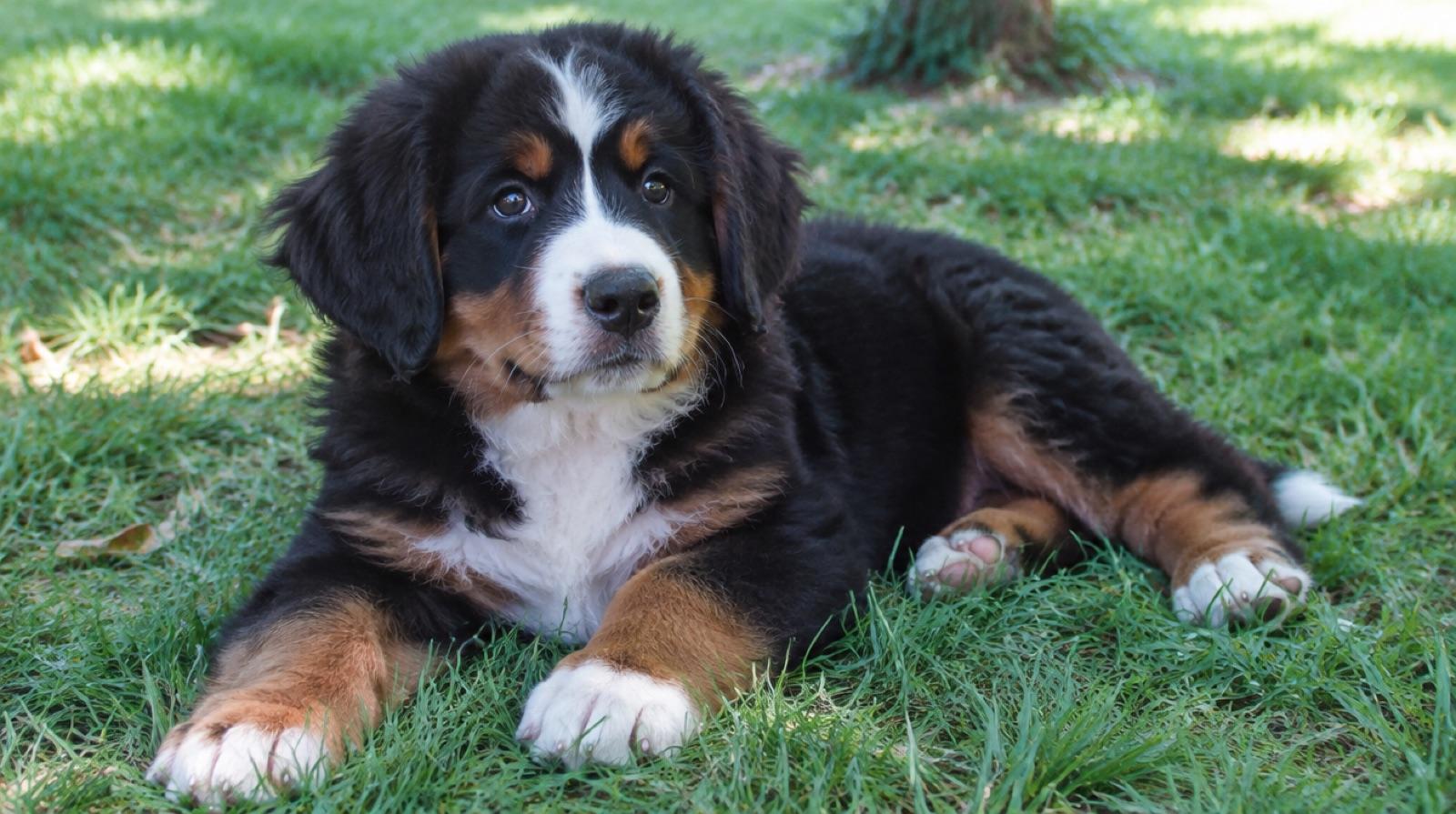
Should you adopt or buy a Bernese Mountain Dog?
Most people who end up with a Berner buy a puppy from a breeder, because purebred Bernese are uncommon in Australian rescue. That makes the breeder's health screening the most important thing you will check. If you are open to an adult or a Bernese cross, a rescue dog skips the puppy stage, arrives desexed and vaccinated, and lets you see the dog's joints and temperament before you commit.
Whichever route you take, decide first whether the breed fits your life. A Bernese is a large dog with a long coat and, according to Dogs Victoria, an average life span of 6 to 8 years. That is not a reason to avoid the breed. It is a reason to go in with open eyes and a budget for later-life vet care.
| Route | Reference cost | What you usually get | Main risk |
|---|---|---|---|
| Dogs Australia registered breeder | No published Bernese figure; ask each breeder (see below) | A purebred puppy with pedigree papers, from parents the breeder can tell you about | No compulsory Bernese health test, so check what was done |
| General rescue or pound | The standard fee, for example $500 to $1,000 at the RSPCA rows below | The occasional adult Berner or Bernese cross, desexed, microchipped and vaccinated | Very few dogs; often adults or seniors with health history |
| Online ad or social media | Often below the going rate | Anything from a real litter to a puppy that does not exist | Scams and untested parents |
Reference figures: RSPCA NSW, RSPCA ACT and RSPCA Victoria fee pages, read November 2026. They are not quotes. Breeders and rescues set their own prices and change them.
How long do Bernese Mountain Dogs live, and what health problems do they have?
Dogs Victoria gives the average life span as 6 to 8 years. The RSPCA puts the average lifespan of dogs and cats at around 12 years, so a Bernese owner should plan for fewer years together than with many breeds. Some Berners live longer; nobody can promise that yours will.
Dogs Victoria calls the Bernese a generally healthy breed in which these conditions occur:
- Hip and elbow dysplasia, malformed joints that can lead to arthritis.
- Gastric torsion (bloat), where the stomach fills and twists. It is a life-threatening emergency; a swollen belly with unproductive retching means go to a vet immediately.
- Degenerative myelopathy, a progressive disease of the spinal cord in older dogs.
- Entropion and ectropion, eyelids that roll in or droop out.
- Certain aggressive cancers.
For what these look like in a pet and when to see a vet, read our city guides to Bernese health: Sydney, Brisbane, Perth, Gold Coast.
Which health tests should a Bernese breeder show you?
The Dogs Australia registration regulations make hip or elbow x-rays compulsory before litters of some breeds can be registered, such as Labradors, Golden Retrievers and Australian Shepherds, but there is no compulsory test for the Bernese. Dogs Victoria simply advises buyers to ask what health testing the breeder does. As a benchmark, the Bernese Mountain Dog Club of America, the breed's US parent club, lists these screenings for both parents:
| Screening | What it looks for | Status in the US club scheme |
|---|---|---|
| Hips | Hip dysplasia | Required |
| Elbows | Elbow dysplasia | Required |
| Eyes | Inherited eye and eyelid disease, by a specialist ophthalmologist | Required |
| Heart | Heart disease, by a specialist cardiologist | Required |
| Degenerative myelopathy DNA | Two gene variants linked to the spinal cord disease | Required |
| Von Willebrand disease DNA, thyroid, or histiocytic sarcoma risk test | A bleeding disorder, thyroid function, or a cancer risk marker | Optional (one of the three) |
Source: Bernese Mountain Dog Club of America health statement, requirements approved November 2017, read 9 November 2026. Australian breeders use Australian schemes for hips, elbows and eyes, so ask which ones and ask for the certificates.
No test can screen out cancer or guarantee a long life. What screening does is lower the odds of the joint, eye, heart and spinal problems that can be tested for. A breeder who can show you results for both parents, and who can tell you how long the dogs in their lines have lived, is giving you real information.
See the Bernese Mountain Dogs listed right now
Berners and Bernese crosses from the rescues, shelters and council pounds we aggregate, each with its rescue, desexing and microchip details. Every listing links to the rescue, where you apply directly.
How do you keep a Bernese comfortable in an Australian summer?
Plan for it from day one. The Dogs Australia breed standard traces the breed to Switzerland, where it was a guard, draught and cattle dog on farms in the Canton of Bern. It describes a longhaired, tricoloured dog of above medium size, 64 to 70 cm at the shoulder for males and 58 to 66 cm for females, with long hair and a jet black main colour. We found no Australian breed club statement on heat, so the practical rules come from the RSPCA's heatstroke guidance:
- Keep the dog lean. The RSPCA says overweight animals overheat faster.
- Walk in the coolest part of the day, and avoid hot concrete, asphalt and sand.
- Shade, water and a cool, well-ventilated space at all times.
- Never leave the dog in a car. The RSPCA lists being locked in a car as a heatstroke risk, even in cooler weather.
- Treat heatstroke as an emergency. Constant panting, drooling, weakness, vomiting or collapse means get to a vet immediately.
The coat is part of the plan. Dogs Victoria describes it as a double coat of medium length and suggests a brush and comb weekly, daily when shedding. (The “double coat (Stockhaar)” that the Dogs Australia standard lists as a disqualifying fault is a short coat type, listed together with “short coat”; it does not mean a Berner's normal coat is faulty.) Our city guides cover local summers: Sydney, Brisbane, Perth, Gold Coast.
How much is a Bernese puppy from a registered breeder?
There is no published figure for the breed. We found no Australian Bernese club page and no Dogs Australia page that quotes a price, and Dogs Victoria's breed profile does not give one. Ask each breeder, and compare what the price includes: which tests were done on the parents, the register the puppy goes on, and what support the breeder offers later.
For scale only, the Australian breed bodies we found that publish a figure for a popular pedigree breed both land in the same band. The German Shepherd Dog Club of Victoria puts the average German Shepherd puppy at $3,500 to $5,000, and Dogs Australia says to expect $4,000 to $5,000 for a Cavalier King Charles Spaniel. Those are other breeds, not a Bernese price.
The purchase price is the smaller number. Feeding, grooming, insuring and treating a large dog adds up, so run it through the dog cost calculator and read our guide to cheaper vet care before you commit.
What do Bernese Mountain Dogs in rescue look like?
Usually adults, sometimes seniors, and often Bernese crosses. Large dogs reach rescue when owners move to smaller homes, when a family changes, or when the cost of a big dog's care becomes too much. We could not verify an active Bernese-only rescue in Australia, so the route is general rescues, council pounds and an alert on the breed page.
An older rescue Berner can be a lovely, settled companion, but go in knowing the breed's average life span and ask the rescue for its vet notes. Large dogs of other breeds come through rescue much more often, so it is worth browsing those too: Sydney, Melbourne, Brisbane, Perth, Adelaide.
What does a rescue Bernese cost?
| Rescue | Fee | Checked |
|---|---|---|
| RSPCA NSW | $620 puppy under 12 months; $500 dog over 12 months | 9 Nov 2026 |
| RSPCA ACT | $900 for popular medium to large breed puppies and mixes up to 12 months | 9 Nov 2026 |
| RSPCA Victoria | $500 to $1,000 adult dog | 9 Nov 2026 |
Fees as published on the date shown. They are a reference, not a quote: rescues change fees and price some dogs individually. The fee normally covers desexing, microchipping, vaccinations and a vet check.
How do Bernese puppy scams work?
Never send a deposit for a Bernese puppy you have not seen with its mother, in person or at least on a live video call. A seller who asks for more money after the first payment, for transport, a crate or insurance, is following the standard scam script.
Scamwatch says scammers set up fake websites, social media profiles and marketplace listings offering popular breeds or cute puppies that do not exist. Its advice: view the puppy in person, ask for a video call if you cannot visit, check that the breeder is legitimate, and compare prices, because a very cheap pet is likely a scam.
Bernese versions of the pattern to watch for:
- “Interstate, we'll fly the puppy to you.” When a breed is hard to find locally, a distant seller seems plausible and a transport fee is easy to ask for. Meet the litter or use a live video call first.
- Health talk without paperwork. “Parents are health tested” means nothing until you see the certificates with the parents' names on them.
- Photos of someone else's litter. A reverse image search often finds the same picture on a real breeder's site.
- No breeder number. NSW, Victoria, Queensland, South Australia and the ACT all require an identifying number in puppy ads. Look it up yourself on the official register.
Our guide to puppies for sale in Australia has the full state-by-state table of breeder numbers and what to do if you have already paid.
When is a registered breeder the better choice?
For this breed, often. Rescue is not right for everyone, and with so few Berners in rescue, a registered breeder is a reasonable choice if you have your heart set on the breed and want a puppy from screened parents. It also makes sense if you want to know as much as you can about the lifespans and health of the dogs in a puppy's pedigree.
- Registration. Enter the breeder's prefix or membership number in the Dogs Australia registered breeder check. It confirms membership, not puppy quality.
- Club contact. Dogs Victoria suggests contacting the breed club or the state canine body about available puppies.
- Health results for both parents, from the table above, with names that match the litter.
- Longevity. Ask how long the grandparents and older relatives lived, and what they died of.
- A written contract covering health problems, register type and whether the breeder will take the dog back.
Is a Bernese Mountain Dog the right dog for you?
The Dogs Australia standard describes the temperament as self-confident, attentive, vigilant and fearless in everyday situations, good-natured and devoted to its own people. Dogs Victoria adds that the ideal owner should be prepared for a dog that may not give them much alone time and will want to be involved in their daily life, and that exercise for a puppy should be minimal and increased slowly with age.
Be honest about four things before you apply anywhere: space for a dog of up to 70 cm at the shoulder, a plan for every summer, time at home, and the money and heart for a breed whose average life is shorter than most. Not sure it fits? Try the what dog breed am I quiz and the adoption readiness check, and read our guide to the best family dogs in Australia for other large, gentle options.
Find a Bernese Mountain Dog near you
Bernese Mountain Dogs and Bernese crosses listed by rescues, by city:
- Bernese Mountain Dogs for adoption in Sydney
- Bernese Mountain Dogs for adoption in Melbourne
- Bernese Mountain Dogs for adoption in Brisbane
- Bernese Mountain Dogs for adoption in Perth
- Bernese Mountain Dogs for adoption in Adelaide
Local guides to adopting a Bernese, with the rescues that serve each city: Sydney, Melbourne, Brisbane, Perth, Adelaide, Gold Coast.
Frequently asked questions
How much is a Bernese Mountain Dog puppy in Australia?▼
No Australian Bernese club or Dogs Australia page we read publishes a price, so ask each registered breeder. For scale, Australian breed bodies that publish figures for other popular pedigree breeds quote $3,500 to $5,000 (German Shepherd Dog Club of Victoria) and $4,000 to $5,000 (Dogs Australia, for Cavaliers). These are reference figures read in November 2026, not quotes.
How long do Bernese Mountain Dogs live?▼
Dogs Victoria, the state canine body, gives the breed's average life span as 6 to 8 years. For comparison, the RSPCA puts the average lifespan of dogs and cats at around 12 years. Individual Berners can live longer, but you should plan for a shorter life than most dogs and for the vet costs of a large breed in its later years.
What health problems do Bernese Mountain Dogs have?▼
Dogs Victoria lists hip dysplasia, elbow dysplasia, gastric torsion (bloat), degenerative myelopathy, entropion and ectropion (eyelid problems) and certain aggressive cancers. It calls the breed generally healthy but says these conditions do occur. Bloat is an emergency in any deep-chested dog: a swollen belly with unproductive retching means go to a vet immediately.
What health tests should a Bernese breeder do?▼
Ask about hip and elbow scores, an eye examination, a heart examination and DNA tests for degenerative myelopathy. That list follows the Bernese Mountain Dog Club of America, the breed's US parent club, which requires those screenings for its health database and offers optional tests for von Willebrand disease, thyroid function and histiocytic sarcoma risk. Dogs Australia has no compulsory Bernese test for litter registration, so ask to see results.
Can Bernese Mountain Dogs live in hot parts of Australia?▼
With planning. The breed comes from the farms of the Canton of Bern in Switzerland, and the Dogs Australia standard describes a longhaired, tricoloured dog of above medium size with a jet black main colour. The RSPCA's heatstroke advice applies in full: keep the dog lean, give shade, water and a cool indoor space, walk in the coolest part of the day and never leave a dog in a car. Heatstroke is an emergency.
Is a Bernese Mountain Dog double coated?▼
Yes. Dogs Victoria describes the Bernese coat as a double coat of medium length, shining, straight or slightly wavy, and warns owners to be prepared for dog hair in the house. The Dogs Australia breed standard calls for long, shining, straight or slightly wavy hair; the 'short coat, double coat (Stockhaar)' it lists as a disqualifying fault is a short coat type, listed together with 'short coat', not the Berner's normal long coat. Dogs Victoria suggests a brush and comb once a week, or daily when shedding, and a full groom about every eight weeks.
Can I adopt a Bernese Mountain Dog in Australia?▼
Sometimes, but they are uncommon. We could not verify an active Bernese-only rescue in Australia, so watch the breed page, set an alert, and look at Bernese crosses as well. Rescue Berners are usually adults or seniors, and the rescue can tell you what it knows about the dog's joints and health.
How much does it cost to adopt a Bernese Mountain Dog?▼
Usually the rescue's standard fee, with desexing, microchipping and vaccinations included. RSPCA NSW lists $620 for a puppy under 12 months and $500 for an older dog, RSPCA ACT charges $900 for popular medium to large breeds and mixes up to 12 months, and RSPCA Victoria lists $500 to $1,000 for adult dogs. These are reference figures from November 2026, not quotes.
Is a Bernese Mountain Dog a good family dog?▼
For the right family, yes. The Dogs Australia standard describes the temperament as self-confident, attentive, vigilant, fearless in everyday situations, good-natured and devoted to its own people. Dogs Victoria says the ideal owner should expect a dog that wants to be involved in daily life. It is a big dog, 58 to 70 cm at the shoulder, so supervise young children with any dog, and especially a large one.
How much exercise does a Bernese puppy need?▼
Less than you might think while it grows. Dogs Victoria says exercise should be minimal and increased slowly with age and maturity. Short walks, gentle play and training sessions suit a growing large-breed puppy better than long runs. Ask your vet when to increase exercise for your dog.
Are Bernese Mountain Dog puppies a scam target?▼
Any in-demand breed is. Scamwatch warns that scammers set up fake websites, social media profiles and marketplace listings offering popular breeds that do not exist, and that a very cheap pet is likely a scam. Never pay for a Berner puppy you have not seen with its mother, and check the breeder's registration yourself.
How do I check a Bernese breeder is registered?▼
Enter the breeder's prefix or membership number in the Dogs Australia registered breeder check, then look up the breeder number your state requires on the official state register yourself. Dogs Victoria suggests contacting the breed club or the state canine body about available puppies. Membership confirms registration, not puppy quality, so still ask for the parents' health results.
Sources
- Dogs Victoria: Bernese Mountain Dog breed profile
- Dogs Australia: Bernese Mountain Dog breed standard
- Dogs Australia: Regulations Part 6, the register and registration (effective 1 July 2025)
- Dogs Australia: registered breeder check
- Bernese Mountain Dog Club of America: Health statement and CHIC requirements
- RSPCA Knowledgebase: How can I protect my dog from heatstroke?
- RSPCA Knowledgebase: What do I need to know before I get a new pet?
- Scamwatch: Buying and selling scams (pet scams)
- German Shepherd Dog Club of Victoria: Puppy FAQs (price comparison)
- Dogs Australia: Buying a Cavalier King Charles Spaniel puppy (price comparison)
- RSPCA NSW: Adoption fees
- RSPCA ACT: Adoption process
- RSPCA Victoria: The adoption process
Keep reading
Bernese Mountain Dogs listed by rescues
Berners and Bernese crosses listed right now by the rescues and shelters we aggregate across Australia.
Puppies for sale: adopt or buy?
The breeder number each state requires, how to check it, and rescue puppy fees.
German Shepherd heat management
How to plan an Australian summer around a large, heavily coated dog.
Golden Retriever puppies: adopt or buy?
The four health certificates a good Golden breeder shows you, and rescue Goldens.