The short answer
You can adopt a Bernese Mountain Dog in Brisbane, but purebred Berners are uncommon in rescue, so set alerts across RSPCA Queensland, Animal Welfare League Queensland, the foster-based and giant-breed rescues and PetRescue, and stay open to a cross or an older dog. Adoption runs about $400 to $700 all-inclusive against $3,000 to $5,000 or more from a breeder, but with a giant breed the purchase price is the small number: food, coat care and vet costs are what you really budget for. Go in knowing the hard part, this is a short-lived breed, commonly around seven to eight years, with a high cancer rate, so insure early and choose a vet you trust. And a heavy Swiss mountain coat genuinely struggles in the SEQ heat, so heat management is not optional. For the right household, few dogs are gentler or more devoted.
What a Bernese Mountain Dog is
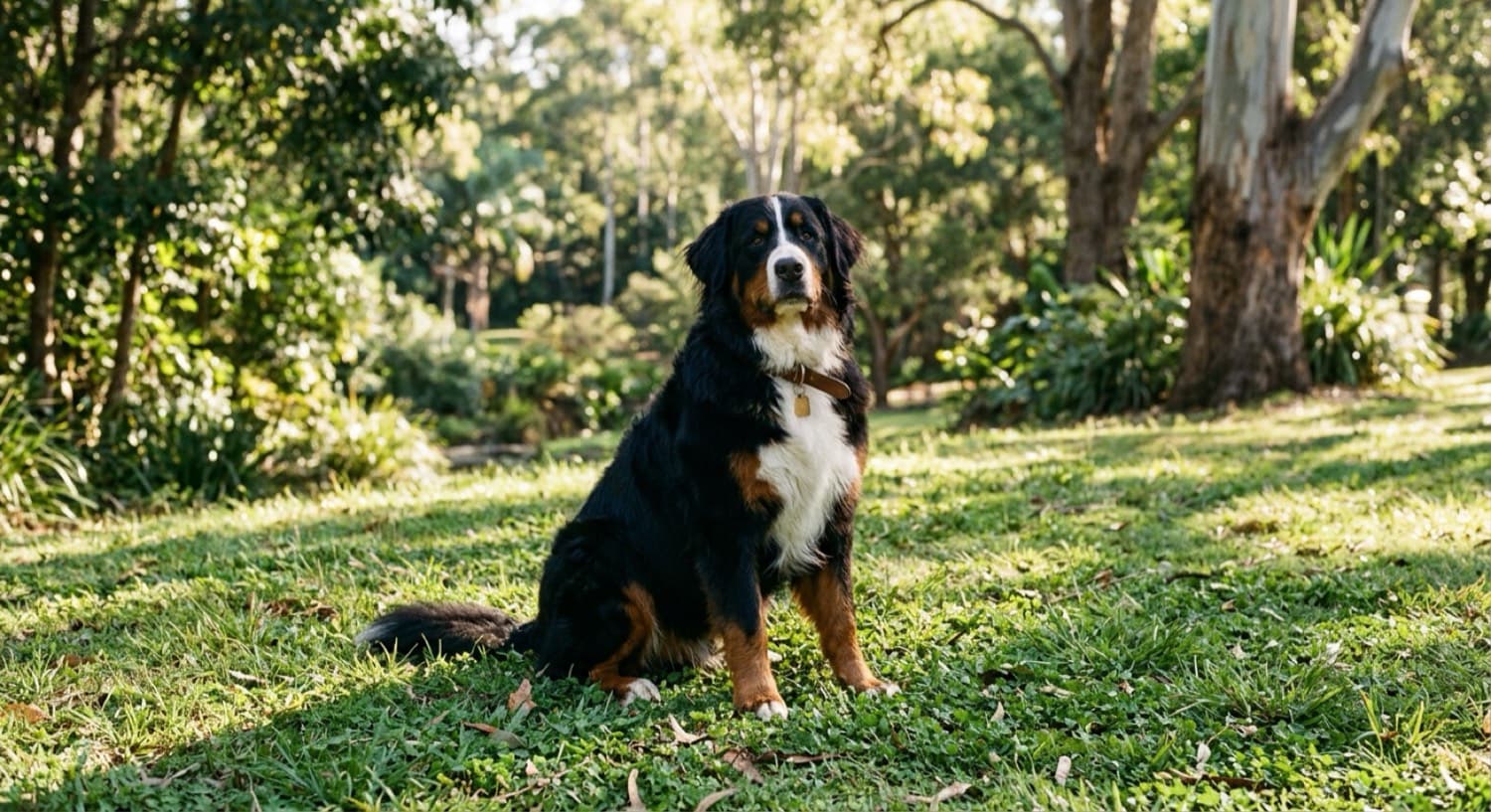
The Bernese Mountain Dog was bred on Swiss farms as a calm, powerful working dog for droving and cart-pulling, and everything about it reflects a cold-climate working heritage: a large, heavily built body, often forty to fifty kilograms, and a thick tricolour double coat of black, rust and white built to shrug off alpine cold. The temperament is the breed's glory, gentle, affectionate, steady and patient, a genuine gentle giant that wants to be with its people. It is not a high-energy dog; a Bernese wants moderate daily exercise and, above all, to be part of the family.
Two features of that heritage matter enormously in Brisbane. The coat that protects against Swiss winters is a liability in a subtropical summer, and the breed's genetics carry a heavy health burden. Both are covered in full in the guides linked below, and both should shape your decision before you adopt.
Why Berners reach rescue
- The commitment is bigger than expected. A giant dog that sheds heavily, needs real coat care and space, and carries high vet costs overwhelms some households.
- Cost. Giant-breed food, grooming and especially veterinary bills add up fast, and a serious illness can arrive early in this breed.
- The climate mismatch. Some owners realise too late that a heavy cold-climate coat and the Queensland heat are a poor fit for the life they can offer.
- Ex-breeding dogs and changed circumstances. Reduced or shut-down breeding operations, and life changes such as moving or illness, send some Berners to rescue.
None of these reflect the dog. A rescue Bernese is typically a sweet, already-grown companion whose only problem was a situation that did not work out.
Where to look in Brisbane
- RSPCA Queensland. The state body runs its main Animal Care Campus at Wacol plus other South East Queensland centres, with all-inclusive adoptions (desexing, vaccination, microchipping, vet check). Browse at rspcaqld.org.au.
- Animal Welfare League Queensland (AWLQ). A long-running no-kill charity with centres at Willawong, Warra, Beenleigh and Coombabah. Listings at awlq.org.au.
- Breed-specific and giant-breed rescues. Dedicated Bernese and giant-breed rescues operate in Australia and are the most likely route to a purebred Berner. Contact one directly and expect to wait for the right match.
- Foster-based rescues. A foster home means the carer can tell you exactly how the individual dog is with children, other pets and the heat, which matters a great deal for a giant breed.
- PetRescue. A national aggregator listing dogs from many smaller Queensland rescues in one place, at petrescue.com.au.
The honest cost comparison
Real first-year costs in Brisbane for a Bernese Mountain Dog. Note the giant-breed premium on food, grooming and insurance:
| First-year cost | Rescue Bernese | Breeder Bernese |
|---|---|---|
| Adoption fee or purchase price | $400 to $700 | $3,000 to $5,000+ |
| Desexing (giant breed) | Included | $400 to $800 |
| Microchipping | Included | $60 to $80 |
| First-year vaccinations | Included | $250 to $400 |
| Initial vet check | Included | $100 to $200 |
| Council registration (reduced fee if desexed and microchipped) | Set by your council | Set by your council |
| Year 1 food (giant breed) | $1,000 to $1,800 | $1,000 to $1,800 |
| Grooming (heavy double coat) | $300 to $700 | $300 to $700 |
| Parasite prevention (paralysis tick, flea, worm, heartworm) | $350 to $650 | $350 to $650 |
| Initial gear (bed, lead, bowls, harness, brush) | $300 to $550 | $300 to $550 |
| Reward-based training class | $200 to $400 | $200 to $400 |
| Pet insurance (strongly recommended for this breed) | $900 to $1,600 | $900 to $1,600 |
| Year 1 total (excluding council fee) | $4,700 to $8,650 | $7,060 to $12,880+ |
The point of the table is that with a giant, health-prone breed the adoption fee is almost a rounding error against the lifetime cost. Insurance taken out early, before any condition is on record, is the single most valuable thing you can do, because this breed's illnesses can be expensive and can arrive young. The Bernese health guide explains why.
Browse Bernese Mountain Dogs in Brisbane rescue
Purebred Berners are uncommon in rescue, so crosses and older dogs appear more often. Live listings from Brisbane shelters and Queensland rescues, with foster carer notes on each dog.
See Available Bernese Mountain Dogs →Is a Bernese right for your Brisbane home?
A Bernese suits a household with space, a comfortable budget for giant-breed and veterinary costs, and the emotional readiness for a breed that often does not live long. It wants to be indoors with the family, not left in a yard, and it needs a cool place to be through a Queensland summer, ideally air conditioning on the hottest days. It is not a good match for a small apartment, a tight budget, or an owner who cannot commit to the coat care and the heat management. If you can offer the space, the money and, most of all, the awareness of what the breed's health means, a Bernese returns it with some of the gentlest, most devoted companionship any dog offers.
Whatever the breed, the first month home is a decompression period. The 3-3-3 rule is a useful guide: roughly three days to decompress, three weeks to start showing personality, three months to fully settle.
Registering your Bernese in Queensland, and scams
Council registration is a separate legal step from adoption. Under the Animal Management (Cats and Dogs) Act 2008, a dog must be microchipped before 12 weeks of age or before it changes hands, and registered with your local council from 12 weeks, with a reduced rate for a desexed and microchipped dog; check the current fee on your council's page, for example Brisbane City Council. On scams, any dog born on or after 26 May 2017 that is advertised must display a Queensland Dog Breeder Register supply number and a microchip number, so a listing with neither is a red flag, and an expensive breed offered cheap or free with a deposit or transport-fee story is the classic scam Scamwatch warns about. Brisbane after-hours emergencies are handled by hospitals such as Animal Emergency Service at Jindalee and Underwood.
Frequently Asked Questions
Can you actually adopt a Bernese Mountain Dog in Brisbane?
You can, but be patient, because purebred Berners are uncommon in rescue and crosses and older dogs turn up more often than young purebred ones. When a Bernese does need rehoming it comes through RSPCA Queensland, Animal Welfare League Queensland, the foster-based rescues, a breed-specific Bernese or giant-breed rescue, and PetRescue, which aggregates listings from many smaller Queensland rescues in one place. Set alerts across several sources, be application-ready, and stay open to a cross or an older dog. A Bernese cross often keeps the sweet temperament with a bit more heat tolerance and sometimes better health odds.
How much does it cost to adopt a Bernese Mountain Dog in Brisbane?
Adoption fees run about $400 to $700 for an adult, with desexing, microchipping, vaccination and a vet check already included. A breeder Bernese typically costs $3,000 to $5,000 or more. But the purchase price is the small number with this breed. A Bernese is a giant dog, so the food bill, the coat care and, above all, the veterinary costs are what you really budget for, and because the breed is prone to serious illness and is a giant, pet insurance taken out early is strongly worth it. Expect a giant-breed dog to cost meaningfully more to run than a medium dog for its whole life.
How long do Bernese Mountain Dogs live?
This is the hard truth to go in knowing: the Bernese Mountain Dog is one of the shorter-lived breeds, commonly living only around seven to eight years, and the breed has a notably high rate of cancer compared with dogs generally. Many Berner families face serious illness sooner than they would with another breed. None of that is a reason not to adopt one, and a Bernese gives extraordinary years, but it is a reason to go in with open eyes, to insure early, and to choose a vet you trust. The health guide linked below covers the specifics.
Why do Bernese Mountain Dogs end up in rescue?
Usually because the commitment was bigger than expected. A Bernese is a giant dog that sheds heavily, needs real coat care and space, and carries high veterinary costs, and some are surrendered when the size, cost or health needs overwhelm a household. Others come from reduced or shut-down breeding operations, and some when an owner’s circumstances change. In the Queensland climate, a few are rehomed when owners realise a heavy cold-climate coat and the local heat are a genuine mismatch they had not planned for. None of it reflects the dog, which is why rescue Berners are so often gentle, already-grown companions.
Are Bernese Mountain Dogs good family dogs?
Yes, famously so. The Bernese is a gentle giant, calm, affectionate and patient, and typically excellent with children and other pets, which is a big part of why the breed is so loved. They are people-focused and want to be part of the family rather than left in a yard, and they bond hard. The cautions are practical rather than temperamental: the sheer size means supervision around very small children (a friendly bump can knock a toddler over), the heavy shedding and coat care are constant, and the short lifespan and health risks are an emotional and financial reality. For the right household with space and budget, few breeds are sweeter.
How can I tell if a Bernese advertised online is a scam?
In Queensland, any dog born on or after 26 May 2017 that is sold, given away or advertised must display a breeder supply number from the Queensland Dog Breeder Register, and every dog must be microchipped before it changes hands, so a listing with no supply number and no microchip number is a red flag. Bernese are expensive and wanted, which makes them a favourite scam bait, so be very wary of a cheap or free purebred puppy with a story about being interstate, a deposit or a transport fee, the classic setup Scamwatch warns about. Adopting through a verified Queensland rescue avoids the problem entirely.
Keep reading
Adoptable Bernese Mountain Dogs in Brisbane
Live listings with foster carer notes on temperament, size and health.
Bernese Health Issues
The cancer risk and short lifespan, hip and elbow dysplasia, bloat, and insuring early.
Bernese Coat & Heat Care in Brisbane
Why you never shave the double coat, the brush-out routine, and managing the SEQ heat.
Brisbane Adoption Resources
Guides on adopting, costs, council rules and settling a rescue dog in Brisbane.