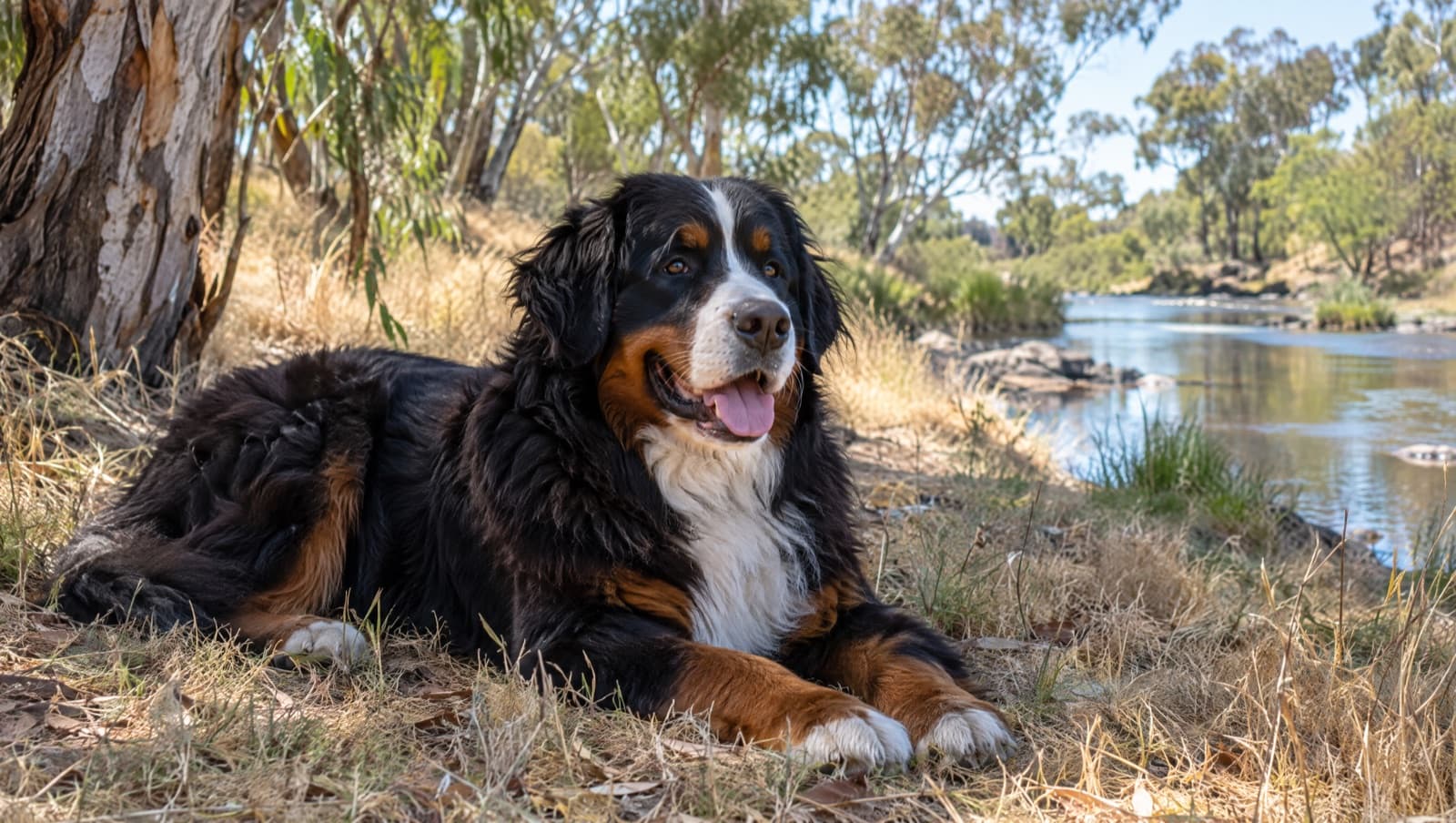
The short answer
Never shave a Bernese double coat to cool it down: the coat insulates against heat as well as cold and shades the skin, so a shaved dog is more vulnerable, not cooler, and the coat often grows back poorly. Instead, brush the coat out thoroughly two or three times a week (daily during the seasonal moults) with a slicker brush and undercoat rake, which removes the dead undercoat that traps heat and manages the heavy shedding. Then manage the Perth heat directly: exercise only in the cool of the morning and evening, provide shade, constant water and indoor cooling, watch hot pavement and sand, and never leave the dog in a car. Learn the signs of heat stress, because a cold-climate giant in a hot dry WA summer makes heatstroke a real risk, and it is an emergency.
Why you never shave the coat
It feels intuitive that shaving a thick-coated dog in a hot climate would cool it down. For a double-coated breed like the Bernese, it is the wrong move and can do lasting harm. The double coat is not just insulation against cold; it also insulates against heat, shades the skin from the sun, and helps the dog regulate its temperature. Shave it off and you remove that protection, exposing pale skin to sunburn and actually making the dog more vulnerable to heat, not less. On top of that, a shaved double coat frequently grows back wrong, patchy, with a changed texture, or with the softer undercoat crowding out the guard hairs.
The right way to help a double-coated dog in the heat is to keep the coat and keep it well maintained. A clean, well-brushed coat with the dead undercoat removed lets air move through it and works as it should. The RSPCA Knowledgebase is a good reference on grooming and hot-weather care, and any groomer working on a Bernese should understand the never-shave rule.
The brush-out routine for a heavy shedder
The Bernese sheds heavily all year, with two bigger seasonal moults, so regular brushing is the core of coat care and the thing that keeps a Berner comfortable in the heat. Aim for:
- Most of the year: a thorough brush-out two or three times a week, right down through the coat, not just over the surface.
- During the seasonal coat blows: daily brushing, because the undercoat comes out in quantity and, left in, it mats and traps heat.
- Tools: a slicker brush for the topcoat and an undercoat rake or de-shedding tool to reach and remove the dense undercoat. Work gently on the feathering behind the legs and around the tail, where tangles form.
- While you brush: run your hands over the skin to check for lumps, which matters in a cancer-prone breed, and feel for grass seeds, which are a common WA summer nuisance that work into the coat and skin.
Many owners add a periodic professional groom for a proper bath, blow-out and tidy, which is genuinely useful for a heavy coat. The rule never changes: de-shed and tidy, never shave.
Managing the Perth heat directly
Because the coat stays on, you manage the Perth heat around it. WA summers are hot and dry, with long stretches in the mid-30s and days that push past 40 degrees, and a cold-climate giant in a thick black coat heats up fast in that. For a Bernese that means:
- Exercise timing. Walk in the cool of the early morning and evening only, never the middle of a hot day, and keep it shorter and gentler on the hottest days.
- Shade and water. Constant shade and fresh water outdoors, always.
- Indoor cooling. A cool place inside, with air conditioning or fans on the hottest days. A Bernese often needs more cooling than a short-coated dog, and wants to be indoors with the family anyway.
- Pavement and sand check. If the ground is too hot for the back of your hand, it is too hot for paws; walk on grass or wait for it to cool.
- Water play. Many Berners love a paddle or a wet-down, which genuinely helps them cope. A shell pool of water in the shade is a simple win.
- Never the car. Never leave a dog in a parked car, even briefly, even with windows cracked.
Perth's late-afternoon sea breeze, the Fremantle Doctor, brings real relief, but it arrives on its own schedule, so do not plan a midday walk around it. Treat every hot day as an early-and-late day.
Heat stress: the signs and the response
Every Bernese owner in Perth must know these signs, because heatstroke is a life-threatening emergency and this breed is genuinely at risk: heavy, frantic panting, drooling, bright red gums, weakness or stumbling, vomiting or diarrhoea, and in severe cases collapse. If you suspect heat stress, act immediately: move the dog into shade or air conditioning, offer small amounts of cool (not icy) water, wet the coat with cool water especially on the belly and paws, and get to a vet straight away, because internal damage can keep progressing even after the dog appears to recover. Do not wait to see if it passes. Prevention, through timing, shade, water and cooling, is far better than treatment.
Emergency: heatstroke is life-threatening, act now
If your Bernese is panting frantically, drooling, has bright red gums, is weak, stumbling or has collapsed, treat it as a life-threatening emergency. Move the dog to shade or air conditioning at once, wet the coat with cool (not icy) water on the belly and paws, offer small sips of cool water, and get to a vet immediately, because internal damage can keep progressing even after the dog seems to recover. Phone ahead so the team is ready. Perth has round-the-clock emergency hospitals including Perth Vet Emergency at Cannington and The Animal Hospital at Murdoch University. With heatstroke, fast cooling and a fast trip to the vet beat everything.
Snakes, 1080 and the WA outdoors
Two WA-specific hazards deserve a place in any Perth dog owner's head alongside the heat. Snakes, mainly dugites, gwardars and tiger snakes near water, are active around Perth's bushland corridors, wetlands and the Swan and Canning river foreshores in the warmer months, roughly September to April. They are highly venomous, and a big curious dog that chases or disturbs one can be bitten and needs an emergency vet fast. Keep a Bernese under control on bush and riverside walks and know where your nearest 24/7 hospital is before you need it, such as WAVES at Success.
The other is 1080 (sodium fluoroacetate) baiting. Under the state's Western Shield program, 1080 fox and feral-cat baiting runs across many WA reserves, forests and bushland, the baited areas are signposted with “1080 poison” warnings, and the WA Government advises treating every baited area as dangerous to pet dogs at all times. 1080 is lethal to dogs, including by secondary poisoning from a poisoned carcass. Check for signage before a bushland walk, keep your dog leashed in reserves, and if you suspect poisoning, go straight to an emergency vet. On where it is safe and legal to let a Bernese off-lead, WA off-lead areas are set by each council, so check your council's dog exercise areas index, for example the City of Stirling list, before assuming a park or beach is off-lead. One worry you can mostly set aside in Perth is paralysis ticks: the Australian paralysis tick is an eastern-seaboard species and is not established in WA, so local risk is low, and tick prevention is mainly a question for before you travel east with your dog.
Meet a Bernese Mountain Dog in Perth rescue
If you can offer the coat care, the cooling and the space, a Berner is one of the most devoted companions there is. Browse Bernese Mountain Dogs and crosses available in Perth and WA rescue.
See Available Bernese Mountain Dogs →Frequently Asked Questions
Can I shave my Bernese Mountain Dog to keep it cool in Perth?
No, and this is the single most important thing to know about the breed in a hot climate. A Bernese has a double coat, and that coat insulates against heat as well as cold, shades the skin from the sun, and helps regulate temperature. Shaving it removes that protection, exposes pale skin to sunburn, and the coat often does not grow back the same, sometimes coming in patchy or with a changed texture. A shaved double-coated dog is not cooler, it is more vulnerable. Keep the coat, keep it well brushed so air moves through it, and manage the Perth heat with shade, water, cooling and timing instead.
How much does a Bernese Mountain Dog shed?
A lot, all year, with two heavier seasonal moults. The Bernese is a heavy shedder, and the thick double coat drops hair constantly, so a regular brush-out is not optional. Plan on brushing thoroughly two or three times a week most of the year, and daily during the seasonal coat blows, using a slicker brush and an undercoat rake to reach the dense undercoat. Regular brushing keeps the coat healthy, removes the dead undercoat that would otherwise trap heat, cuts down the hair around your home, and is a good moment to check the skin for lumps. Live with a Berner and you live with dog hair; the brushing manages it.
How do I keep a heat-sensitive Bernese safe in a Perth summer?
Treat heat as a genuine safety issue for this breed. Perth summers are hot and dry, with long runs of 35 to 40-degree days, so exercise only in the cool of the early morning and evening, never the middle of a hot day, and keep walks shorter and gentler on the hottest days. Provide constant shade and fresh water, and give the dog a cool place indoors, with air conditioning or fans when it is hot, since a Bernese often needs more cooling than a short-coated dog. Watch the pavement and sand (if it is too hot for your hand it burns paws), never leave a dog in a parked car, and learn the signs of heat stress. Many Berners enjoy a paddle or a wet-down, which helps them cope.
What are the signs of heat stress in a Bernese, and what do I do?
Heavy, frantic panting, drooling, bright red gums, weakness or stumbling, vomiting or diarrhoea, and in severe cases collapse. Heatstroke is a life-threatening emergency. If you suspect it, move the dog to shade or air conditioning at once, offer small amounts of cool (not icy) water, wet the coat with cool water especially on the belly and paws, and get to a vet immediately, because internal damage can continue even after the dog seems to recover. In Perth, round-the-clock emergency hospitals include Perth Vet Emergency at Cannington, The Animal Hospital at Murdoch University, and WAVES at Success. A heat-sensitive giant breed in the WA climate makes prevention the real priority.
Does the coat need professional grooming, or can I do it myself?
Most of the work is home brushing, which you can absolutely do yourself and should do regularly, and it is the part that keeps the coat healthy and the shedding manageable. Many owners also use a professional groomer periodically for a thorough bath, blow-out and tidy of the feet, sanitary areas and any feathering, which is genuinely useful for a heavy coat, especially before or during a seasonal moult. Whichever you choose, the rule is the same: brush and de-shed the coat, never shave it. Keep the ears clean too, since drop-eared breeds can be prone to ear infections.
Is Perth's dry heat easier on a Bernese than humid heat?
A little, but do not rely on it. Dry heat lets a dog's panting work more effectively than humid heat does, so Perth is arguably kinder to a heavy-coated dog than a muggy tropical city. But Perth summers run long and genuinely hot, often 35 to 40 degrees for days at a time, and a cold-climate giant in a thick black coat still overheats fast in that. The late-afternoon sea breeze, the Fremantle Doctor, brings real relief, but it arrives when it arrives and you cannot plan a midday walk around it. Treat every hot day as a day to shift exercise to early morning and evening and keep the dog cool indoors.
What about hot sand and pavement at a Perth dog beach?
Both burn paw pads, and on a hot Perth day bitumen and beach sand get hot enough to injure a dog quickly. Use the simple test: press the back of your hand to the surface, and if you cannot hold it there for five seconds, it is too hot for paws. Walk on grass or wait for the cool of the day, carry water, and keep to the early morning and evening. Off-lead status at WA beaches and parks is set by each local council, so confirm on your council's dog exercise areas index before you go. The City of Stirling, for example, lists Peasholm Dog Beach at Scarborough as an off-lead dog beach.
Are there WA outdoor hazards beyond the heat?
Yes, two worth knowing. Snakes, mainly dugites, gwardars and tiger snakes near water, are active around Perth's bushland corridors, wetlands and river foreshores in the warmer months, roughly September to April, and a curious dog that disturbs one can be bitten and needs an emergency vet fast. And in WA reserves and bushland, watch for '1080 poison' signage: the state's Western Shield baiting program runs across many reserves, the baits are lethal to dogs, and the WA Government advises treating every baited area as dangerous to pet dogs at all times. Keep your dog leashed and under control in reserves and know your nearest emergency hospital. Paralysis ticks, by contrast, are not established in WA, so local tick risk is low.
Keep reading
Adoptable Bernese Mountain Dogs in Perth
Live listings with foster carer notes on temperament, size and health.
Bernese Adoption in Perth
Where to look, why they reach rescue, real costs, and whether one suits your home.
Bernese Health Issues in Perth
The cancer risk and short lifespan, joint problems, bloat, and insuring early.
Large Dogs for Adoption in Perth
Every big dog we track across Perth and WA shelters and rescues, updated regularly.