The short answer
If it has to be a Malamute puppy, buy from a Dogs Australia registered breeder, and ask for both parents' hip and elbow results, a current eye certificate, a thyroid test and DNA results. None of the breeders whose own websites we read in November 2026 published a current pet price we could use, so ask several breeders directly. If you are open to an adult, adopt: Malamutes and Malamute crosses turn up in general rescue at the standard fee, for example $500 for an adult dog at RSPCA NSW. Fees are reference figures read on 11 November 2026, not quotes; fees change, so check with the rescue. Either way, the breed club says a Malamute needs very good fencing, an on-lead life in public and a lot of exercise.
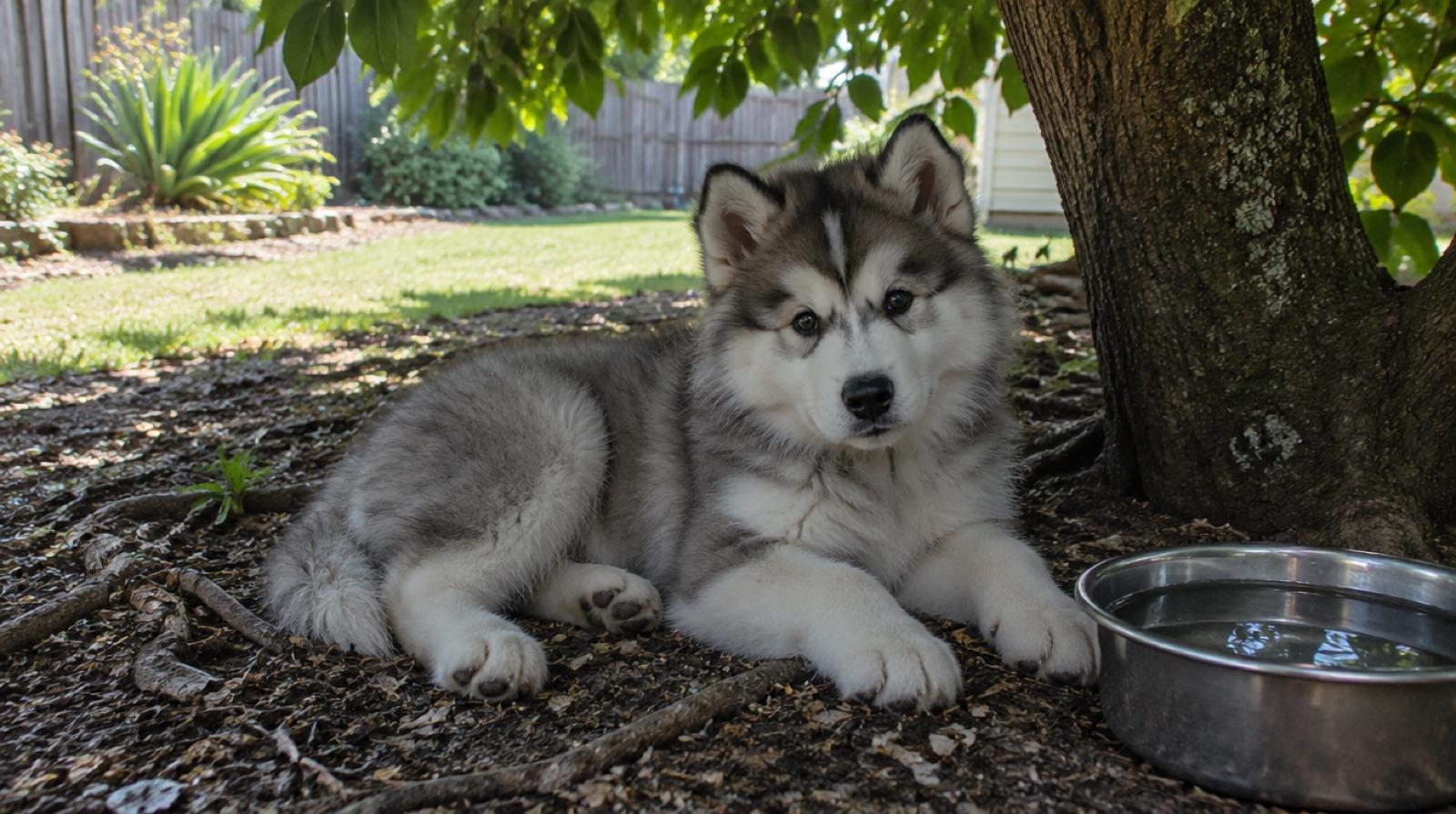
Should you adopt or buy an Alaskan Malamute?
It depends on whether it has to be a puppy. Purebred Malamute puppies are rare across the rescues we aggregate, so if you want an eight-week-old Malamute from health-tested parents, or a dog for sledding, weight pulling or showing, a registered breeder is the realistic route. If what you want is the dog (the size, the plumed tail, the friendliness with people), an adult Malamute or Malamute cross from rescue comes with a known record on fences, cats and other dogs, which matters a great deal in this breed.
The Alaskan Malamute Club, Victoria (AMCV) puts it plainly in its information pack (May 2021 edition): Malamutes “are very attractive but can be a challenge to own and are not suitable for everyone.” The RSPCA Australia Knowledgebase suggests the RSPCA or a reputable rescue first, and if you go to a breeder, making sure they are registered, visiting where the puppies were born and meeting the parents. Our guide to adopting a dog in Australia covers the rescue process step by step.
| Route | Reference cost | What you usually get | Main risk |
|---|---|---|---|
| Dogs Australia registered breeder | No breeder website we read publishes a usable price; ask | A purebred puppy with papers, vaccinated and microchipped, ideally from hip, elbow, eye, thyroid and DNA tested parents | Testing varies, so ask |
| General rescue or pound | The standard fee, for example $500 for an adult dog at RSPCA NSW | Malamutes and crosses, desexed, microchipped and vaccinated | Purebreds are rare; unknown parent health |
| Classified ad or social media | Anything | Anything from an untested litter to a puppy that does not exist | Scams, no health guarantee |
Reference only, not quotes. Figures read on 11 November 2026; breeders and rescues set their own prices and change them, so check with them.
How much is a Malamute puppy from a registered breeder?
There is no current published figure to quote. The AMCV information pack does give a guide price, but its FAQ page says it was prepared in January 2008, so it is far too old to use. The club's breeders and puppies page lists member breeders and a puppy register, with no prices.
In November 2026 we tried the websites of 10 Australian Malamute breeders found through the breed club and state body directories. None published a current pet puppy price we could use: seven gave no price and asked for an enquiry or an expression of interest, and three could not be reached. Prices on listing sites are left out, because we cannot check who is selling. So the honest answer is: ask each breeder, and compare what the price includes, such as registration papers, vaccinations, microchipping and a desexing agreement.
| Who published it | Reference figure | Read |
|---|---|---|
| Breeders, own websites (10 tried) | No current usable pet puppy price | 11 Nov 2026 |
| Alaskan Malamute Club, Victoria | Guide price dated 2008, too old to use | 11 Nov 2026 |
| RSPCA NSW, adult dog | $500 | 11 Nov 2026 |
| RSPCA NSW, under 12 months | $620 | 11 Nov 2026 |
Reference only, not quotes. Fees change, so check with the rescue. Rescue fees usually include desexing, microchipping, vaccinations and a vet check. The dog cost calculator covers the first year of a large dog after the price tag.
Which health tests should a Malamute breeder show you?
Hips, elbows, eyes and thyroid first, then DNA. Before a litter can go on the AMCV puppy register, both parents must have been x-rayed and passed for hip and elbow dysplasia, hold an Australian Canine Eye Scheme (ACES) certificate issued no more than 12 months before mating, and have been tested for thyroid problems within the 12 months before mating. The club's hip dysplasia program treats a score of 7 or less on either hip as acceptable for breeding. Overseas clubs add DNA tests, set out below.
| Check | Who asks for it | What to ask for |
|---|---|---|
| Hip score | AMCV puppy register; required by the Alaskan Malamute Club of America (AMCA) and the UK club | Both parents' hip reports |
| Elbow score | AMCV puppy register; recommended by the AMCA | Both parents' elbow results |
| Eyes | AMCV (ACES certificate within 12 months of mating); required by the AMCA and the UK club | Current eye certificates for both parents |
| Thyroid | AMCV (within 12 months of mating); recommended by the AMCA | Both parents' thyroid results |
| Polyneuropathy DNA | Required by the AMCA and the UK club; the Royal Kennel Club's first (Good Practice) test | Both parents' DNA results |
| Cone degeneration (day blindness) DNA | Royal Kennel Club Best Practice; recommended by the AMCA. The AMCV says cases have been confirmed in several Australian states | Both parents' DNA results |
| Heart | Recommended by the AMCA | Whether the parents had a cardiac exam |
Sources: AMCV puppy register requirements, AMCA breed health statement, Alaskan Malamute Club of the UK and the Royal Kennel Club Health Standard, read 11 November 2026. This is a buying checklist, not veterinary advice. Our Malamute health guide covers what these conditions mean once you own one.
The AMCV health page also names chondrodysplasia (dwarfism), which affects bone growth and is inherited as a simple recessive. The club's chondrodysplasia page carries an undated notice that it placed a moratorium on issuing certificates under its Chondrodysplasia Certification Scheme after an affected pup was whelped from certified parents in Canada, so ask what the breeder knows about dwarfism in their lines rather than relying on a certificate. The same page says bloat “can occur in any breed of dog at any age, but is more prevalent amongst large, deep chested breeds such as the Alaskan Malamute,” and that suspected cases must be taken to a vet immediately. Signs it lists include a swollen belly, restlessness, drooling and unproductive attempts to vomit: if you see them, call or go to your nearest vet now. Our dog bloat (GDV) guide covers the signs and what to ask your vet about prevention.
See the Alaskan Malamutes listed right now
Malamutes and Malamute crosses from the rescues, shelters and council pounds we aggregate, with each rescue's notes on fences, children, cats and other dogs. Every listing links to the rescue, where you apply directly.
How is a Malamute different from a Husky?
They are two breeds with two jobs. The Dogs Australia standard says the Malamute's function “as a sledge dog for heavy freighting in the Arctic must be given consideration above all else” and that it “is not intended as a racing sled dog designed to compete in speed trials.” The AMCV adds that the Malamute is larger and stockier and cannot have blue eyes (the standard makes blue eyes a disqualifying fault), while the Husky tends to be more hyperactive and is the faster of the two.
We compare the two breeds side by side in our Husky vs Malamute guide. If you are leaning towards the smaller dog, our Husky puppies: adopt or buy guide covers the same questions for that breed.
How much exercise does a Malamute need?
More than most homes expect. The Royal Kennel Club in the UK rates the Alaskan Malamute at “more than 2 hours per day”, calls it “the strongest of the sled dogs”, and lists it as a large dog suited to the country and a large garden. The AMCV says Malamutes “love as much exercise as you can give them”, will not run around the yard exercising themselves, and are happiest with a working activity such as sledding (in Australia mainly with the dogs pulling scooters), weight pulling or backpacking.
The dog exercise calculator shows the Kennel Club breed ratings side by side, with RSPCA advice for puppies and hot days.
Do Malamutes escape, and are they safe with other pets?
The breed club is blunt about both. Its information pack says a Malamute is “quite likely” to dig up your lawn and garden, need very good fencing and strong gates, run away if let off lead and not come when called, hunt other animals, and not be friendly to other dogs, particularly those of the same sex. It adds that Malamutes have “a natural instinct to roam over a huge distance if given the opportunity”, so owners need to be prepared to always have their Malamute on lead in public places.
- Cats. The AMCV says Malamutes and cats can live together happily in many cases, most often when the Malamute is raised with the cat from puppyhood, but warns that an older Malamute “may well think the family puss is something to be hunted.”
- Livestock, wildlife and caged pets. The club says Malamutes cannot be trusted around livestock or wildlife, and that cages for small animals should be strong and kept away from the dog.
- Other dogs. If you already have a dog, the club strongly recommends a Malamute of the opposite sex, and says the two may need to be fed apart to avoid fights.
This is where an adult from rescue helps: a foster carer can tell you how that dog behaves with a cat, a fence and a dog park. The fence advice in our Husky escape and exercise guide applies to a Malamute too.
Can a Malamute cope with the Australian heat?
With care, and it is the biggest welfare question for the breed here. The Dogs Australia standard notes that Malamutes “usually have a shorter and less dense coat during the summer months.” The AMCV says Malamutes will not be as active in the heat, need a cool shady place to lie and plenty of cool water, and that the double coat works as insulation, so it “should never be shaved or clipped in summer.”
The RSPCA Australia Knowledgebase calls heatstroke a life-threatening emergency and advises exercising dogs at the coolest times of day and giving constant access to a cool, shaded, well-ventilated area. In practice, that means walks at dawn or after dark through summer and a cool indoor space on hot days. Our dogs in hot weather guide covers the warning signs and what to do, and the Malamute coat, heat and exercise guide covers grooming through a moult.
What do Malamutes in rescue look like?
Mostly adolescents, adults and crosses. Across the rescues, shelters and council pounds we aggregate, a purebred Malamute is listed only now and then, so an alert on the Alaskan Malamute breed page matters more than checking once. The AMCV adoption page also lists Malamutes needing new homes, with the note that the club does not assess those dogs, so read the listing and ask questions as you would anywhere.
An adult from a rescue or foster home comes with honest notes on how it copes with heat, fences, children, cats and time alone, which is exactly what a puppy cannot tell you.
How do Malamute puppy scams work?
Never pay a deposit for a Malamute puppy you have not seen with its mother, in person or at least on a live video call. A seller who asks for more money after the first payment, for transport, a crate or insurance, is following the standard scam script.
Scamwatch says scammers set up fake websites and fake social media and marketplace profiles to sell popular breeds and pets that do not exist. Its advice: view the pet in person, ask for a video call with the breeder if you cannot visit, check the breeder is legitimate and accredited, and compare prices, because a very cheap pet is likely a scam.
- No breeder number. The Queensland Government says puppy sale scams are on the rise and not to buy a puppy from a person who does not have a valid breeder identification number (BIN). NSW, Victoria, South Australia and the ACT also require an identifying number in puppy ads. Look it up on the official register, not through a link the seller sends.
- No papers. The AMCV says pedigree papers are the only proof a puppy is a purebred Malamute, and that a breeder who does not offer them is in breach of the state and national canine bodies' rules and should be avoided.
- “Giant” Malamutes. The AMCV says the term does not refer to a recognised breed and may be used to make an oversized Malamute sound more acceptable to an unsuspecting buyer.
- Blue eyes sold as rare. Blue eyes are a disqualifying fault in the Dogs Australia standard. A blue-eyed “Malamute” may well be a cross.
Our guide to puppies for sale in Australia has the full state-by-state table of breeder numbers and what to do if you have already paid. And if a seller calls a puppy part wolf, read our wolf dogs in Australia guide first; the AMCV says Malamutes are no more closely related to the wolf than any other domestic dog.
When is a registered breeder the better choice?
Rescue is not right for everyone. A registered breeder makes sense if you want a Malamute for sledding, weight pulling or showing, if you want a puppy from health-tested parents with a known family history, or if you have watched the rescue listings for months and no adult has suited your home.
- Registration. Check the membership number with Dogs Australia or your state body, and your state's breeder number on the official register.
- A club check. The AMCV breeders and puppy register lists member breeders and litters that meet its health rules.
- Health results for both parents: hips, elbows, a current eye certificate, thyroid, and DNA tests.
- The mother, in person, and where the puppies are raised, before any deposit. The AMCV says puppies should stay with their mother and littermates until at least 8 weeks old.
- A written contract covering register type, desexing, health problems and whether the breeder will take the dog back.
Is an Alaskan Malamute the right dog for you?
The Dogs Australia breed standard describes “a powerful and substantially built dog with a deep chest and strong, well-muscled body”, and its temperament as “an affectionate, friendly dog, not a ‘one man’ dog”, “playful on invitation, but generally impressive by his dignity after maturity.” The desirable freighting size is 63.5 cm and 38.5 kg for dogs and 58.5 cm and 34 kg for bitches. Be honest about five things.
- Exercise. More than 2 hours a day on the Royal Kennel Club rating, always on lead in public.
- Fences and gates. Very good fencing and strong gates, in the AMCV's words, plus a garden you do not mind being dug.
- Strength. The AMCV says Malamutes pull very hard on lead and are too strong for children or the elderly to walk.
- Other animals. Not always friendly to other dogs, and a hunter of small animals.
- Heat. A cool place every summer day, for many years: the Royal Kennel Club lists the lifespan as over 10 years.
Not sure it fits? The what dog breed is right for me quiz and the adoption readiness check each take a few minutes.
Find an Alaskan Malamute near you
Malamutes and Malamute crosses listed by rescues, by city:
- Alaskan Malamutes for adoption in Sydney
- Alaskan Malamutes for adoption in Melbourne
- Alaskan Malamutes for adoption in Brisbane
- Alaskan Malamutes for adoption in Perth
- Alaskan Malamutes for adoption in Adelaide
Local guides to adopting a Malamute, with the rescues that serve each city: Sydney, Melbourne, Brisbane, Gold Coast, Perth, Adelaide.
Weighing up other big dogs? Our Samoyed, Newfoundland, Weimaraner, English Springer Spaniel, Rhodesian Ridgeback and German Shorthaired Pointer guides cover the same questions, and the large dogs in Sydney and in Melbourne are worth a look.
Frequently asked questions
Should I adopt or buy an Alaskan Malamute puppy?▼
Buy from a Dogs Australia registered breeder if it has to be a Malamute puppy with health-tested parents, because purebred Malamute puppies are rare across the rescues we aggregate. Adopt if you are open to an adult or a Malamute cross: they are listed by rescues and pounds from time to time, and an adult's habits with fences, cats and other dogs are already known. The Alaskan Malamute Club, Victoria says the breed is not suitable for everyone, so be sure of the breed first.
How much is an Alaskan Malamute puppy in Australia?▼
There is no current published figure to quote. None of the Australian Malamute breeders whose websites we read in November 2026 published a current pet puppy price we could use, and the only club guide price we found is in material prepared in 2008. Ask several breeders what they charge and what it includes. For comparison, RSPCA NSW listed $500 for an adult dog and $620 for a dog under 12 months. These are reference figures read on 11 November 2026, not quotes; fees change, so check with the rescue.
How much exercise does an Alaskan Malamute need?▼
A lot. The Royal Kennel Club in the UK rates the Alaskan Malamute at more than 2 hours of exercise a day. The Alaskan Malamute Club, Victoria says Malamutes love as much exercise as you can give them, will not exercise themselves in the yard, and should preferably do some working activity such as pulling a scooter or backpacking, always on lead in public.
Can an Alaskan Malamute live in the Australian heat?▼
Only with careful management. The Dogs Australia standard notes Malamutes usually have a shorter and less dense coat in summer, and the Alaskan Malamute Club, Victoria says they will be less active in the heat and need a cool shady place and plenty of cool water, and that the coat should never be shaved. The RSPCA calls heatstroke a life-threatening emergency, so walk early or late and give the dog a cool place to rest.
Do Malamutes escape and chase other animals?▼
Quite likely, according to the breed club. The Alaskan Malamute Club, Victoria says a Malamute is quite likely to run away if let off lead and not come when called, to hunt other animals, and to need very good fencing and strong gates. It says Malamutes cannot be trusted around livestock or wildlife, and that an older Malamute may see the family cat as something to hunt.
What health tests should a Malamute breeder show me?▼
Ask for both parents' hip and elbow results, a current eye certificate and a thyroid test, which are what the Alaskan Malamute Club, Victoria requires before a litter goes on its puppy register. Also ask for a polyneuropathy DNA result, which the Alaskan Malamute Club of America requires and the UK Royal Kennel Club lists as a Good Practice test, and a cone degeneration (day blindness) DNA result.
Is a Malamute the same as a Husky?▼
No. The Alaskan Malamute Club, Victoria says they are two different breeds: the Malamute is larger and stockier and cannot have blue eyes, while the Husky tends to be more hyperactive and is the faster sledding breed. The Dogs Australia standard says the Malamute is built for heavy freighting and is not intended as a racing sled dog. Our Husky vs Malamute guide compares them in detail.
Are Alaskan Malamutes good with children and other dogs?▼
They love people but are not an easy family dog. The Alaskan Malamute Club, Victoria says Malamutes love all people, including children, but their size and exuberance can make them unsuitable playmates, and a child should never walk one. It also says they are not always friendly towards other dogs, particularly those of the same sex, and suggests a Malamute of the opposite sex if you already have a dog.
What is a giant Malamute?▼
Not a recognised breed. The Alaskan Malamute Club, Victoria says the term giant Malamute may be used by some breeders to make an oversized Malamute sound more acceptable to an unsuspecting buyer, and that a reputable breeder would never deliberately breed or promote oversized Malamutes. The Dogs Australia standard gives a desirable freighting size of 63.5 cm and 38.5 kg for dogs and 58.5 cm and 34 kg for bitches.
Are Malamute puppies on Gumtree or Facebook a scam?▼
Some are scams and many are not from registered breeders. Scamwatch says scammers set up fake websites and social media profiles for popular breeds and that a very cheap pet is likely a scam. The Queensland Government warns that puppy sale scams are on the rise and says not to buy a puppy from a person who does not have a valid breeder identification number (BIN).
Where can I see Alaskan Malamutes for adoption right now?▼
The Alaskan Malamute breed page on LocalPetFinder shows Malamutes and Malamute crosses listed by the rescues, shelters and council pounds we aggregate, with a page for each major city. Every listing links to the rescue, where you apply directly. The Alaskan Malamute Club, Victoria also lists Malamutes needing homes on its adoption page. Set an alert, because purebreds come up only now and then.
Sources
- Dogs Australia: Alaskan Malamute breed standard
- Alaskan Malamute Club, Victoria: Information pack
- Alaskan Malamute Club, Victoria: Breeders and puppies
- Alaskan Malamute Club, Victoria: Health and medical
- Alaskan Malamute Club, Victoria: Hip dysplasia control program
- Alaskan Malamute Club, Victoria: Day blindness (cone degeneration)
- Alaskan Malamute Club, Victoria: Chondrodysplasia
- Alaskan Malamute Club, Victoria: Rehoming and adoption
- Alaskan Malamute Club of America: Breed health statement
- Alaskan Malamute Club of the UK: Health testing
- Royal Kennel Club (UK): Alaskan Malamute
- Royal Kennel Club (UK): Health Standard
- RSPCA Australia Knowledgebase: How can I protect my dog from heatstroke?
- Queensland Government: Puppy farms and puppy scams
- Scamwatch: Buying and selling scams
- RSPCA NSW: Adoption fees
- RSPCA Australia Knowledgebase: Where should I go for a new companion animal?
Keep reading
Malamutes listed by rescues
Alaskan Malamutes and Malamute crosses listed right now by the rescues and pounds we aggregate across Australia.
Malamute coat, heat and exercise
Brushing out a double coat, keeping a Malamute cool in summer, and how much work the breed wants.
Malamute health issues
Hips, eyes, thyroid and the other conditions to watch for as a Malamute ages.
Husky vs Malamute
The two Arctic breeds side by side: size, purpose, heat, shedding and which suits which home.