The short answer
If it has to be a GSP puppy, buy from a Dogs Australia registered breeder, and ask for the parents' hip and elbow scores, eye and heart checks and DNA results. No Australian GSP club publishes a price, and none of the member breeders whose own websites we read in November 2026 published a current pet price we could use, so ask several breeders directly. If you are open to an adult, adopt: GSPs and crosses turn up in general rescue at the standard fee, for example $500 for an adult dog at RSPCA NSW. Fees are reference figures read on 11 November 2026, not quotes; check with the rescue. Whatever you choose, the Royal Kennel Club rates the breed at more than 2 hours of exercise a day.
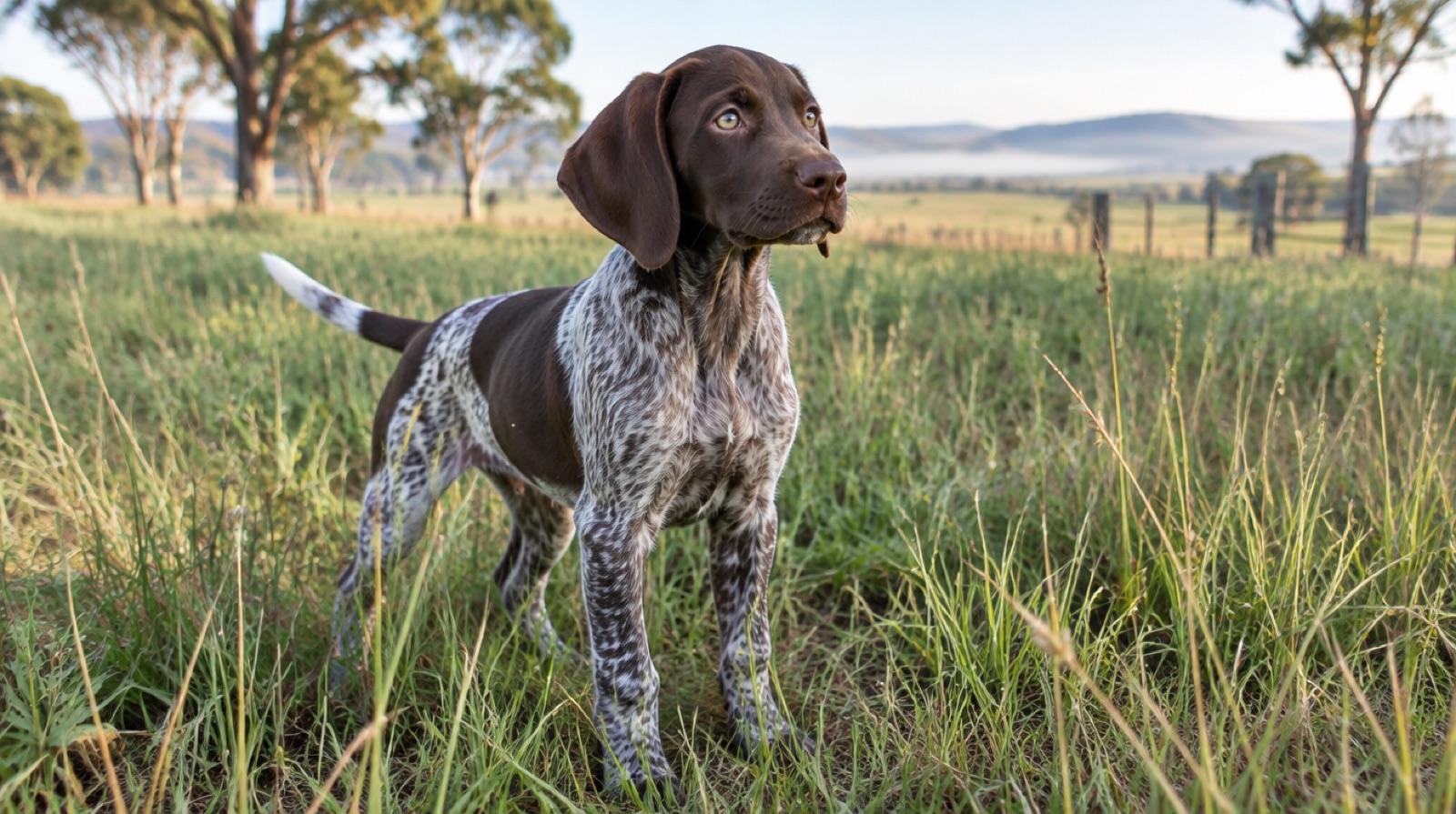
Should you adopt or buy a German Shorthaired Pointer?
It depends on whether it has to be a puppy. Purebred GSP puppies rarely reach general rescue, so if you want an eight-week-old GSP from health-checked parents, or a pup for field trials or hunting, a registered breeder is the realistic route. If what you want is the dog (the loyalty, the athleticism, the nose), an adult GSP or GSP cross from rescue comes with a known energy level and set of manners, which matters a great deal in a breed this energetic.
The RSPCA Australia Knowledgebase suggests the RSPCA or a reputable rescue first, and if you go to a breeder, making sure they are registered, visiting where the puppies were born and meeting the parents. Our guide to adopting a dog in Australia covers the rescue process step by step.
| Route | Reference cost | What you usually get | Main risk |
|---|---|---|---|
| Dogs Australia registered breeder | No member breeder we read publishes a usable price; ask | A purebred puppy, vaccinated and microchipped, ideally from hip, elbow, eye and heart checked parents | Testing varies, so ask |
| General rescue or pound | The standard fee, for example $500 for an adult dog at RSPCA NSW | GSPs and crosses, desexed, microchipped and vaccinated | Purebreds are rare; unknown parent health |
| Classified ad or social media | Anything | Anything from an untested litter to a puppy that does not exist | Scams, no health guarantee |
Reference only, not quotes. Figures read on 11 November 2026; breeders and rescues set their own prices and change them, so check with them.
How much is a GSP puppy from a registered breeder?
There is no published figure to quote. No Australian GSP club we found publishes a price; the German Shorthaired Pointer Club of SA lists breeders and strongly recommends contacting one registered with the Australian National Kennel Council (now Dogs Australia).
In November 2026 we read the websites of 11 Australian GSP breeders. None published a current pet puppy price we could use: most gave no price, one said to enquire, some prices were for litters from 2023 or 2024, and one page with a price did not make clear which breeds the parents were. Several breeders show prices only on listing sites, which we leave out. So the honest answer is: ask each breeder, and compare what the price includes.
| Who published it | Reference figure | Read |
|---|---|---|
| Breeders, own websites (11 read) | No current usable pet puppy price | 11 Nov 2026 |
| Australian GSP clubs | No price published | 11 Nov 2026 |
| RSPCA NSW, adult dog | $500 | 11 Nov 2026 |
| RSPCA NSW, under 12 months | $620 | 11 Nov 2026 |
Reference only, not quotes. Fees change, so check with the rescue. Rescue fees usually include desexing, microchipping, vaccinations and a vet check. The dog cost calculator covers the first year after the price tag.
Which health tests should a GSP breeder show you?
Hips and elbows first, then eyes, heart and DNA. Dogs Victoria says health conditions occur occasionally in the German Shorthaired Pointer and may include hip dysplasia, elbow dysplasia, bloat and late onset progressive retinal atrophy (LOPRA rcd4). We found no Australian GSP club health-testing list, so the table below adds the tests the German Shorthaired Pointer Club of America requires of its breeders.
| Check | Why it matters | What to ask for |
|---|---|---|
| Hip score | Hip dysplasia occurs in the breed (Dogs Victoria) | Both parents' scores |
| Elbow score | Elbow dysplasia occurs in the breed (Dogs Victoria) | Both parents' results |
| Eyes | Late onset PRA (rcd4) is listed by Dogs Victoria; the US club requires annual eye exams to age 6 | Recent eye certificates and a PRA rcd4 DNA result |
| Heart | The US club requires an exam by a board certified cardiologist from 24 months | Whether the parents had a cardiac exam |
| Cone degeneration DNA | Required by the US club | Both parents' DNA results |
| Von Willebrand disease type II DNA | A bleeding disorder; optional in the US club's list | Whether the parents were tested |
Sources: Dogs Victoria and the German Shorthaired Pointer Club of America health statement (United States, required tests effective 1 May 2014), read 11 November 2026. This is a buying checklist, not veterinary advice. Our GSP health guide covers what these conditions mean once you own one.
Bloat deserves a separate word because it is an emergency. Dogs Victoria lists it among the conditions that occur in the breed. The NSW Greyhound Welfare and Integrity Commission calls it a veterinary emergency and lists signs such as retching or gagging with nothing coming up, a swollen belly and heavy drooling. If you see them, call or go to your nearest vet now. Our dog bloat (GDV) guide covers the signs and what to ask your vet about prevention.
See the German Shorthaired Pointers listed right now
GSPs and GSP crosses from the rescues, shelters and council pounds we aggregate, with each rescue's notes on energy, children, cats and time alone. Every listing links to the rescue, where you apply directly.
How much exercise does a GSP need?
More than most homes expect. The Royal Kennel Club in the UK rates the German Shorthaired Pointer at “more than 2 hours per day”, the same rating it gives the Border Collie and Labrador, and lists it as a large dog suited to the country and a large garden. Dogs Victoria says the breed suits an active lifestyle and needs a lot of exercise, whether a strenuous hike, a long walk or a good game of fetch.
Three things follow for a pet home. First, a GSP left alone all day struggles: Dogs Victoria says it does not do well alone for long periods and that secure, high fencing is a must, and Dogs NSW says the breed can escape from four- to six-foot enclosures with little difficulty. Second, it is a hunting dog, and Dogs Victoria says many have a high prey drive, so early socialisation with cats and small pets matters. Third, in an Australian summer, exercise moves to early morning and evening.
The dog exercise calculator shows the Kennel Club breed ratings side by side, with RSPCA advice for puppies and hot days, and our GSP exercise and drive guide covers recall and settling a gundog at home.
What do GSPs in rescue look like?
Mostly adolescents, adults and crosses. Across the rescues, shelters and council pounds we aggregate, a purebred GSP is listed only now and then, often a young dog whose energy outgrew its first home. Because so few come up, an alert on the German Shorthaired Pointer breed page matters more than checking once.
An adult from a rescue or foster home comes with honest notes on how it copes alone, with children, with cats and with other dogs, which is exactly what a puppy cannot tell you. For a first-time owner drawn to the breed, that knowledge is worth a lot.
How do GSP puppy scams work?
Never pay a deposit for a GSP puppy you have not seen with its mother, in person or at least on a live video call. A seller who asks for more money after the first payment, for transport, a crate or insurance, is following the standard scam script.
Scamwatch says scammers set up fake websites and fake social media and marketplace profiles to sell popular breeds and pets that do not exist. Its advice: view the pet in person, ask for a video call with the breeder if you cannot visit, check the breeder is legitimate and accredited, and compare prices, because a very cheap pet is likely a scam.
- No breeder number. The Queensland Government says puppy sale scams are on the rise and not to buy a puppy from a person who does not have a valid breeder identification number (BIN). NSW, Victoria, South Australia and the ACT also require an identifying number in puppy ads. Look it up on the official register, not through a link the seller sends.
- A membership number you cannot check. Ask for the breeder's Dogs Australia membership number and check it with the state body yourself.
- “Health tested” with no papers. A registered breeder can show hip and elbow scores and DNA reports. A seller who cannot is not offering the same puppy.
- The wrong colour sold as rare. The Dogs Australia standard lists the accepted colours, from solid brown to roans, white with brown markings and the black equivalents. Be wary of a “rare colour” premium.
Our guide to puppies for sale in Australia has the full state-by-state table of breeder numbers and what to do if you have already paid.
When is a registered breeder the better choice?
Rescue is not right for everyone. A registered breeder makes sense if you want a GSP for hunting, field trials or showing, if you want a puppy from health-checked parents with a known family history, or if you have watched the rescue listings for months and no adult has suited your home.
- Registration. Check the membership number with Dogs Australia or your state body, and your state's breeder number on the official register.
- A club check. State GSP clubs, such as the GSP Club of SA, can point you to member breeders.
- Health results for both parents: hips, elbows, eyes, heart and DNA.
- The mother, in person, and where the puppies are raised, before any deposit.
- A written contract covering register type, desexing, health problems and whether the breeder will take the dog back.
Is a German Shorthaired Pointer the right dog for you?
The Dogs Australia breed standard describes a dog “of noble and balanced appearance” built for strength, endurance and speed, with a “firm, balanced, reliable, restrained temperament. Neither nervous, nor shy or aggressive.” Dogs stand 62 to 66 cm and bitches 58 to 63 cm. Be honest about four things.
- Exercise. More than 2 hours a day on the Royal Kennel Club rating.
- Time alone. Dogs NSW says the breed does not do well left alone all day.
- Experience. Dogs NSW says it is not a suitable pet for an inactive home or for inexperienced dog owners.
- Other pets. A high prey drive means cats and small pets need careful introductions.
Not sure it fits? The what dog breed is right for me quiz and the adoption readiness check each take a few minutes.
Find a German Shorthaired Pointer near you
GSPs and GSP crosses listed by rescues, by city:
- German Shorthaired Pointers for adoption in Sydney
- German Shorthaired Pointers for adoption in Melbourne
- German Shorthaired Pointers for adoption in Brisbane
- German Shorthaired Pointers for adoption in Perth
- German Shorthaired Pointers for adoption in Adelaide
Local guides to adopting a GSP, with the rescues that serve each city: Sydney, Melbourne, Brisbane, Gold Coast, Perth, Adelaide.
Weighing up other active breeds? Our Vizsla, Rhodesian Ridgeback, Koolie and Bull Terrier guides cover the same questions, and the large dogs in Sydney and in Melbourne are worth a look.
Frequently asked questions
Should I adopt or buy a German Shorthaired Pointer puppy?▼
Buy from a Dogs Australia registered breeder if it has to be a GSP puppy, because purebred GSP puppies rarely reach general rescue. Adopt if you are open to an adult or a GSP cross: they are listed by rescues and pounds from time to time, and an adult's energy and manners are already known. Either way, this is one of the most energetic gundogs, and it needs a lot of exercise and company.
How much is a German Shorthaired Pointer puppy in Australia?▼
No Australian GSP club publishes a price, and none of the Dogs Australia member breeders whose websites we read in November 2026 published a current pet puppy price we could use. Breeders give prices when you ask, so ask several what they charge and what it includes. For comparison, RSPCA NSW listed $500 for an adult dog and $620 for a dog under 12 months. These are reference figures read on 11 November 2026, not quotes; fees change, so check with the rescue.
How much exercise does a GSP need?▼
A lot. The Royal Kennel Club in the UK rates the German Shorthaired Pointer at more than 2 hours of exercise a day. Dogs Victoria says the breed is best suited to an active lifestyle and needs a lot of exercise, such as a strenuous hike, a long walk or a good game of fetch, and that it does not do well left alone for long periods.
Are GSPs good for first-time owners?▼
Often not. Dogs NSW says the German Shorthaired Pointer is not a suitable pet for an inactive home or for inexperienced dog owners, and calls it one of the most energetic breeds. A first-time owner who loves the breed may suit a calm adult GSP from a rescue, whose energy and manners are already known, better than a puppy.
What health tests should a GSP breeder show me?▼
Ask for hip and elbow scores for both parents, an eye examination, a heart examination and DNA results, including for late onset progressive retinal atrophy (rcd4). Dogs Victoria lists hip dysplasia, elbow dysplasia, bloat and late onset PRA as conditions that occur occasionally in the breed. The US breed club's required tests are hips, elbows, eyes, a cardiac exam and a cone degeneration DNA test.
Do German Shorthaired Pointers get bloat?▼
Some do. Dogs Victoria lists bloat among the health conditions that occur occasionally in the breed. Bloat, or gastric dilatation-volvulus, is an emergency in which the stomach fills and can twist. The NSW Greyhound Welfare and Integrity Commission lists signs such as retching or gagging with nothing coming up, a swollen belly and heavy drooling: if you see them, call or go to your nearest vet now. Ask your vet how to lower the risk.
Can I adopt a German Shorthaired Pointer in Australia?▼
Yes, though not often as a purebred puppy. GSPs and GSP crosses are listed by the rescues, shelters and council pounds we aggregate from time to time, and each listing links to the rescue where you apply directly. Set an alert on the German Shorthaired Pointer breed page so you hear when one comes up.
Are GSPs good with children?▼
Many are, with supervision and an active family. Dogs NSW describes the breed as very loyal, family orientated, gentle and affectionate. Dogs Victoria warns that young GSPs can be very boisterous and says children should always be supervised with dogs. Many GSPs have a high prey drive, so early socialisation with cats and other small pets matters.
How long do German Shorthaired Pointers live?▼
Dogs Victoria gives an average lifespan of 10 to 12 years, and Dogs NSW says a GSP will usually live 11 or 12 years, sometimes longer. The Royal Kennel Club lists the lifespan as over 10 years. Plan for a commitment of more than a decade of daily exercise.
Are GSP puppies on Gumtree or Facebook a scam?▼
Some are scams and many are not from registered breeders. Scamwatch says scammers set up fake websites and social media profiles for popular breeds and that a very cheap pet is likely a scam. The Queensland Government warns that puppy sale scams are on the rise and says not to buy a puppy from a person who does not have a valid breeder identification number (BIN).
Where can I see German Shorthaired Pointers for adoption right now?▼
The German Shorthaired Pointer breed page on LocalPetFinder shows GSPs and GSP crosses listed by the rescues, shelters and council pounds we aggregate, with a page for each major city. Every listing links to the rescue, where you apply directly. Set an alert, because purebred GSPs come up only now and then.
Sources
- Dogs Australia: German Shorthaired Pointer breed standard
- Dogs Victoria: German Shorthaired Pointer
- Dogs NSW: German Shorthaired Pointer
- Royal Kennel Club (UK): German Shorthaired Pointer
- German Shorthaired Pointer Club of SA: Breeders list
- German Shorthaired Pointer Club of America: Health statement
- Queensland Government: Puppy farms and puppy scams
- Scamwatch: Buying and selling scams
- RSPCA NSW: Adoption fees
- RSPCA Australia Knowledgebase: Where should I go for a new companion animal?
- NSW Greyhound Welfare and Integrity Commission: Gastric dilation and volvulus fact sheet
Keep reading
GSPs listed by rescues
German Shorthaired Pointers and GSP crosses listed right now by the rescues and pounds we aggregate across Australia.
GSP exercise and drive
How much running a GSP needs, recall, prey drive, and settling a gundog that hates being alone.
GSP health issues
Hips, elbows, eyes and the other conditions to watch for as a GSP ages.
Dog bloat (GDV)
The signs of bloat, why it is an emergency, and what to ask your vet about prevention.