The short answer
If it has to be a Ridgeback puppy, buy from a Dogs Australia registered breeder who checks every puppy for dermoid sinus and can show hip and elbow scores and DM and JME DNA results for both parents. The Rhodesian Ridgeback Club of Victoria's undated FAQ says prices may vary between $3,000 and $5,000, and the WA club's undated guide says $1,500 to $2,500 on average in WA; one member breeder published $3,000 (November 2026) for a pet puppy, and one breeder is not a range. If you are open to an adult, adopt: Ridgebacks and crosses turn up in general rescue, and several state clubs publish rescue contacts. All prices are reference figures read on 11 November 2026, not quotes; check with the breeder or rescue.
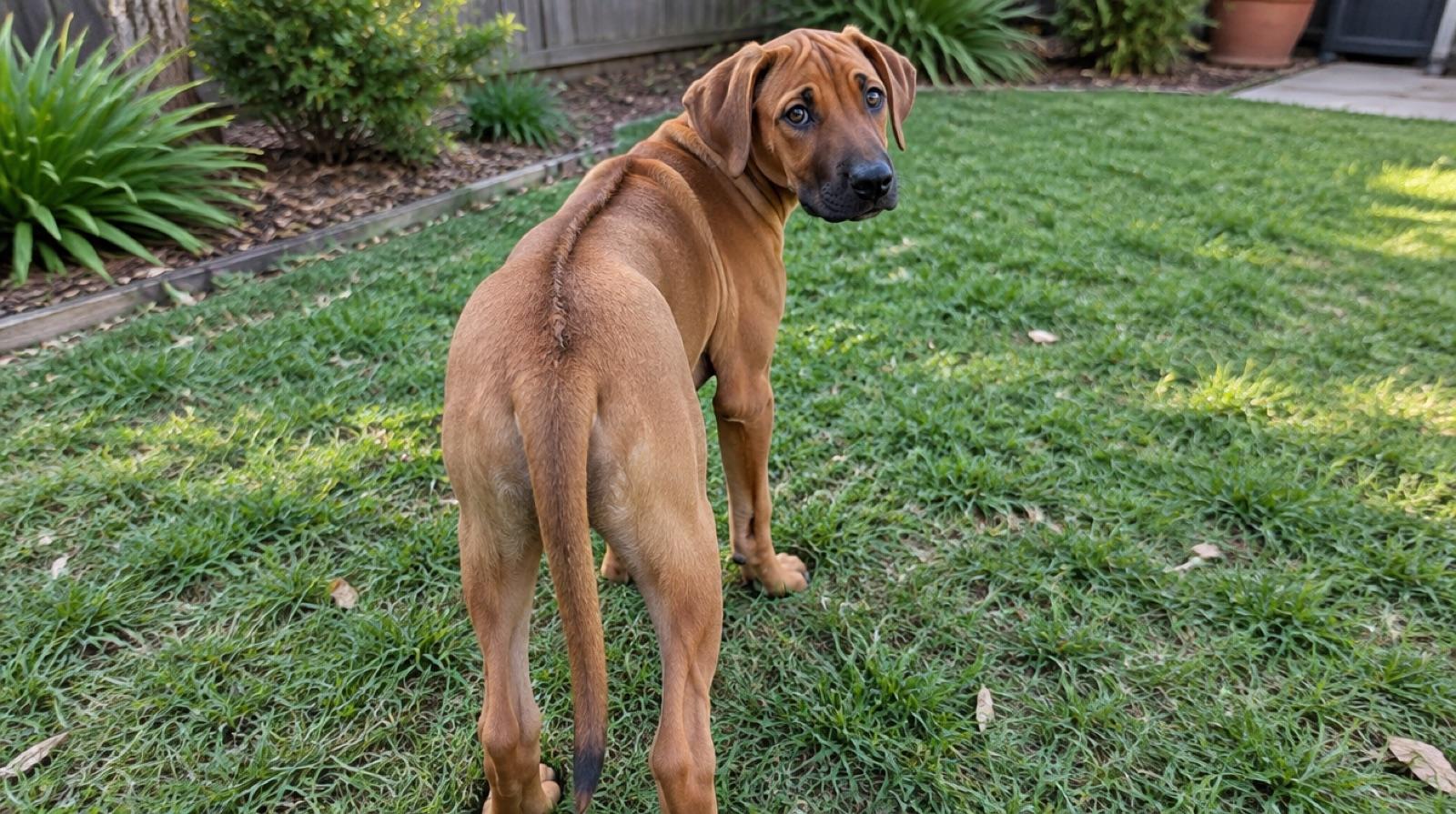
Should you adopt or buy a Rhodesian Ridgeback?
It depends on whether it has to be a puppy. Purebred Ridgeback puppies rarely reach general rescue, so if you want an eight-week-old Ridgeback with known parents and checked for dermoid sinus, a registered breeder is the realistic route. If what you want is the dog (the calm dignity at home, the athlete outdoors), an adult Ridgeback or Ridgeback cross from a rescue comes with a known size, temperament and set of manners, which matters in a dog this big and strong.
The RSPCA Australia Knowledgebase suggests the RSPCA or a reputable rescue first, and if you go to a breeder, making sure they are registered, visiting where the puppies were born and meeting the parents. Our guide to adopting a dog in Australia covers the rescue process step by step.
| Route | Reference cost | What you usually get | Main risk |
|---|---|---|---|
| Dogs Australia registered breeder | $3,000 to $5,000 (Victorian club FAQ, undated); $1,500 to $2,500 in WA (WA club, undated); one member breeder published $3,000 (November 2026) | A purebred puppy checked for dermoid sinus, usually from hip and elbow scored parents | Waiting lists; DNA testing varies, so ask |
| Ridgeback club rescue or rehoming | Set by the club; ask | An adult Ridgeback needing a new home | Availability varies; ask the club |
| General rescue or pound | The standard fee, for example $500 for an adult dog at RSPCA NSW | Ridgebacks and crosses, desexed, microchipped and vaccinated | Purebreds are rare; unknown parent health |
| Classified ad or social media | Anything | Anything from an unchecked litter to a puppy that does not exist | Scams, no dermoid check, no health guarantee |
Reference only, not quotes. Figures read on 11 November 2026 from the club, breeder and rescue pages named; prices and fees change, so check with them.
How much is a Ridgeback puppy from a registered breeder?
Two state clubs publish a guide. The Rhodesian Ridgeback Club of Victoria's FAQ says the cost of a puppy is determined by the individual breeders and that “the current price range may vary between $3000 to $5000”. The Rhodesian Ridgeback Club of WA says prices for puppies from registered breeders with health-tested parents vary and that on average you would be looking at anywhere between $1,500 and $2,500 in WA. Neither page is dated; we read both on 11 November 2026.
We also read the websites of 19 Australian Ridgeback breeders in November 2026. One member breeder (membership of Dogs Australia through its state body and of its state Ridgeback club shown on its own site) published $3,000 (November 2026) for a pet-quality puppy on the limited register (not for breeding). One breeder is not a range, so treat it as a single example. The rest did not publish a price, or showed only a price from an earlier year, which we leave out, as we do prices on listing sites. Ask several breeders what they charge and what it includes.
| Who published it | Reference figure | Read |
|---|---|---|
| Rhodesian Ridgeback Club of Victoria (FAQ, undated) | $3,000 to $5,000 | 11 Nov 2026 |
| Rhodesian Ridgeback Club of WA (undated; WA, health-tested parents, average) | $1,500 to $2,500 | 11 Nov 2026 |
| One member breeder, own website (pet, limited register) | $3,000 (one breeder, not a range) | 11 Nov 2026 |
| Other breeders read (18) | No current pet price we could use | 11 Nov 2026 |
| RSPCA NSW, adult dog | $500 | 11 Nov 2026 |
| RSPCA NSW, under 12 months | $620 | 11 Nov 2026 |
Reference only, not quotes. Breeders and rescues set their own prices and change them, so check with them. Rescue fees usually include desexing, microchipping, vaccinations and a vet check. The dog cost calculator covers the first year after the price tag.
What is dermoid sinus, and why does every litter need checking?
A dermoid sinus is a narrow, tube-like structure that, in the words of the National Rhodesian Ridgeback Council, can “penetrate from the skin surface to varying depths downward into the muscles and towards the spinal cord.” Sinuses sit in the midline of the neck and the croup (lower back), and a puppy can have more than one. The council grades them into four types, the most serious of which reaches the spinal cord between the vertebrae.
The council says responsible breeders check for a sinus as soon as possible after birth and keep checking, often asking other experienced breeders to check as well. If a sinus is found before it becomes infected, it can be removed surgically with a good chance of no further complications, and the council notes that many breeders now have the operation done at 8 to 9 weeks and home the puppy as a pet. Ask any breeder how and when the litter was checked.
The ridge and the sinus are linked. A 2007 study in Nature Genetics found that the ridge in Rhodesian and Thai Ridgebacks is caused by a dominant mutation, a duplication involving three fibroblast growth factor (FGF) genes, that also predisposes dogs to dermoid sinus. The picture is not fully settled: a 2022 German study of 12,700 puppies found a dermoid sinus prevalence of 2.53% and concluded that the ridge locus was unlikely to determine whether a sinus appears. In Australia, the council's 2006 breed survey put the rate at 4.7%, down from 6.7% in 1996, and the council's dermoid sinus page says the incidence across the breed in Australia is not known.
This is a buying checklist, not veterinary advice. If you own a Ridgeback with a lump or discharge along the midline of the neck or back, see your vet. Our Ridgeback health guide covers what this means once you own one.
What happens to ridgeless puppies?
Some purebred Ridgeback puppies are born without a ridge. A 2006 study estimated the frequency at 5.6% in the Swedish population, and the National Rhodesian Ridgeback Council's 2006 Australian survey reported 6.8%. Because the Dogs Australia standard calls the ridge “the escutcheon of the breed”, a ridgeless puppy cannot be shown or bred from under club rules, but apart from its back it is the same dog.
Australian club codes set out what breeders should do. The Rhodesian Ridgeback Club of Victoria's code says members recognise that ridgeless pups are not in the standard and undertake to desex them before they leave the breeder, and the Queensland club's code requires a desexing contract and the Limited Register for puppies with faults such as no ridge. Under the Rhodesian Ridgeback Club of Great Britain's code of ethics, members agree that “no healthy puppy will be culled”, and ridgeless puppies should be rehomed with a contract to desex them. If you are offered a ridgeless puppy, ask about its desexing terms and its health checks like any other.
Which health tests should a Ridgeback breeder show you?
The Rhodesian Ridgeback Club Inc in NSW lists the basic tests as hip and elbow scoring (AVA scored or PennHIP), degenerative myelopathy (DM) and juvenile myoclonic epilepsy (JME), and says dermoid sinus is the most common issue. Its buyer questions also include a vet check of the puppy for entropion (inturned eyelids) and heart murmurs.
| Check | What the clubs say | What to ask for |
|---|---|---|
| Dermoid sinus | Every puppy checked from birth (NRRC) | How and when the litter was checked |
| Hip score | Breed average around 5 (RR Club of SA); Queensland code: no greater than 10 total to breed | Both parents' scores |
| Elbow score | Scored out of 3 for each elbow (RR Club of SA) | Both parents' results |
| DM DNA test | Never breed two carriers (RR Club of SA) | Both parents' DNA results |
| JME DNA test | Rare in Australia so far; breed clear parents or avoid carrier to carrier (RR Club of SA) | Both parents' DNA results |
| Heart | Screening by a specialist cardiologist (RR Club of SA); most club breeders also do cardiac testing (RR Club of Victoria) | Whether the parents were tested |
Sources: Rhodesian Ridgeback Club of South Australia, Rhodesian Ridgeback Club of Victoria, Queensland club code of ethics, Rhodesian Ridgeback Club of WA, read 11 November 2026. This is a buying checklist, not veterinary advice.
JME has a known cause: a 2017 study in PNAS identified a recessive deletion in the DIRAS1 gene, with onset between 6 weeks and 18 months, which is why a DNA test exists. Because it is recessive, two healthy carrier parents can produce an affected puppy, so ask for both parents' results rather than one.
See the Ridgebacks listed right now
Rhodesian Ridgebacks and Ridgeback crosses from the rescues, shelters and council pounds we aggregate, with each rescue's notes on children, other dogs and cats. Every listing links to the rescue, where you apply directly.
What do Ridgebacks in rescue look like?
Mostly adults and crosses. Across the rescues, shelters and council pounds we aggregate, purebred Ridgebacks are listed only now and then, and Ridgeback crosses appear more often. A cross may or may not have a ridge, and its size and temperament can lean towards either parent, so the rescue's notes on the individual dog matter more than the label. An alert on the Ridgeback breed page catches new listings.
The breed clubs are the other route. The Queensland club, the South Australian club and the WA club each publish a rescue or rehoming page, and the National Rhodesian Ridgeback Council lists rescue contacts by state. Ask the club in your state whether it has dogs needing homes and how its process works.
An adult from rescue comes with what a puppy cannot tell you: how it behaves with strangers, other dogs and cats, and whether it has the chase instinct the Ridgeback was bred with. Our Ridgeback exercise and prey drive guide covers living with that.
How do Ridgeback puppy scams work?
Never pay a deposit for a Ridgeback puppy you have not seen with its mother, in person or at least on a live video call. A seller who asks for more money after the first payment, for transport, a crate or insurance, is following the standard scam script.
Scamwatch says scammers set up fake websites and fake social media and marketplace profiles to sell popular breeds and pets that do not exist. Its advice: view the pet in person, ask for a video call with the breeder if you cannot visit, check the breeder is legitimate and accredited, and compare prices, because a very cheap pet is likely a scam.
Ridgeback versions of the pattern:
- A borrowed membership number. Dogs Victoria warns that scammers use the membership numbers of legitimate breeders, often lifted from other websites. Check the number on the official register yourself.
- A deposit before you meet anyone. Dogs NSW lists asking for deposits before you have met the breeder as a scammer tactic.
- No word on dermoid sinus. A genuine Ridgeback breeder checks every puppy. A seller who cannot say how the litter was checked is not following club practice, even if the puppy is real.
- No breeder number. NSW, Victoria, Queensland, South Australia and the ACT each require an identifying number in puppy ads. Look it up on the official register, not through a link the seller sends.
Our guide to puppies for sale in Australia has the full state-by-state table of breeder numbers and what to do if you have already paid.
When is a registered breeder the better choice?
Rescue is not right for everyone. A registered breeder makes sense if you want a puppy you can raise from eight weeks, with hip and elbow scored and DNA tested parents and a documented dermoid check, if you want to show or lure-course, or if you have watched the rescue listings for months and no adult has suited your home.
If you go that way, check the breeder properly:
- Registration. Check the membership number with Dogs Australia or your state body, and your state's breeder number on the official register.
- A club check. The Victorian club's breeders list and the other state clubs can point you to member breeders who follow their code of ethics.
- Health results for both parents: hips, elbows, DM and JME, plus any cardiac testing.
- The dermoid check, and the vet check for entropion and heart murmurs.
- A written contract covering register type, desexing, health problems and whether the breeder will take the dog back.
Is a Rhodesian Ridgeback the right dog for you?
The Dogs Australia breed standard describes a “strong, muscular, agile and active dog” capable of great endurance with a fair amount of speed, with a temperament that is “dignified, intelligent, aloof with strangers, but showing no aggression or shyness.” Dogs stand 63 to 69 cm with a desirable weight of 36.5 kg; bitches 61 to 66 cm and 32 kg. Be honest about four things.
- Size and strength. A large, strong dog that pulls is a problem for anyone who cannot hold it, so lead training starts on day one.
- Exercise. This is an endurance hound. The dog exercise calculator helps you plan daily exercise.
- Strangers. Aloof is in the standard. A Ridgeback needs plenty of calm socialisation as a puppy, and the Victorian club recommends obedience school so dogs can be socialised with other dogs.
- Commitment. The Queensland club describes a Ridgeback as a companion for the next 10 to 12 years.
Not sure it fits? The what dog breed is right for me quiz and the adoption readiness check each take a few minutes.
Find a Ridgeback near you
Rhodesian Ridgebacks and Ridgeback crosses listed by rescues, by city:
- Ridgebacks for adoption in Sydney
- Ridgebacks for adoption in Melbourne
- Ridgebacks for adoption in Brisbane
- Ridgebacks for adoption in Perth
- Ridgebacks for adoption in Adelaide
Local guides to adopting a Ridgeback, with the rescues that serve each city: Sydney, Melbourne, Brisbane, Gold Coast, Perth, Adelaide.
Open to another large dog? See the large dogs in Sydney and in Melbourne, and our guides to German Shorthaired Pointer, Bull Terrier and Koolie puppies.
Frequently asked questions
Should I adopt or buy a Rhodesian Ridgeback puppy?▼
Buy from a Dogs Australia registered breeder if it has to be a Ridgeback puppy, because purebred Ridgeback puppies rarely reach general rescue. Adopt if you are open to an adult or a Ridgeback cross: they are listed by general rescues and pounds from time to time, and several state Ridgeback clubs publish rescue or rehoming contacts. Either way, this is a large, strong hound that needs training and daily exercise.
How much is a Rhodesian Ridgeback puppy in Australia?▼
Two state clubs publish an undated guide. The Rhodesian Ridgeback Club of Victoria's FAQ (undated, read 11 November 2026) says breeders set their own prices and the range may vary between $3,000 and $5,000. The Rhodesian Ridgeback Club of WA (undated, read 11 November 2026) says puppies from registered breeders with health-tested parents average $1,500 to $2,500 in WA. Of the member breeders' own websites we read, one member breeder published $3,000 (November 2026) for a pet puppy on the limited register; one breeder is not a range. These are reference figures only, not quotes; prices change, so ask each breeder.
What is a dermoid sinus in a Ridgeback?▼
A dermoid sinus is a narrow, tube-like defect under the skin, in the midline of the neck or lower back, that can run down towards the spinal cord. The National Rhodesian Ridgeback Council says responsible breeders check every puppy for it soon after birth and keep checking. A sinus can become infected; if it is found before that, it can be removed surgically with a good chance of no further problems.
Is the ridge linked to dermoid sinus?▼
A 2007 study in Nature Genetics found that the ridge is caused by a dominant mutation, a duplication involving three FGF genes, that also predisposes dogs to dermoid sinus. A 2022 German study of 12,700 Ridgeback puppies found a dermoid sinus prevalence of 2.53% and concluded the ridge locus was unlikely to determine whether a sinus appears, so the genetics are not fully settled.
What is a ridgeless Ridgeback?▼
A ridgeless Ridgeback is a purebred puppy born without the ridge. A 2006 study estimated 5.6% of Swedish Ridgeback puppies are ridgeless, and the National Rhodesian Ridgeback Council's 2006 Australian survey reported 6.8%. The ridge is the hallmark of the breed standard, so Australian club codes require ridgeless puppies to be desexed or placed on the Limited Register and homed as pets. Apart from the missing ridge, they are the same dog.
What health tests should a Ridgeback breeder show me?▼
Ask for hip and elbow scores for both parents and DNA results for degenerative myelopathy (DM) and juvenile myoclonic epilepsy (JME), which the Rhodesian Ridgeback Club Inc in NSW lists as basic tests. Ask too how the litter was checked for dermoid sinus, and whether a vet has checked the puppy's heart and eyelids. The Victorian club says most of its breeders also do cardiac testing.
Can I adopt a Rhodesian Ridgeback in Australia?▼
Yes, though not often as a purebred puppy. Ridgebacks and Ridgeback crosses are listed by the general rescues, shelters and council pounds we aggregate from time to time, and the Ridgeback clubs in Queensland, South Australia and Western Australia publish rescue or rehoming pages. The National Rhodesian Ridgeback Council lists rescue contacts. Set an alert on the Ridgeback breed page as well.
Are Ridgebacks good family dogs?▼
They can be, with training and an owner who can handle a large, strong dog. The Dogs Australia standard describes the temperament as dignified, intelligent and aloof with strangers, but showing no aggression or shyness. The Rhodesian Ridgeback Club of Queensland calls a Ridgeback a friend and companion for the next 10 to 12 years. Ask a rescue or breeder how a particular dog is with children.
How big does a Rhodesian Ridgeback get?▼
The Dogs Australia breed standard gives a height of 63 to 69 cm and a desirable weight of 36.5 kg for dogs, and 61 to 66 cm and 32 kg for bitches. It describes a strong, muscular, agile dog capable of great endurance with a fair amount of speed, with no tendency towards massiveness. Plan for a large dog in the car, the yard and the vet bills.
Are Ridgeback puppies on Gumtree or Facebook a scam?▼
Some are scams and many are not from registered breeders. Scamwatch says scammers set up fake websites and social media profiles for popular breeds and that a very cheap pet is likely a scam. Dogs Victoria warns that scammers lift the membership numbers of real breeders, so check any number on the official register yourself and never pay a deposit before you have met the breeder.
Where can I see Ridgebacks for adoption right now?▼
The Rhodesian Ridgeback breed page on LocalPetFinder shows Ridgebacks and Ridgeback crosses listed by the rescues, shelters and council pounds we aggregate, with a page for each major city. Every listing links to the rescue, where you apply directly. Set an alert, because purebred Ridgebacks come up only now and then.
Sources
- Dogs Australia: Rhodesian Ridgeback breed standard
- National Rhodesian Ridgeback Council: Dermoid sinus
- National Rhodesian Ridgeback Council: Breed survey 2006
- National Rhodesian Ridgeback Council: Rescue contacts
- Rhodesian Ridgeback Club of Victoria: FAQs
- Rhodesian Ridgeback Club of Victoria: Breeders list
- Rhodesian Ridgeback Club of Victoria: Code of ethics
- Rhodesian Ridgeback Club of Queensland: Choosing your Ridgeback
- Rhodesian Ridgeback Club of Queensland: Code of ethics
- Rhodesian Ridgeback Club of South Australia: Puppies
- Rhodesian Ridgeback Club Inc (NSW): Purchasing a puppy
- Rhodesian Ridgeback Club of WA: Why a registered breeder
- Rhodesian Ridgeback Club of Great Britain: Code of ethics
- Salmon Hillbertz et al. (2007), Nature Genetics: Duplication of FGF3, FGF4, FGF19 and ORAOV1 causes hair ridge and predisposition to dermoid sinus
- Hillbertz and Andersson (2006), Journal of Small Animal Practice: Ridge inheritance and ridgeless frequency
- Distl (2022), The Veterinary Journal: Dermoid sinus in 12,700 Rhodesian Ridgeback puppies
- Wielaender et al. (2017), PNAS: DIRAS1 deletion in juvenile myoclonic epilepsy in Rhodesian Ridgebacks
- Dogs NSW: Puppy scammers
- Dogs Victoria: Identifying puppy scams and puppy farms
- Scamwatch: Buying and selling scams
- RSPCA NSW: Adoption fees
- RSPCA Australia Knowledgebase: Where should I go for a new companion animal?
Keep reading
Ridgebacks listed by rescues
Rhodesian Ridgebacks and Ridgeback crosses listed right now by the rescues and pounds we aggregate across Australia.
Ridgeback health issues
Dermoid sinus, hips, elbows and the other conditions to know about as a Ridgeback ages.
Ridgeback exercise and prey drive
How much exercise a Ridgeback needs, recall, and living with a sighthound-type chase instinct.
Puppies for sale: adopt or buy?
The breeder number each state requires, how to check it, and the full scam checklist.