The short answer
You can adopt a Rhodesian Ridgeback in Brisbane, but purebred ones are uncommon in rescue, so set alerts across RSPCA Queensland, Animal Welfare League Queensland, foster-based and breed-specific hound rescues and PetRescue, and stay open to a cross or an older dog. Adoption runs about $400 to $700 all-inclusive against $2,000 to $4,000 or more from a breeder. This is a powerful, independent, high-energy hound that needs an experienced owner, real daily exercise, consistent reward-based training and secure fencing; without those it is difficult to manage, which is why some reach rescue. It has a strong prey drive, so care is needed around cats and small pets. One genuine advantage for a Queensland dog: the short African coat handles the SEQ heat far better than most large breeds, so exercise and training, not cooling, are the real commitment.
What a Rhodesian Ridgeback is
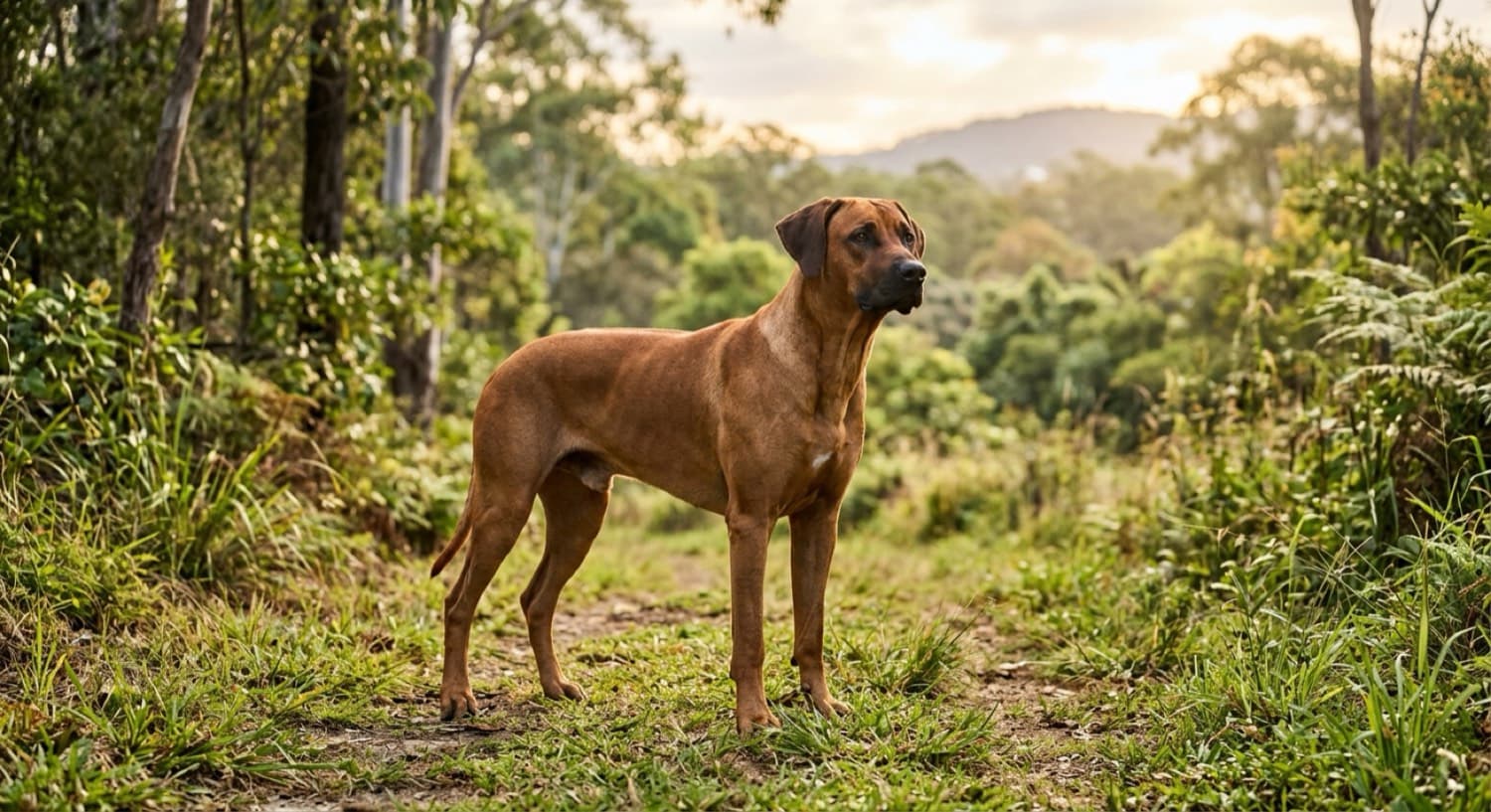
The Rhodesian Ridgeback is a large, powerful hound of around 30 to 40 kilograms, developed in southern Africa as an all-purpose farm dog that could hunt, guard and endure the bush, sometimes used in packs to track and bay up big game, which is the origin of its old nickname, the African lion dog. Its hallmark is the ridge: a strip of hair along the back that grows in the opposite direction to the rest of the coat. The coat itself is short, dense and low-maintenance, usually wheaten.
The temperament follows the history. A Ridgeback is intelligent, independent, confident and strong-willed, deeply loyal and affectionate with its family but aloof and watchful with strangers, and naturally protective. It is athletic and needs real exercise, and it thinks for itself rather than living to please, which is what makes training a Ridgeback a genuine project rather than a formality. This is a magnificent dog in the right hands and a real handful in the wrong ones, which the training and exercise guide below covers in full.
Why Ridgebacks reach rescue
- More dog than expected. Under-exercised or under-trained, a powerful independent hound develops problem behaviours, and owners who took on the look without the commitment surrender the dog.
- Prey drive conflicts. The strong prey drive can cause trouble in homes with cats or small pets.
- Changed circumstances and breeding situations. Moves, finances and life changes, plus the occasional ex-breeding dog, account for the rest.
The common thread is a mismatch between the breed's needs and the home, not a fault in the dog. A Ridgeback rehomed into an experienced, active household usually flourishes.
Where to look in Brisbane
- RSPCA Queensland. The state body runs its main Animal Care Campus at Wacol plus other South East Queensland centres, with all-inclusive adoptions. Browse at rspcaqld.org.au.
- Animal Welfare League Queensland (AWLQ). A no-kill charity with centres at Willawong, Warra, Beenleigh and Coombabah. Listings at awlq.org.au.
- Breed-specific and hound rescues. Dedicated Ridgeback and large-hound rescues operate in Australia, understand the breed's needs, and assess homes carefully. Contact one directly and expect a thorough process.
- Foster-based rescues. A foster carer can tell you exactly how the individual dog is with children, cats and other dogs, and how it responds to training and exercise, which matters enormously for this breed.
- PetRescue. A national aggregator listing dogs from many smaller Queensland rescues in one place, at petrescue.com.au.
The honest cost comparison
Real first-year costs in Brisbane for a Rhodesian Ridgeback:
| First-year cost | Rescue Ridgeback | Breeder Ridgeback |
|---|---|---|
| Adoption fee or purchase price | $400 to $700 | $2,000 to $4,000+ |
| Desexing (large breed) | Included | $350 to $700 |
| Microchipping | Included | $60 to $80 |
| First-year vaccinations | Included | $250 to $400 |
| Initial vet check | Included | $100 to $200 |
| Council registration (reduced fee if desexed and microchipped) | Set by your council | Set by your council |
| Year 1 food (large breed) | $800 to $1,500 | $800 to $1,500 |
| Secure fencing / gear (bed, lead, harness, long line) | $300 to $700 | $300 to $700 |
| Parasite prevention (paralysis tick, flea, worm, heartworm) | $350 to $650 | $350 to $650 |
| Reward-based training (important for this breed) | $250 to $600 | $250 to $600 |
| Pet insurance (recommended) | $700 to $1,300 | $700 to $1,300 |
| Year 1 total (excluding council fee) | $3,750 to $6,650 | $5,660 to $10,130+ |
Two lines are worth extra thought for this breed: secure fencing, because an athletic, driven Ridgeback needs containment it cannot jump or push through, and training, which is not optional for a strong-willed hound. Both are covered in the Ridgeback exercise and prey drive guide.
Browse Rhodesian Ridgebacks in Brisbane rescue
Purebred Ridgebacks are uncommon in rescue, so crosses and older dogs appear more often. Live listings from Brisbane shelters and Queensland rescues, with foster carer notes on temperament, training and prey drive.
See Available Rhodesian Ridgebacks →Is a Ridgeback right for your Brisbane home?
A Rhodesian Ridgeback suits an experienced, active owner or household with the time and commitment for a large, driven dog: daily vigorous exercise, ongoing reward-based training, secure fencing, and the confidence to lead an independent breed calmly and consistently. It can be excellent with a family and its own children when raised and socialised well, though its size and exuberance mean supervision around very small children. It is a poor match for a first-time owner, a low-activity or frequently-absent household, an unfenced or insecurely-fenced property, or a home with cats or small pets the dog has not been raised with. Meet the individual dog, be honest about your experience and activity level, and lean on the foster carer's and rescue's guidance.
Whatever the breed, the first month home is a decompression period. The 3-3-3 rule is a useful guide: roughly three days to decompress, three weeks to start showing personality, three months to fully settle. With a Ridgeback, calm structure and clear routine from day one pay off.
Registering your Ridgeback in Queensland, and scams
Council registration is a separate legal step from adoption. Under the Animal Management (Cats and Dogs) Act 2008, a dog must be microchipped before 12 weeks of age or before it changes hands, and registered with your local council from 12 weeks, with a reduced rate for a desexed and microchipped dog; check the current fee on your council's page, for example Brisbane City Council. On scams, any dog born on or after 26 May 2017 that is advertised must display a Queensland Dog Breeder Register supply number and a microchip number, so a listing with neither is a red flag, and a valuable breed offered cheap or free with a deposit or transport-fee story is the classic scam Scamwatch warns about. Brisbane after-hours emergencies are handled by hospitals such as Animal Emergency Service at Jindalee and Underwood.
Frequently Asked Questions
Can you adopt a Rhodesian Ridgeback in Brisbane?
You can, though purebred Ridgebacks are not common in rescue and crosses and older dogs appear more often than young purebred ones. When one does need rehoming it comes through RSPCA Queensland, Animal Welfare League Queensland, the foster-based rescues, a breed-specific Ridgeback or hound rescue, and PetRescue, which lists dogs from many smaller Queensland rescues in one place. Because this is a powerful, high-drive breed often surrendered for behaviour that comes from under-exercise or inexperience rather than a bad nature, read the foster notes closely, and be ready to show you can meet its exercise and training needs.
How much does it cost to adopt a Rhodesian Ridgeback in Brisbane?
Adoption fees run about $400 to $700 for an adult, with desexing, microchipping, vaccination and a vet check already included. A breeder Rhodesian Ridgeback typically costs $2,000 to $4,000 or more. On top of the adoption fee, budget for the real ongoing costs of a large, athletic dog: more food than a medium breed, secure fencing, and giant-to-large-breed veterinary costs. Pet insurance taken out early is worth it, because the breed has some significant health risks. The upfront saving over a breeder is real, but the lifetime cost of a large active dog is what to plan around.
Are Rhodesian Ridgebacks good for first-time owners?
Generally no, and this is the honest heart of the breed. The Rhodesian Ridgeback is intelligent, independent, strong-willed and physically powerful, bred in southern Africa as a versatile hunting and guarding dog, and it needs an owner who can provide firm, consistent, reward-based training, real daily exercise, and confident leadership. Without that it can become bored, destructive or difficult to manage, which is exactly why some end up in rescue. It is aloof with strangers and naturally protective, and it has a strong prey drive. For an experienced, active owner it is a magnificent, loyal companion; for a first-time or low-activity household it is usually too much dog.
Why do Rhodesian Ridgebacks end up in rescue?
Most often because the breed was more dog than the household expected. A powerful, high-energy, independent hound that is under-exercised or under-trained can develop problem behaviours, and owners who took on the look without the commitment sometimes surrender the dog. Others come to rescue through changed circumstances, and some from breeding situations. The strong prey drive can also cause conflict in homes with cats or small pets. Almost none of it reflects a bad temperament, and a Ridgeback that lands in the right experienced home, with enough exercise and clear training, typically thrives.
How does a Rhodesian Ridgeback handle the Brisbane heat?
Better than most large breeds, which is a genuine plus for a Queensland dog. The Ridgeback was developed in the African bush and has a short, dense coat and a lean, athletic build suited to warm climates, so it copes with the SEQ heat far better than a thick-coated or flat-faced breed. That said, it is still a dog: exercise in the cool of the morning and evening rather than the midday heat, provide shade and constant water, never leave it in a car, and keep up year-round paralysis-tick prevention. Its heat tolerance means the real management challenge with a Ridgeback is exercise and training, not cooling.
How can I tell if a Ridgeback advertised online is a scam?
In Queensland, any dog born on or after 26 May 2017 that is sold, given away or advertised must display a breeder supply number from the Queensland Dog Breeder Register, and every dog must be microchipped before it changes hands, so a listing with no supply number and no microchip number is a red flag. Ridgebacks are valuable and sought-after, which makes them scam bait, so be wary of a cheap or free purebred puppy with a story about being interstate, a deposit or a transport fee, the classic setup Scamwatch warns about. Adopting through a verified Queensland rescue avoids the problem entirely.
Keep reading
Adoptable Rhodesian Ridgebacks in Brisbane
Live listings with foster carer notes on temperament, training and prey drive.
Ridgeback Exercise & Prey Drive
Daily exercise needs, secure fencing, prey drive and recall, and training an independent hound.
Rhodesian Ridgeback Health Issues
Hip and elbow dysplasia, dermoid sinus, bloat, thyroid and other conditions to watch.
Brisbane Adoption Resources
Guides on adopting, costs, council rules and settling a rescue dog in Brisbane.