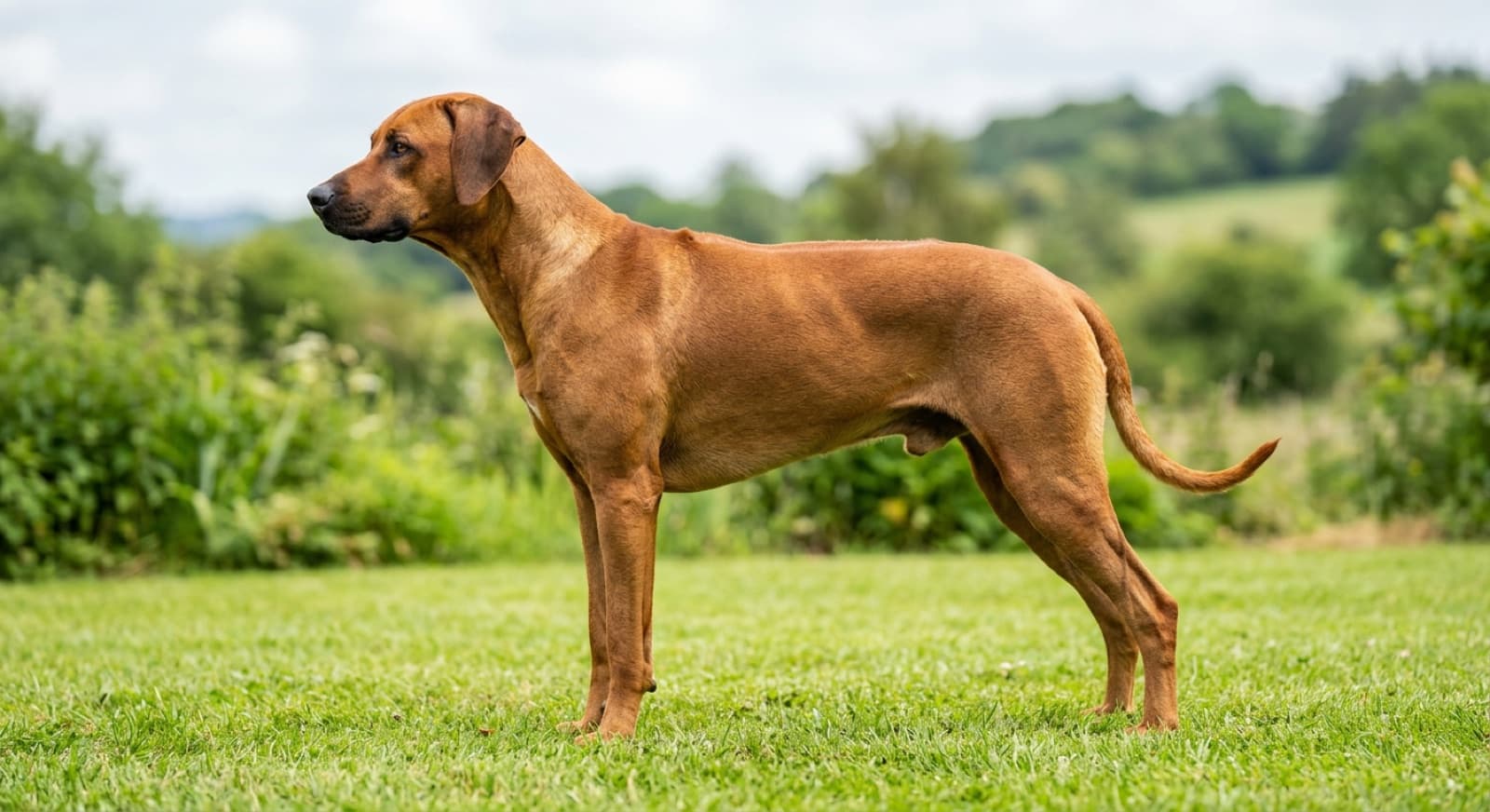
The short answer
The Rhodesian Ridgeback is a relatively robust large breed that often lives around ten to twelve years, but it is prone to hip and elbow dysplasia, to the breed-specific congenital condition dermoid sinus (a skin tube along the back, usually found and treated in puppies), and to bloat because it is deep-chested. Hypothyroidism and degenerative myelopathy are also seen, and certain cancers occur as in many breeds. Responsible breeders screen for the heritable conditions; a rescue Ridgeback should get a full vet check. Because the big costs are unpredictable, pet insurance taken out early, before any condition is on record, is the most valuable safeguard, paired with weight control, sensible exercise and regular check-ups. The short African coat handles the SEQ heat well. This is general information, not veterinary advice.
Hip and elbow dysplasia
Like most large, athletic breeds, the Ridgeback can develop hip and elbow dysplasia, malformations of the joint that lead to arthritis, pain and lameness. Responsible breeders hip and elbow score their breeding dogs (screening described by the Orthopedic Foundation for Animals), which is why the paperwork matters when buying, and a rescue Ridgeback benefits from a vet assessment of its joints. Management ranges from weight control and appropriate exercise to joint support, pain relief and, in severe cases, surgery. For such an active breed, keeping the dog lean and building fitness sensibly, and crucially not over-exercising a growing puppy, is the biggest lever an owner controls.
Dermoid sinus: the breed-specific one
Dermoid sinus is the condition most particular to the Rhodesian Ridgeback. It is a congenital defect, a narrow tube of skin that forms during embryonic development and runs inward from the surface of the back, in some cases connecting toward the spinal cord, and it is linked to the same genetics that produce the breed's signature ridge. It is usually identified in puppies, treated surgically where present, and can become infected if left, so it needs veterinary care. For someone adopting an adult rescue Ridgeback, the practical takeaway is simply to ensure a thorough vet check; a dog that has reached adulthood without related problems has generally already been assessed, and reputable breeders screen newborn puppies for it.
Bloat (gastric dilatation-volvulus)
As a deep-chested breed, the Ridgeback is at real risk of bloat, where the stomach fills with gas and can twist, cutting off blood supply. It is a life-threatening emergency requiring immediate surgery, and it kills quickly. Learn the signs now, before you ever need them: a swollen, hard belly, unproductive retching, restlessness and pacing, drooling and obvious distress. Reduce the risk by feeding measured meals rather than one large one, using a slow feeder if the dog gulps, and avoiding hard exercise right after eating. Know your nearest emergency hospital in advance, and treat any suspected bloat as a get-to-a-vet-now situation rather than waiting to see if it passes.
Thyroid disease, degenerative myelopathy and cancer
- Hypothyroidism. An underactive thyroid, seen in the breed, causing gradual weight gain, lethargy, coat and skin changes and cold intolerance. It is diagnosed with a blood test and managed very effectively with lifelong daily medication.
- Degenerative myelopathy. A progressive, non-painful spinal cord disease seen in older dogs, causing gradual hind-limb weakness. There is a DNA test for the associated gene, and supportive care and physiotherapy help maintain quality of life.
- Cancer. As in many breeds, various cancers occur; report any unexplained lump, weight loss, persistent lethargy or lameness that does not resolve to your vet promptly, since early attention gives the best options.
The RSPCA Knowledgebase and your vet are good plain-language references on these conditions and on what regular preventive care should look like.
The Brisbane climate is on your side here
Unusually for a large breed, heat is not a major health worry for a Ridgeback. Its short, dense coat and lean, athletic build come from a warm-climate origin, so the breed copes with the SEQ heat far better than a thick-coated or flat-faced dog. Sensible timing still applies, exercise in the cool of the early morning and evening, provide shade and water, and never leave the dog in a car, but you are not fighting the dog's own biology the way you would with a Bernese or a Bulldog. Keep up year-round paralysis-tick prevention, since ticks are a risk across South East Queensland regardless of coat length, and run your hands over the dog regularly to check.
Thinking about a Rhodesian Ridgeback in Brisbane?
A rescue Ridgeback comes with a vet check and honest foster notes, so you adopt knowing the dog. Browse Rhodesian Ridgebacks and crosses available in Brisbane and Queensland rescue.
See Available Rhodesian Ridgebacks →Frequently Asked Questions
What health problems are Rhodesian Ridgebacks prone to?
The main ones are hip and elbow dysplasia (like most large breeds), the breed-specific congenital condition dermoid sinus, gastric dilatation-volvulus (bloat) because the breed is deep-chested, hypothyroidism, and degenerative myelopathy in older dogs. Some cancers also occur, as in many breeds. On the whole the Ridgeback is a reasonably robust, athletic breed and often lives around ten to twelve years, longer than the giant breeds, but the conditions above are worth knowing and screening for. A rescue Ridgeback should have a full vet check, and this is general information rather than veterinary advice.
What is dermoid sinus in a Rhodesian Ridgeback?
Dermoid sinus is a congenital condition particularly associated with the breed, a narrow tube of skin that forms during development and runs inward from the surface of the back, sometimes connecting toward the spinal cord. It is linked to the same genetics that give the breed its ridge. It is usually detected in puppies and, where present, is treated surgically, and it can become infected if not addressed, so it needs veterinary attention. For an adopter, the practical point is simply to have any Ridgeback vet-checked; a rescue dog that has reached adulthood without problems has typically already been assessed, and a reputable source screens puppies for it.
Are Rhodesian Ridgebacks at risk of bloat?
Yes. As a large, deep-chested breed the Ridgeback is at risk of gastric dilatation-volvulus (bloat), where the stomach fills with gas and can twist, cutting off blood supply. It is a life-threatening emergency requiring immediate surgery. Learn the signs, a swollen hard belly, unproductive retching, restlessness, drooling and obvious distress, feed measured meals rather than one large one, use a slow feeder if the dog gulps, avoid heavy exercise right after eating, and know your nearest emergency hospital before you ever need it. In Brisbane, after-hours emergencies are handled by hospitals such as Animal Emergency Service at Jindalee and Underwood. Bloat is a get-to-a-vet-now situation.
Do Rhodesian Ridgebacks get hip and elbow dysplasia?
Yes, like most large, athletic breeds they can develop hip and elbow dysplasia, malformations of the joint that lead to arthritis, pain and lameness. Responsible breeders hip and elbow score their breeding dogs, which is why the screening paperwork matters when buying, and a rescue Ridgeback benefits from a vet assessment. Management ranges from keeping the dog lean and appropriately exercised, to joint support and pain relief, to surgery in severe cases. Because the breed is so active, keeping a Ridgeback at a healthy weight and building fitness sensibly, especially avoiding over-exercising a growing pup, is the biggest thing an owner controls.
What is hypothyroidism, and how would I spot it?
Hypothyroidism is an underactive thyroid gland, seen in the breed, where too little thyroid hormone is produced. The signs are often gradual and easy to miss: weight gain without more food, lethargy, a poor or thinning coat, skin problems and cold intolerance. It is diagnosed with a blood test and managed very effectively with lifelong daily medication, so a dog does well once it is picked up. If your Ridgeback becomes unexpectedly sluggish, gains weight, or develops coat or skin changes, ask your vet about a thyroid test. It is one of the more manageable conditions on this list once diagnosed.
Is pet insurance worth it for a Rhodesian Ridgeback?
For most owners, yes, and it is easiest to arrange before any condition appears, because insurers exclude pre-existing conditions. A Ridgeback’s potential issues, joint surgery, bloat emergency surgery, dermoid sinus treatment, or cancer care, can each run into the thousands, and a rescue dog’s history is often unknown. Take out cover as soon as you adopt, read the waiting periods and exclusions, and pair insurance with the preventive basics, weight control, sensible exercise, year-round parasite prevention and regular check-ups, which keep an athletic breed healthy. The Ridgeback’s general robustness and good heat tolerance help, but insurance protects against the big, unpredictable costs.
Keep reading
Adoptable Rhodesian Ridgebacks in Brisbane
Live listings with foster carer notes on temperament, training and prey drive.
Rhodesian Ridgeback Adoption in Brisbane
Where to look, why they reach rescue, real costs, and whether one suits your home.
Ridgeback Exercise & Prey Drive
Daily exercise needs, secure fencing, prey drive and recall, and training an independent hound.
Brisbane Adoption Resources
Guides on adopting, costs, council rules and settling a rescue dog in Brisbane.