The short answer
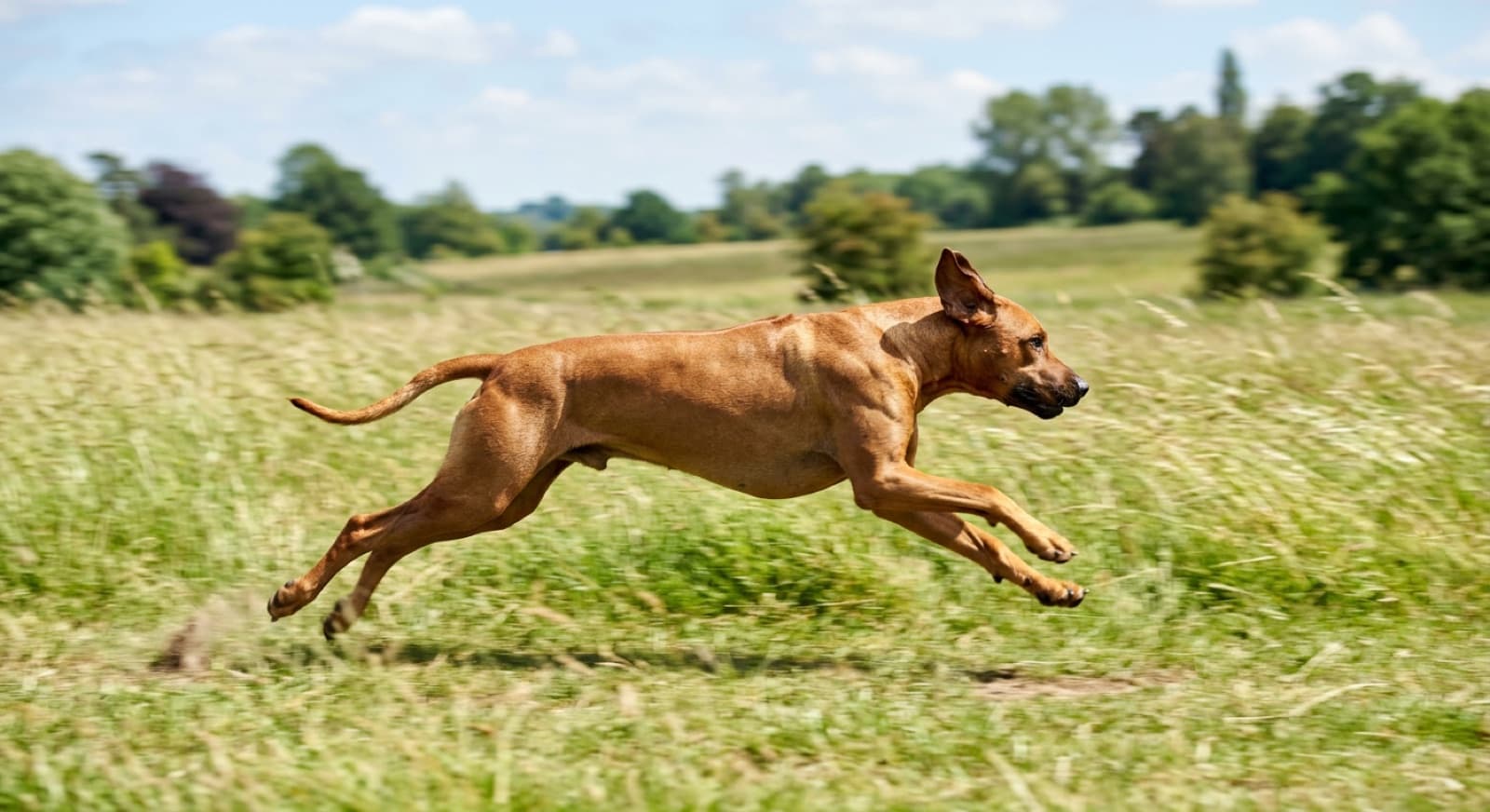
An adult Rhodesian Ridgeback needs one to two hours of daily exercise, combining walking or running with safe off-lead running and mental stimulation; under-exercise is where the breed's behaviour problems begin. It has a strong prey drive, so recall can be unreliable when a chase is triggered, introductions to cats and small pets must be careful, and off-lead freedom has to be earned with reward-based training and managed with a long line. Secure, tall fencing (around 1.8 metres, no gaps) is essential for an athletic, escape-capable dog. Train with patience, consistency and positive reinforcement, never harsh methods, because this is an intelligent but independent hound. In Brisbane, shift vigorous exercise to the cool of the morning and evening; the short African coat handles the heat well, so timing, not cooling, is the adjustment.
How much exercise, and what kind
The Ridgeback was bred for endurance in the African bush, and it needs real physical work as an adult: roughly one to two hours a day, combining a solid walk or run with the chance to run off-lead in a safe, contained space, plus mental stimulation. Physical exercise alone is not enough for a clever hound; scent games, training sessions, puzzle feeders and problem-solving tire the mind and are what actually settle the breed at home. An under-exercised, under-stimulated Ridgeback becomes bored, and a bored powerful dog finds its own outlets, digging, chewing, escaping, pacing, which is where most surrenders begin.
Puppies and adolescents are the exception: their exercise should be carefully limited to protect growing joints in a large breed, so follow your vet's guidance on appropriate amounts by age rather than running a young dog hard. In Brisbane, schedule the vigorous work for the cool of the early morning and evening.
The prey drive, and what it means day to day
A Ridgeback carries a significant prey drive from its hunting heritage, and it is one of the defining practical facts of living with the breed. It means the dog may chase cats, small pets and wildlife, and in Australia that includes possums, hares, birds and more. Two consequences follow:
- Living with small animals. Introductions to cats and small pets must be careful, gradual and supervised, and some Ridgebacks never become reliably safe with them. A dog raised alongside a cat can do well, but never assume an unknown dog is safe with small animals without knowing its history, which is one reason a foster carer's notes are so valuable.
- Off-lead freedom. A dog in full chase does not hear you, so recall has to be genuinely reliable and off-lead freedom managed carefully, never near roads, livestock or wildlife the dog might pursue.
Recall and secure fencing
Recall in an independent, prey-driven hound is often less reliable than in a biddable breed, so build it patiently with reward-based training from day one, practise first in a securely fenced area, and use a long line in open spaces while recall is developing. Trust off-lead freedom only in fully enclosed dog areas or once you are genuinely confident.
Containment at home matters just as much. A Ridgeback is a powerful athlete that can jump and, when bored or triggered by prey, will test a boundary, so fencing needs to be tall and solid, around 1.8 metres, in good repair, with no gaps to push through, nothing alongside to climb, and a base a digger cannot get under. Secure fencing is not only about keeping the dog in; for a prey-driven breed it protects local wildlife and neighbouring pets too. If you cannot reliably contain a large, athletic dog, this is not the right breed for your property.
Training an independent hound
The Ridgeback is intelligent but independent, and that combination is what people mean when they call the breed a challenge to train. It learns quickly, but it thinks for itself and will not work simply to please you, so training rewards the right approach and punishes the wrong one. Use patient, consistent, positive reinforcement, and avoid harsh or heavy-handed methods, which tend to make an aloof, sensitive breed shut down or dig in; the RSPCA Knowledgebase is a good reference on reward-based training and why it works. Start socialisation and training early and keep it going, make sessions short, rewarding and interesting, and set clear boundaries that everyone in the household maintains the same way. A confident, force-free trainer experienced with independent or hound breeds is a good investment for a first Ridgeback.
The payoff is real: a well-exercised, well-trained Ridgeback is a calm, dignified, affectionate companion at home, precisely because its considerable needs are being met. The work is the price of the breed, and it is why Ridgebacks suit experienced, committed owners.
Meet a Rhodesian Ridgeback in Brisbane rescue
If you can offer the exercise, the secure fencing and the training this breed needs, a Ridgeback is a magnificent companion. Browse Rhodesian Ridgebacks and crosses available in Brisbane and Queensland rescue, with foster notes on temperament and prey drive.
See Available Rhodesian Ridgebacks →Frequently Asked Questions
How much exercise does a Rhodesian Ridgeback need?
A lot. An adult Ridgeback is an athletic hound bred for endurance, and it needs substantial daily exercise, in the order of one to two hours, combining a good walk or run with off-lead running in a safe, contained space and mental stimulation. A single stroll around the block is nowhere near enough, and an under-exercised Ridgeback is where most behaviour problems start. In Brisbane, do the vigorous work in the cool of the early morning and evening rather than the midday heat. Puppies need their exercise carefully limited to protect growing joints, so follow your vet’s guidance on how much is appropriate at each age.
Do Rhodesian Ridgebacks have a strong prey drive?
Yes, a significant one, because the breed was developed to hunt and pursue game. That means a Ridgeback may chase cats, small pets, or wildlife, and Australian wildlife such as possums, hares and birds can all trigger it. In practice it means two things: introductions to cats and small animals must be careful and supervised, and some Ridgebacks never become safe with them; and off-lead freedom has to be earned and managed, because a dog in full chase does not hear you. A Ridgeback can live happily with a cat it was raised alongside, but you should never assume a given dog is safe with small animals without knowing its history.
Can you let a Rhodesian Ridgeback off the lead?
Only with a reliable recall and in a genuinely safe place, and even then with realism about the breed. Ridgebacks are independent and driven, and a strong prey stimulus can override training, so recall in the breed is often less reliable than in a biddable dog like a Labrador. Build recall patiently with reward-based training from day one, practise in a securely fenced area first, use a long line in open spaces while recall is developing, and only trust off-lead freedom in fully enclosed dog areas or when you are confident. Never let a Ridgeback off lead near roads, livestock or wildlife it might chase. Managing this well is central to owning the breed.
What kind of fencing does a Rhodesian Ridgeback need?
Secure, tall and solid. A Ridgeback is a powerful athlete that can jump and, when motivated by boredom or prey, will test a boundary, so a low or flimsy fence is not enough. Aim for a fence around 1.8 metres, in good condition, with no gaps a determined dog can push through and nothing beside it to climb on. Check the base too, as some dogs dig. Good containment is not just about keeping the dog in; in a prey-driven breed it is a safety issue for the dog and for local wildlife and pets. If you cannot securely contain a large athletic dog, a Ridgeback is not the right breed for your property.
Are Rhodesian Ridgebacks hard to train?
They are intelligent but independent, which is different from difficult. A Ridgeback learns quickly but thinks for itself and will not work simply to please you the way some breeds do, so training rewards patience, consistency and positive reinforcement, and punishes harsh or heavy-handed methods, which tend to make an aloof, sensitive breed shut down or resist. Start training and socialisation early and keep it up, make it rewarding and interesting, and set clear, consistent boundaries the whole household maintains. A well-trained Ridgeback is a calm, dignified companion; the work to get there is real, which is exactly why the breed suits experienced owners.
Does a Ridgeback’s exercise change in the Brisbane heat?
The timing does, not the amount. The Ridgeback handles heat better than most large breeds thanks to its short African coat and lean build, but it is still a dog in a subtropical climate, so shift the vigorous exercise to the cool of the early morning and evening, carry water, and avoid hard running in the midday heat and humidity. Watch the pavement, since hot ground burns paws. On very hot days, lean more on mental enrichment, such as scent games, training and puzzle feeders, which tire a clever hound without overheating it. The breed’s heat tolerance is a real Queensland advantage, but common-sense timing still applies.
Keep reading
Adoptable Rhodesian Ridgebacks in Brisbane
Live listings with foster carer notes on temperament, training and prey drive.
Rhodesian Ridgeback Adoption in Brisbane
Where to look, why they reach rescue, real costs, and whether one suits your home.
Rhodesian Ridgeback Health Issues
Hip and elbow dysplasia, dermoid sinus, bloat, thyroid and other conditions to watch.
Brisbane Adoption Resources
Guides on adopting, costs, council rules and settling a rescue dog in Brisbane.