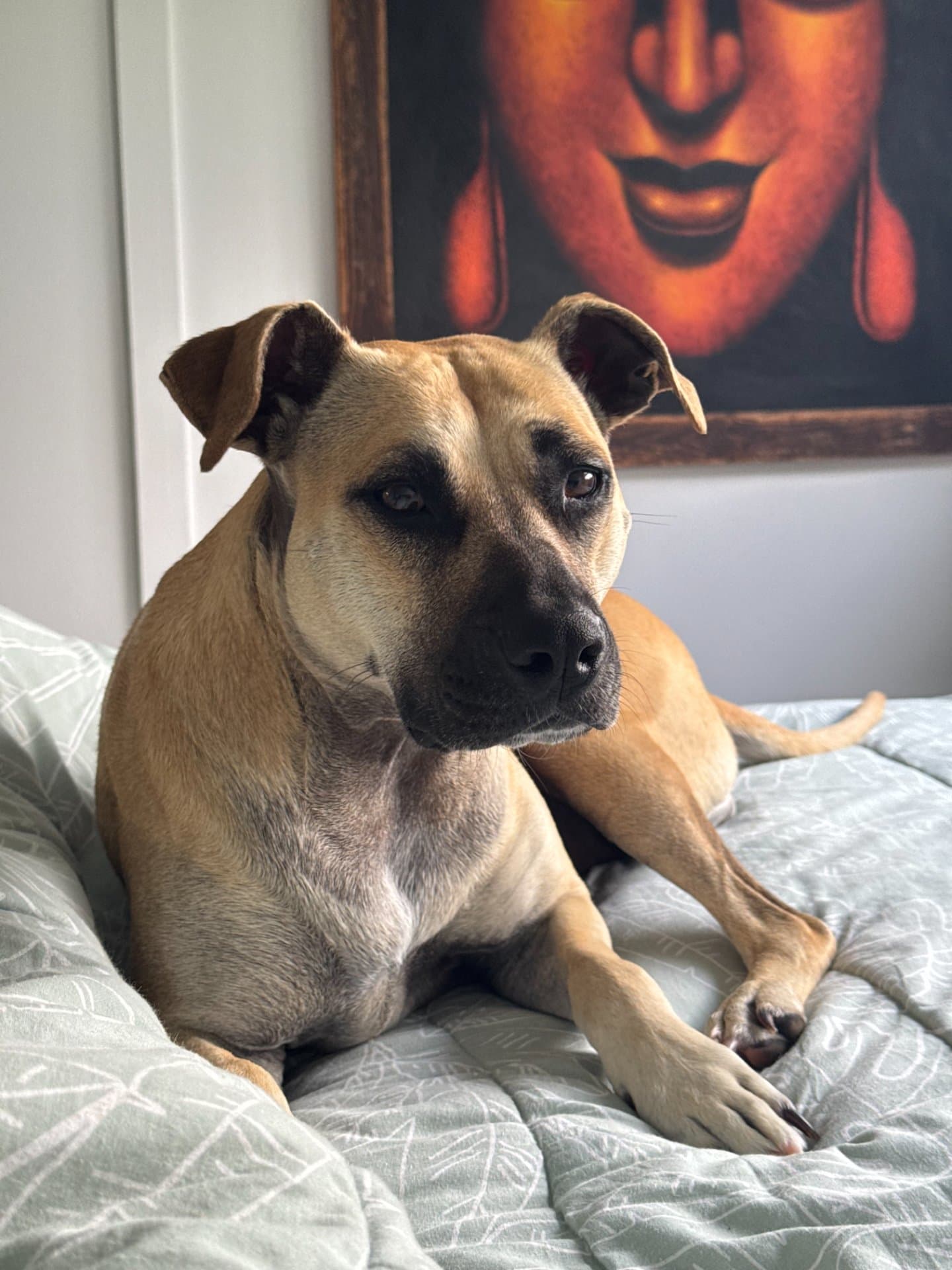
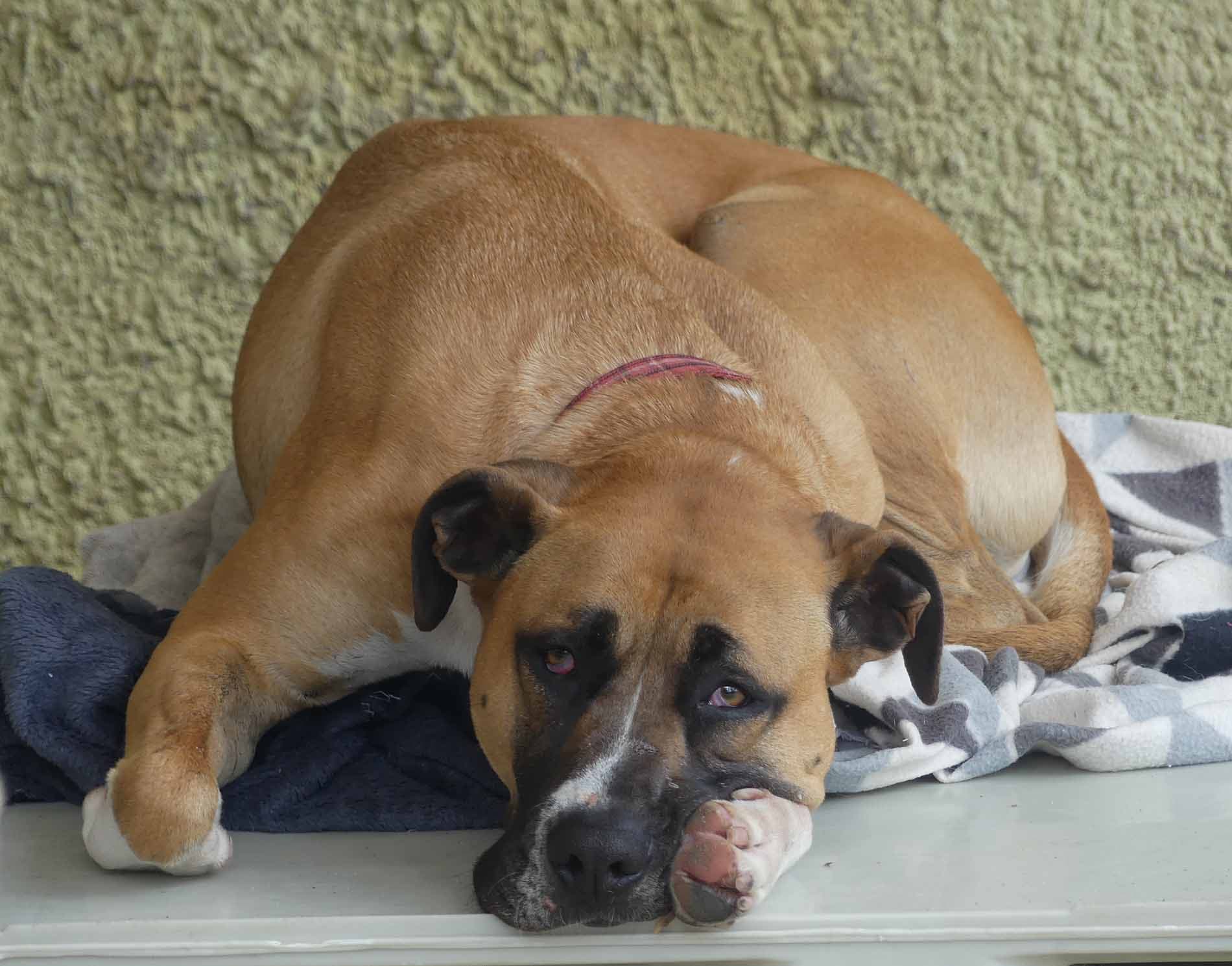
Marlin
About 3 years old • Labrador X Ridgeback
The Rhodesian Ridgeback is a large, athletic hound bred in southern Africa to track and bay lions, and that heritage shows in a powerful, independent, strong-willed dog with real prey drive. Ridgebacks reach Sydney rescue when owners underestimate the size, energy and independence, or cannot provide the secure containment and exercise the breed needs. These are striking, capable dogs that ask for an experienced owner.
A Ridgeback needs a confident handler, early socialisation, patient reward-based training and plenty of exercise, and its strength and prey drive mean secure high fencing and a lead in unfenced areas are essential. Independent by nature, the breed is loyal but not endlessly biddable, so training rewards patience. They are generally quiet indoors and famously devoted to their family, forming strong bonds.
In an active, experienced home with room to run, a Rhodesian Ridgeback is a loyal, dignified and affectionate companion, often good with children in its own family, though care around cats and small animals is wise given the prey drive. Browse the Ridgebacks and Ridgeback crosses listed below from rescues and shelters across Sydney and New South Wales.
Rhodesian Ridgebacks in Sydney rescue
The Rhodesian Ridgeback is a large, athletic African hound, named for the distinctive ridge of backward-growing hair along its spine, and bred to cover ground all day and think for itself. That independence is the whole breed: a Ridgeback is loyal and affectionate with its family, aloof with strangers, and strong-willed enough that it is genuinely not a first dog for most people. Some end up in rescue when a household underestimated the exercise, the training or the sheer physical strength.
A rescue Ridgeback has usually been assessed in a foster home, which is worth leaning on for a breed this powerful and this independent. Ask the carer about recall, prey drive, and how the dog is with children, cats and other dogs, since the strong hunting instinct means compatibility varies a lot by individual.
A strong, independent dog that needs a confident home
Ridgebacks are highly intelligent but not eager to please in the way a Labrador is; they respond to calm, consistent, positive training and shut down under heavy-handedness. They have a strong prey drive that can mean chasing cats or small animals, so secure fencing and reliable recall matter, and at 30 to 40 kilos of muscle, lead manners are not optional. This is a breed for an active, experienced home that will give it real daily exercise and clear, kind boundaries.
On health the breed carries a condition specific to the ridge, dermoid sinus, a congenital defect that reputable breeders check for, along with hip and elbow dysplasia, hypothyroidism and some inherited heart conditions. Ask the rescue what the in-care assessment found, insure the dog young, and raise any specific concern with your vet. A rescue Ridgeback arrives desexed, vaccinated, microchipped and vet-checked.
Living with a Ridgeback in Sydney
One thing the breed handles well is the heat. Its short, dense coat and African origins mean a Ridgeback copes with the Australian summer far better than a heavy-coated breed, though it still needs shade and water on hot days, and the short coat is close to no grooming. The one NSW caveat is the coastal paralysis tick: year-round prevention is essential, but a short-coated dog at least makes the tick check quick.
Under the NSW Companion Animals Act your dog must be microchipped by 12 weeks and registered once for life through the NSW Pet Registry, a single lifetime fee rather than an annual renewal, and lower for a desexed dog. A rescue dog comes to you already desexed and microchipped. Council leash and off-leash rules vary, so it is worth checking your own council's off-leash areas before you adopt.
The Ridgeback is not a restricted breed in New South Wales.
- Strong-willed and independent; not a first dog, and needs calm, consistent, positive training.
- Strong prey drive; secure fencing and reliable recall matter, and it may chase cats.
- Screen the budget for dermoid sinus, hip and elbow dysplasia and thyroid issues.
- Handles the heat well, but the coastal paralysis tick means year-round prevention.
Common Rhodesian Ridgeback health concerns
Breed-associated conditions worth asking any rescue about before you adopt. A good rescue will already know whether a dog has been assessed for these.
Hip and elbow dysplasia
Moderate prevalence; OFA screening is standard for breeding stock.
Source: OFA →Dermoid sinus
A congenital skin-tube defect specific to ridged breeds; surgically correctable when caught.
Source: VCA →Bloat (gastric dilation-volvulus)
A deep-chested breed; feed two smaller meals rather than one large.
Source: ACVS →Editorial summary for adopters, not medical advice. Ask the rescue about a specific dog's health, and consult your vet for individual guidance.
Breed and regulatory information cross-checked against NSW Office of Local Government (Dogs).
Get notified when a Rhodesian Ridgeback is listed
We will email you when a Rhodesian Ridgeback or Rhodesian Ridgeback cross becomes available for adoption in Sydney, from a rescue or an owner rehoming.
Need to rehome a Rhodesian Ridgeback?
If you can no longer keep your Rhodesian Ridgeback, listing it for rehoming on LocalPetFinder connects it directly with adopters across Sydney and NSW, and keeps it out of a shelter. It is free.
List your dog for free →Rhodesian Ridgeback Adoption Guides
The pre-adoption reading list specific to Rhodesian Ridgebacks in Sydney and NSW.
Rhodesian Ridgeback Adoption in Sydney
Where to adopt a Ridgeback in Sydney, what it costs, why they end up in rescue, and whether this powerful hound suits your home.
Rhodesian Ridgeback Health Issues to Plan For
Dermoid sinus, hip and elbow dysplasia, bloat, hypothyroidism and cancer, plus Sydney heat and year-round tick care.
Ridgeback Exercise & Prey Drive
Why recall is hard, the secure fencing they need, safe off-lead choices and the exercise this athletic hound really needs.
Rhodesian Ridgeback Adoption FAQ
Tap a question to expand.
How many Rhodesian Ridgebacks are available for adoption in Sydney?
As of November 2026, Rhodesian Ridgebacks are uncommon in Sydney rescue, only 2 are listed right now across 2 rescues on LocalPetFinder. They are usually adopted quickly, so it is worth applying early or setting an alert.
Where can I adopt a Rhodesian Ridgeback near me in Sydney?
LocalPetFinder lists Rhodesian Ridgebacks available for adoption from rescues across Sydney and New South Wales, including the Inner West, Eastern Suburbs, Northern Beaches, Western Sydney and the Sutherland Shire. Rescues that regularly take in dogs of this type include RSPCA NSW at Yagoona and Animal Welfare League NSW at Kemps Creek, alongside foster-based groups. Listings update regularly, so browse the Rhodesian Ridgebacks above and apply directly through the rescue.
Are there Rhodesian Ridgeback rescues near Sydney?
Yes. Several Sydney and NSW rescues regularly have Rhodesian Ridgebacks and Rhodesian Ridgeback crosses, including RSPCA NSW, Animal Welfare League NSW, Sydney Dogs and Cats Home, Monika's Doggie Rescue and Maggie's Rescue, plus breed-focused foster networks. A dedicated single-breed rescue is not always active, so the fastest path is to set an alert here and watch the general rescues. Use LocalPetFinder to see which rescues currently have Rhodesian Ridgebacks available near you.
Where can I adopt a Rhodesian Ridgeback puppy in Sydney?
Purebred Rhodesian Ridgeback puppies are uncommon in Sydney rescue and are usually adopted very quickly, so the best strategy is to set an alert here and be ready to apply fast. Most Rhodesian Ridgebacks in rescue are young adults, older dogs, or Rhodesian Ridgeback crosses, and these make just as loving a pet as a purebred puppy while often being calmer and already part house-trained. A rescue puppy or young dog costs a few hundred dollars fully desexed, vaccinated and microchipped, against several thousand from a breeder with a waitlist. If you searched "rhodesian ridgeback puppies sydney" or "rhodesian ridgeback puppies for sale", browse the Rhodesian Ridgebacks above and set an alert for new arrivals.
Are these Rhodesian Ridgebacks for sale in Sydney?
Not for sale, for adoption, which is usually the better deal. Every Rhodesian Ridgeback here comes from a Sydney or NSW rescue, not a breeder or classified seller, and the adoption fee already includes desexing, vaccination and microchipping. That fee is typically a few hundred dollars, against often several thousand from a breeder with none of the vet work done. If you searched "rhodesian ridgeback for sale sydney", adopting gets you a vetted dog for a fraction of the price.
Where can I buy a Rhodesian Ridgeback in Sydney, and should I?
You can buy from a registered breeder, but it is worth weighing against adoption first. A reputable breeder often charges several thousand dollars and may have a waitlist, while a rescue Rhodesian Ridgeback costs a few hundred dollars fully vetted and may be available now. Be cautious of cheap "for sale" ads on classified sites and marketplaces, which are a known hotspot for scams and backyard breeding. The ACCC Scamwatch has documented deposit scams for pets that do not exist. For most Sydney families, adopting a rescue Rhodesian Ridgeback is cheaper, faster and gives a dog in need a home.
Are Rhodesian Ridgebacks good family dogs?
In the right home, yes. Ridgebacks are loyal and affectionate with their family and are often devoted to and gentle with their own children, though their size and energy mean supervision around small children is sensible. This is a large, powerful, independent breed that suits an experienced, active household with space, rather than a first-time owner or a small apartment. Care around cats and small animals is wise because of the prey drive.
Do Rhodesian Ridgebacks need a lot of exercise?
Yes. The Ridgeback is an athletic hound with real stamina and needs substantial daily exercise, ideally including secure off-lead running, plus mental stimulation. A bored, under-exercised Ridgeback can become destructive and hard to manage given its size. This is a breed for an active owner who enjoys the outdoors and can commit real time to exercise and training every day.
Are Ridgebacks easy to train?
They are intelligent but independent and strong-willed, so training takes patience, consistency and a confident, kind approach. Reward-based methods work best; harsh handling backfires with the breed. Recall can be unreliable when the prey drive engages, so a lead in unfenced areas and secure fencing at home are essential. Early socialisation is particularly important for such a large, powerful dog.
Are Rhodesian Ridgebacks restricted in NSW?
No. The Rhodesian Ridgeback is not on the NSW restricted-breed list and is legal to own and rehome normally. Like any dog it must be microchipped and registered on the NSW Pet Registry. As a large, strong breed with a working heritage, it benefits from a responsible owner who prioritises secure fencing, lead manners, socialisation and training regardless of the law.
Are Rhodesian Ridgebacks good family dogs?
They can be devoted family dogs, but for an experienced, active household rather than a first-time owner. A Ridgeback is loyal and affectionate with its people and often good with children it is raised alongside, but it is large, strong-willed and independent, with a strong prey drive that means care around cats and small animals. It needs confident, consistent, positive training and real daily exercise. Ask the foster carer how the individual dog is with children and other pets.
Do Rhodesian Ridgebacks handle the heat?
Better than most breeds. The short, dense coat and the breed's African origins mean a Ridgeback copes with the Australian summer well, which is one of the easier things about owning one here. It still needs shade, water and sensible timing of exercise on very hot days, and year-round tick prevention along the NSW coast, but heat itself is far less of a concern for this breed than for a heavy-coated one.