The short answer
Wolf hybrids and wolfdog breeds are not allowed into Australia. The federal agriculture department lists the Czechoslovakian Wolfdog, Saarloos Wolfdog, Lupo Italiano and Kunming Wolfdog, plus any crossbred offspring, as hybrid dogs that cannot be imported, and the environment department says the only hybrid on the Live Import List is the mule. Tasmania goes further: its Nature Conservation Act makes wolves and their hybrids restricted animals. If you want the wolf look legally, choose a recognised breed such as the Siberian Husky, Alaskan Malamute, Samoyed, German Shepherd Dog or Norwegian Elkhound, and expect a strong, high-energy dog that needs secure fencing and a summer heat plan. Many are waiting in rescue.
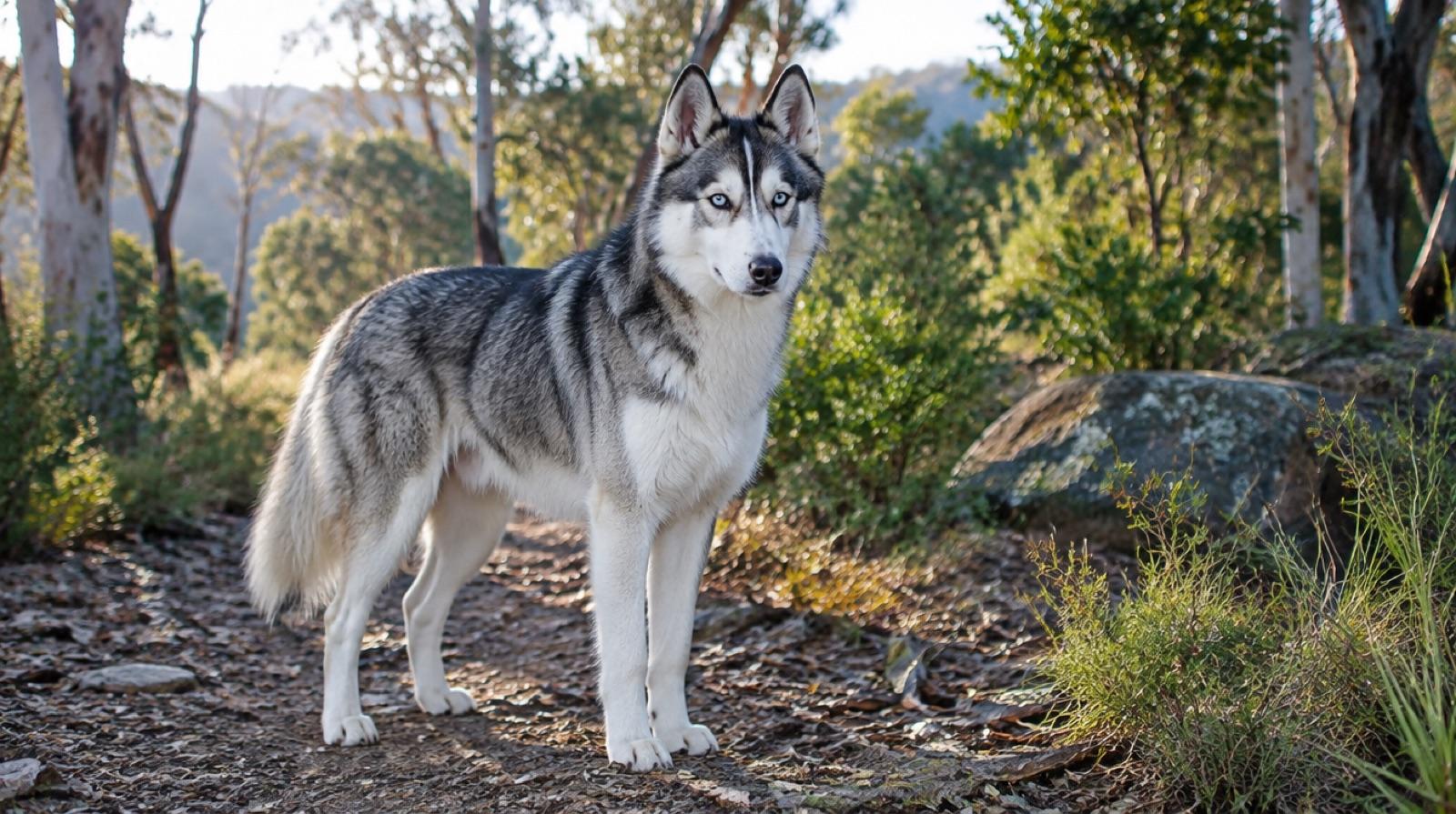
Can you own a wolf dog in Australia?
Not a true one. A wolf dog (also written wolfdog) usually means one of two things: a hybrid bred from a wolf and a domestic dog, or a breed that was created from wolf-dog crosses, such as the Czechoslovakian Wolfdog. Australia does not allow either into the country.
The Department of Agriculture, Fisheries and Forestry (DAFF) dog import guide says some hybrid dogs, domestic and non-domestic, are not allowed into Australia, and that these bans come from environmental protection and customs laws rather than biosecurity law. It lists hybrid dogs not allowed in, “including, but not limited to, these breeds and any crossbreed offspring from them”:
- Czechoslovakian Wolfdog or Czechoslovakian Vlcak
- Saarloos Wolfdog or Saarloos Wolfhound
- Lupo Italiano or Italian Wolfdog
- Kunming Wolfdog or Kunming Dog
DAFF sends hybrid questions to the Department of Climate Change, Energy, the Environment and Water (DCCEEW), and says that if an imported dog is identified as possibly being a hybrid after arrival, DCCEEW may investigate further.
What does the law actually say about wolf hybrids?
The rule that matters is the Live Import List. Under the federal Environment Protection and Biodiversity Conservation Act 1999, a live animal can be imported only if it appears on that list. The list compiled on 28 January 2026 includes the domestic dog (Canis lupus familiaris) and the dingo, but not the wolf and not any wolf-dog hybrid. Since 1 July 2026 the Live Import List has been administered by the new National Environmental Protection Agency (National EPA), which says the only hybrid on the list is the mule/hinny.
DCCEEW's guidance on hybrid animals spells out the policy: hybrids are not permitted “unless specifically listed on the Live Import List”, and this applies “irrespective of generational distance from the original mating or wild ancestor”. It also says that registering a dog-wild animal cross as a breed with a registration body “is not accepted by the department as evidence the animal is not a hybrid.” Where ancestry is in doubt, the importer has to prove the animal is not a hybrid.
DCCEEW's household pets page names wolfdogs (wolf crossed with domestic dog) as a hybrid, says all hybrids must pass a risk assessment before they can be listed, and states that “the only hybrid on the Live Import List is the mule/hinny”. It specifically mentions Czechoslovakian vlcaks: even if overseas groups recognise them as a breed, they cannot be imported unless they are on the list.
There has been one formal attempt to change this. In 2023 DCCEEW put an application to list the Czechoslovakian Wolfdog out for public comment, with comments closing on 8 March 2023. As of the January 2026 compilation, the breed was not on the list.
Do any states have their own rules?
The import ban is federal, so it covers every state and territory. Tasmania also has its own rule. Section 32 of Tasmania's Nature Conservation Act 2002 defines a “restricted animal” as a fox, wolf, dingo or mink, or “a hybrid” of any of them. Bringing one into the state or having one in your possession needs the Secretary's prior written permission, and the Act says that permission may only be given as part of a program to manage feral populations. Biosecurity Tasmania puts it simply: dingoes, foxes and wolves are prohibited entry.
Other states regulate exotic animals through their own wildlife and biosecurity laws, and DCCEEW notes that states and territories set rules on keeping exotic animals within their borders. If you are unsure whether a particular dog is legal where you live, ask your state environment or primary industries department before you take it home, not after.
Which legal dog breeds look like wolves?
Several breeds recognised by Dogs Australia have the upright ears, wedge-shaped head, thick coat and grey or sable colouring people mean by “wolf-like”. Every figure and quote below comes from the breed's Dogs Australia standard.
| Breed | Size (males) | Wolf-like features | Temperament (standard) |
|---|---|---|---|
| Siberian Husky | 53.5 to 60 cm, 20 to 27 kg | Erect ears, double coat; black, grey, agouti, sable, red and white allowed | “Friendly and gentle, but also alert and outgoing” |
| Alaskan Malamute | 63.5 cm, 38.5 kg (desirable size) | Heavy build, light grey to black or sable to red, white face markings | “an affectionate, friendly dog, not a ‘one man’ dog” |
| German Shepherd Dog | 60 to 65 cm, 30 to 40 kg | Erect pointed ears, wedge-shaped head; grey sables with dark shadings allowed | “well balanced temperament, steady of nerves, self assured” |
| Norwegian Elkhound | 52 cm, about 23 kg | “Grey of various shades” with black tips; tail curled over the back | “Friendly, intelligent and independent” |
| Samoyed | 51 to 56 cm | Erect ears, heavy coat; pure white, white and biscuit, or cream | “intelligent, alert, full of action but above all displaying affection towards all mankind” |
Breed standards describe the ideal show dog. Individual dogs, and especially rescue crosses, vary, so judge the dog in front of you. Standards checked 9 to 10 November 2026.
How do the wolf-like breeds differ?
Siberian Husky. The Husky standard describes a medium-sized sled dog that carries “a light load at a moderate speed over great distances”. Blue or odd eyes are allowed, which adds to the wolf look. It is sociable with people and other dogs but bred to run, so fencing and recall are the big challenges.
Alaskan Malamute. The Malamute standard calls it a “powerful and substantially built dog” for heavy freighting, and treats blue eyes as a disqualifying fault. It is the closest to a wolf in bulk and the hardest to handle on lead. Our Husky vs Malamute guide compares the two in detail.
German Shepherd Dog. The German Shepherd standard lists the breed's purpose as “Versatile Utility, Herding, Guard and Service Dog” and describes it as “attentive and easy to train”. Grey sables look the most wolf-like. White is not a permitted colour in this standard.
Norwegian Elkhound. The Elkhound standard describes “a hardy hunting Spitz with a bold energetic disposition” in shades of grey with a pale grey undercoat. It is smaller than the others and has a tightly curled tail, but the grey coat and pointed ears give it the wolf look.
Samoyed. The Samoyed standard describes a strong, active working dog for cold climates with a heavy, weather-resisting coat. People who picture a white Arctic wolf often mean this breed. The coat needs serious brushing; our Samoyed puppies guide covers what to ask a breeder or rescue.
All five breeds have a dense undercoat, and the four northern breeds carry the heavy coat of a cold-climate dog, so the RSPCA heatstroke advice applies year after year: exercise at the coolest times of day, give constant shade and water, and never leave the dog in a car. The German Shepherd has its own heat management guide.
Why do wolf-look dogs end up in rescue?
The looks that draw people to these breeds come with traits that are easy to underestimate. These are the traits that often lead to Huskies, Malamutes and German Shepherds being given up:
- Escaping and digging. Sled dogs were bred to run, and many owners discover their fence was not built for one. The Husky escape and exercise guide covers fencing that holds.
- Exercise needs. A bored working dog is often a destructive one, and a short walk around the block rarely satisfies these breeds.
- Size and strength. A Malamute or large German Shepherd that pulls on the lead can be hard for some owners to walk safely.
- Shedding and heat. Double coats drop a lot of hair, and owners in hot, humid areas can struggle in summer.
For an adopter, that is an advantage. An adult dog in foster care has already shown how it handles fences, heat, other dogs, cats and time alone. The RSPCA Knowledgebase recommends looking at rescue organisations and shelters first. Many rescue Huskies and Shepherds are crosses, and our what breed is my rescue dog guide explains how to read a cross.
What about “wolf hybrid” puppies advertised for sale?
Be very cautious. Because wolf hybrids and wolfdog breeds cannot be imported, an ad for one in Australia is either describing an animal that should not be here or using the label to sell an ordinary dog at a higher price. Neither is a good start. DCCEEW says it may investigate dogs identified as possible hybrids.
The usual puppy-scam warning signs apply too. Scamwatch warns about fake websites, social media profiles and marketplace listings offering puppies that do not exist, and advises viewing the animal in person (or by video call if you cannot visit), checking the breeder and comparing prices. If you want a puppy of one of the breeds above, a registered breeder who is a member of Dogs Australia through their state body is a reasonable choice. Our Husky puppies, German Shepherd puppies and puppies for sale guides cover health tests, each state's breeder rules and how to check a seller.
Is a wolf-like breed right for you?
Before you fall for the look, be honest about the day-to-day:
- Can you give an hour or more of real exercise every day, timed around the heat in summer?
- Is your fence high, secure and dig-proof, or can you make it so?
- Are you happy brushing a heavy coat several times a week and living with dog hair?
- Can you physically hold a strong dog that pulls?
If those answers are shaky, look at the dogs for first-time owners guide or the calm dog breeds guide, or take the what dog breed am I quiz. If you are still keen, the adoption readiness check and the dog cost calculator are good next steps. Interested in Australia's own wild dog instead? Read can you keep a dingo as a pet first, because the law is very different in each state.
See wolf-like dogs for adoption
Huskies, Malamutes, German Shepherds and their crosses are listed by rescues and pounds across Australia.
See Huskies →See German Shepherds →See Malamutes →Find a wolf-like dog near you
- Sydney: Huskies, Malamutes, German Shepherds, Samoyeds and all large dogs, plus our Sydney Husky adoption guide
- Melbourne: Huskies, Malamutes, German Shepherds, Samoyeds and all large dogs, plus our Melbourne Husky adoption guide
- Brisbane: Huskies, Malamutes, German Shepherds, Samoyeds and all large dogs, plus our Brisbane Husky adoption guide
- Perth: Huskies, Malamutes, German Shepherds, Samoyeds and all large dogs, plus our Perth Husky adoption guide
- Adelaide: Huskies, Malamutes, German Shepherds, Samoyeds and all large dogs, plus our Adelaide Husky adoption guide
Rescue sled dogs and Shepherds are often crosses, so read the listing for size, energy and how the dog lives with cats and children, not just the breed label.
Frequently asked questions
Are wolf dogs legal in Australia?▼
No, not in the sense most people mean. Wolf-dog hybrids, and wolfdog breeds such as the Czechoslovakian Wolfdog, Saarloos Wolfdog, Lupo Italiano and Kunming Wolfdog, are not allowed into Australia. The federal agriculture department lists them, and any crossbred offspring from them, as hybrid dogs that cannot be imported. The federal environment department says the only hybrid on the Live Import List is the mule and hinny, so a hybrid that is not listed cannot be brought in.
Can I import a Czechoslovakian Wolfdog into Australia?▼
No. The Department of Agriculture, Fisheries and Forestry names the Czechoslovakian Wolfdog (Czechoslovakian Vlcak) first in its list of hybrid dogs not allowed into Australia. An application to add it to the Live Import List went to public comment in early 2023, but the list compiled on 28 January 2026 still does not include it. DCCEEW also says that registration of a dog and wild animal cross as a breed by a registration body is not accepted as evidence that the animal is not a hybrid.
Why does Australia ban wolf hybrids?▼
The ban comes from environmental protection law, not quarantine law. Under the federal Environment Protection and Biodiversity Conservation Act 1999, a live animal can only be imported if it is on the Live Import List, and DCCEEW's policy is that hybrids are excluded unless the specific hybrid has been assessed and listed. DCCEEW says each hybrid needs its own environmental risk assessment, because it is not feasible to judge every possible cross when a parent species is assessed.
Is a Husky part wolf?▼
No. The Siberian Husky is a recognised domestic breed with a Dogs Australia breed standard, which describes a medium-sized working dog bred to carry a light load at moderate speed over great distances. Its wolf-like look comes from the northern sled-dog type, not from wolf ancestry in the modern breed. The same is true of the Alaskan Malamute, Samoyed and German Shepherd Dog.
What dog breed looks most like a wolf?▼
Among breeds you can legally own in Australia, the Siberian Husky, Alaskan Malamute, German Shepherd Dog (especially sable or grey dogs), Norwegian Elkhound and white Samoyed are the usual answers. The Dogs Australia standards describe the Elkhound as grey of various shades, the Malamute as light grey to black, sable to red or white, and German Shepherds as including grey sables with dark shadings. Which one looks most like a wolf is a matter of taste; they differ far more in size, energy and coat care than in looks.
Which wolf-like breed is best for a first-time owner?▼
None of them is a typical first dog, but a German Shepherd from a good rescue or registered breeder is often the most trainable. Its Dogs Australia standard calls it attentive and easy to train, while the Husky and Malamute are bred to run and pull and are harder to keep contained. A calm adult rescue dog whose foster carer can describe its behaviour is the safest choice with any of these breeds. Our first-time owners guide covers easier breeds.
Can wolf-like breeds cope with Australian heat?▼
Yes, with planning, but heat is a real risk for the thick-coated northern breeds. The RSPCA Knowledgebase lists body weight, exercise and hot, humid conditions without enough shade and water among the risk factors for heatstroke, and advises exercising dogs at the coolest times of day. A Husky, Malamute, Samoyed or Elkhound needs shade, water, a cool indoor space in summer and walks only early or late on hot days. Never shave a double coat; brush out the shed undercoat instead.
Is a German Shepherd a wolf dog?▼
No. The German Shepherd Dog is a domestic herding and working breed developed in Germany from 1899, according to the history section of its Dogs Australia standard. It has erect ears and a wedge-shaped head, and grey sable colouring is allowed, which is why some look wolf-like. White German Shepherds are not allowed under that standard.
Is an Irish Wolfhound a wolf hybrid?▼
No. The Irish Wolfhound is a purebred domestic dog with a Dogs Australia breed standard, not a cross with a wolf. It is a giant breed, with a minimum height of 79 cm for males under its standard. Our big dog breeds guide compares it with the other giant breeds.
What should I do if someone offers me a wolf hybrid puppy?▼
Treat it as a red flag. Wolf hybrids and wolfdog breeds cannot be imported into Australia, and DCCEEW says it may investigate if an imported dog is identified as possibly being a hybrid. A seller advertising a wolf hybrid is either describing a dog that cannot legally have come into the country or using the label to sell an ordinary dog at a higher price. Scamwatch also warns about fake listings for puppies that do not exist and advises seeing the animal in person or by video call before you pay.
Why do Huskies and other wolf-like dogs end up in rescue?▼
The breeds that look most like wolves are also high-energy, strong and heavy-shedding, and many owners underestimate that. Escaping, digging, pulling on the lead, hair and summer heat are common reasons these dogs are given up. That is good news for adopters, because rescues often have adult Huskies, Malamutes, German Shepherds and their crosses whose size, energy and escape habits are already known.
Where can I adopt a wolf-like dog in Australia?▼
Start with the breed pages for the Siberian Husky, Alaskan Malamute, Samoyed, German Shepherd and Norwegian Elkhound on LocalPetFinder, which list dogs and crosses from the rescues and pounds we aggregate. You can filter by city for Sydney, Melbourne, Brisbane, Perth and Adelaide. The RSPCA Knowledgebase also recommends looking at rescue organisations and shelters first.
Sources
- DAFF: How to bring your dog to Australia (breeds and hybrids not allowed)
- DCCEEW: Household pets (hybrid pets)
- DCCEEW: Guidance on the import of live hybrid animals
- DCCEEW: Application for the import of Czechoslovakian Wolfdog
- Federal Register of Legislation: List of Specimens taken to be Suitable for Live Import
- DCCEEW / National EPA: Live Import List (importing hybrid animals)
- Tasmania: Nature Conservation Act 2002 (section 32)
- NRE Tasmania: Animals and animal products you can bring in
- Dogs Australia: Siberian Husky breed standard
- Dogs Australia: Alaskan Malamute breed standard
- Dogs Australia: Samoyed breed standard
- Dogs Australia: German Shepherd Dog breed standard
- Dogs Australia: Norwegian Elkhound breed standard
- RSPCA Knowledgebase: How can I protect my dog from heatstroke?
- RSPCA Knowledgebase: Where should I go for a new companion animal?
- Scamwatch: Buying and selling scams
Keep reading
Husky vs Malamute
The distance runner against the freight hauler: size, coat, temperament and heat.
Can you keep a dingo as a pet?
State-by-state dingo rules, what dingoes need, and adopting a dog instead.
Husky escape and exercise
The fence that holds a sled dog, and how much running a northern breed needs.
German Shepherds for adoption
German Shepherds and crosses listed by the rescues and pounds we aggregate.