The short answer
Adopt if you are open to an adult Dalmatian or a Dalmatian cross: its energy, hearing and temperament are already known, and it comes desexed, microchipped and vaccinated (RSPCA NSW: $500 for an adult, $620 under 12 months, checked 9 November 2026). Buy from a Dogs Australia registered breeder if you need a purebred puppy, and insist on a written BAER hearing result for your puppy, which Dogs Australia says every Dalmatian puppy should have. No Dalmatian club publishes a puppy price, and none of the member breeders whose websites we read in November 2026 listed one. Fees are reference figures, not quotes.
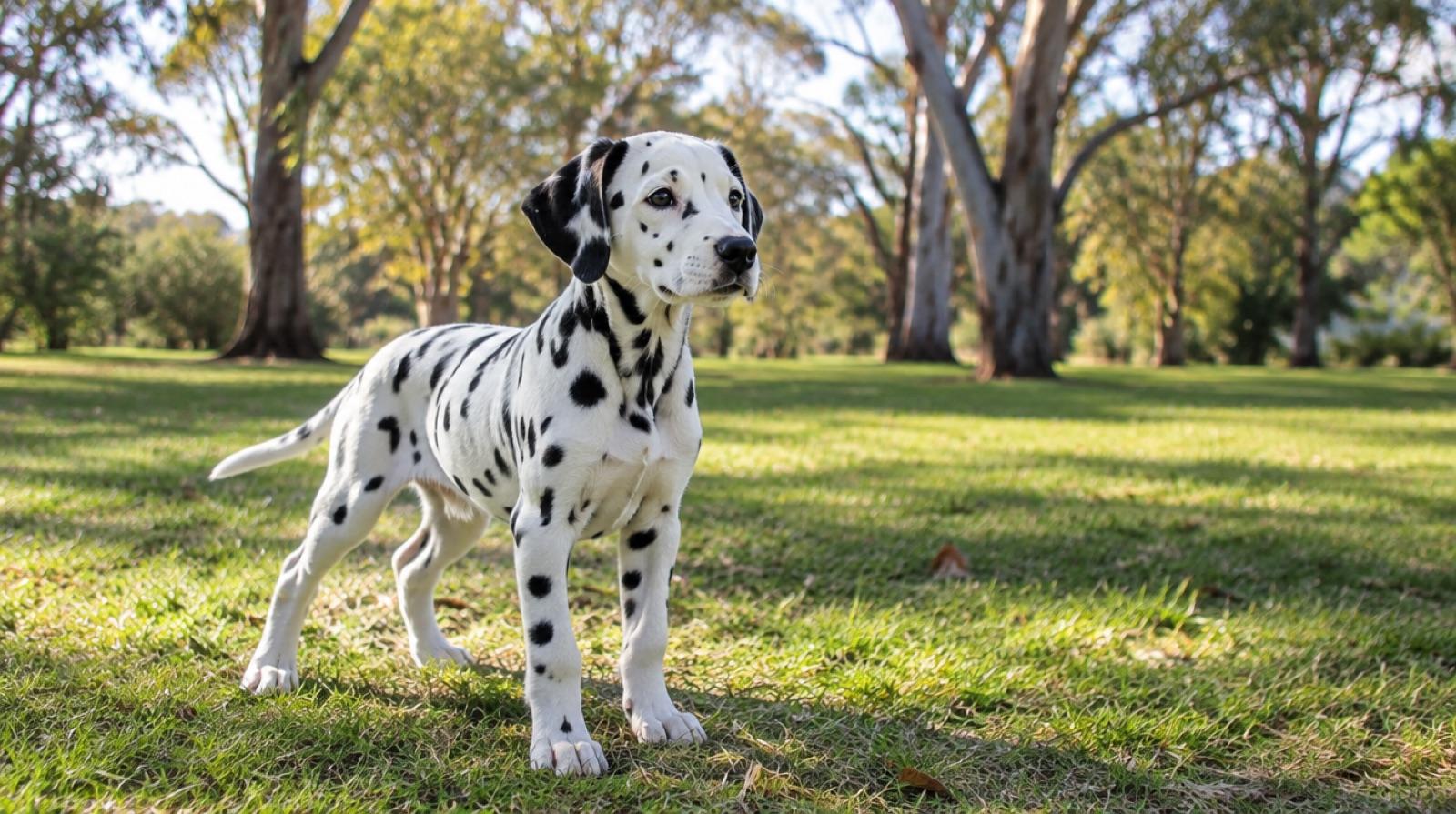
Should you adopt or buy a Dalmatian?
It depends on whether it has to be a puppy. If you want an eight-week-old purebred Dalmatian with known parents and a hearing test on file, a registered breeder is the realistic route, because purebred Dalmatian puppies rarely reach rescue. If what you want is the dog (the spots, the grin, a running companion), an adult Dalmatian or a Dalmatian cross from a rescue costs less, arrives desexed and vaccinated, and has a hearing status and personality you can already see.
- Adopt if you are open to an adult or a cross, and want to know before you commit how much energy the dog has and how it gets on with children and other pets.
- Buy from a registered breeder if you need a puppy, want to show or do dog sports, or have owned Dalmatians before. Then ask for the BAER result and the health questions below.
- Walk away from any seller who cannot show you the mother, the puppy's BAER result, the microchip number and your state's breeder number, whatever the price.
The RSPCA Australia Knowledgebase puts it the same way for any breed: look at the RSPCA or a reputable rescue first, and if you go to a breeder, make sure they are registered, visit where the puppies were born and meet the parents.
| Route | Reference cost | What you usually get | Main risk |
|---|---|---|---|
| Dogs Australia registered breeder | No published figure; ask each breeder (see below) | A purebred puppy with pedigree papers, a BAER hearing result, vaccination and microchip | Health checks on the parents vary by breeder, so ask |
| Dalmatian Club of NSW welfare service | Not published; ask the club | A desexed adult Dalmatian, placed after the club vets the new home | Few dogs at any time |
| General rescue or pound | The standard fee, for example $500 to $620 at RSPCA NSW | Dalmatian crosses and the odd purebred adult, desexed, microchipped and vaccinated | Hearing may not have been formally tested; ask |
| Online ad or social media | Often below the going rate | Anything from a real litter to a puppy that does not exist | Scams, no hearing test, untested parents |
Reference figures: RSPCA NSW adoption fee page read on 9 November 2026. They are not quotes. Breeders and rescues set their own prices and change them.
How much is a Dalmatian puppy from a registered breeder?
There is no published figure. We read the puppy and breeder pages of the Dalmatian Club of NSW and the Dalmatian Club of Victoria in November 2026, and neither quotes a price. We then read the own websites of the club member breeders that have one, in Victoria and NSW, and none of them published a puppy price either. Most ask buyers to make contact, and one we read no longer keeps a waiting list for companion puppies. So the honest answer is: ask each breeder, and compare what the price includes rather than the number alone.
Prices shown on classified and listing sites are not a reliable guide, and we have not used them. What the breeder pages we read did agree on is what a puppy should come with:
- A BAER hearing test done by a vet, with the written result.
- Vaccination, worming, a microchip and a vet check before the puppy leaves.
- Registration papers from the state canine body (Dogs NSW, Dogs Victoria and so on), usually on the limited register for a pet, which means the dog is not to be bred from.
- Written information on diet and care. The Dalmatian Club of NSW code of ethics asks members to give each buyer a registration certificate, vaccination certificate, a diet and care document, the BAER test document and hip score documentation where done, and the microchip identification.
For the first year after the price tag (food, desexing if needed, insurance, training), run the numbers through the dog cost calculator. A medium-large, very active dog costs more to feed and exercise than people expect.
Which health checks should a Dalmatian breeder show you?
Two breed issues matter most when you buy a Dalmatian puppy: hearing and uric acid. The Dogs Australia breed profile describes the Dalmatian as a strong, hardy dog with few health issues, then names both.
| Check | Why it matters | What to ask for |
|---|---|---|
| BAER hearing test | Congenital deafness in one or both ears; Dogs Australia says all puppies should be tested at about seven weeks | Your puppy's written result: bilateral (both ears) or unilateral (one ear) |
| Parents' hearing | Shows what the breeder is breeding from; the NSW club code lists the BAER document among the papers a buyer receives | The BAER status of the sire and dam |
| Uric acid (SLC2A9) DNA | The breed's high uric acid can lead to urate stones in some dogs, more often males | Whether the parents carry the normal gene (LUA lines) and the DNA result, if the breeder claims it |
| Hips | Hip dysplasia; the NSW club code covers hip score documentation where done | The parents' hip scores, if tested |
| DNA profile | Confirms parentage, so the results above actually belong to your puppy's parents | Whether the puppy has been DNA profiled |
Sources: Dogs Australia breed profile, Dalmatian Club of Victoria health information, Dalmatian Club of NSW code of ethics and UC Davis, read 9 November 2026. This is a buying checklist, not veterinary advice.
Deafness and the BAER test
The Dalmatian Club of Victoria explains that Dalmatians can be born deaf, that others hear in only one ear (unilateral hearing), and that the majority hear in both (bilateral hearing). Dogs Australia says all Dalmatian puppies should be BAER tested at about seven weeks old and that most breeders give owners a copy of the result, so they know whether the puppy has bilateral or unilateral hearing.
A unilateral puppy is not deaf, in Dogs Australia's terms; ask your vet what one-sided hearing means day to day. A bilaterally deaf puppy is a different matter: both Australian clubs say members do not sell deaf puppies as ordinary pets, and the NSW club's code allows a breeder to place one only with a suitable home and a promise to take it back if needed. That is why a puppy offered without any hearing result is a red flag. You cannot reliably test a young puppy's hearing yourself by clapping or calling.
Uric acid and urinary stones
Dogs Australia says Dalmatians have a propensity to urinary stones. The Dalmatian Club of Victoria explains why: a uric acid anomaly in the breed means that in predisposed dogs, purines from some foods form crystals in the urine, which can clump into hard stones that block the urethra. It says this happens more often in males than females, is not very common, and that an obstruction is not only painful but can be life-threatening. A male Dalmatian straining to urinate, or passing little or no urine, needs a vet straight away.
In 2008, researchers at the University of California, Davis found that mutations in the SLC2A9 gene cause the breed's high uric acid, and began offering a DNA test so breeders could select against it. They worked with descendants of a Dalmatian and Pointer cross made in the early 1970s, which brought the normal gene back into the breed. If a breeder advertises low uric acid (LUA) lines, ask to see the DNA result for the parents rather than taking the label on trust. Prevention for any Dalmatian is about diet and water intake, according to Dogs Australia; ask your vet what suits your dog rather than following a generic diet.
For what these conditions mean once you own a Dalmatian, including skin problems, read our Dalmatian health guide.
See the Dalmatians listed right now
Dalmatians and Dalmatian crosses from the rescues, shelters and council pounds we aggregate, with each rescue's notes on energy, children and other pets. Every listing links to the rescue, where you apply directly.
What do Dalmatians in rescue look like?
Mostly adults, plus Dalmatian crosses. Purebred Dalmatian puppies rarely reach rescue, so if your heart is set on a puppy, keep an alert running and stay open to a young cross. Being honest about why Dalmatians reach rescue helps you choose well. The Dalmatian Club of NSW names indiscriminate backyard breeding and the popularity of the Disney films as contributors, alongside owners dying and dogs that simply did not suit their home. The most common mismatch is energy: a coach dog bred to run beside horses, bought for its looks by a household with little time.
None of that makes a rescue Dalmatian a problem dog. It means the right home is an active one, and a rescue's foster notes will usually tell you what the dog needs. Ask too whether the dog's hearing has been tested; some rescue Dalmatians have one hearing ear, and Dogs Australia notes that deaf dogs can be trained and lead a healthy life with committed owners.
The breed club welfare service
The Dalmatian Club of NSW has run a welfare service since 1973. It rehomes Dalmatians from council shelters (after trying to trace the owner), after an owner dies, or when a dog and home were not right for each other, and it desexes every rescue before rehoming. It vets new homes carefully and follows up after placement. Its members are spread across NSW, and its page lists the Dalmatians waiting for homes when there are any. If an older Dalmatian would suit you, the club invites people to put their name forward. Outside NSW, Dalmatians come up through general rescues and council pounds, which all appear on our breed pages.
What does a rescue Dalmatian cost?
| Rescue | Fee | Checked |
|---|---|---|
| RSPCA NSW, dog over 12 months | $500 | 9 Nov 2026 |
| RSPCA NSW, puppy under 12 months | $620 | 9 Nov 2026 |
| Dalmatian Club of NSW welfare | Not published; ask the club | 9 Nov 2026 |
| Other rescues and pounds | Shown on each dog's listing | 9 Nov 2026 |
Fees as published on the date shown. They are a reference, not a quote: rescues change fees and price some dogs individually. The RSPCA NSW fee covers desexing, microchipping, vaccinations and health checks. More rescue fees by state are in our puppies for sale guide.
How do Dalmatian puppy scams work?
Never send a deposit for a Dalmatian puppy you have not seen with its mother, in person or at least on a live video call. A seller who asks for more money after the first payment, for transport, a crate or insurance, is following the standard scam script.
Scamwatch says scammers set up fake websites, social media profiles and marketplace listings offering popular breeds or cute puppies that do not exist. Its advice: view the puppy in person, ask for a video call if you cannot visit, check that the breeder is legitimate, and compare prices, because a very cheap pet is likely a scam.
Dalmatian-specific versions of the pattern to watch for:
- No hearing result. A genuine breeder can give you your puppy's written BAER result. “They all hear fine, we checked” is not a test.
- The “rare colour” premium. The Dogs Australia breed standard describes black-spotted and liver-spotted Dalmatians; lemon spots, tricolours and large patches are listed as faults. A puppy sold at a higher price because it is lemon, tricolour or patched is not a rarer, better Dalmatian.
- Photos of someone else's litter. Dalmatian puppies photograph alike. A reverse image search often finds the same photo on a real breeder's site.
- No breeder number. NSW, Victoria, Queensland, South Australia and the ACT all require an identifying number in puppy ads. Look it up yourself on the official register, not through a link the seller sends.
Our guide to puppies for sale in Australia has the full state-by-state table of breeder numbers and how to check each one, plus what to do if you have already paid.
When is a registered breeder the better choice?
Rescue is not right for everyone. A registered breeder is a reasonable choice if you need a puppy whose hearing has been tested and whose parents you can meet, if you plan to show, run or do obedience with your dog, or if you have owned Dalmatians before and want another from known lines. It also makes sense if you live in a state where Dalmatians rarely come up in rescue and you cannot wait.
If you go that way, check the breeder properly:
- Registration. Check the breeder's prefix or membership number yourself with your state canine body, a member of Dogs Australia. Dogs Australia says it makes no representation about any breeder's reputation or the soundness of any puppy.
- Club membership. The Dalmatian Club of NSW and the Dalmatian Club of Victoria each list member breeders who are also registered with their state canine body. The NSW club says on its puppies page that it is not permitted to recommend any breeder.
- The BAER result for your puppy, and the hearing status of both parents.
- The uric acid question. Ask what the breeder knows about the parents' uric acid status, and see the DNA result if LUA is claimed.
- The mother, in person, and where the puppies are raised. Dogs Australia suggests contacting the breed club or your state canine body before you decide.
Is a Dalmatian the right dog for you?
The Dogs Australia breed profile describes a friendly, outgoing dog, neither nervous nor aggressive, happy and full of life but sometimes over-enthusiastic and boisterous. It is keen to please and easy to train, but it can get bored if training is not varied, and as a running dog it needs daily exercise. The breed standard puts males at 58 to 61 cm at the shoulder and females at 56 to 58 cm, and Dogs Australia gives an average weight of 25 kg for males and 23 kg for females.
| Trait | What it means at home |
|---|---|
| Bred to run beside carriages | Real stamina. The Dalmatian Club of Victoria says a well-bred Dalmatian is highly active and needs a daily chance to run, such as a fenced yard and ball games or an off-lead run in a dog park. |
| A house dog | Very social. The Victorian club says Dalmatians shut away from the family often become barkers or diggers. |
| Short coat that sheds | Little grooming, but the club is blunt that Dalmatians shed all year and the white hairs stick to everything. Not a low-shedding dog. |
| The “smile” | Some Dalmatians curl the lip and show their teeth when happy. The club says it is usually a sign of affection, but it can unsettle visitors. |
| Size and bounce | The club says they suit older children; a fast-growing, very active puppy can overwhelm toddlers. |
Traits from the Dogs Australia breed profile and the Dalmatian Club of Victoria. Individual dogs vary, which is one reason to read a rescue's foster notes closely.
If you are still deciding, the what dog breed am I quiz is a quick reality check, and the adoption readiness check asks the time and budget questions first. Our Dalmatian exercise and energy guide covers the daily routine in detail, and the best family dogs guide puts the Dalmatian next to calmer options.
Find a Dalmatian near you
Dalmatians and Dalmatian crosses listed by rescues, by city:
- Dalmatians for adoption in Sydney
- Dalmatians for adoption in Melbourne
- Dalmatians for adoption in Brisbane
- Dalmatians for adoption in Perth
- Dalmatians for adoption in Adelaide
Local guides to adopting a Dalmatian, with the rescues that serve each city: Sydney, Melbourne, Brisbane, Perth, Adelaide, Gold Coast. Melbourne readers can also read the Melbourne Dalmatian health guide and exercise guide.
Not sure a Dalmatian is right? Fostering first is an honest way to find out how much energy you can live with; see fostering a dog or cat, or browse the large dogs listed in Sydney.
Frequently asked questions
Should I adopt or buy a Dalmatian puppy?▼
Adopt if you want the dog more than the puppy stage: rescue Dalmatians are mostly adults and crosses whose energy, hearing and temperament are already known, and they come desexed, microchipped and vaccinated. Buy from a Dogs Australia registered breeder if you need a young purebred puppy with known parents, and insist on a written BAER hearing result for your puppy. Either way, a Dalmatian is a running dog that needs an active home.
How much does a Dalmatian puppy cost in Australia?▼
There is no published figure. The Dalmatian Club of NSW and the Dalmatian Club of Victoria do not publish a puppy price, and none of the club member breeders whose own websites we read in November 2026 listed one, so ask each breeder directly. Classified-site prices are not a reliable guide. A rescue dog costs far less: RSPCA NSW charged $500 for an adult dog and $620 for a dog under 12 months when we checked on 9 November 2026. These are reference figures, not quotes.
What is a BAER test and why does it matter for Dalmatians?▼
A BAER (brainstem auditory evoked response) test is a vet hearing test that shows whether a puppy hears in both ears, one ear, or neither. Dogs Australia says deafness is a problem in the breed and that all Dalmatian puppies should be BAER tested at about seven weeks old, and that most breeders give buyers a copy of the result. Ask for the written result for your own puppy, not a verbal assurance.
Is a Dalmatian that hears in only one ear a problem?▼
It is not the same as deaf. The Dalmatian Club of Victoria explains that some Dalmatians hear normally in only one ear (unilateral hearing) and that most hear in both (bilateral hearing), and Dogs Australia says the BAER result tells owners whether a puppy has bilateral or unilateral hearing and is not deaf. Ask your vet what one-sided hearing means day to day, and ask the breeder whether both parents hear in both ears, which is one reason the BAER result belongs on the paperwork.
Can you adopt a deaf Dalmatian?▼
Yes, sometimes, and a deaf Dalmatian can be a good pet in the right home. Dogs Australia says deaf dogs can be trained and lead a healthy life but need a special home with committed owners. A deaf dog is trained with hand signals, needs a securely fenced yard, and should not be off lead near roads because it cannot hear traffic or a recall. Ask the rescue how the dog has been trained so far.
Do Dalmatians get bladder stones?▼
Some do. Dogs Australia says Dalmatians have a propensity to urinary stones, and the Dalmatian Club of Victoria explains that a uric acid anomaly in the breed can lead to urate stones in some dogs, more often in males. A stone that blocks the urethra is painful and can be life-threatening, so a male Dalmatian straining to urinate needs a vet straight away. Diet and water intake are part of prevention; ask your vet what suits your dog rather than following a generic diet.
What are LUA Dalmatians?▼
They are Dalmatians descended from a Dalmatian and Pointer cross made in the early 1970s, a line that carries the normal uric acid gene. UC Davis researchers identified the SLC2A9 gene behind the breed's high uric acid in 2008 and began offering a DNA test for it. If a breeder advertises low uric acid (LUA) lines, ask to see the DNA result rather than relying on the label.
Is there a Dalmatian rescue in Australia?▼
Yes. The Dalmatian Club of NSW has run a welfare service since 1973 that rehomes Dalmatians from council shelters, deceased estates and homes that did not suit, and it desexes every rescue before rehoming. It lists dogs needing homes on its own site when it has any. Dalmatians and Dalmatian crosses also turn up at general rescues and council pounds, so set an alert on the breed page.
How do I check a Dalmatian breeder is registered?▼
Ask for the breeder's prefix or membership number and check it yourself with your state canine body (Dogs NSW, Dogs Victoria and so on, all members of Dogs Australia), then check your state's breeder number on the official register. The Dalmatian Club of NSW and the Dalmatian Club of Victoria each list their member breeders. The NSW club and Dogs Australia both say a listing makes no representation about a puppy's soundness, so still ask for the BAER result and the parents' health checks.
Is a Dalmatian a good family dog?▼
For an active family with older children, often yes. The Dogs Australia breed profile describes the Dalmatian as friendly and outgoing, happy and full of life, but sometimes over-enthusiastic and boisterous. The Dalmatian Club of Victoria says they suit older children and that a fast-growing, very active puppy may be too much for toddlers. They also shed all year, which surprises many first-time owners.
Where can I see Dalmatians for adoption right now?▼
The Dalmatian breed page on LocalPetFinder shows Dalmatians and Dalmatian crosses listed by the rescues, shelters and council pounds we aggregate, and each big city has its own page. Every listing links to the rescue, where you apply directly. Purebred Dalmatians are not common in rescue, so set an alert and be ready to apply.
Sources
- Dogs Australia: Dalmatian breed profile (for owners)
- Dogs Australia: Dalmatian breed standard
- Dalmatian Club of Victoria: Health information
- Dalmatian Club of Victoria: Appearance and temperament
- Dalmatian Club of Victoria: Selecting a breeder
- Dalmatian Club of NSW: Code of ethics
- Dalmatian Club of NSW: Dalmatian welfare
- UC Davis via EurekAlert: Dalmatian bladder stones gene (2008)
- Scamwatch: Buying and selling scams
- RSPCA Australia Knowledgebase: Where should I go for a new companion animal?
- RSPCA NSW: Adoption fees
Keep reading
Dalmatians listed by rescues
Dalmatians and Dalmatian crosses listed right now by the rescues and shelters we aggregate across Australia.
Dalmatian health issues
Deafness, urinary stones and skin, and what each means once you own the dog.
Dalmatian exercise and energy
How much running a coach dog really needs, and what happens when it does not get it.
Puppies for sale: adopt or buy?
The breeder number each state requires, how to check it, and the full scam checklist.