The short answer
Owning a Bullmastiff means owning a giant guardian: a gentle, calm, devoted dog wrapped in a 55 kilogram body with real strength, a protective instinct, a tendency to drool and a sensitivity to heat. It needs space and secure fencing, an experienced and confident owner, early and ongoing socialisation and training, and only moderate, careful exercise (never over-exercise a growing pup). It is a low-cost dog to adopt but an expensive one to keep. It is not a first-dog or apartment breed, and it is not a dog to take on lightly. Give it the space, the training and the budget it needs, though, and few breeds are as steady, soft and loyal.
Size and strength: respecting the giant
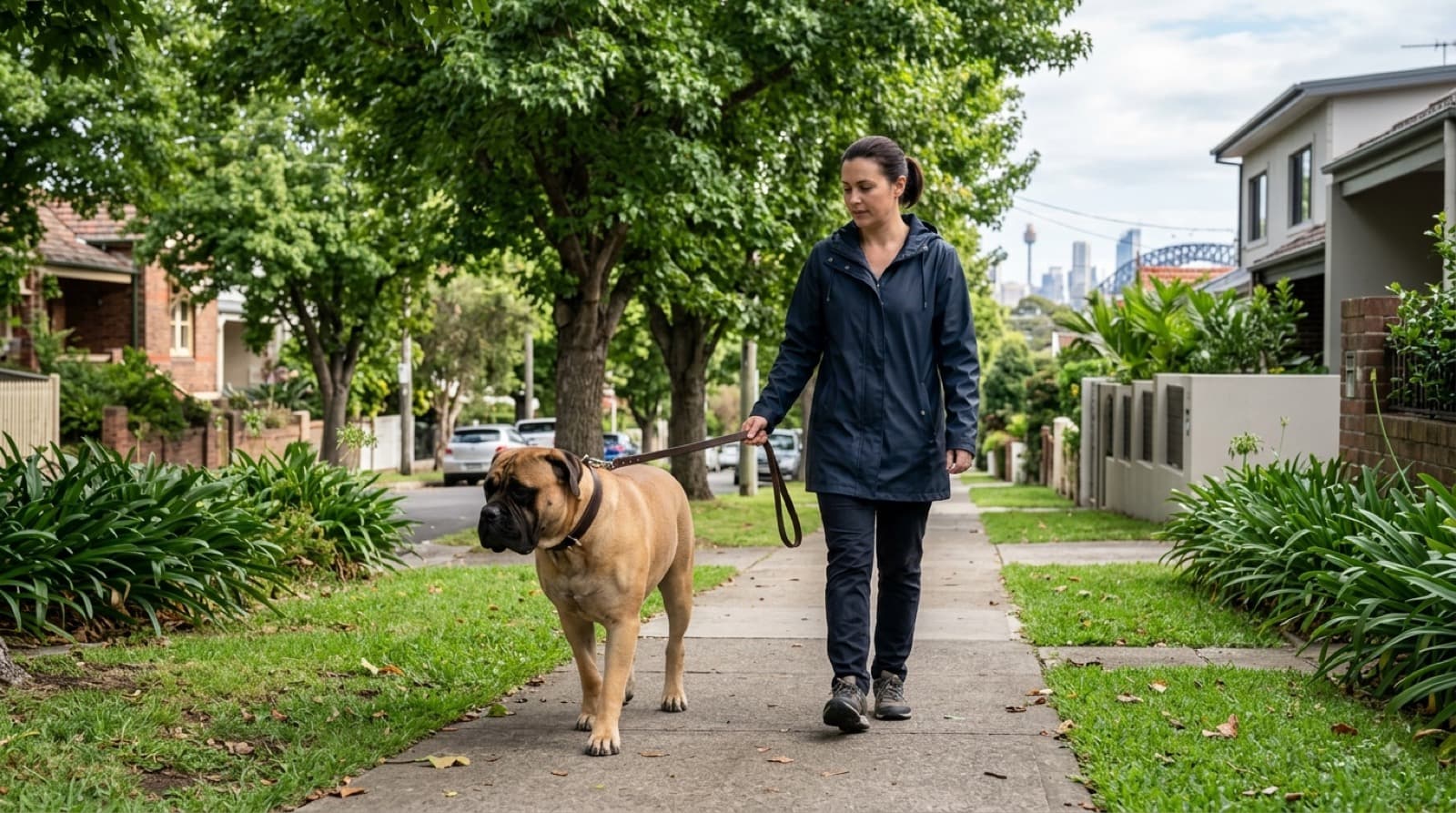
Everything about owning a Bullmastiff starts with its scale. Adult males commonly reach 50 to 60 kilograms, and even a calm, well-mannered dog of that size is powerful. A Bullmastiff that pulls on the lead, or lunges at another dog, is a lot to hold, so lead manners are not optional; they are a safety issue. Teaching reliable loose-lead walking and a solid response to you while the dog is young and manageable pays off enormously, because retraining an adult giant is far harder than teaching a pup.
The size shapes daily life in small ways too. A Bullmastiff can clear a coffee table with one wag, knock over a toddler without meaning to, and take up most of a couch. None of that is a problem in a home set up for a giant breed; all of it is a problem in a home that is not. Be honest about whether your space and your household suit a dog this big.
The guardian temperament
The Bullmastiff was developed as a gamekeeper's night dog, bred to find and hold poachers, brave and protective but under control rather than aggressive. That heritage shows in the modern dog: a natural, watchful guardian that is deeply devoted and gentle with its own people and simply aloof and reserved with strangers. Bullmastiffs are not typically barky or hyper-vigilant; their sheer presence does most of the deterring.
That guardian instinct is exactly why socialisation matters so much. A well-socialised Bullmastiff learns that the world is mostly friendly and settles confidently around people, dogs and everyday situations, while an under-socialised one can become wary or reactive, which in a giant, powerful dog is a serious problem. Expose the dog positively to lots of people, places and situations from early on, keep socialising throughout its life, and be the calm, consistent presence it looks to. Some individuals are less tolerant of unfamiliar dogs, especially same-sex, so read your dog and manage sensibly.
Training a powerful, strong-willed dog
Bullmastiffs are intelligent and devoted but can be independent and strong-willed, so they respond best to early, consistent, reward-based training and a confident, patient owner. Heavy-handed methods do not suit the breed and can backfire in a powerful dog; positive reinforcement builds the calm, cooperative giant you want. Focus first on lead manners, reliable basic obedience and settled behaviour around distractions.
A good positive-reinforcement training class is well worth it, both for the skills and for the socialisation. Organisations like the RSPCA NSW run classes and can point you to reputable trainers, and the RSPCA Knowledgebase has sound, force-free training guidance. Whatever you choose, start early and stay consistent: a well-trained Bullmastiff is an easy, delightful dog to live with.
Exercise: less than you think, but the right kind
For its size, the Bullmastiff needs surprisingly little exercise. An adult is a low-energy dog content with a couple of gentle daily walks plus some mental engagement, and it will happily spend the rest of the day as a large, warm floor ornament. What it does not need is hard running or endless high-impact activity.
This matters most with a young dog. Over-exercising a growing Bullmastiff genuinely harms the developing joints of a giant breed, so exercise in the first couple of years should be controlled and age-appropriate, gentle rather than intense. Protecting those joints early pays dividends in comfort later. We cover the joint and health picture in detail in our Bullmastiff health guide.
Browse adoptable Bullmastiffs in Sydney
If a gentle giant suits your home, space and budget, a rescue Bullmastiff is a wonderful companion. Browse current NSW listings and find your match.
See Available Bullmastiffs →Drool, heat and the daily realities
Drool. Bullmastiffs slobber. The loose lips that give them their face fling drool when they drink, eat or shake, so a slobber cloth becomes a household fixture. It is harmless, but it is real, and a spotless-home household should think twice.
Heat. The heavy build and shortened muzzle make the breed heat-sensitive, which matters in Sydney. Walk in the cool hours, provide shade and water, keep the dog cool on hot days, and never leave it in a car. Learn the signs of heat stress and treat them as an emergency.
Cost. A giant dog is expensive to keep. Food, medication doses, anaesthesia and surgery all scale with the size, and the breed carries real health risks, so budget toward the higher end and insure the dog while it is young. We break the numbers down in our Bullmastiff adoption guide.
Is a Bullmastiff the right dog for you?
A Bullmastiff suits a household with real space and a secure yard, some dog experience and the confidence to train and socialise a powerful breed, a genuine budget for a giant dog, and a soft spot for a slobbery, devoted giant. It does not suit a small apartment, a first-time owner unwilling to put in the training, a tight budget, or anyone wanting a low-maintenance, drool-free pet. And it asks you to accept a short lifespan of around 7 to 10 years.
If that description fits you, few breeds are as rewarding. A well-raised, well-loved Bullmastiff is steady, gentle, endlessly loyal, and a magnificent presence in a home. Adopting one from a Sydney rescue means giving a gentle giant a second chance and gaining a devoted companion. Start by browsing the current Bullmastiffs available in Sydney, and read our adoption guide for the full process.
Frequently Asked Questions
Is a Bullmastiff a good dog for a first-time owner?
Usually not, and it is fairer to say so plainly. A Bullmastiff is a giant, powerful guardian breed that needs an experienced, confident owner, committed training and socialisation, real space and a substantial budget, which is a lot for a first-time owner to get right. That said, a very dedicated first-timer who has genuinely researched the breed, has the space and money, and commits to training and socialisation with the help of a good trainer can succeed and find the breed enormously rewarding. The stakes are simply higher than with an easier breed, because a poorly managed 55 kilogram dog is a serious problem. If it is your first dog, prepare thoroughly and lean on a rescue to match you well.
How much space does a Bullmastiff need?
More than its calm indoor nature might suggest. A Bullmastiff is a low-energy dog that is happy to be a large, warm presence on the floor, but it is a giant animal that needs room to move comfortably indoors and a secure yard outside. That makes it poorly suited to a small apartment or a home without outdoor space. It does not need acres or hard exercise, but it does need physical room and secure fencing. If you rent or live under strata rules, check the pet policy before you fall in love with a giant breed, because many landlords and buildings are cautious about them.
Are Bullmastiffs aggressive?
No, not when well raised. The Bullmastiff was bred as a gamekeeper's guardian, brave and protective but under control rather than aggressive, and a well-socialised Bullmastiff is famously gentle, calm and devoted, soft with its family and simply watchful and aloof with strangers. The breed's guarding instinct and its power mean early and ongoing socialisation and training are genuinely important, so the dog learns to be confident and settled around people, dogs and everyday situations. Some individuals can be less tolerant of unfamiliar dogs, especially same-sex, so sensible management matters. Aggression is not the breed's nature; it is a risk that good raising and responsible ownership prevent.
Do Bullmastiffs drool a lot?
Yes, Bullmastiffs drool and slobber, and it catches some new owners off guard. The loose lips (flews) that give the breed its distinctive face also mean they can fling drool when they drink, eat or shake their heads, so a slobber cloth around the house and in the car is part of Bullmastiff life. It is not a health problem, just a feature of the breed to accept cheerfully. If a spotless, drool-free home is important to you, a heavy-jowled giant breed may not be the right fit. For the people who love the breed, the drool is a small price for the gentle giant it comes attached to.
How much exercise does a Bullmastiff need?
Less than most dogs its size, but the right kind. An adult Bullmastiff is a low-energy dog that needs moderate daily exercise, a couple of gentle walks rather than hard running, plus mental engagement to keep it content. Crucially, you must not over-exercise a young, growing Bullmastiff, because too much high-impact activity harms the developing joints of a giant breed, so controlled, age-appropriate exercise is essential in the first couple of years. In the Sydney summer, exercise in the cool of early morning or evening, because the heavy build and short muzzle make the breed heat-sensitive. Gentle, consistent activity suits the breed far better than intensity.
Are Bullmastiffs good with children?
Well-raised Bullmastiffs are typically gentle, patient and affectionate with their own family's children, and their steady temperament is part of what makes them beloved family dogs. The main caution is size and strength rather than temperament: a giant dog can knock a small child over without any ill intent, so supervision around young children and teaching both dog and child to interact calmly is sensible. As with any dog, interactions between dogs and young children should always be supervised. A family with the space, experience and budget for a giant breed, and the sense to supervise, often finds the Bullmastiff a wonderful, devoted family companion.
What training does a Bullmastiff need?
Early, consistent, positive training and thorough socialisation. Because a Bullmastiff grows into a powerful, strong-willed guardian, it needs to learn good lead manners, reliable basic obedience and calm, confident behaviour around people, dogs and everyday situations while it is young and manageable, and reward-based methods suit the breed far better than heavy-handed ones. Enrol in a good positive-reinforcement training class, keep socialising throughout the dog's life, and be a calm, consistent leader. A well-trained Bullmastiff is a joy and easy to live with; an untrained 55 kilogram dog that pulls and does as it pleases is a genuine problem. The investment in training early pays off enormously.
Can you keep a Bullmastiff in the Sydney heat?
Yes, with sensible management. Bullmastiffs are heat-sensitive because of their heavy build and shortened muzzle, so Sydney summers call for care: walk in the cool of early morning or evening, provide constant shade and fresh water, keep the dog somewhere cool during the hottest part of the day, and never leave it in a car even briefly. Watch for the signs of heat stress (heavy panting, drooling, weakness, bright red gums, collapse) and treat it as an emergency. Plenty of Bullmastiffs live happily in Sydney; it just takes an owner who plans around the heat rather than ignoring it. Tick prevention year-round is essential too.
Why choose a Bullmastiff over a smaller guardian breed?
People choose the Bullmastiff for its unique combination of imposing presence and genuinely gentle, calm temperament: it is a natural deterrent that is soft and devoted at home, quieter and lower-energy than many guardian breeds, and deeply loyal to its family. If you have the space, experience and budget, and you want a steady, affectionate giant rather than a busy, high-drive dog, the Bullmastiff is hard to beat. But it should be a considered choice, not an impulse, because the size, cost, drool, heat sensitivity and short lifespan are all real. Choose the breed for what it is, prepare properly, and it rewards you with years of gentle devotion.
Keep reading
Adoptable Bullmastiffs in Sydney
Live listings of Bullmastiffs, mastiffs and mastiff crosses across Sydney and NSW rescues.
Bullmastiff Adoption in Sydney
Where to adopt, what it costs, and why these gentle giants end up in rescue.
Bullmastiff Health Issues in Sydney
Bloat, cancer, joints, heart and heat: the giant-breed risks and the short lifespan.
All Sydney Adoption Guides
Browse every breed and how-to guide for adopting a rescue dog in Sydney.