The short answer
DSH stands for Domestic Short Hair, the standard label for a short-coated cat whose breed is unknown. It is not a breed: DMH and DLH are the same thing with medium or long coats, and tabby, tuxedo or tortie describe the coat, not the ancestry. Most cats in Australian rescue are DSH. There is no single DSH personality, so choose the individual cat from what the rescue or foster carer tells you. As a group they tend to have fewer breed-specific inherited problems than pedigree cats, though they still get ordinary cat illnesses. Adopting one costs a few hundred dollars, such as $220 for an adult at RSPCA NSW (checked 9 November 2026, not a quote).
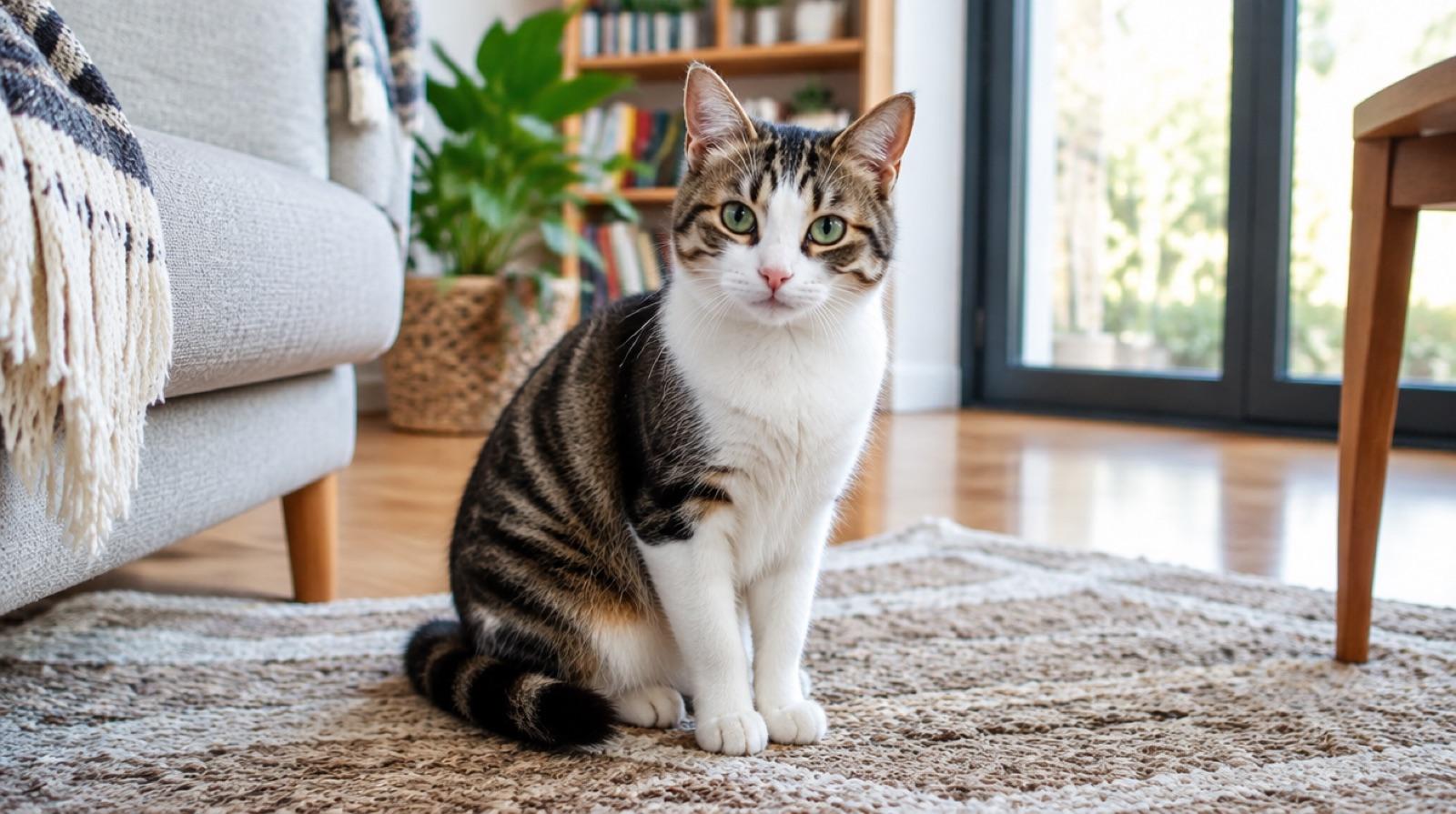
What does DSH mean on an Australian rescue listing?
It means Domestic Short Hair, and it is what a rescue writes when it does not know a cat's breed. The PetRescue knowledge base, which guides the rescues that list on Australia's national adoption platform, tells them to choose Domestic Long Hair, Domestic Medium Hair or Domestic Short Hair for a cat whose breed or mix they do not know. On listings these are often shortened to DSH, DMH and DLH.
In plain Australian English, a DSH is a moggy. It is a cat of mixed or unknown ancestry with a short coat, born of ordinary cats breeding over many generations rather than to a written breed standard. Across the rescues we aggregate, Domestic Shorthairs are the large majority of cats listed, with Domestic Medium Hairs a distant second and pedigree breeds a small minority. As RSPCA South Australia puts it, it is common to find moggies in rescue centres, though purebred cats do occasionally come through its doors.
The label is a filing category, not a description of the cat. Two DSH cats can be as different as a quiet lap cat and a climbing, chatty explorer. What you need to know about a particular cat is in its notes, not its label.
Is a Domestic Shorthair a breed?
No. A pedigree breed has two things a DSH does not: a registered family tree and a written standard kept by a cat council such as the Co-Ordinating Cat Council of Australia or the member bodies of the Australian Cat Federation. Domestic Shorthair is simply the name for everything else with a short coat. That is why the word “domestic” appears: it means a house cat of no particular breed.
The labels you will see, and what each one actually tells you:
| Label on the listing | What it describes | Is it a breed? |
|---|---|---|
| DSH (Domestic Short Hair) | Unknown or mixed ancestry, short coat | No |
| DMH (Domestic Medium Hair) | Unknown or mixed ancestry, medium coat | No |
| DLH (Domestic Long Hair) | Unknown or mixed ancestry, long coat | No |
| Tabby, tuxedo, tortie, calico, ginger, blue | Coat colour or pattern | No |
| “Siamese x”, “Ragdoll cross”, “Burmese mix” | A rescue's best guess from looks | No; it is a resemblance, not a pedigree |
| British Shorthair, Burmese, Russian Blue (with papers) | A registered pedigree cat | Yes |
DSH, DMH and DLH: what changes with coat length?
Grooming, and not much else. RSPCA Pet Insurance says a weekly brush helps a Domestic Shorthair by removing loose fur and reducing shedding, while a Domestic Medium Hair usually benefits from brushing two to three times a week, paying attention to behind the ears, the neck, chest and belly where mats form. A long coat that is not groomed can also mean more hairballs.
Coat length is just one inherited trait, so littermates from the same moggy mother can have different coats. If grooming time matters in your home, the short coat is the practical pick. If you like a fluffier cat, look at the Domestic Medium Hairs and Domestic Longhairs listed too.
Tabby, tuxedo, tortie: is the pattern the breed?
No. A cat is usually a Domestic Shorthair and a tabby at the same time, because the two words describe different things. DSH is ancestry and coat length. Tabby, tuxedo, tortoiseshell, calico, ginger and blue are colours and patterns, decided by a handful of coat genes. You can browse the cats listed now in each coat: tabby, tuxedo, tortoiseshell and calico.
The genetics of each coat, why torties are almost always female, and why colour does not predict personality are all in our Domestic Shorthair colours and patterns guide.
Is my DSH secretly a British Shorthair, Russian Blue or Bengal?
Almost certainly not, even if it looks the part. A round-faced grey moggy can resemble a British Shorthair, a sleek grey one a Russian Blue, and a spotted tabby a Bengal. Resemblance is not ancestry. A pedigree cat comes with registration papers from a cat council, and a cat without them is a Domestic Shorthair, whatever an advert or a listing calls it. The Russian Cat Council of Australia makes the same point for its breed: a blue, black or white coat does not make a cat a Russian.
This matters when money is involved. Sellers sometimes ask pedigree prices for look-alike moggies. If you want a particular pedigree breed, see our Bengal price guide and British Shorthair adopt-or-buy guide for how to check a registered breeder. Sydney readers wondering about the American Shorthair can read our American Shorthair vs Domestic Shorthair guide.
What is a Domestic Shorthair like to live with?
It depends entirely on the cat. RSPCA Pet Insurance says that because Domestic Shorthairs come from such varied backgrounds, there is no single personality type: some are affectionate lap cats, some energetic explorers, and some prefer to interact on their own terms. That range is the useful part. You can look for the exact kind of cat your home suits.
Two things shape a cat's personality, according to the research:
- Genes. A Finnish study of more than 5,700 cats in Scientific Reports (2019) found behaviour traits such as shyness and aggression were moderately heritable, with estimates from 0.40 to 0.53 in the breeds it tested, and that a lot of genetic variation exists within breeds. For a moggy, whose parents are usually unknown, there is no breed average to lean on at all, which is why the label predicts so little.
- Early life. International Cat Care says the key socialisation period for kittens is between two and seven weeks of age, and that kittens handled gently by several different people in that window grow into cats more sociable with people. A kitten born to a stray mother may have missed some of that, while a kitten raised in a busy foster home has usually had plenty.
So ask about the individual cat. Good questions for a rescue or foster carer: How does it react to visitors? Has it lived with children, dogs or other cats? Does it like being picked up? How does it cope when left alone? Is it more lap cat or explorer? An adult cat answers these for you; a kitten's adult personality is still forming.
Are Domestic Shorthairs healthier than purebred cats?
As a group they tend to carry fewer breed-specific inherited problems, but no cat is guaranteed healthy. RSPCA Pet Insurance says Domestic Shorthairs generally have fewer breed-specific hereditary health conditions than many pedigree cats, while noting they can still develop common problems such as obesity, urinary tract disease, hyperthyroidism, kidney disease and cat flu, and that dental care matters.
The research points the same way, with caveats:
- Lifespan. A study of 4,009 cats at 90 English vet practices (O'Neill and colleagues, Journal of Feline Medicine and Surgery, 2015) found crossbred cats had a median lifespan of 14.0 years against 12.5 years for purebreds. After allowing for weight, sex, desexing and insurance, the gap among cats that reached 5 years was smaller, about 0.6 years, and individual pedigree breeds varied widely, with some outliving the crossbreds.
- Genetic diversity. A genetic study of more than 1,100 cats (Lipinski and colleagues, Genomics, 2008) found random-bred cats worldwide remain genetically diverse, while pure breeding was associated with a loss of diversity.
- Not immune. The 2020 ACVIM consensus statement on feline heart disease notes that most cats with hypertrophic cardiomyopathy (HCM) are not pedigree cats. And the UC Davis Veterinary Genetics Laboratory lists Domestic Shorthairs among the cats appropriate for its PK deficiency (inherited anaemia) test. Moggies have inherited conditions too, just not concentrated in one closed bloodline.
What protects any cat most is ordinary care: desexing, a healthy weight, dental checks and a yearly vet visit. A rescue cat comes desexed, vaccinated and microchipped, which covers the first of those before it reaches your home.
Can a DNA test tell me what my DSH is?
Not in the way most people hope. Most pedigree breeds were themselves developed from local random-bred cats, according to the Genomics study above, so a moggy is usually not a neat mix of two named breeds. A breed-ancestry result can only tell you which reference groups your cat resembles. Where cat DNA testing earns its place is specific health markers, which is a conversation to have with your vet rather than a curiosity purchase.
Will a Domestic Shorthair suit you?
Almost any home can find a DSH that fits, because the range is so wide. The trick is to match the individual cat to the way you actually live. A starting point:
| Your home | What to ask the rescue for |
|---|---|
| First cat, out at work all day | A settled adult described as independent and relaxed alone, or two cats that already get on |
| Young children | A confident adult that has lived with children and tolerates handling |
| A dog already at home | A cat with a known history of living calmly with dogs |
| Apartment, indoor only | A cat that has lived indoors and enjoys play; see our indoor cats listings |
| Quiet home, older adults | A calm adult or senior cat |
| Time and energy for a kitten | A kitten from a foster home where it has been handled by different people |
Kitten or adult? A kitten is months of supervision, play and training, and its adult personality is still forming. An adult arrives with its temperament known and is often easier for a first-time owner. Either way, the first weeks can feel harder than expected; our kitten blues guide covers what is normal. The free cat breed quiz can help you work out which kind of cat you are after, and dog or cat? and the adoption readiness check help if you are still deciding whether to get a pet at all.
Allergies are the one thing a short coat will not fix. The Australasian Society of Clinical Immunology and Allergy says all cat breeds can cause allergies, because all cats have sebaceous glands. If anyone at home reacts to cats, read our hypoallergenic cats guide and talk to your GP first.
How much does a Domestic Shorthair cost?
A DSH is not sold as a breed, so in practice you adopt one, and the fee covers vet work you would otherwise pay for separately:
| Route | Price (AUD) | What it includes |
|---|---|---|
| RSPCA NSW | Cat over 6 months $220; kitten under 6 months $270 | Desexing, microchipping, vaccinations, health checks |
| Cat Protection Society of NSW | $150 per cat or kitten; $250 for two | Vet check, desexing, microchip, first vaccination, flea and worm treatment |
| Rescue kittens around Australia | About $150 to $450 | Usually desexed, microchipped and vaccinated; see our kittens for sale guide |
| For comparison: a pedigree kitten | Russian Blue about $1,000 to $1,600; Bengal $1,500 to $3,600 | Varies by breeder; see each breed's guide |
Reference figures checked 9 November 2026, not quotes: rescue fees from each rescue's own page; Russian Blue from the Russian Cat Council of Australia; Bengal from six cat-council member breeders' own websites. Some rescues charge less for a pair or for older cats, so ask.
Be wary of a short-haired kitten advertised for sale at a pedigree price with no council papers. It is a moggy, and the right price for a moggy is a rescue fee that includes desexing.
Find a Domestic Shorthair near you
The live listings show every DSH cat and kitten the rescues we aggregate have right now, refreshed regularly. Each city also has a local adoption guide covering its rescues and fees.
- Domestic Shorthairs for adoption in Sydney (Sydney DSH adoption guide)
- Domestic Shorthairs for adoption in Melbourne (Melbourne DSH adoption guide)
- Domestic Shorthairs for adoption in Brisbane (Brisbane DSH adoption guide)
- Domestic Shorthairs for adoption in Perth (Perth DSH adoption guide)
- Domestic Shorthairs for adoption in Adelaide (Adelaide DSH adoption guide)
Or browse the national Domestic Shorthair page and set an alert for the age, coat and temperament you want.
Frequently asked questions
What does DSH mean on a cat listing?▼
DSH stands for Domestic Short Hair (often written Domestic Shorthair). It is the standard label Australian rescues use for a short-coated cat of unknown or mixed breed. PetRescue, the national listing platform, tells rescues to choose Domestic Long Hair, Domestic Medium Hair or Domestic Short Hair when they do not know a cat's breed. In everyday Australian English the same cat is a moggy.
Is a Domestic Shorthair a breed?▼
No. Domestic Shorthair describes a cat with a short coat and no known pedigree, so it is a type of cat rather than a breed. Pedigree breeds such as the British Shorthair or Burmese have a registered family tree and a written standard kept by cat councils. A DSH has neither, and that is all the label means. It says nothing bad about the cat.
What is the difference between DSH, DMH and DLH?▼
Coat length only. DSH is a Domestic Short Hair, DMH a Domestic Medium Hair and DLH a Domestic Long Hair, and none of them is a breed. The practical difference is grooming: RSPCA Pet Insurance says a weekly brush suits a Domestic Shorthair, while a Domestic Medium Hair usually benefits from brushing two to three times a week to prevent tangles.
Is a tabby a Domestic Shorthair?▼
Usually, because the two words describe different things. Domestic Shorthair describes ancestry and coat length, while tabby describes a coat pattern: stripes, swirls, spots or ticking, often with an M on the forehead. Most tabbies in rescue are DSH cats. The same goes for tuxedo, tortoiseshell, calico, ginger and grey: they are colours and patterns, not breeds.
Is a Domestic Shorthair the same as a British or American Shorthair?▼
No. The British Shorthair and American Shorthair are pedigree breeds with registered ancestry and a breed standard. Domestic Shorthair is the label for a short-coated cat with no known pedigree. A round-faced grey moggy can look a lot like a British Shorthair, but without registration papers from a cat council it is a Domestic Shorthair, whatever the listing or the seller calls it.
What is a Domestic Shorthair's personality like?▼
There is no single DSH personality. RSPCA Pet Insurance puts it plainly: because Domestic Shorthairs come from such varied backgrounds, there is no single personality type, and they range from lap cats to energetic explorers to independent cats. Early experience matters a lot: International Cat Care says the key socialisation period for kittens is between two and seven weeks. Judge the individual cat, and ask the rescue or foster carer how it behaves at home.
Are Domestic Shorthairs healthier than purebred cats?▼
On average they tend to have fewer breed-specific inherited problems, but they are not immune to illness. RSPCA Pet Insurance says Domestic Shorthairs generally have fewer breed-specific hereditary conditions than many pedigree cats, and a large study of cats at English vet practices found crossbred cats lived longer than purebreds overall. Moggies still get common cat problems such as obesity, kidney disease, hyperthyroidism and dental disease, and most cats with the heart disease HCM are not pedigree cats.
How long do Domestic Shorthair cats live?▼
Many live well into their teens. In a study of 4,009 cats that died while registered with 90 vet practices in England, published in the Journal of Feline Medicine and Surgery in 2015, crossbred cats had a median lifespan of 14.0 years, against 12.5 years for purebreds. Individual cats vary a lot, and desexing, a healthy weight and regular vet care all help.
Can a DNA test tell me what breed my DSH is?▼
Rarely in a satisfying way. Most breeds were developed from ordinary random-bred cats, and a genetic study of more than 1,100 cats found random-bred cats around the world remain genetically diverse. So a moggy is usually not a mix of two named breeds, and a breed result can only show resemblance to reference groups. DNA tests are more useful for specific health markers your vet asks about.
Are Domestic Shorthair cats good for allergies?▼
No cat is allergy-free. The Australasian Society of Clinical Immunology and Allergy (ASCIA) says that because all cats have sebaceous glands, all cat breeds can cause allergies, and that up to half of people allergic to animals do not get symptoms straight away. A short coat does not change that. If someone in your home has a cat allergy, see your GP or an allergy specialist before adopting.
Is a Domestic Shorthair a good first cat?▼
Often, yes, as long as you choose the individual cat rather than the label. Because DSH cats cover every personality, you can look for the one that fits your home: a settled adult for a busy household, a confident cat used to children for a family, or a pair of young cats for someone who is out all day. Ask the rescue about the cat's history, and adopt an adult if you want fewer surprises.
How much does it cost to adopt a Domestic Shorthair?▼
Usually a few hundred dollars, including desexing, a microchip and vaccination. On 9 November 2026, RSPCA NSW listed $220 for a cat over 6 months and $270 for a kitten under 6 months, and Cat Protection Society of NSW listed $150 per cat or kitten, or $250 for two. Rescue kitten fees around Australia ran from about $150 to $450. These are reference figures, not quotes; check the rescue's own page.
Sources
- PetRescue Knowledge Base: Selecting a pet's breed
- RSPCA Pet Insurance: Popular cat breeds in Australia (5 Aug 2026)
- RSPCA South Australia: Misconceptions about rescue cats
- O'Neill et al. 2015, Longevity and mortality of cats attending primary care practices in England (J Feline Med Surg)
- Lipinski et al. 2008, The ascent of cat breeds (Genomics)
- Salonen et al. 2019, Breed differences of heritable behaviour traits in cats (Scientific Reports)
- International Cat Care: Bringing up a litter of kittens, behavioural considerations
- ACVIM consensus statement on feline cardiomyopathy (2020)
- UC Davis Veterinary Genetics Laboratory: PK deficiency
- Co-Ordinating Cat Council of Australia
- Australian Cat Federation: member bodies
- ASCIA: Pet allergy
- RSPCA NSW: Adoption fees
- Cat Protection Society of NSW: Cats for adoption
- Russian Cat Council of Australia: Buying a Russian
Keep reading
Domestic Shorthairs for adoption
Every DSH cat and kitten listed right now across the Australian rescues we aggregate.
Domestic Shorthair colours and patterns
Tabby, tortie, calico, tuxedo, ginger and blue: what each coat is called and how it is inherited.
Kittens for sale: adopt or buy?
Where kittens really come from, the breeder rules in each state and what rescue kittens cost.
Kitten blues and adoption regret
What is normal in the first weeks with a new cat, and what to do if it feels like a mistake.