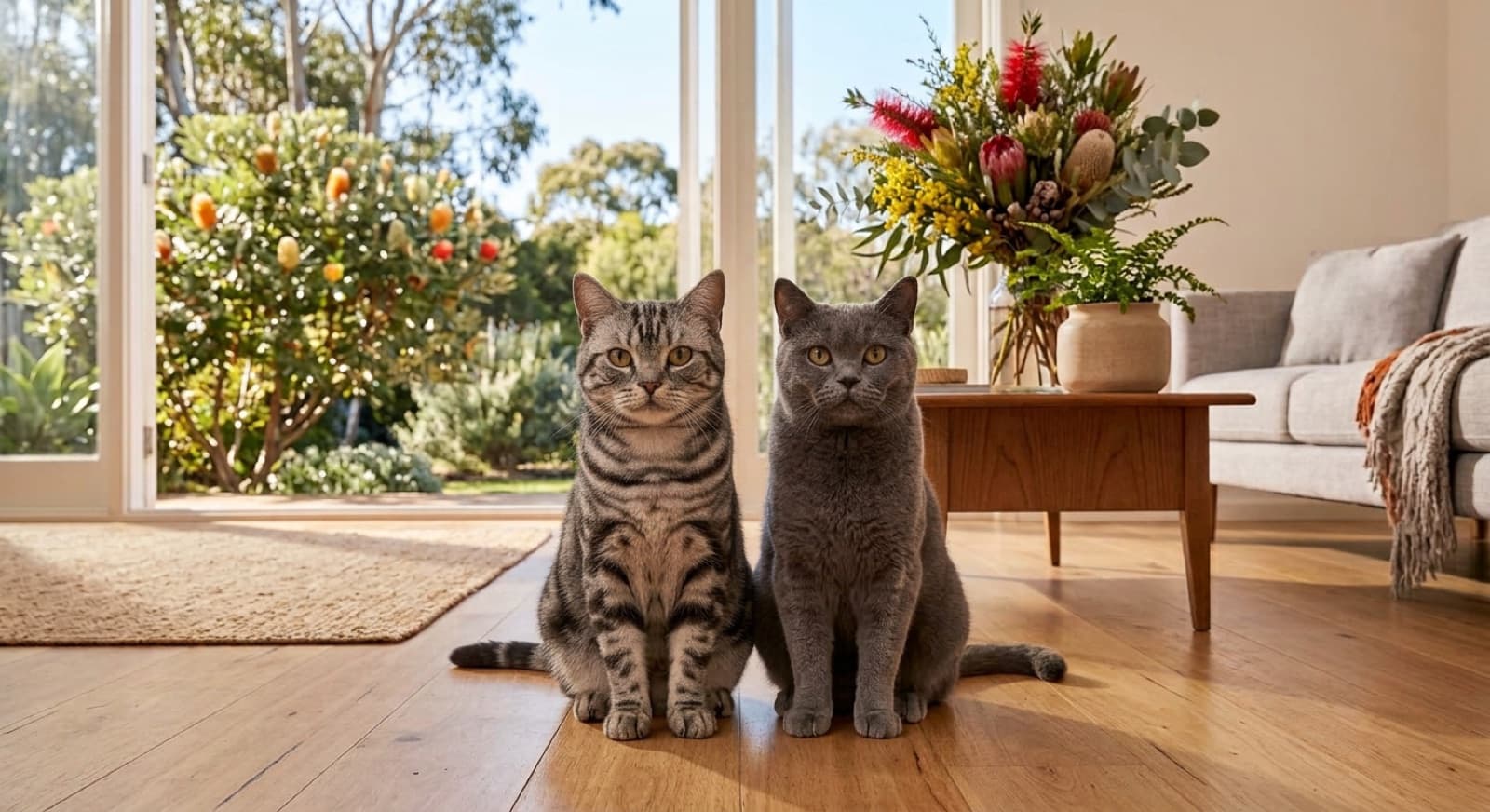
The short answer
The American Shorthair is a recognised pedigree breed; the domestic shorthair is the everyday, non-pedigree short-haired cat. But the pedigree was built around the ordinary short-haired cat in the first place, so the two are essentially the same sturdy, calm, healthy animal. The real difference is a certificate of ancestry and a much higher breeder price. In Australia, purebreds are rare while domestic shorthairs fill every rescue, so for almost everyone the domestic shorthair is the smart adoption: the same cat, already vetted, for a rescue fee, and often even healthier thanks to a mixed gene pool.
What an American Shorthair is
The American Shorthair is a recognised pedigree breed. That means it has a written breed standard describing the ideal cat, a sturdy, medium to large, round-faced short-haired cat, and that cats registered as American Shorthairs have documented ancestry meeting that standard. The breed was developed in the United States from hardy working cats, the everyday mousers of homes, farms and ships, and refined into a consistent, papered breed, with the silver tabby as its most famous look.
The key thing to notice is what the breed was built from. It was not created by exaggerating some unusual feature, the way a folded ear or a hairless coat is. It was created by standardising the ordinary, sturdy short-haired cat that already existed everywhere. That origin is exactly why the American Shorthair and the everyday domestic shorthair are so close: the breed is, in effect, the pedigree edition of the common cat.
What a domestic shorthair is
A domestic shorthair is the everyday, non-pedigree short-haired cat, the moggy, and it is the most common cat in the world. It has mixed, usually unknown ancestry, comes in every colour and pattern imaginable, and carries no registration papers. It is not a breed but a description: a short-haired cat of no particular pedigree. The great majority of cats in every Sydney rescue are domestic shorthairs.
Because their ancestry is varied rather than narrow, domestic shorthairs are wonderfully diverse in looks, and yet remarkably consistent in the things that matter: they are typically sturdy, healthy, adaptable and easygoing. Many look exactly like an American Shorthair, because they are the same underlying kind of cat. Others look nothing like the breed and are just as lovely. What they share is being the reliable, low-drama, all-purpose cat that suits ordinary family life. Our domestic shorthair adoption guide covers them in full.
What the pedigree actually buys you
If the two are so alike, what does paying for a pedigree American Shorthair actually get you? Three things, and it is worth being clear-eyed about them. First, a certificate of ancestry, which matters if you intend to show or breed the cat, and very little otherwise. Second, a more predictable appearance, since a breeder is selecting for a consistent look, so you can know roughly what a kitten will grow into. Third, a much higher price, often well over a thousand dollars, with none of the vet work a rescue includes.
For a show or breeding home, those things have value. For a pet owner who simply wants a lovely family cat, they add almost nothing, because a domestic shorthair delivers the same temperament, the same easy coat, the same sturdy health and the same companionship, without the paperwork or the price. When people say they want an American Shorthair, what they almost always mean is that they want a sturdy, calm, easygoing short-haired cat, and that cat is sitting in rescue right now as a domestic shorthair.
The same cat is waiting to be adopted
You do not need a rare pedigree to get the American Shorthair experience. The same sturdy, easygoing cat fills every Sydney rescue as a domestic shorthair. Check the cats available now and set an alert.
See Available American Shorthairs →Why the domestic shorthair is the smart adoption
Put it all together and the case is clear. In Australia, purebred American Shorthairs are uncommon, so finding one usually means a breeder, a waitlist and a high price. Meanwhile the same type of cat, the domestic shorthair, is the most abundant cat in every rescue, available to adopt for about $100 to $300, already desexed, vaccinated, microchipped and vet-checked. You get the identical sturdy, easygoing family cat, you save well over a thousand dollars, and you give a waiting animal a home.
There is even a health bonus. Because the domestic shorthair has a mixed gene pool rather than a closed pedigree, the group tends to enjoy the sturdy health sometimes called hybrid vigour, spreading rather than concentrating the risk of inherited conditions. It is not a guarantee for any one cat, and every cat needs the same weight, dental and preventive care, covered in our health guide. But it does mean the everyday moggy is usually a genuinely sturdy, easy-to-love cat. For a family looking for a reliable companion, it is hard to make a better choice.
Can you even tell them apart?
Usually not, and that is rather the point. Without registration papers, there is no reliable way to look at a sturdy, round-faced, short-haired cat and know whether it is a pedigree American Shorthair or a domestic shorthair, because they are the same type of cat. A silver tabby moggy from a Sydney rescue can be a dead ringer for a show American Shorthair. So be a little wary of any listing or seller charging a premium for a cat described only as American Shorthair type without papers, because type is not pedigree, and you may simply be paying extra for an ordinary, wonderful domestic shorthair.
The freeing conclusion is that the label barely matters for a pet. Choose the cat, not the paperwork. Meet a few short-haired cats at a Sydney rescue, find the one whose temperament suits your household, and you will have exactly the sturdy, easygoing companion the American Shorthair is famous for. For general guidance on cats and adoption, the RSPCA Australia Knowledgebase and the Australian Veterinary Association are reliable starting points, and the Sydney cat adoption guide walks through the process.
Frequently Asked Questions
What is the difference between an American Shorthair and a domestic shorthair?
The honest answer is: mostly a piece of paper. An American Shorthair is a recognised pedigree breed, a short-haired cat whose ancestry is registered and which meets a written breed standard. A domestic shorthair is the everyday, non-pedigree short-haired cat, the moggy, with mixed and usually unknown ancestry. But the American Shorthair breed was built around the sturdy, moderate, healthy ordinary short-haired cat in the first place, so the two are essentially the same type of animal. The real differences are the pedigree certificate, a much higher price from a breeder, and a slightly more predictable look. For a pet owner, the everyday domestic shorthair is the same wonderful cat without the paperwork or the cost.
Is my cat an American Shorthair or a domestic shorthair?
Unless your cat came with pedigree registration papers from a breeder, it is a domestic shorthair, however much it looks like an American Shorthair. That is not a lesser thing, it is simply what the label means: American Shorthair is a registered pedigree, and without papers a cat is a domestic shorthair by definition, no matter how sturdy, round-faced or silver-tabby it is. Plenty of gorgeous rescue cats look exactly like the breed. The good news is that it makes no practical difference to what a wonderful pet the cat is. If you love the look and nature, you already have, or can adopt, the same cat.
Are American Shorthairs and domestic shorthairs the same cat?
For all practical purposes, yes. The American Shorthair is the pedigree standardisation of the everyday short-haired cat, so the two share the same sturdy build, the same dense easy-care coat, the same calm and adaptable temperament, and often the same good health. A breeder producing American Shorthairs is refining and documenting the type; rescues are full of the same type of cat as domestic shorthairs. The main things a pedigree adds are a certificate of ancestry and a more predictable appearance for showing or breeding. As a companion in your home, a domestic shorthair and an American Shorthair will feel like the same cat.
Why adopt a domestic shorthair instead of buying an American Shorthair?
Because you get the same cat for a fraction of the price, already vetted, and you give a waiting animal a home. A purebred American Shorthair from a breeder costs well over a thousand dollars with no vet work done, and in Australia the breed is uncommon anyway. A domestic shorthair, the same sturdy, easygoing type of cat, is the most common cat in every Sydney rescue and costs about $100 to $300 to adopt, already desexed, vaccinated, microchipped and vet-checked. Domestic shorthairs also tend to be very healthy thanks to a mixed gene pool. So for almost everyone, adopting a domestic shorthair is the smart and kind choice, not a compromise.
Are domestic shorthairs healthy cats?
Generally, yes, and often more so than closed-pedigree breeds. Because the domestic shorthair has a mixed, varied gene pool rather than a narrow pedigree, the risk of inherited conditions tends to be spread out rather than concentrated, an effect sometimes called hybrid vigour. That is why moggies as a group are known for being sturdy and long-lived. It is not a guarantee for any individual cat, and every cat still needs the same care: keeping it lean, dental and preventive care, and regular vet checks. But it does mean adopting a domestic shorthair usually gets you a genuinely sturdy, easy-to-care-for cat.
Do American Shorthairs and domestic shorthairs need different care?
No. Because they are essentially the same cat, they need exactly the same care: a good-quality complete diet fed in measured amounts to keep the cat lean, a scratching post and some climbing space, daily play and company, a weekly brush of the dense short coat, dental care, year-round parasite prevention including for the Sydney paralysis tick, and regular vet checks. Both are easygoing, adaptable cats that suit family life and settle happily indoors. Whatever the label, the routine that keeps the cat healthy and happy is the same, and it is refreshingly straightforward for this sturdy, low-drama type of cat.
Where can I adopt a domestic shorthair in Sydney?
Everywhere, which is the whole point. Domestic shorthairs are the most common cat in rescue, so Cat Protection Society of NSW, Sydney Dogs and Cats Home, RSPCA NSW, AWL NSW, Maggie's Rescue and Brighter Future Cat Rescue all have plenty, in every colour and pattern and at every age. Because there are so many, you can choose for temperament and fit rather than chasing a rare breed, and read foster notes to find a cat whose nature suits your household. Our domestic shorthair adoption guide and the Sydney cat adoption guide cover the process, and every rescue cat arrives desexed, vaccinated, microchipped and vet-checked.
Keep reading
Adoptable American Shorthairs
The breed profile and the many American Shorthairs and domestic shorthairs currently listed across Sydney and NSW rescues.
Domestic Shorthair Adoption in Sydney
The everyday moggy in full: the most common, sturdy, easygoing cat in rescue, and how to adopt one.
American Shorthair Adoption in Sydney
Where to adopt an American Shorthair or domestic shorthair, why the breed is rare here, and adopt versus buy.
American Shorthair Health Issues
A hardy breed, but weight, heart and dental care still matter, plus the hybrid-vigour health advantage of the moggy.