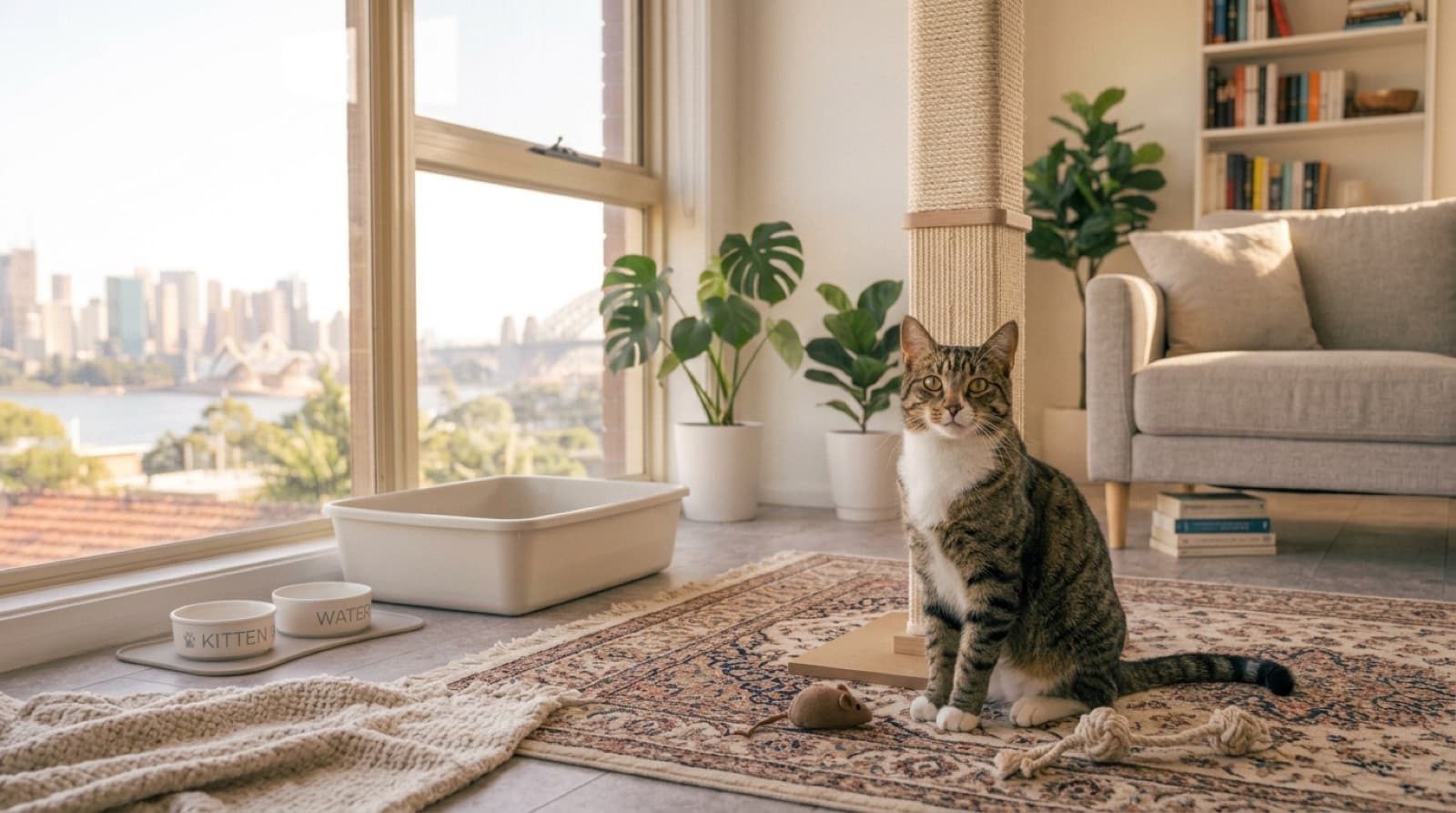
The short answer
The Domestic Shorthair, or moggy, is the most common and most adoptable cat in Brisbane, and often the best first cat. It is not a breed. It is any short-coated mixed cat, which comes in every colour and personality. That mixed background makes DSH cats hardy and long-lived, often 15 to 20 years. Almost every Brisbane rescue cat is a DSH, so you have huge choice, and the adoption fee is the lowest of any cat type, generally $100 to $300, with desexing, vaccination, microchipping and a FIV check included. Choose on temperament, not colour.
What a Domestic Shorthair actually is
A Domestic Shorthair is any short-coated cat of mixed or unknown ancestry. That is the whole definition. It is not a breed with a written standard, the way a Ragdoll or a British Shorthair is. It is a category that covers the ordinary pet cat, the one most Australians grew up with and simply call a moggy.
Because a DSH has a mixed family tree, it can be any colour or pattern you can think of. You will see brown and grey tabbies, black cats, white cats, tuxedos in black and white, ginger cats, tortoiseshells, calicos and every mix in between. Two DSH kittens from the same litter can look completely different. What they share is a short coat and no pedigree, and that is exactly what makes them so common in rescue.
If a cat is short-haired and not a registered breed, it is a Domestic Shorthair. A long-haired mixed cat is technically a Domestic Longhair, but in casual Australian speech both get called moggies. When you browse the Brisbane cat listings, the great majority of what you see will be Domestic Shorthairs.
Why a Domestic Shorthair is a great choice
The mixed background that makes a DSH hard to label is also its biggest advantage. Broad genetic diversity, sometimes called hybrid vigour, tends to make Domestic Shorthairs hardy and healthy. They avoid a lot of the inherited conditions that turn up in some closely bred pedigree lines, and they are typically long-lived, often reaching 15 to 20 years with good care.
Choice is the other big win. Because almost every rescue cat is a DSH, you are not waiting for a rare breed to appear or joining a breeder list. Brisbane rescues take in far more cats than they can quickly rehome, especially over kitten season in the warmer months, so there is always a wide range of ages, colours and personalities ready to meet you.
A DSH is also the most affordable cat there is, because there is no breeder premium built into the fee. And with no fixed breed temperament, you get to choose on personality instead. The rescue can point you to a bold lap cat or a gentle quiet one, whichever fits your home. For a first cat, that mix of hardy, affordable and personality-matched is hard to beat. The RSPCA Australia Knowledgebase is a good general reference on cat care and welfare as you plan.
Where to adopt a Domestic Shorthair in Brisbane
Because nearly every rescue cat is a DSH, this part is easy: almost any Brisbane cat rescue will have them, of every age and colour. These are the main groups to start with. Browse a few at once, since good cats move quickly, and see every one currently listed on the Domestic Shorthair listings.
1. RSPCA Queensland
The state body runs its main Animal Care Campus at Wacol plus other South East Queensland centres, rehoming a steady stream of Domestic Shorthairs and kittens. Every adoption covers desexing, vaccination, microchipping and a vet check. Listings at rspcaqld.org.au.
2. Animal Welfare League Queensland (AWLQ)
A long-running no-kill charity with re-homing centres at Willawong, Warra, Beenleigh and Coombabah, plus a foster network that means honest temperament notes on how a cat behaves with people, children and other pets. Adoption includes desexing, vaccination, microchipping and a vet check. Listings at awlq.org.au.
3. Animals in Need Brisbane
A Brisbane volunteer rescue that fosters cats in real homes before rehoming, so you get detailed notes on how each moggy behaves day to day, including with children and other animals. More at animals-in-need-brisbane.com.au.
4. Healing Angels Animal Rescue
A South East Queensland foster-based rescue rehoming cats and kittens, where the foster model again means honest, day-to-day temperament notes on each cat. That is exactly what you want when choosing an indoor moggy. Information at healingangelsanimalrescue.org.
5. PetRescue
A national aggregator that lists cats from many smaller Queensland rescues in one searchable place, which is the easiest way to see a wide range of Domestic Shorthairs across Brisbane at once. Browse at petrescue.com.au.
What a Domestic Shorthair costs to adopt
A DSH is the cheapest cat you can adopt, because there is no breeder premium. As a guide across Brisbane rescues:
- Adult DSH: about $100 to $250, all inclusive of desexing, F3 vaccination, microchipping and a FIV check.
- DSH kitten: about $150 to $300, covering the same vet work plus the early vaccination course.
- Senior or long-waiting cats: often discounted or fee-waived to help them find homes.
Every one of those fees already includes desexing, vaccination, microchipping, a FIV check, worming, flea treatment and a vet check. That is hundreds of dollars of veterinary work done before you take the cat home. Compare that with buying a kitten privately, which costs far more up front with none of the vet work done. Adopting a moggy is both cheaper and already vetted. For a full breakdown of the fee, what it includes and the ongoing costs of a Brisbane cat, see the cat adoption costs guide.
Browse adoptable Domestic Shorthairs in Brisbane
Moggies of every colour and age, from playful kittens to settled adults, from rescues across Brisbane and Queensland. All desexed, vaccinated, microchipped and FIV tested.
See Available DSH Cats →Choosing your Domestic Shorthair
With a DSH there is no breed temperament to research, which means the match comes down to the individual cat. That is a good thing. The best predictor of a happy adoption is not the cat's colour, it is the fit between its personality and your home. Read the foster or shelter notes carefully. They tell you whether a cat is a confident lap cat or a shy slow-burner, whether it is relaxed with children, dogs or other cats, and how much play and attention it wants.
A few groups of moggies are worth a special look, because they are overlooked and wait longest:
- Adult and senior cats. Calmer, known personalities, and often the easiest introduction to a busy household. Browse senior cats.
- Bonded pairs. Two cats that keep each other company while you are out, which prevents the loneliness that causes problems in single indoor cats. See bonded pairs.
- FIV positive cats. A cat-only virus that does not affect people or dogs. These moggies live long, normal lives indoors and are among the most passed over.
If you are deciding between a kitten and an adult, an adult with a known temperament is usually the safer bet, especially for a first cat or a busy home. For the wider picture on applying, meeting cats and settling one in, our Brisbane cat adoption guide walks through the whole process.
Does colour tell you anything?
People often ask whether a ginger cat is friendlier, or whether a tortoiseshell has more attitude. It is a fun question, and there are long-held beliefs about it, but colour is not a reliable guide to how an individual cat will behave. A DSH is a mix, and personality comes from the cat, not the coat. Pick the moggy whose foster notes match your home, whatever its colour.
If you enjoy the topic, we go deeper into the common colours and patterns, and the myths and grains of truth around each, in the DSH colours and personality guide.
Keeping a moggy indoors in Brisbane
Most Brisbane rescues now adopt cats out to live indoors or with contained outdoor access, and they will ask about your setup during the application. This is not rescues being fussy. Brisbane has heavy traffic, year-round paralysis ticks, cane toads that are toxic if a cat mouths them, snakes, cat fights that spread disease, and native wildlife that free-roaming cats harm. Indoor cats also live longer, which is a big part of why a DSH can reach 15 to 20 years.
An indoor moggy is a happy one when the home is set up for it: vertical space to climb, scratching posts, a window perch, daily play, cool spots for Brisbane's hot humid summers and ideally a companion cat. We cover the full case, including catios, cane-toad and tick safety, and how to transition an outdoor cat indoors, in the indoor versus outdoor cats guide.
Moggy versus purebred, and a scam warning
Some people set out wanting a pedigree cat and assume a moggy is second best. For most homes, the opposite is closer to the truth. A Domestic Shorthair is generally hardier and longer-lived than a closely bred pedigree, costs a fraction to bring home, and arrives already desexed, vaccinated, microchipped and FIV tested. You also get to choose the exact personality you want rather than a fixed breed temperament. There is no shortage of DSH kittens in Brisbane rescue, so there is no need to buy one.
That matters for safety, not just cost. The online pet market in Australia is a documented hotspot for deposit scams, where a seller asks for money for a kitten that does not exist and then disappears. The ACCC Scamwatch has recorded these. Never send money before you have confirmed a real, registered rescue with a physical location and a current adoptable-cat list. When Brisbane rescues are full of Domestic Shorthairs needing homes, there is rarely a good reason to take that risk.
The Queensland basics before you bring one home
Queensland has clear rules for cat ownership under the Animal Management (Cats and Dogs) Act 2008, and a rescue handles most of them for you. Every cat must be microchipped by 12 weeks of age or before it is sold or given away, whichever comes first. Unlike New South Wales, Brisbane City Council does not require cats to be registered, so there is no annual cat registration here, though confirm the current rules with your own council. A rescue cat is already desexed and microchipped, so your job is mainly to update the microchip ownership details to you. For general veterinary guidance the RSPCA Australia Knowledgebase and the Australian Veterinary Association are reliable, and always speak to your own vet about an individual cat.
Frequently Asked Questions
What is a Domestic Shorthair cat?
A Domestic Shorthair, or DSH, is any short-coated cat of mixed or unknown ancestry. It is the everyday moggy that makes up the vast majority of pet cats in Australia and almost every cat in Brisbane rescue. A DSH can be any colour or pattern, from tabby and tuxedo to ginger, black, calico or grey. The term describes the coat and the mixed background, not a pedigree. If a cat is short-haired and not a registered breed, it is a Domestic Shorthair.
Is a Domestic Shorthair a breed?
No. A Domestic Shorthair is a category, not a breed. A breed like a Ragdoll or a British Shorthair is bred to a written standard for a predictable look and temperament. A DSH is simply a short-haired cat with a mixed family tree, so no two look or act exactly alike. That mixed background is a strength, not a downside. It gives DSH cats broad genetic diversity, which tends to make them hardy and long-lived compared with some closely bred pedigree cats.
How much does it cost to adopt a DSH cat in Brisbane?
A Domestic Shorthair is the cheapest cat you can adopt, generally $100 to $250 for an adult and $150 to $300 for a kitten, because there is no breeder premium. That fee already covers desexing, F3 vaccination, microchipping, a FIV check, worming, flea treatment and a vet check. RSPCA Queensland, Animal Welfare League Queensland and smaller foster-based Brisbane rescues all rehome Domestic Shorthairs, and every fee includes that vet work. Buying a kitten privately costs far more with none of that vet work done, so adopting a moggy is both cheaper and already vetted.
Where can I adopt a Domestic Shorthair in Brisbane?
Almost any Brisbane cat rescue, because nearly every rescue cat is a DSH. Good places to start are RSPCA Queensland at Wacol, Animal Welfare League Queensland with centres at Willawong, Warra, Beenleigh and Coombabah, Animals in Need Brisbane and Healing Angels Animal Rescue. PetRescue aggregates listings from many smaller Queensland rescues in one searchable place. You will find Domestic Shorthairs of every age and colour at all of them. The easiest route is to browse current listings, read the foster notes, and apply for a couple of cats whose temperament suits your home.
Are Domestic Shorthairs good cats?
Yes, and for most people they are the best choice. Because DSH cats come from a wide gene pool, they are generally healthy, hardy and long-lived. They come in every personality, from bold lap cat to quiet observer, so the rescue can match you to a temperament rather than a look. There is no breed baggage to research and no breeder waitlist. A settled adult moggy with known behaviour is often the easiest first cat a household can bring home.
How long do Domestic Shorthair cats live?
Domestic Shorthairs are typically long-lived, often reaching 15 to 20 years, especially as indoor cats. Their mixed ancestry gives them genetic diversity that tends to protect them from some of the inherited conditions seen in closely bred pedigree lines. Lifespan still depends on care: desexing, indoor or contained living, a good diet, regular vet checks and year-round parasite prevention all add years. An indoor DSH kept at a healthy weight can be a companion for two decades.
Is a moggy the same as a Domestic Shorthair?
Yes, in everyday Australian use a moggy is a Domestic Shorthair. Moggy is the casual word for a mixed-breed pet cat, and most moggies are short-haired, which makes them Domestic Shorthairs. A long-haired mixed cat is technically a Domestic Longhair, but people still call it a moggy too. The point is the same either way: a moggy is a non-pedigree cat, exactly the kind that fills Brisbane rescues and makes a wonderful, hardy pet.
Should I adopt a DSH kitten or an adult?
Both are great, and an adult is often the easier choice. A DSH kitten is playful and adaptable but needs supervision, kitten-proofing and time, and its adult personality is still forming. An adult DSH has a known temperament the rescue can describe, so you know whether it is a lap cat, whether it is relaxed with children or other pets, and how much energy it has. Adults and seniors also wait far longer for homes and are frequently overlooked. If you want a calm companion or it is your first cat, a settled adult moggy is usually the smarter match.
Do I need to microchip and register a Domestic Shorthair in Brisbane?
Under the Queensland Animal Management (Cats and Dogs) Act 2008, a cat must be microchipped by 12 weeks of age or before it is sold or given away, whichever comes first. Unlike New South Wales, Brisbane City Council does not require cats to be registered, so there is no annual cat registration to pay in Brisbane, though you should confirm the current rules with your own council. A rescue cat is already desexed and microchipped when you adopt, so your main job is to update the microchip ownership details so the cat is registered to you.
Keep reading
Domestic Shorthairs in Brisbane
Live listings of adoptable moggies of every colour and age across Brisbane and Queensland rescues.
DSH Health & Lifespan in Brisbane
Why Domestic Shorthairs are hardy and long-lived, and how to keep a moggy healthy for 15 to 20 years.
DSH Colours & Personality
Tabby, tuxedo, ginger, calico and more, plus what colour does and does not tell you about a cat.
All Cat Adoption Guides
Every LocalPetFinder resource on adopting and caring for a rescue cat in Brisbane and Queensland.