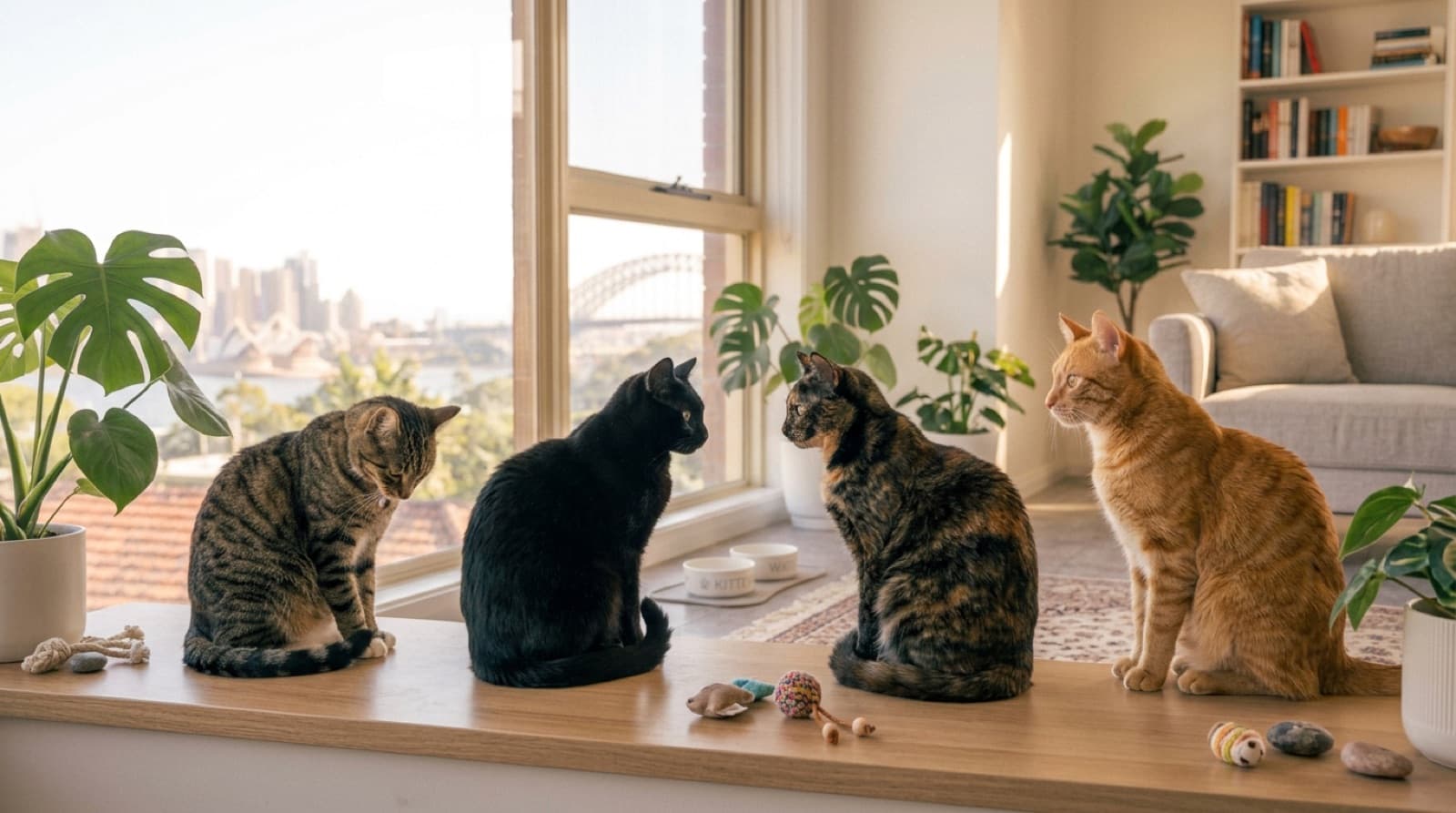
The short answer
Coat colour is fun, but it does not reliably predict personality. What actually shapes a cat is its genetics, how well it was socialised as a kitten, and its own experiences. A few colour facts are real genetics: calico and tortoiseshell cats are almost always female, and ginger cats are more often male. But tortitude and the friendly ginger are folklore, not science. The best guide to any cat's nature is its foster notes and the time you spend meeting it, never the colour of its fur.
First, what a Domestic Shorthair actually is
Most cats in Brisbane rescue are Domestic Shorthairs, and it helps to know that this is a category, not a breed. A Domestic Shorthair is simply a short-coated cat of mixed or unknown ancestry, the moggy of the cat world. It is the feline version of a mixed-breed dog. That mixed background is a good thing, because it usually means a hardy, healthy cat with none of the exaggerated features that cause trouble in some purebreds.
Because a Domestic Shorthair is not a breed, its colour and pattern are also not a breed. Tabby, tuxedo, calico, tortie, ginger and black are all coat descriptions, not cat types. You cannot order a personality by picking a colour, any more than you can predict a person's character from their hair. If you want the full background on the category, our Domestic Shorthair breed page and our Domestic Shorthair adoption guide cover it in detail.
A quick guide to cat coat patterns
Here are the patterns you will see most often in Brisbane rescue listings, with the real genetics where it applies. Remember that many cats combine these, and that none of them tells you how the cat will behave.
Tabby
The most common pattern of all. Tabbies have stripes, swirls or spots, and almost all of them wear a distinctive M shape on the forehead. There are four main types: classic or blotched (bold swirls on the sides), mackerel (narrow vertical stripes like a fish skeleton), spotted (broken stripes that form spots), and ticked (each hair banded so the pattern looks soft and faint). Many other colours, ginger especially, are tabby-patterned too.
Tuxedo
A black-and-white bicolour cat, usually black over the back and head with a white chest, belly and paws, as if wearing a dinner suit. Tuxedo is a colour arrangement, not a breed, and it can appear in any cat. Some tuxedos have a white bib and mittens, others have splashes of white in different places.
Calico
Three colours in distinct patches: ginger, black and a clear amount of white. Calicos are almost always female, because the pattern relies on having two X chromosomes (more on that below). If you meet a calico, she is very likely a girl.
Tortoiseshell (tortie)
Ginger and black blended and mottled together, with little or no white, giving a marbled look. Like calicos, torties are almost always female. The idea of tortie attitude, or tortitude, is fun folklore but is not scientifically established. Torties come in every temperament, just like every other colour.
Ginger (orange)
Warm orange or marmalade cats, very often carrying a tabby pattern underneath. Ginger cats are more often male, roughly three in four, for the same X chromosome reason that makes calicos female. The cheerful, cuddly orange cat is a popular idea but it is folklore, not fact. Ginger says nothing about personality.
Black
A solid black cat, sometimes with a few stray white hairs. Black cats are just as loving and playful as any other, but they carry a real welfare problem: they are consistently overlooked in rescue and wait the longest for homes. More on that below, because it is the one part of this guide that genuinely matters for a cat's life.
Grey (blue) and white
Grey cats, often called blue, range from soft dove to deep slate. Pure white cats are less common. One genuine health note here: white cats with blue eyes have higher rates of deafness than other cats, which is a genetics link worth knowing. It does not make them any harder to love, and a deaf indoor cat lives a full, happy life, but ask the rescue and your vet about any individual white cat's hearing.
Colour and personality: the myth versus the evidence
Here is the honest position, and it is the reason this article exists. Coat colour does not reliably predict a cat's personality. The strong drivers of feline behaviour are genetics, how well a kitten was socialised in its first weeks, and the experiences the cat has had since. Authorities that owners can trust point the same way. The RSPCA Australia Knowledgebase and the Australian Veterinary Association both stress socialisation and individual temperament over anything cosmetic.
So why do the colour myths persist? Mostly because of confirmation bias. Once you expect a tortie to be sassy or a ginger to be a lap cat, you notice and remember the moments that fit the story and quietly forget the ones that do not. The pattern feels true even when it is not. It is the same reason star signs feel accurate.
None of this means you cannot enjoy the folklore. If you love the look of a marbled tortie or a marmalade ginger, that is a perfectly good reason to be drawn to a cat. Just make the final decision on the animal, not the myth. The foster or shelter notes, and the time you spend with the cat, will tell you whether it is confident or shy, cuddly or independent, calm or busy. Our cat adoption guide explains how to read those notes and choose for fit.
The genetics that are real
A few colour facts are genuine, settled science rather than folklore, and they are worth knowing because they let you guess a cat's sex from its coat. The genes for black and ginger colouring both sit on the X chromosome.
- Calico and tortoiseshell cats are almost always female. A female has two X chromosomes, so she can carry the black gene on one and the ginger gene on the other and show both colours at once. That mix is what makes the calico and tortie patterns.
- Ginger cats are more often male, roughly three in four. A male needs only his single X to be ginger, while a female needs the ginger gene on both of her X chromosomes, which is rarer. Ginger females are still common, just outnumbered.
- Male calicos and torties are rare. When they do occur, it is usually because of an unusual extra chromosome, and those males are often infertile. Meeting one is genuinely uncommon.
These are the only colour facts that predict anything, and what they predict is sex, not temperament. A cat's character still comes from its upbringing and its individual nature.
The black cat problem, and why it matters
If there is one thing to take from this article, it is this: black cats need homes more than any other colour. Rescues around Australia and overseas report the same pattern. Black cats, and black-and-white cats, are consistently passed over and spend longer waiting for adoption than cats of brighter colours.
The reasons say nothing about the cats and everything about us. Black cats can look similar to one another, so people feel they are less distinctive. They are genuinely harder to photograph well, which matters when most adopters browse online first and a poorly lit black cat can vanish into the background of a listing. And a thread of old superstition still puts some people off. None of it is fair. A black cat is exactly as affectionate, playful, chatty or calm as a cat of any other colour.
So if you are open to any colour, the kindest and often the smartest choice is the cat that has been waiting longest, and very often that is a black cat, a black-and-white cat, or an older tortie. Foster-based Brisbane rescues like Animals in Need Brisbane and Healing Angels Animal Rescue can point you straight to the ones who have been overlooked.
Browse adoptable Domestic Shorthairs in Brisbane
Tabbies, tuxedos, gingers, calicos, torties and black cats, every colour and every personality, from rescues across Brisbane and Queensland. Read the foster notes and find the one that fits your home.
See Available DSH Cats →How to actually pick a cat
If colour is not the guide, what is? The match between a cat's temperament and your home. That is the thing that decides whether an adoption is happy or hard, and it is knowable before you commit.
- Read the foster or shelter notes. A cat in foster care has been watched daily. The notes will tell you if it is a bold lap cat or a shy slow-burner, and how it goes with children, dogs and other cats.
- Watch behaviour, not the coat. When you meet a cat, notice how it approaches you, whether it settles, whether it plays. That tells you far more than the pattern of its fur.
- Match to your household. A calm adult suits a quiet home or a first-time owner. A busy young cat suits a lively household. Age and energy matter; colour does not.
- Stay open on colour. The cat that fits you best might be black, or a plain brown tabby, or a tortie. Keeping an open mind widens your choice and helps an overlooked cat.
Our cat adoption guide and Domestic Shorthair adoption guide both walk through this in more depth, including how the main Brisbane rescues describe their cats and what the adoption process looks like.
Every colour is available in Brisbane
The good news for adopters is that Brisbane rescue never runs short of cats, and it never runs short of colours. Across the main groups you will find tabbies, tuxedos, gingers, calicos, torties, greys, whites and plenty of black cats, in every age from kitten to senior. You are not compromising by adopting rather than buying. You are choosing from a bigger pool than any breeder can offer.
And the colours people wrongly treat as less desirable, black cats and older torties above all, are exactly the ones that need homes most. If you can look past the myths, you will find that a black cat curled on your lap is every bit as wonderful as a fancy purebred, and that it was your open mind, not the coat colour, that made the difference. Browse the full range on the Brisbane cat listings and see who is waiting.
Frequently Asked Questions
Does a cat's coat colour affect its personality?
Not in any reliable way. A cat's personality comes from its genetics, how well it was socialised as a young kitten, and its own life experiences, not from the colour of its fur. Bodies like the RSPCA and the Australian Veterinary Association point owners toward early socialisation and each cat's individual temperament as the things that actually shape behaviour. Colour myths are fun, and some are so common that people believe them, but a tortie is not automatically feisty and a ginger is not automatically cuddly. The most reliable guide to any cat's nature is its foster or shelter notes, which describe the real animal in front of you.
Are calico and tortoiseshell cats always female?
Almost always, yes, and this one is real genetics rather than folklore. The genes for black and ginger colouring sit on the X chromosome. A female cat has two X chromosomes, so she can display both colours at once, which is what makes the calico and tortoiseshell patterns. A male usually has just one X, so he normally shows one colour, not the mottled mix. Male calicos and torties do exist, but they are rare and result from an unusual extra chromosome, and they are often infertile. So if you meet a calico or a tortie, she is very likely a girl.
Why are orange cats usually male?
For the same X chromosome reason that makes calicos female. The ginger colour gene sits on the X chromosome. A male cat needs only one copy to be ginger, while a female needs two, which is a rarer combination. That is why ginger cats skew male, roughly three in four, though ginger females are perfectly common too. It is a genetics fact, not a personality one. Being ginger tells you nothing about whether a cat will be bold, shy, playful or calm.
Do tortoiseshell cats really have attitude?
The idea of tortie attitude, sometimes called tortitude, is folklore and is not scientifically established. Plenty of tortoiseshell cats are bold and chatty, and plenty are gentle lap cats, exactly like cats of every other colour. What people are often noticing is confirmation bias: once you expect a tortie to be sassy, you remember the moments that fit. If you like the striking mottled look of a tortie, adopt one, but choose the individual based on the foster notes and how she behaves when you meet her, not on the colour myth.
Are black cats harder to adopt?
Yes, and it is a genuine, well-documented pattern in rescue. Black cats are consistently overlooked and tend to wait longer for homes than cats of other colours. Rescues report a few reasons: black cats can look similar to one another so they feel less distinctive, they are harder to photograph well for online listings, and lingering superstition still puts some people off. None of it reflects the cat. A black cat is exactly as loving, playful or calm as any other. If you want to do real good, a black cat or a black-and-white one is often the cat that needs you most.
What is the difference between a calico and a tortoiseshell?
It comes down to white. A calico has three colours in distinct, separated patches: ginger, black and a clear amount of white. A tortoiseshell has the ginger and black blended and mottled together, with little or no white. Think of a calico as bold blocks of colour and a tortie as a swirled, marbled mix. Both patterns are almost always female for the same X chromosome reason. Neither pattern is a breed, and neither predicts personality. They are simply two ways the same colour genes can show up on a cat's coat.
What is a tabby cat?
A tabby is a coat pattern, not a breed, and it is the most common pattern you will see in Brisbane rescue. Tabby cats have stripes, swirls or spots, and nearly all of them carry a distinctive M shape on the forehead. There are several tabby types: classic or blotched (bold swirls on the sides), mackerel (narrow vertical stripes like a fish skeleton), spotted (broken stripes forming spots), and ticked (each hair banded with colour so the pattern looks faint). A ginger cat is very often a tabby too. Because the pattern is so common, tabby says nothing about personality.
Are ginger cats friendlier?
There is no reliable evidence that ginger cats are friendlier, even though the cheerful orange cat is a popular idea. Friendliness comes from genetics, early socialisation and how a cat has been treated, not from coat colour. Some ginger cats are outgoing and some are reserved, just like cats of every colour. If a relaxed, sociable cat is what you want, look for one the rescue describes that way in its notes, and spend time with the cat before you decide. That will tell you far more than the colour ever could.
Keep reading
Domestic Shorthair Cats in Brisbane
Live listings of tabby, tuxedo, ginger, calico and black moggies across Brisbane and Queensland rescues.
Domestic Shorthair Adoption Guide
Where to adopt a moggy in Brisbane, what it costs, and how to choose the right cat for your home.
DSH Health & Lifespan in Brisbane
Why moggies are hardy and long-lived, and how to keep a Domestic Shorthair healthy for 15 to 20 years.
All Cat Adoption Resources
Guides on adopting, kitten care, indoor living and costs for cats in Brisbane and Queensland.