The short answer
The bottom line: a rescue cat in Brisbane costs about $100 to $250 for an adult or $150 to $300 for a kitten, and that fee bundles in desexing, vaccination, microchipping and a FIV check. Add roughly $200 to $450 for one-off gear like a litter tray, bowls, a scratching post and a carrier. Then, as a rough guide, plan for around $1,000 to $2,000 a year for food, litter, a vet check and year-round parasite prevention. Brisbane has no council cat registration fee, but paralysis tick prevention is a real ongoing SEQ cost. Adopting beats buying on price because the vet work is already done.
The adoption fee, and what it includes
Adoption fees in Brisbane are modest, and they represent real value once you see what is packed into them. As a guide across Queensland rescues, an adult cat costs about $100 to $250 and a kitten about $150 to $300. Senior and long-waiting cats are often discounted or fee-waived to help them find homes. The larger shelters, like RSPCA Queensland at Wacol and the Animal Welfare League Queensland at Willawong and Warra, sit in this range, and smaller foster-based groups like Animals in Need Brisbane and Healing Angels do too.
What makes the fee good value is everything the rescue has already done. Nearly every Brisbane cat adoption includes desexing, an F3 vaccination course, microchipping, a FIV blood test, worming and flea treatment and a full vet check. Because Queensland law requires a cat to be microchipped by 12 weeks before it can be sold or given away, your rescue cat comes to you already chipped. That is hundreds of dollars of veterinary work built into a fee that is a fraction of a private kitten price.
Compare that with buying. A privately sold or breeder kitten costs far more up front and arrives with none of that vet work done, so you pay for desexing, vaccination and microchipping yourself in the first months. Adopting is cheaper and safer at the same time. For the full picture on where to adopt and how the process works, see our Brisbane cat adoption guide.
One-off setup costs
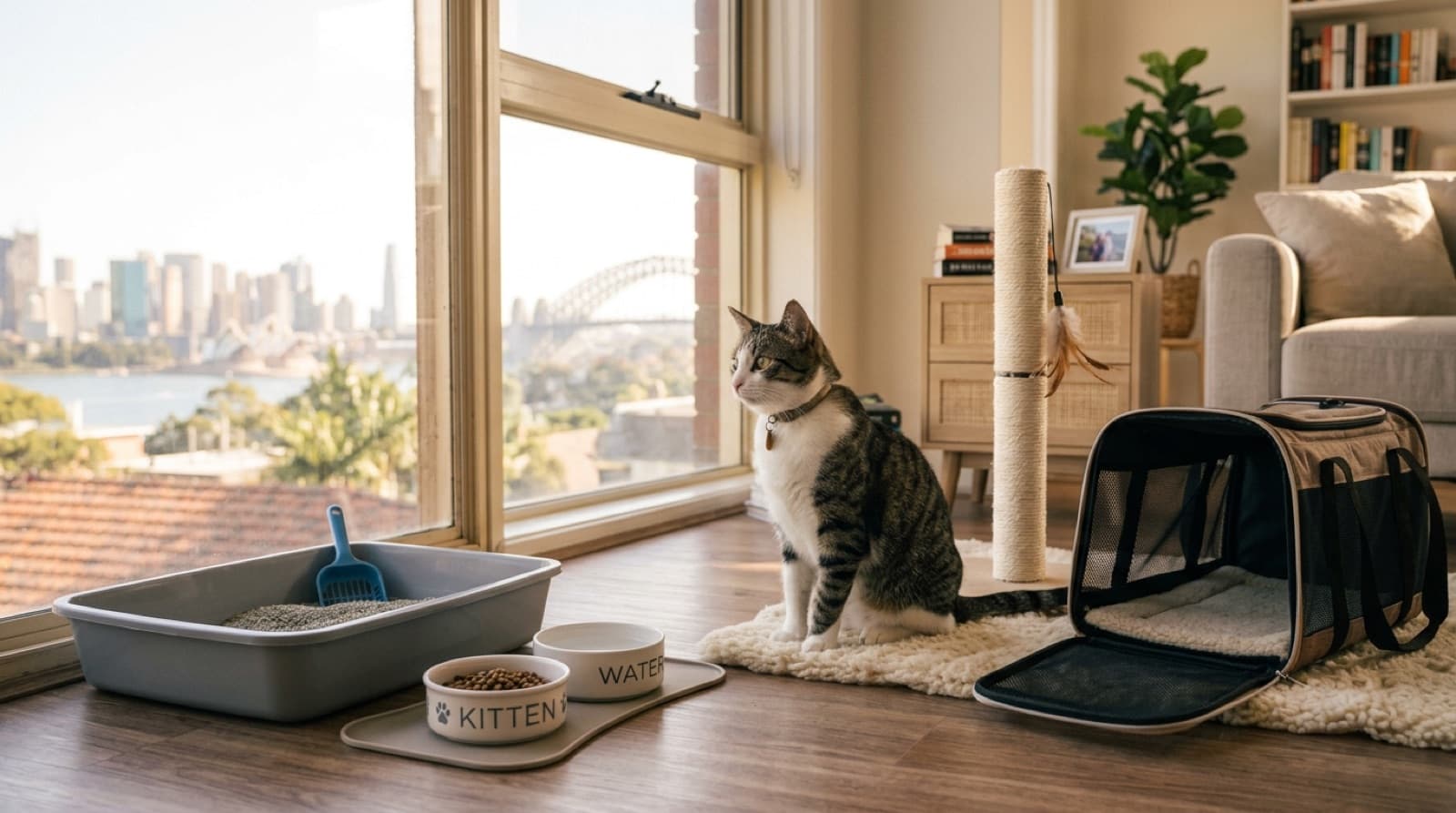
Beyond the fee, your only real up-front spend is gear. A sensible starter set runs roughly $200 to $450, and you can spend less by buying second-hand or starting simple. These are the items worth having ready before the cat arrives:
- Litter tray and litter: about $25 to $70 to start. One tray per cat plus one spare is the common rule.
- Food and water bowls: around $15 to $40. Ceramic or stainless is easy to clean.
- Scratching post or cat tree: roughly $40 to $150, and the one item worth spending on. It saves your furniture and gives an indoor cat somewhere to stretch and climb.
- Bed: about $20 to $60, though many cats happily claim a folded blanket.
- Carrier: around $30 to $80. A hard-sided carrier makes vet trips far calmer and safer.
- Microchip detail update: usually a small or nil fee to update the record into your name and contact details after adoption.
- Starter toys: about $15 to $40. A wand toy and a couple of small toys are plenty at first.
You do not need everything premium on day one. Ask the rescue what litter and food the cat is used to and match it for the first week, which keeps the settling-in period smooth. If you are bringing home a kitten, our new kitten guide has the full first-month checklist.
Ongoing yearly costs
This is where most of the money goes over a cat's life. As a rough guide, plan for roughly $1,000 to $2,000 a year for one indoor cat in Brisbane, and treat that as an estimate that moves with your choices, not a fixed bill. The main lines are:
- Food: roughly $400 to $900 a year, depending on quality and whether you feed wet, dry or both.
- Litter: about $150 to $350 a year for a single indoor cat.
- Annual vet check and any booster: commonly $80 to $200, more if a dental or extra treatment is needed.
- Year-round parasite and tick prevention: a genuine SEQ line item. Plan for a regular cat-safe product on your vet's advice that covers fleas, worms, heartworm and paralysis ticks. This is covered in detail below.
- Pet insurance (optional): the biggest swing. Budget monthly cover can be modest, while comprehensive cover for an older cat runs much higher.
- Council registration: nothing to budget here. Brisbane City Council does not register or charge an annual fee for cats.
One-off events lift a given year above the range: a dental, a swallowed object, or a tick emergency can each run into the hundreds or thousands. That unpredictability is exactly why the levers below matter so much. The RSPCA Australia Knowledgebase is a good plain-English reference for routine cat care and preventive health.
The Brisbane cost levers
Two things are different about the Brisbane numbers compared with cooler southern cities, and both are worth knowing before you adopt.
The first is a saving. Brisbane has no council cat registration cost. Under the Animal Management (Cats and Dogs) Act 2008, the legal requirement for a cat is microchipping by 12 weeks and before sale or transfer, not annual registration. Brisbane City Council does not charge a yearly cat rego fee, and only asks for a permit if you keep four or more cats. Your rescue cat is already microchipped, so the only thing left to do is update the chip record into your name. The Queensland Government sets out the state pet laws in plain English.
The second is a real cost that southern owners often underestimate: the paralysis tick. South East Queensland is tick country, and the risk here runs effectively year-round rather than only in summer. The tick lives in bushland and backyards across the region, and its toxin causes ascending paralysis that is fatal to cats without prompt veterinary treatment. A tick emergency is one of the most expensive and frightening vet events an owner can face. Consistent, year-round prevention is essential here, not optional. Ask your vet for a cat-safe tick and parasite product suited to your area, and use it every month without gaps. Never share a dog's tick treatment, because some dog products are toxic to cats. The Australian Veterinary Association and your local vet are the right sources for the current recommended product.
Adopt versus buy: the cost comparison
When you line up the numbers, adoption wins on price and on peace of mind. The table below shows why the fee is only part of the story.
| What you pay for | Adopt from a Brisbane rescue | Buy privately or from a breeder |
|---|---|---|
| Up-front price | $100 to $250 adult, $150 to $300 kitten | Often much higher, especially for popular types |
| Desexing | Included | Usually your cost later |
| Vaccination (F3) | Included | Often your cost |
| Microchipping | Included, required by QLD law | Required by law, not always done |
| FIV check | Included | Rarely done |
| Vet check and worming | Included | Your cost |
| Scam risk | Very low, real rescue with a location | Higher, the online market is a scam hotspot |
The private and online market is also where most pet scams sit. The ACCC Scamwatch records deposit scams where a seller asks for money for a kitten that does not exist. Adopting from a registered rescue with a current adoptable list removes that risk entirely.
Browse adoptable cats in Brisbane
Adults, kittens, seniors and bonded pairs from rescues across Brisbane and South East Queensland, all desexed, vaccinated and microchipped. Browse the live listings and find the one that fits your budget and home.
See Available Cats →Ways to keep costs down
The smartest savings are decisions you make before and just after adopting, not corners you cut on the cat's care.
- Adopt an adult or senior. They are often discounted or fee-waived, already desexed, and past the kitten stage that needs vaccination top-ups and constant supervision. Browse senior cats.
- Consider a bonded pair. Many rescues rehome pairs for a single combined fee rather than double, and two cats keep each other company, which prevents the boredom problems that cost money later.
- Keep the cat indoors or contained. Indoor cats avoid the fight abscesses, car injuries and tick emergencies that drive the biggest vet bills in SEQ. Our indoor versus outdoor guide covers how to set this up.
- Buy setup gear second-hand. Trays, carriers and cat trees are easy to find used, and cats do not care.
- Insure early or self-insure with discipline. A young, healthy cat is the cheapest to cover, or set aside a fixed monthly amount into a dedicated vet fund.
- Stay on top of year-round prevention. Consistent tick and parasite control and an annual check catch small problems before they become expensive ones.
Frequently Asked Questions
How much does it cost to adopt a cat in Brisbane?
An adult cat through a Brisbane rescue commonly costs about $100 to $250, and a kitten about $150 to $300. That single fee already covers desexing, an F3 vaccination course, microchipping, a FIV check, worming and flea treatment and a full vet check, which adds up to hundreds of dollars of veterinary work done before the cat comes home. Major Brisbane rescues like RSPCA Queensland at Wacol and the Animal Welfare League Queensland at Willawong list cats in this range, with senior and long-waiting cats often discounted or fee-waived. Compared with buying a kitten privately, adoption is both cheaper up front and safer, because the vet work is already done and you are dealing with a real rescue that has a physical shelter.
What is included in a cat adoption fee?
Nearly always: desexing, an up-to-date F3 vaccination, microchipping, a FIV blood test, worming and flea treatment and a full vet check. Because Queensland law requires a cat to be microchipped by 12 weeks before it can be sold or given away, a rescue cat comes to you already chipped and registered on the national microchip database. Some rescues add a starter pack or a short trial of pet insurance. Always confirm the exact inclusions with the specific rescue, but the core value is the same everywhere: the fee buys a vet-checked, desexed, microchipped cat, which is why it works out far cheaper than a private kitten once you total the separate vet bills.
How much does a cat cost per year in Brisbane?
As a rough guide, plan for roughly $1,000 to $2,000 a year for one indoor cat in Brisbane, and treat that as an estimate rather than a fixed figure. The main lines are quality food, litter, an annual vet check with any booster, and year-round parasite prevention that in South East Queensland must cover fleas, intestinal worms, heartworm and above all paralysis ticks. Pet insurance is optional and is the biggest swing: budget monthly cover can be modest, while comprehensive cover for an older cat runs much higher. One-off vet events like a dental or a tick emergency can lift a given year well above the range. The cheapest way to control the number is to insure the cat while it is young and healthy, and to keep it indoors so it avoids fight injuries and tick emergencies.
What do I need to buy before adopting a cat?
The essentials are a litter tray and litter, food and water bowls, a scratching post or cat tree, a bed, a carrier for vet trips, and a few toys. Expect roughly $200 to $450 for a decent starter set, less if you buy second-hand or start simple. A sturdy scratching post is the one item worth spending on, because it saves your furniture and gives an indoor cat somewhere to stretch and mark. You do not need to buy everything premium on day one. A rescue cat is already desexed, vaccinated and microchipped, so your setup budget is just gear, not vet work. Ask the rescue what litter and food the cat is used to so you can keep the first week consistent.
Is it cheaper to adopt or buy a cat?
Adopting is clearly cheaper, and it is not close. A Brisbane rescue adult cat costs about $100 to $250 and a kitten about $150 to $300, with desexing, vaccination, microchipping and a FIV check already included. A privately sold or breeder kitten costs far more up front and arrives with none of that vet work done, so you then pay for desexing, the vaccination course and microchipping yourself, often several hundred dollars more. On top of the price gap, the private and online market is where most pet scams sit. Adoption gives you a fully vetted cat for a fraction of the cost, from a real rescue with a physical location and a current adoptable list.
Do I pay to register my cat in Brisbane?
No. Brisbane City Council does not register or charge an annual registration fee for cats, so unlike some other Australian cities there is no yearly council cat rego cost to budget for. The one exception is that you need a permit if you keep four or more cats at one address. What Queensland law does require is microchipping: under the Animal Management (Cats and Dogs) Act 2008, a cat must be microchipped by 12 weeks of age and before it is sold or given away. A rescue cat is already microchipped, so this is handled for you. Just make sure the microchip record is updated into your name and contact details after adoption.
Why is year-round tick prevention a real cost in Brisbane?
Because South East Queensland is paralysis tick country, and the risk here is effectively year-round rather than only in summer. The paralysis tick lives in bushland and backyards across the region, and its toxin causes ascending paralysis that is fatal to cats without prompt veterinary treatment. A tick emergency is one of the most expensive and frightening vet events an owner can face in Brisbane. Consistent, year-round tick prevention is essential here, not optional, and it is a genuine ongoing cost that owners in cooler southern cities do not carry in the same way. Ask your vet for a cat-safe tick and parasite product, and never share a dog's treatment, because some dog tick products are toxic to cats.
Does pet insurance make sense for a cat in Brisbane?
For many Brisbane owners, yes, and the key is to start it while the cat is young. Pet insurance turns an unpredictable vet bill, a swallowed object, a dental, a tick emergency, into a predictable monthly cost. Premiums rise with age and pre-existing conditions are usually excluded, so a policy taken out on a young, healthy cat is both cheaper and more useful than one bought after a problem appears. Whether it pays off depends on your appetite for risk and your cash buffer. If a sudden $3,000 vet bill would be a genuine problem, insurance is worth serious thought. If you would rather self-insure, set money aside each month into a dedicated vet fund instead.
How can I keep cat ownership costs down?
The biggest savings come before you adopt. Choose an adult or senior cat, which is often discounted or fee-waived and already desexed, so you skip the kitten vaccination top-ups and the settling-in chaos. Consider a bonded pair, which many rescues adopt out for a single combined fee rather than double, and the two cats keep each other company so you avoid boredom-driven behaviour problems. Keep the cat indoors or contained, which prevents the fight injuries, abscesses and tick emergencies that drive the biggest vet bills in SEQ. Buy setup gear second-hand where you can, insure early while premiums are low, and stay on top of year-round parasite prevention so small problems never become expensive ones.
Keep reading
Adoptable Cats in Brisbane
Live listings of kittens, adults and seniors across Brisbane and SEQ rescues.
Cat Adoption Guide for Brisbane
Where to adopt, how the process works, the QLD law, and how to choose the right rescue cat.
New Kitten Guide for Brisbane
The first month with a rescue kitten: the checklist, kitten-proofing and settling in.
All Cat Adoption Resources
Every guide on adopting and caring for a rescue cat in Brisbane and SEQ.