The short answer
If you want a papered British Shorthair, buy from a breeder registered with a cat council who can show you the parents' heart (HCM) echocardiogram results, PKD1 DNA results and blood types. There is no DNA test for HCM in this breed, so a breeder who offers only “DNA tested” has not answered the heart question. No Australian breed club or cat council publishes a price range we could find; registered catteries set their own, so ask each one. Purebreds are uncommon in rescue, but British Shorthair crosses and round-faced grey cats do appear for a rescue fee of a few hundred dollars. Figures checked 9 November 2026, reference only, not quotes.
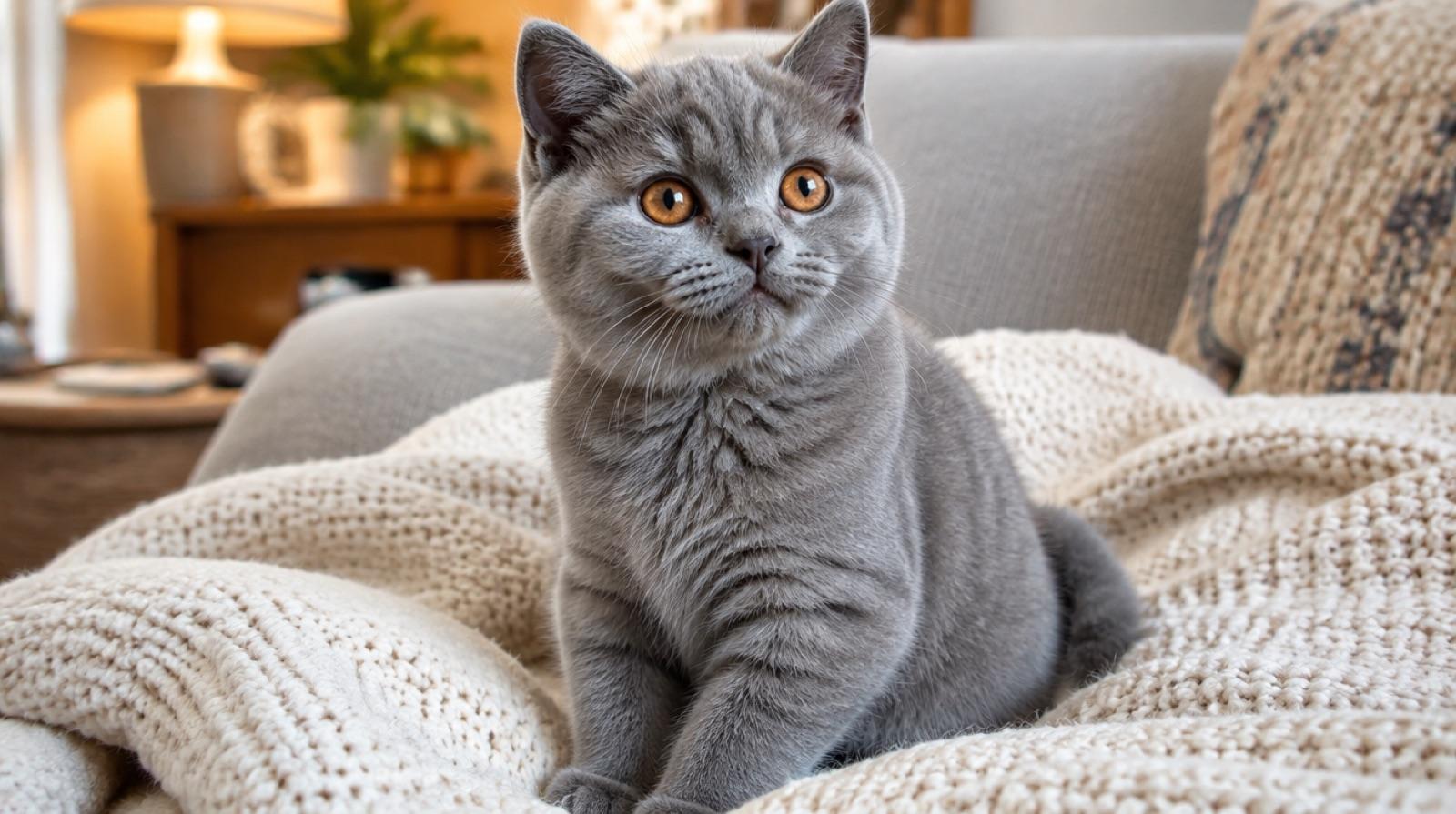
Should you adopt or buy a British Shorthair?
Buy if you want a pedigree British Shorthair with papers, and are willing to check the breeder's health testing properly. This breed has known heart and kidney risks, so the breeder you choose matters more than the colour you pick. Adopt if what you want is a calm, sturdy, undemanding cat: rescues list British Shorthair crosses and round-faced grey moggies, and the fee covers desexing, microchipping and vaccination.
The honest trade-off looks like this:
- A registered breeder. A known pedigree, the breed's look and temperament, and health results on the parents if you ask for them. A higher price and often a wait.
- A rescue, shelter or council pound. Lower cost, all vet work done, and a foster carer who can tell you what the cat is like. A purebred is uncommon, so you may be adopting the type rather than the breed.
- An unregistered seller or online ad. No health testing you can confirm, in a breed where testing is the point, plus the usual kitten scam risk.
What does a British Shorthair kitten cost?
Unlike the Russian Blue, whose breed council publishes a price range, we could not find an Australian British Shorthair club or cat council that publishes one when we checked on 9 November 2026. Registered catteries set their own prices. We do not quote a range from individual sellers, because it would read as a market rate that no independent body stands behind.
| Route | Reference cost | What is included | Source |
|---|---|---|---|
| Registered British Shorthair breeder | No published breed-club figure; set by each cattery | Varies: ask in writing about desexing, vaccinations, microchip, papers and the parents' health results | The breeder's own written terms |
| RSPCA NSW | $270 kitten (under 6 months); $220 adult cat | Desexing, microchipping, vaccinations and health checks | RSPCA NSW fees, read 9 Nov 2026 |
| Cat Protection Society of NSW | $150 per cat or kitten, $250 for two | Vet check, desexing, microchip, first vaccination, flea and worm treatment | Cat Protection Society, read 9 Nov 2026 |
Reference figures, not quotes. Rescue fees in other states are in our guide to kittens for sale in Australia, and our Ragdoll and Maine Coon price guides show how pedigree prices compare.
Whatever the price, the cost of the health testing is part of what you are paying for. A kitten sold cheaply because the parents were never screened is not a bargain in this breed.
What health tests should a British Shorthair breeder do?
Ask for three things on both parents: a heart scan (echocardiogram) for HCM, a PKD1 DNA result, and their blood types. “Vet checked” or “DNA tested” on its own does not answer the heart question.
Heart: hypertrophic cardiomyopathy (HCM)
HCM is a thickening of the heart muscle and the most common heart disease in cats. The 2020 ACVIM consensus statement, written by a panel of veterinary cardiologists, says most cats with HCM are not pedigree, but some pedigree breeds are believed to be at increased risk, and it names the British Shorthair among them alongside the Maine Coon, Ragdoll, Persian, Bengal, Sphynx, Norwegian Forest Cat and Birman. The UC Davis School of Veterinary Medicine lists the British Shorthair the same way.
The best measure we found of how common it is comes from a Danish study of 329 British Shorthairs screened by echocardiogram (Granström and colleagues, 2011). It found HCM in 8.5% of the cats, and in 20.4% of the males against 2.1% of the females, with the youngest affected cat under a year old. The authors recommended echocardiographic screening in the breed, especially for breeding cats, and cautioned that one country's cats may be more closely related than a larger population.
The key point for buyers: there is no DNA test for HCM in British Shorthairs. The only two known HCM mutations in cats belong to Maine Coons and Ragdolls, and the ACVIM statement says testing other breeds for them is not recommended. So the screening tool is an echocardiogram, an ultrasound of the heart. International Cat Care advises that breeding cats have an annual echocardiogram during their breeding years and that cats found to have HCM should not be bred from. Ask when each parent was last scanned and who did the scan.
Kidneys: polycystic kidney disease (PKD1)
PKD1 is an inherited condition in which cysts form in both kidneys, usually showing early but often leading to kidney failure later in life. The UC Davis Veterinary Genetics Laboratory describes it as common in Persians and cats with Persian ancestry, and lists the British Shorthair among the Persian-derived breeds appropriate for its PKD1 DNA test. It is autosomal dominant: a cat with one copy (N/P) is affected and passes it to 50% of its kittens, while a cat that tests N/N will not have this form of the disease and cannot pass this variant on. A breeder should be able to show N/N results for both parents.
Blood type
International Cat Care names the British Shorthair among breeds with a higher share of type B cats. Mating a type B queen with a type A tom can cause neonatal isoerythrolysis, a reaction that can kill newborn kittens, so it says the blood type of cats used for breeding should always be determined beforehand. A breeder who knows the parents' blood types is a breeder who is paying attention. Knowing your own cat's type also helps your vet if it ever needs a transfusion.
General information from the sources linked, not veterinary advice. Talk to your vet about any health question for a particular cat. More on day-to-day health is in our British Shorthair health guide.
See British Shorthairs and crosses listed near you
Purebreds are uncommon in rescue, so the breed pages also catch British Shorthair crosses as they are listed. Each listing links to the rescue, where you apply directly.
How do you check a British Shorthair breeder?
Pedigree cats in Australia are registered through cat councils, not a single national body. The main ones are ANCATS (Australian National Cats), the Australian Cat Federation with its state member bodies, and the Co-Ordinating Cat Council of Australia, whose members include the Feline Control Council of Victoria, the NSW Cat Fanciers Association and Cats Queensland. Registration with one of these is the starting point, not the finish line.
- Confirm the registration with the council yourself. Do not rely on a logo or a link the seller sends. ANCATS has a public “Check a Member” lookup.
- Check your state's number. NSW, Victoria, South Australia and the ACT all set rules for kitten ads. Look the number up on the official register; the full state table is in our kittens for sale guide.
- See the health results on paper. Echocardiogram reports for HCM with dates, PKD1 DNA results and blood types for both parents.
- Meet the kitten with its mother, in person or on a live video call you start.
- Get a written contract covering desexing, vaccinations, what happens if a health problem appears, and whether the breeder will take the cat back.
Rescue is not the right answer for everyone, and a breeder who passes all five checks is a reasonable choice if the pedigree matters to you.
How do British Shorthair kitten scams work?
We found no breed-specific scam warning for British Shorthairs from an Australian authority, so here is the general pattern from Scamwatch, which applies to any wanted breed: fake websites, social media profiles and marketplace listings for pets that do not exist, often with a very cheap price, which Scamwatch says is likely a scam. Scamwatch's advice is to view the pet in person at the breeder's or seller's place, ask for a video call if you cannot visit, check the breeder is legitimate, and compare prices.
- A cheap “British Blue” with papers. Ask which council registered it and check with the council.
- Fees after the deposit for transport, crates, insurance or vet certificates.
- Health claims with nothing behind them. “Fully DNA tested” but no echocardiogram report, in a breed with no HCM DNA test.
- Photos that appear elsewhere. Run a reverse image search before you pay anything.
If you have already paid, contact your bank straight away and report it to Scamwatch. More red flags, including the fake transport company pattern, are in our kittens for sale guide.
Is a British Shorthair the right cat for you?
The Cat Fanciers' Association describes a calm, quiet, extremely patient cat that enjoys people but would rather sit near you than on you, and that is not fond of being carried around. The breed standard calls for a medium to large, powerful cat with a round, massive head, a deep, broad chest and a short, very dense coat with a crisp feel. It also says the breed does not reach full size until about three years old.
- Good fit: a calm home, people who like an independent cat that stays close without demanding attention, older children who understand “sit beside, do not pick up”.
- Think twice: if you want a lap cat that loves to be held, or a very playful, high-energy cat.
- Not a reason to choose one: allergies. ASCIA says all cat breeds can cause allergies, and the dense coat changes nothing about that. Our guide to hypoallergenic cats explains why.
Torn between this breed and the slimmer, green-eyed blue cat? Our Russian Blue guide compares the two side by side, and the British Shorthair temperament and care guide covers grooming and keeping them lean.
What does a British Shorthair look like in rescue?
Usually a cross or a look-alike rather than a papered cat. Rescues label by appearance, so a stocky, round-faced grey domestic shorthair may be listed as a “British Blue” or “British Shorthair cross”. Grey is one of the most common moggy colours, as our guide to domestic shorthair colours and patterns explains, so treat the label as a description of the look and ask the rescue about the cat's personality. Adult cats come up too, and an adult's temperament is already known.
One practical upside: a rescue cat arrives desexed, which removes the breeding-related health questions above from your list, though any cat can still develop heart or kidney disease, so regular vet checks matter whatever its background.
British Shorthair listings in the big cities
- British Shorthairs for adoption in Sydney
- British Shorthairs for adoption in Melbourne
- British Shorthairs for adoption in Brisbane
- British Shorthairs for adoption in Perth
- British Shorthairs for adoption in Adelaide
- Australia-wide: the British Shorthair breed page.
City guides to adopting a British Shorthair
Each city guide names the local rescues, fees and council rules:
- British Shorthair adoption in Sydney
- British Shorthair adoption in Newcastle
- British Shorthair adoption in Melbourne
- British Shorthair adoption in Brisbane
- British Shorthair adoption in Gold Coast
- British Shorthair adoption in Perth
- British Shorthair adoption in Adelaide
Want a kitten of any breed? See kittens in Sydney or kittens in Melbourne, and take the adoption readiness check before you apply. Still deciding on a species? Try dog or cat?.
Frequently asked questions
How much is a British Shorthair kitten in Australia?▼
There is no published price range from an Australian British Shorthair breed club or cat council that we could find when we checked on 9 November 2026. Registered catteries set their own prices, so ask each breeder in writing and compare the health testing behind each price. A rescue cat costs a rescue fee, for example $220 for an adult cat or $270 for a kitten at RSPCA NSW. These are reference figures, not quotes.
What health tests should a British Shorthair breeder do?▼
Ask about three things. Heart: the breed is at increased risk of hypertrophic cardiomyopathy (HCM), there is no DNA test for it in British Shorthairs, so breeding cats should be screened by echocardiogram. Kidneys: the British Shorthair is on the UC Davis Veterinary Genetics Laboratory list of breeds appropriate for the PKD1 DNA test. Blood type: International Cat Care says breeding cats should always be blood typed, and the British Shorthair has more type B cats than most breeds. Ask to see the results.
Do British Shorthairs get heart disease?▼
They are one of the pedigree breeds believed to be at increased risk of hypertrophic cardiomyopathy (HCM), according to the 2020 ACVIM consensus statement on feline cardiomyopathies. A Danish study of 329 British Shorthairs screened by echocardiogram found HCM in 8.5% of them, and in 20.4% of the males, with affected cats as young as 10 months. Most cats with HCM are not pedigree, and the study's authors note their cohort may not represent the breed everywhere.
Is there a DNA test for HCM in British Shorthairs?▼
No. The two known HCM gene mutations in cats are in Maine Coons and Ragdolls, and the ACVIM consensus statement says testing for them in other breeds is not recommended because they are almost entirely specific to those two breeds. For British Shorthairs, echocardiography, an ultrasound of the heart, is the screening tool. International Cat Care advises that breeding cats have an annual echocardiogram during their breeding years.
Do British Shorthairs get polycystic kidney disease?▼
They can. PKD1 is an inherited kidney disease seen in Persians and cats with Persian ancestry, and the UC Davis Veterinary Genetics Laboratory lists the British Shorthair among the Persian-derived breeds appropriate for its PKD1 DNA test. The condition is autosomal dominant, so a cat with one copy is affected and passes it to about half its kittens, while a cat that tests N/N cannot pass this variant on. Ask the breeder for the parents' PKD1 results.
Can you adopt a British Shorthair from a rescue?▼
Sometimes, but purebreds are uncommon in Australian rescue. What appears more often is a British Shorthair cross or a round-faced grey domestic shorthair listed as a British Blue. Many have the calm nature people want, for a rescue fee that includes desexing, microchipping and vaccination. Watch the British Shorthair page for your city and set an alert.
Are British Shorthairs good family cats?▼
Often, for a calm family. The Cat Fanciers' Association describes the breed as calm, quiet and extremely patient, enjoying people but preferring to sit nearby rather than on a lap, and says they are not fond of being carried around. Children need to know that a British Shorthair would rather be sat beside than picked up.
Are British Shorthairs hypoallergenic?▼
No. The Australasian Society of Clinical Immunology and Allergy (ASCIA) says all cat breeds can cause allergies, because all cats have sebaceous glands. The British Shorthair's dense coat does not change that. If someone at home is allergic, see a doctor and spend long, repeated visits with the individual cat before you commit.
What is the difference between a British Shorthair and a Russian Blue?▼
Both are famous in blue, but they are built differently. A blue British Shorthair has a round, massive head, large round gold or copper eyes and a medium to large, powerful body with a deep, broad chest and a dense, crisp coat, according to the Cat Fanciers' Association standard. A Russian Blue has green eyes, a wedge-shaped head, large upright ears and a slender, long body with a silver-tipped coat.
How big do British Shorthairs get, and when are they fully grown?▼
Medium to large and solid. The Cat Fanciers' Association says males can reach about 17 pounds (around 7.7 kg) with females somewhat smaller, that the breed does not reach full size until about three years old, and that full maturity takes three to five years. A kitten's look will keep changing for longer than most cats.
How do I avoid a British Shorthair kitten scam?▼
Follow Scamwatch's advice: see the kitten in person or on a live video call, check the breeder is legitimate, and treat a very cheap kitten as likely to be a scam. Confirm the breeder's cat council registration directly with the council, look up your state's breeder or source number yourself, and never pay transport or insurance fees to a seller you have not met.
Where can I see British Shorthairs for adoption right now?▼
LocalPetFinder lists cats from the rescues, shelters and council pounds we aggregate, refreshed regularly. Open the British Shorthair page for Sydney, Melbourne, Brisbane, Perth or Adelaide to see current matches, and set an alert so you hear about new arrivals early. Each listing links to the rescue, where you apply directly.
Sources
- ACVIM consensus statement on feline cardiomyopathies (2020)
- UC Davis School of Veterinary Medicine: Hypertrophic cardiomyopathy
- Granström et al. 2011, Prevalence of HCM in British Shorthair cats in Denmark (J Vet Intern Med)
- International Cat Care: Cardiomyopathy (heart disease) in cats
- UC Davis Veterinary Genetics Laboratory: Polycystic kidney disease (PKD1)
- International Cat Care: Blood groups and blood incompatibility in cats
- Cat Fanciers' Association: British Shorthair breed profile and standard
- ASCIA: Pet allergy
- Scamwatch: Buying and selling scams (pet scams)
- RSPCA NSW: Adoption fees
- Cat Protection Society of NSW: Cats for adoption
Keep reading
British Shorthairs for adoption in Sydney
British Shorthairs and crosses listed by the Sydney rescues we aggregate, with each rescue's details on the profile.
Kittens for sale in Australia: adopt or buy?
Cat breeder rules state by state, kitten season, the kitten scam pattern and what rescue kittens cost.
Russian Blue kittens: adopt or buy?
The other blue cat: the breed council's price, the hypoallergenic myth and how to tell one from a grey moggy.
What cat breed am I?
A quick quiz on energy, coat and household to see which kind of cat suits you before you start looking.