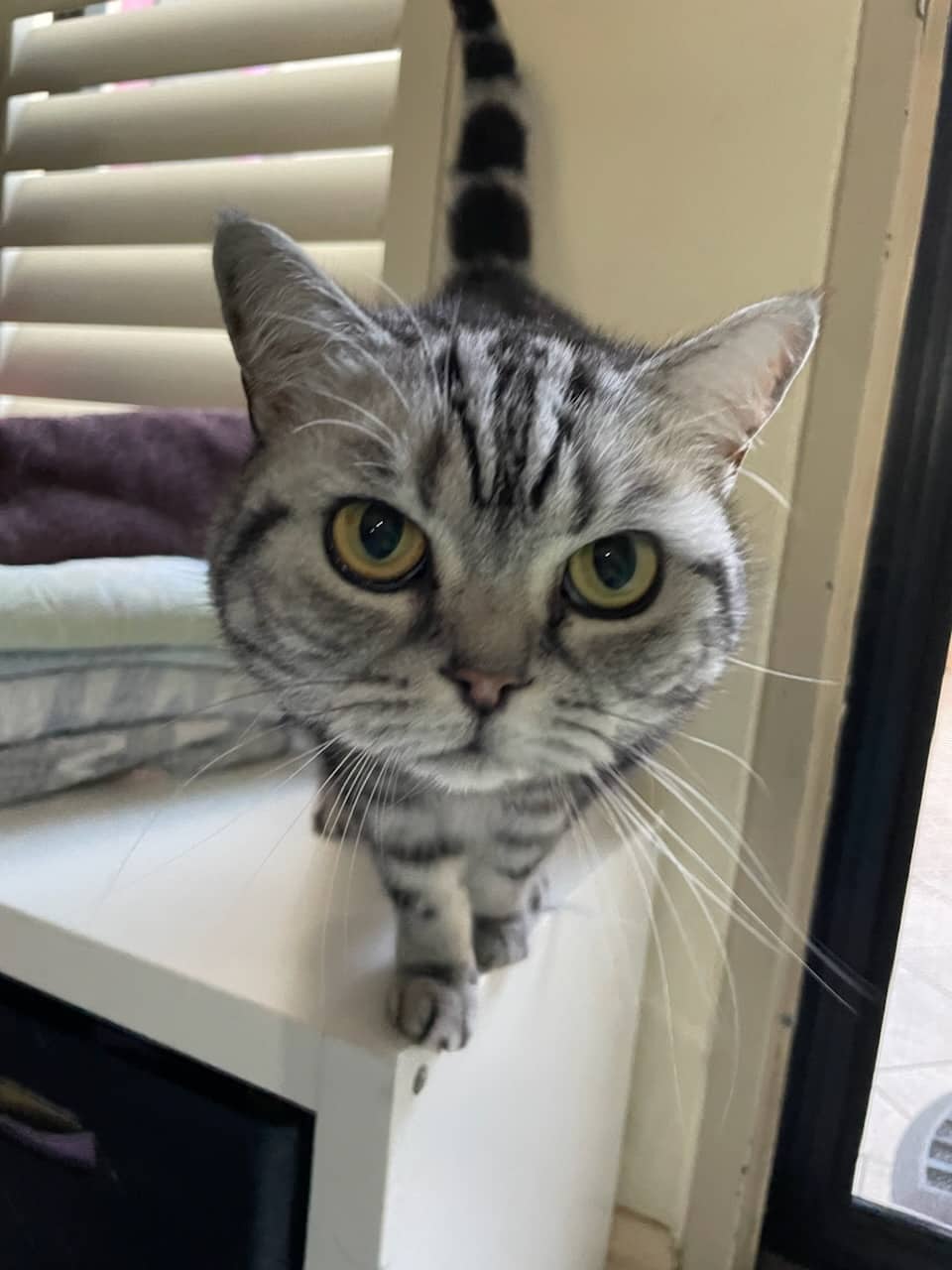
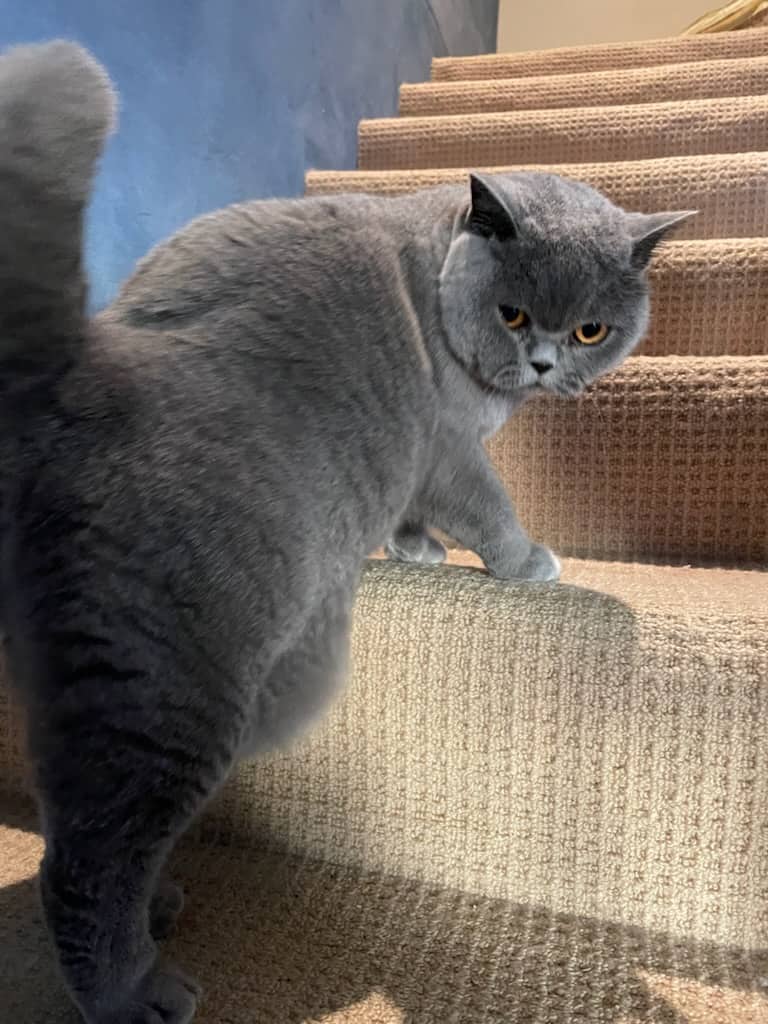
British Shorthairs are stocky, round-faced cats with dense plush coats; the original "British Blue" with its solid grey-blue coloring is the iconic look, but the breed comes in many colors. The Cat Fanciers' Association describes them as calm, quiet and extremely patient, and notes they are not fond of being carried around.
Most purebred British Shorthairs are bought from breeders, so in rescue you are more likely to meet a cross with the breed's round face and dense coat. The individual cat's temperament matters more than the label, so ask the foster carer how this cat behaves.
British Shorthairs are often described as more independent than very people-focused breeds, so some suit a household that is out during the day, though every cat still needs company and play. With slow, careful introductions many get on with children, dogs and other cats.
British Shorthairs in Sydney: adopt or buy?
The British Shorthair is one of the most searched-for cats in Australia, and almost all of that demand is aimed at breeders and kittens for sale, which is exactly why it is worth pausing on. A purebred British Shorthair in NSW rescue is genuinely uncommon, so if your heart is set on the round-faced blue cat specifically, expect to wait and to set an alert. But British Shorthair crosses and cats with the same calm, undemanding temperament turn up in rescue far more often than the pedigree does, and they make the same easy companion at a fraction of the cost.
Buying a kitten is not wrong, but do it with eyes open. A NSW sale advertisement must legally show an identification number, and a healthy pedigree comes from a breeder who screens for the breed's heart and kidney conditions rather than one selling a fashionable colour cheaply. If you are open to a cross or an adult, a rescue cat arrives desexed, vaccinated, microchipped and vet-checked, which is most of the early cost handled.
What the breed is actually like
British Shorthairs are calm, steady and independent rather than clingy. They tend to sit near you rather than on you, dislike being carried, and suit a household that wants an affectionate but low-drama cat. That easy nature comes with two practical watch-points: they are prone to putting on weight because they are not naturally busy, and the breed carries hypertrophic cardiomyopathy and polycystic kidney disease, which reputable breeders screen for. Keep a rescue British Shorthair lean, ask what the in-care vet assessment found, and insure young.
The dense, plush double coat is low-maintenance but not no-maintenance: a weekly brush keeps it right, stepping up during the seasonal moult. It is a coat that copes better with a cool night than with humid heat, so the summer care is the same as for any solid cat in NSW, shade, water in more than one spot and somewhere cool to lie.
- Calm and independent; sits near you, not on you, and dislikes being carried.
- Weight-prone, so portion the food and keep the cat lean.
- Screen the budget for heart (HCM) and kidney (PKD) conditions.
- Dense double coat needs a weekly brush, more during the moult.
Living with one in Sydney
The NSW health risk that catches new cat owners out is the paralysis tick, which is found along the NSW coast and in bushland and affects cats as well as dogs. RSPCA Australia says that "in the north, paralysis ticks may be found all year round, while in the more southern areas, the season generally begins in spring and finishes in late autumn", and that the season can start earlier after a mild winter (RSPCA Knowledgebase, kb.rspca.org.au, read 13 November 2026). It can be fatal. An indoor cat is far less exposed; if yours goes outside or lives near bush, ask your vet about a cat-safe tick product and never use a dog product on a cat.
Under the NSW Companion Animals Act your cat must be microchipped by 12 weeks of age, or before it is sold or given away, and registered for life on the NSW Pet Registry "either by 12 weeks of age or immediately upon transfer (whichever happens first)" (NSW Office of Local Government, checked 13 November 2026). Unlike Victoria there is no annual renewal, so it is a single lifetime fee, lower for a desexed cat, and a rescue cat comes to you already desexed and microchipped. Since July 2020 an annual permit applies to cats not desexed by four months, which is another reason a desexed rescue cat is the simplest path. Some NSW councils also declare cat prohibited areas to protect wildlife, so check your own council before you adopt.
Common British Shorthair health concerns
Breed-associated conditions worth asking any rescue about before you adopt. A good rescue will already know whether a cat has been assessed for these.
Hypertrophic cardiomyopathy
The breed has recognised predisposition to this heart muscle disease; screening is available.
Ask your vet about this before you adopt.
Polycystic kidney disease
An inherited cause of progressive kidney failure seen in the breed; a genetic test exists.
Ask your vet about this before you adopt.
Editorial summary for adopters, not medical advice. Ask the rescue about a specific cat's health, and consult your vet for individual guidance.
Breed and regulatory information cross-checked against NSW Pet Registry.
Get notified when a British Shorthair is listed
We will email you when a British Shorthair or British Shorthair cross becomes available for adoption from a rescue across Sydney and NSW.
Need to rehome your British Shorthair cat?
If you can no longer keep your British Shorthair cat, you can list them for free on LocalPetFinder. Your cat stays at home until you find the right family, you screen who applies, and there is no fee to list. Not sure yet? Our guide to how to rehome a British Shorthair responsibly walks through every option first.
List your cat for free →British Shorthair Adoption Guides
The pre-adoption reading list specific to British Shorthair cats in Sydney and NSW.
British Shorthair Adoption in Sydney
Where to adopt a British Shorthair or BSH cross, why they are rare in rescue, and adopt versus breeder cost.
British Shorthair Health Issues
The heart disease HCM, obesity as the number-one everyday risk, and the health signs to watch.
British Shorthair Temperament & Care
A calm, independent, affectionate-on-its-own-terms cat: plush-coat grooming, keeping them lean, and indoor life.
British Shorthair Adoption FAQ
Tap a question to expand.
How many British Shorthairs are available for adoption in Sydney?
A small number of British Shorthairs are listed in Sydney right now; the live count is at the top of this page. They are usually adopted quickly, so it is worth applying early or setting an alert.
Where can I adopt a British Shorthair near me in Sydney?
LocalPetFinder lists British Shorthair cats available for adoption from rescues across Sydney and New South Wales, including the Inner West, Eastern Suburbs, Northern Beaches and Western Sydney. Cat-focused rescues include the Cat Protection Society of NSW in Newtown and Brighter Future Cat Rescue, alongside RSPCA NSW, Sydney Dogs and Cats Home and Animal Welfare League NSW. Listings update regularly, so browse the British Shorthair cats above and apply through the rescue.
Are there British Shorthair rescues near Sydney?
Yes. Sydney and NSW rescues that list British Shorthair cats and British Shorthair crosses include the Cat Protection Society of NSW, Brighter Future Cat Rescue, RSPCA NSW, Sydney Dogs and Cats Home and Maggie's Rescue. A dedicated single-breed cat rescue is not always active, so setting an alert on the general rescues is the fastest path. Use LocalPetFinder to see which rescues currently have British Shorthair cats available near you.
Where can I adopt a British Shorthair kitten in Sydney?
Purebred British Shorthair kittens are uncommon in Sydney rescue and are usually adopted very quickly, so setting an alert here and being ready to apply is the best approach. Most British Shorthair cats in rescue are adults or British Shorthair crosses, and an adult cat is often the easier choice, already litter-trained, desexed and with a known temperament. Kitten season over spring and summer brings far more kittens into rescue. RSPCA NSW lists $270 for a kitten under six months, desexed, vaccinated and microchipped (checked 9 November 2026), against more from a breeder. If you searched "british shorthair kittens sydney" or "british shorthair kittens for sale", browse the British Shorthair cats above and set an alert for new arrivals.
Are these British Shorthair cats for sale in Sydney?
Not for sale, for adoption, which is usually the better deal. Every cat here comes from a Sydney or NSW rescue, a shelter or an owner rehoming them. A rescue adoption fee already includes desexing, vaccination and microchipping. As a reference, RSPCA NSW lists $220 for an adult cat and $270 for a kitten, and Cat Protection Society of NSW $150 per cat or kitten (checked 9 November 2026; reference figures, not quotes), against far more from a breeder with none of the vet work done. If you searched "british shorthair for sale sydney", adopting gets you a vetted cat for a fraction of the price.
Where can I buy a British Shorthair cat in Sydney, and should I?
You can buy from a registered breeder, but it is worth weighing against adoption first. A reputable breeder often charges well into four figures and may have a waitlist, while a rescue cat costs $100 to $300 fully vetted and may be available now. Be cautious of cheap "for sale" ads on classified sites and marketplaces, a known hotspot for deposit scams and backyard breeding. The ACCC Scamwatch has documented pet scams for animals that do not exist. For most Sydney homes, adopting is cheaper, safer and gives a cat in need a home.
Are British Shorthairs good for first-time cat owners?
They can be. The Cat Fanciers' Association describes the breed as calm, quiet and extremely patient, which suits many first-time owners. Every cat is different, so ask the foster carer how this cat behaves and whether it has any special needs.
How much grooming does a British Shorthair need?
Less than you'd expect from how plush the coat looks. Brush 1 to 2 times per week; the dense double coat needs occasional combing to prevent loose-fur buildup, especially during seasonal sheds in spring and autumn.
Do British Shorthairs like to be held?
Most British Shorthairs are not lap cats and don't love being picked up. They prefer to sit beside their human rather than on top. They will tolerate brief cuddles but typically prefer to set the terms of physical contact.
How long do British Shorthairs live?
Lifespans vary widely between individual cats. In a 2024 VetCompass study of cats under UK vet care, the British group (British Blue and British Longhair) had a life expectancy at birth of about 9.6 years. The ACVIM consensus statement lists the British Shorthair among breeds believed to be at increased risk of hypertrophic cardiomyopathy (HCM), a heart disease. Keep the cat at a healthy weight and see a vet for regular checks.
Should I adopt or buy a British Shorthair in NSW?
Most of the demand for this breed points at breeders, but adoption is worth trying first. A purebred British Shorthair is uncommon in NSW rescue, so set an alert if you want the pedigree specifically. British Shorthair crosses and cats with the same calm temperament appear in rescue much more often and give you the same easy companion, already desexed and vet-checked, at a fraction of a breeder price. If you do buy, a legitimate NSW ad must show an identification number, and a good breeder screens for the breed's heart and kidney conditions.
Are British Shorthairs affectionate?
Affectionate but on their own terms. A British Shorthair is calm and steady, tends to sit beside you rather than on your lap, and usually dislikes being picked up or carried. That suits people who want a loving but undemanding cat and are happy to let it come to them. Ask the foster carer what an individual cat is like, since rescue cats vary more than the breed stereotype suggests.
What health problems do British Shorthairs have?
The two to know are hypertrophic cardiomyopathy, the main inherited heart condition in cats, and polycystic kidney disease, both of which responsible breeders screen for. British Shorthairs are also prone to weight gain because they are not naturally active, and obesity makes other problems worse, so keeping the cat lean is the single most useful thing an owner does. Ask the rescue what its vet assessment found and insure the cat while it is young and healthy.