The short answer
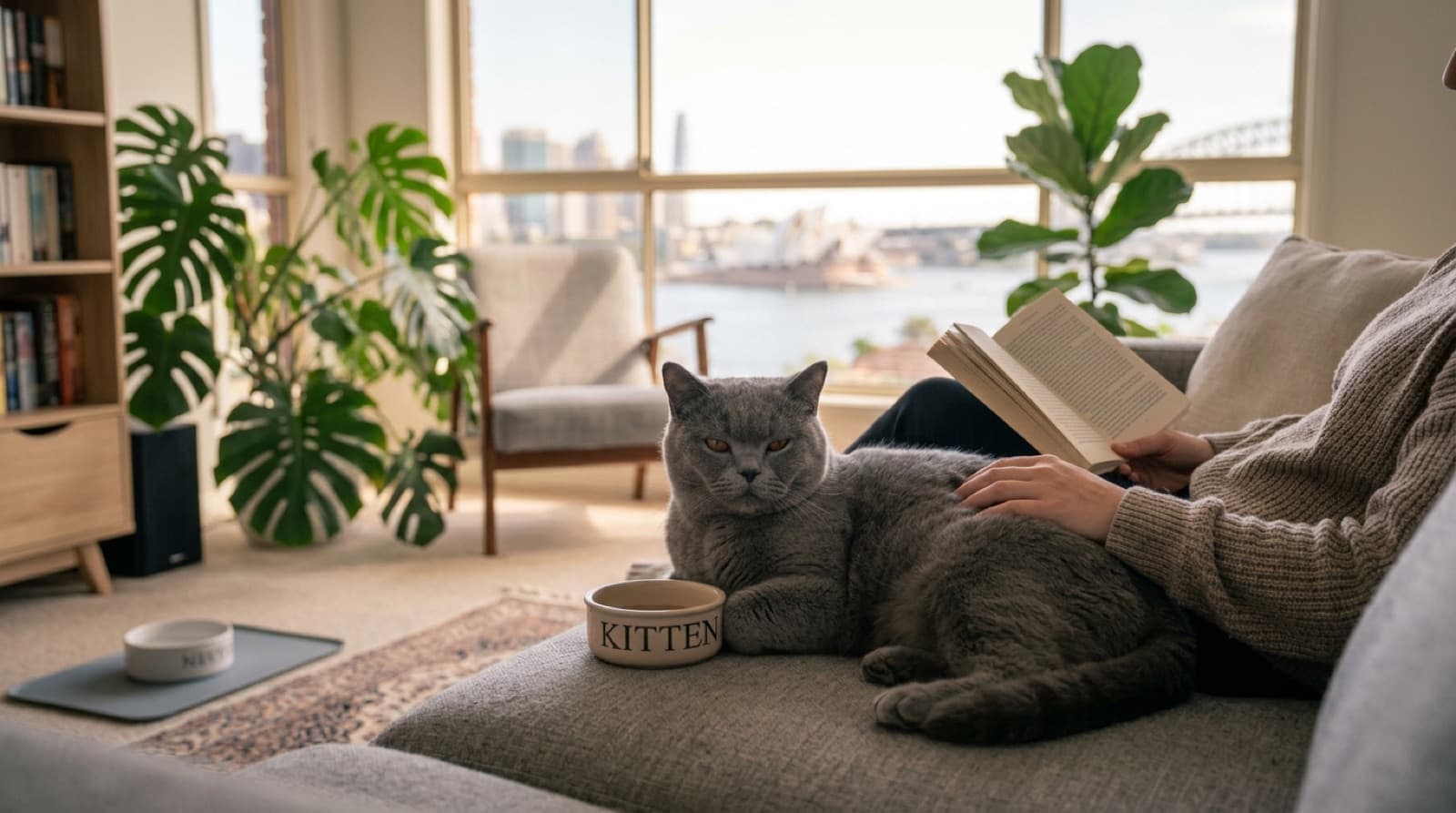
The British Shorthair is a calm, independent, low-drama cat: affectionate on its own terms, easy to groom, but prone to obesity. It likes to be near you rather than held, copes well alone during the day, and suits a quiet or working household. The plush double coat sheds and needs a weekly brush, more during a moult. The care that matters most is measured feeding and daily play to keep them lean. Indoor or contained living suits their nature and keeps them safe in Sydney. A wonderful cat, but not a clingy lap cat.
What a British Shorthair is like to live with
If you want one word for the British Shorthair, it is easy-going. This is a calm, dignified, undemanding cat that moves through the house at its own steady pace. They are not the acrobats and chatterboxes some breeds are. They tend to be quiet, tolerant and relaxed, which is a big part of why they are one of the most popular pedigree cats in homes around the world.
They are affectionate, but the affection is understated. A British Shorthair shows love by staying close: following you from room to room, settling on the couch beside you, keeping you company while you cook. What most of them do not enjoy is being scooped up and carried around. Many will wriggle to be put down, and they generally prefer to sit near you rather than on your lap. It is worth setting that expectation before you adopt. If you are dreaming of a cat that melts into your arms for hours, a breed like the Ragdoll fits that picture better. The British Shorthair loves you from a comfortable arm's length.
That independent streak is a genuine strength for the right home. Because they are self-contained and cope well with their own company, British Shorthairs suit people who are out at work during the day. They are also patient and tolerant, which makes them a good match for gentle children and for other cats or a cat-friendly dog, provided introductions are done slowly. The one caution with kids is handling: because these cats dislike being grabbed, children need to learn to let the cat come to them. Manage the expectation of a cuddly toy and you get a wonderfully steady family companion. For the bigger picture on choosing and settling a rescue cat, our Sydney cat adoption guide is a good next read.
The plush double coat and grooming
The British Shorthair coat is the breed's signature: dense, firm and plush, often described as feeling like a soft toy. It is a double coat, which means a short outer layer over a thick, cushiony undercoat. Because the fur is short, it mats far less than a long-haired breed and does not need the daily detangling a Persian does. But that heavy undercoat has a downside. It sheds steadily all year and blows out more heavily during a seasonal moult.
- Weekly brushing. A once-a-week brush keeps the coat healthy and pulls out loose undercoat before it lands on your lounge. Step up to a few times a week when they are moulting.
- The right tools. A metal comb or a slicker brush reaches down into the dense undercoat. A quick once-over with a grooming glove suits cats who are less keen on a brush.
- Fewer hairballs. Regular brushing removes fur your cat would otherwise swallow while self-grooming, which cuts down on hairballs.
- Watch the moult. Expect a heavier shed as the weather shifts. More frequent brushing during those weeks keeps the fur off your clothes and furniture.
- Not hypoallergenic. No cat truly is, and the British Shorthair's thick coat and normal shedding mean it is not a low-allergen breed. If someone in the home has cat allergies, spend time with the breed first.
Never shave a British Shorthair to reduce shedding. The double coat insulates against both heat and cold, and shaving disrupts how it regrows. Brushing, not clipping, is the answer. The RSPCA Australia Knowledgebase has good general guidance on routine cat grooming and coat care if you want to read further.
Obesity is the biggest care issue
If you take one thing from this guide, make it this. The British Shorthair's calm nature and healthy appetite combine into a real tendency to gain weight. They are food-motivated cats that will happily eat what is put in front of them, and they are not burning it off with the frantic activity of a more high-strung breed. Left to free-feed, many British Shorthairs quietly become overweight.
Weight matters because it is not just about looks. Feline obesity raises the risk of diabetes, puts strain on joints, makes grooming harder for the cat, and shortens life. The good news is that it is almost entirely preventable with a few habits. Feed measured meals rather than leaving a bowl out all day. Go easy on treats, and use some of the daily food ration for play or food puzzles rather than as extras. Keep an eye on body condition: you should be able to feel the ribs under a light layer, and see a gentle waist from above. If your cat is gaining or losing weight, or you are not sure how much to feed, your vet can set a target and a plan. The Australian Veterinary Association is a good starting point for finding a local clinic.
Enrichment for a laid-back cat
A calm cat still needs stimulation, and this is where owners of easy-going breeds can slip up. Because the British Shorthair is content to nap, it is tempting to let daily life become just eat and sleep. That is how the weight goes on and how a bright cat gets bored. The fix is to build a little activity into the day.
Give them somewhere to climb, whether a cat tree or a few shelves, so they can get up high and survey their patch. A window perch is one of the best cheap enrichments going: a British Shorthair will happily watch birds and the street for long stretches. Short daily play sessions with a wand toy get them moving and tap into their hunting instinct, and food puzzles slow down eating while giving the brain a job. Scratching posts keep claws healthy and protect your furniture. If your cat is targeting the couch, our guide to stopping cats scratching furniture walks through the redirects that actually work. A few minutes of play and the right setup keep a laid-back indoor cat active and happy.
Indoor life suits them in Sydney
The British Shorthair's calm, quiet temperament makes it one of the easiest breeds to keep as an indoor or contained cat. They are not pining to roam or scaling the fence at every chance, so a well-set-up home or a secure catio keeps them thoroughly content. That is a good thing, because free-roaming carries real risks in Sydney.
Sydney has heavy traffic, paralysis ticks in bushland suburbs, cat fights that spread disease, and vulnerable native wildlife, all of which make outdoor roaming dangerous for the cat and harmful to the environment. A growing number of NSW councils are bringing in cat containment rules, and most Sydney rescues now adopt cats out to live indoors or with contained access. Indoor cats also live longer. A British Shorthair is a natural fit for this life. We cover the full case, plus catios and how to transition an outdoor cat, in our indoor versus outdoor cats guide.
Browse adoptable British Shorthairs in Sydney
Purebred British Shorthairs are uncommon in rescue, but British Shorthair crosses and plush-coated cats do turn up. Set an alert and browse the live listings.
See Available British Shorthairs →The rest of daily care
Beyond coat and weight, a British Shorthair's routine care is the same steady basics as any cat. Trim the nails every few weeks so they do not overgrow or snag, and start young so your cat learns to accept it calmly. Dental health is easy to overlook: get them used to tooth brushing early, and mention any bad breath or reluctance to eat to your vet, since dental disease is common and painful in cats.
Keep the litter tray clean and in a quiet spot, and give a multi-cat home one tray per cat plus a spare. Run through the thick coat with your fingers during a Sydney tick season check, because a paralysis tick can hide in that dense fur and is dangerous to cats. Use a year-round, cat-safe tick and parasite product, and here is the critical safety point: some tick products made for dogs contain ingredients that are toxic and can be fatal to cats. Never use a dog product on a cat. Ask your vet for a cat-specific option and the right routine for where you live. Under NSW law your cat must also be microchipped and lifetime-registered, which you can check on the NSW Pet Registry.
Is a British Shorthair right for you?
A British Shorthair is a brilliant match if you want a low-maintenance, undemanding companion with a calm presence. They suit quiet homes, apartment living, and working households where the cat needs to cope alone during the day. They get on with gentle children and other pets, they groom easily, and they are not going to run your house ragged. For a lot of Sydney adopters, that steady, dignified nature is exactly the appeal.
They are the wrong cat if you specifically want a cuddly, carry-me lap cat that craves constant physical affection. That is not how this breed shows love, and trying to force it leads to a frustrated owner and a stressed cat. Be honest about what you want from the relationship. If you are after presence and companionship rather than lap time, the British Shorthair delivers in spades. If you want to know more about finding one, our British Shorthair adoption guide for Sydney covers rescue sources and costs.
When a coat or behaviour change means a vet
A healthy British Shorthair coat is thick and even. Changes are worth acting on. Book a vet check if you notice sudden heavy shedding beyond a normal moult, bald patches, or a cat that is overgrooming and licking one spot raw, since these can point to stress, allergies, parasites or a skin condition rather than routine coat care. The same goes for a dull, greasy or matted coat, which can signal that a cat is unwell or unable to groom properly.
Weight changes are a red flag in either direction. Any noticeable gain or loss, a drop in appetite, or increased thirst deserves a vet visit rather than a wait-and-see. Because this breed hides discomfort well, a shift in behaviour, hiding more, playing less, or a change in toilet habits, is often the first clue something is wrong. When in doubt, a vet is always the right call. You should never try to diagnose or treat a skin or weight problem at home.
Frequently Asked Questions
Are British Shorthairs affectionate?
Yes, but on their own terms. A British Shorthair is a loving, loyal cat that likes to be near you, follow you from room to room, and settle close by while you work or watch TV. What they usually are not is a clingy, demanding lap cat that wants to be held constantly. The affection is real but calm and undemanding, which is exactly why so many people love the breed. If you want a cat that shows love by presence rather than by climbing all over you, this is a great fit.
Do British Shorthairs like to be held?
Most do not love being picked up or carried, and many will squirm to get down. British Shorthairs are a dignified, independent breed that generally prefers to choose the contact themselves, sitting next to you rather than being scooped into your arms. This is worth knowing before you adopt, especially for children who want a cat to cuddle. You can build trust with gentle, brief handling and lots of choice, but do not expect a carry-me lap cat. If cuddling is your must-have, a breed like the Ragdoll suits that better.
Do British Shorthairs shed a lot?
Yes, more than many people expect. The British Shorthair has a dense double coat with a thick undercoat, and while it is short and mats far less than a long-haired breed, that undercoat means steady shedding all year and a heavier moult when the seasons change. You will find fur on furniture and clothes, and swallowed fur can lead to hairballs. Weekly brushing, and more often during a moult, removes the loose undercoat before it ends up around the house or in your cat. The breed is not hypoallergenic.
How often should I groom a British Shorthair?
Brush once a week as a baseline, and step up to a few times a week when the coat is moulting more heavily. A comb or slicker brush works the loose undercoat out of that plush double coat, which cuts shedding around the home and reduces the fur your cat swallows and coughs up as hairballs. Grooming is quick and most British Shorthairs tolerate it well if you keep sessions short and positive. Add nail trims every few weeks and get them used to tooth brushing early for dental health.
Are British Shorthairs good apartment cats?
Yes, they are one of the better breeds for apartment living. British Shorthairs are calm, quiet and low-energy compared with many cats, so they are not bouncing off the walls or yowling for space. They are happy to nap, watch the world from a window, and potter about a unit. Give them vertical space to climb, a scratching post, daily play and a window perch, and an apartment suits them well. Because they cope with being alone during the day, they also fit a working household in a smaller home.
Can British Shorthairs be left alone during the day?
Yes, better than many breeds. British Shorthairs are independent and undemanding, so they generally cope well with being on their own while you are at work, without the separation stress or destructive boredom you see in more needy cats. That said, alone all day every day is still a long stretch for any cat. Leave out enrichment like food puzzles and a window perch, and make time to play and connect when you are home. If you are out long hours, a bonded pair or a second cat gives them company.
Why do British Shorthairs get overweight?
Because they are food-motivated and naturally calm, which is an easy recipe for weight gain. A British Shorthair will happily eat what is offered and is not burning it off with frantic activity, so kilos creep on if you free-feed or over-treat. Obesity is the single biggest health issue owners create for this breed, and it drives problems like diabetes, joint strain and a shorter life. Measure meals to your cat's needs, go easy on treats, and build in daily play. If your cat is gaining or losing weight, ask your vet.
Are British Shorthairs good with children and other pets?
Yes, they are one of the more tolerant, easy-going breeds around children and other animals. Their calm, unflappable nature means they usually take gentle kids, a resident cat, or a cat-friendly dog in their stride rather than getting stressed or aggressive. The key word is gentle. Because they dislike being grabbed or carried, they do best with children who have learned to let the cat come to them. Always introduce a new cat to other pets slowly and give everyone space and escape routes while they settle.
Keep reading
Adoptable British Shorthairs in Sydney
Live listings of British Shorthairs and plush-coated crosses across Sydney and NSW rescues.
British Shorthair Adoption in Sydney
Where to find one in rescue, what adoption costs, and why buying is rarely the better route.
British Shorthair Health Issues
The breed-specific health concerns to know about and how to keep a British Shorthair well.
Cat Adoption Resources Hub
Guides on adopting, settling and caring for a rescue cat in Sydney and NSW.