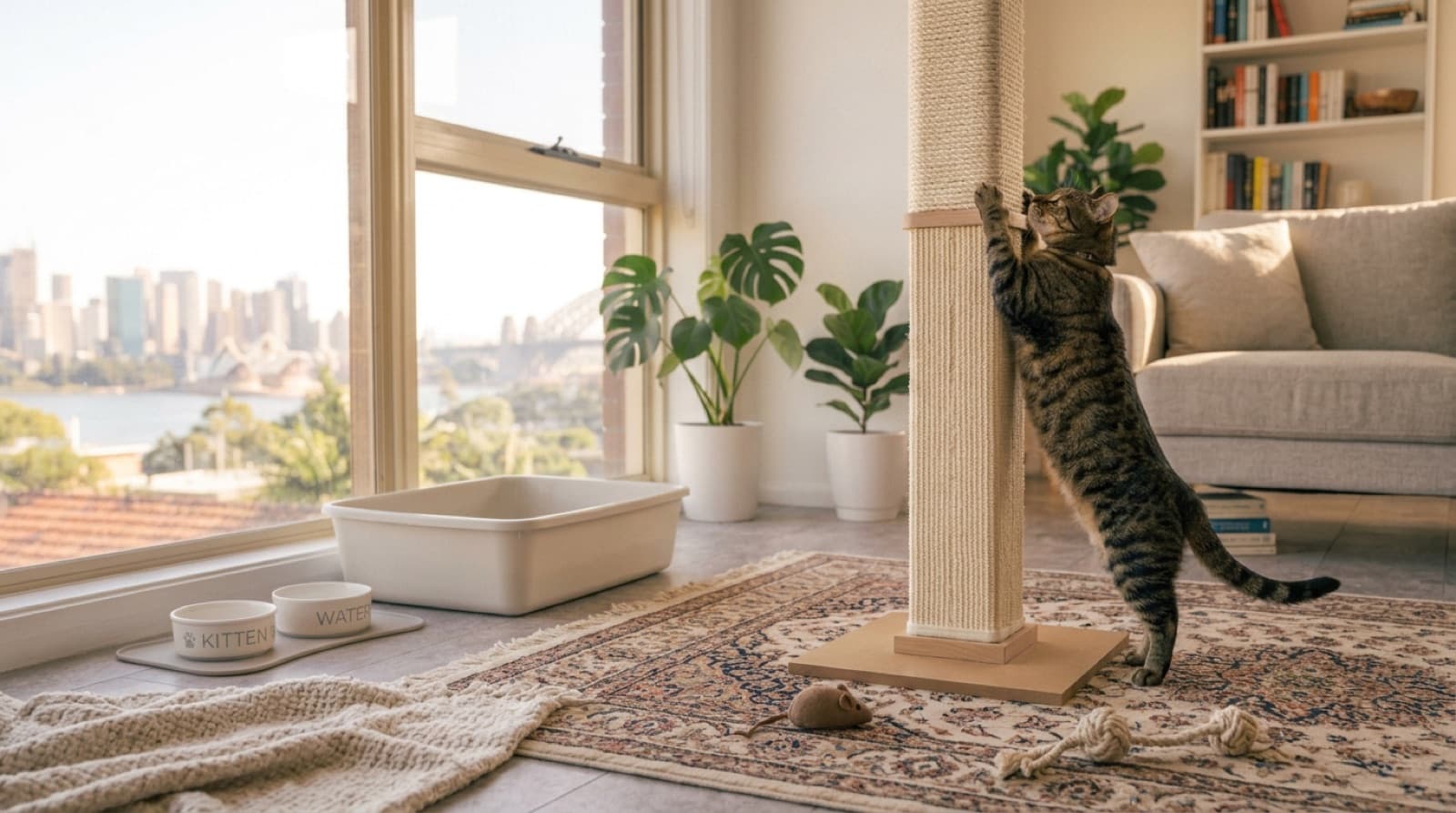
The short answer
Scratching is normal, so you redirect it to good posts rather than trying to stop it. Give your cat a tall, sturdy scratching post right beside the furniture it targets, reward every time it uses the post, and make the couch boring for a few weeks with double-sided tape or a cover. Add nail trims to keep the tips blunt. Never punish scratching, and never consider declawing. Declawing is illegal in Australia and completely unnecessary, because posts, placement and patience solve the problem kindly and permanently.
Why cats scratch (and why you should never punish it)
Before you can fix scratching, it helps to understand that your cat is not being naughty. Scratching is one of the most natural things a cat does, and it serves three real purposes at once.
- Claw health. Dragging the claws down a surface pulls off the worn outer sheath and keeps the nails healthy and sharp.
- Stretching. Reaching up to scratch gives the back, shoulders and legs a full stretch, which is why cats often scratch straight after a nap.
- Marking territory. Scent glands in the paws leave both a visible mark and a smell that tells other cats this space is taken.
The RSPCA describes scratching as an important, instinctive behaviour that cats need an outlet for, which you can read more about on the RSPCA Australia Knowledgebase. Because it is a genuine need, punishment does not work. Yelling, spraying water or shooing your cat off the couch only teaches it to fear you and to scratch when you are not watching. Worse, a stressed cat scratches more, not less, because marking territory is how cats calm themselves when they feel unsettled. The whole strategy in this guide is to give your cat a better place to scratch, then make that place the easy, rewarding choice.
The Australian reality: declawing is illegal and unnecessary
If you have read overseas advice about declawing a cat to save the furniture, put it aside. Declawing is illegal in Australia and Australian vets do not do it. This is the most important thing to know if you arrived here from US content, where the procedure is still legal in some places.
Declawing is not a heavy nail trim. It is an amputation that removes the last bone of every toe, and it is treated in Australia as an unacceptable mutilation. The RSPCA opposes declawing because it causes ongoing pain, can change how a cat walks, and often creates new behaviour problems such as biting or litter tray avoidance. The Australian Veterinary Association takes the position that surgery to remove healthy claws for a non-medical reason is not acceptable.
Here is the good news: you do not need it. Everything else in this guide, the right posts, smart placement, making furniture boring, rewards and regular nail trims, solves scratching without harming your cat. It costs less than surgery, it is kinder, and it lasts. Declawing is neither an option nor a shortcut in Australia, so nobody here has to weigh it up.
Choosing the right scratching post
Most furniture scratching happens because the cat has no post, or the post it has is no good. The right post is easy to spot once you know what a cat actually wants:
- Tall enough for a full stretch. Your cat should be able to reach up and drag its claws down at full length. A short post it has to crouch at will lose to the arm of the couch every time.
- Heavy and rock solid. A post that wobbles feels unsafe, and a nervous cat will not use it. A wide, weighted base that does not tip is the most important feature of all.
- The right covering. Sisal rope or sisal fabric is the most popular and hard-wearing, and it feels satisfying under the claws. Many cats also love plain cardboard scratchers.
- Vertical and horizontal options. Some cats scratch upright surfaces, others prefer to scratch flat on the floor. Offer one of each and let your cat show you its preference.
- One per cat, plus a spare. In a multi-cat home, each cat needs its own post so they are not forced to share a marked surface. More on that below.
You do not need to spend a fortune. A sturdy sisal post and a flat cardboard scratcher cover most cats. If your cat is already shredding a particular texture, such as the woven side of a lounge, try to match it with a similar post surface so the swap feels natural.
Placement is everything
You can buy the best post on the market and your cat will still ignore it if you hide it in the laundry. Cats scratch in specific, meaningful spots, so put the post where the scratching already happens.
If your cat claws the side of the couch, stand the post right against that spot. It feels backwards to put the fix next to the problem, but that is exactly what works, because the cat wants to mark that area and now has a better surface to do it on. Once the cat is reliably using the post, you can shift it a little at a time if you want it somewhere else, moving it only a few centimetres every few days.
Two other spots earn a post as well. Cats love to stretch and scratch after sleeping, so a post near the bed or a favourite napping spot gets used daily. And because scratching marks territory, a post near a main doorway or entry point covers the busy, high-traffic areas a cat most wants to claim. In a house with more than one cat, spread the posts across different rooms rather than lining them up together.
Redirecting your cat off the couch
The trick is simple: make the post the best option and the furniture the worst, at the same time. Do only one and it rarely works.
To make the post rewarding, praise your cat, offer a small treat or start a short play session every time it scratches the post. Dangle a wand toy up the post so the claws land on it, and rub a little catnip on the surface to draw the cat in. The message you are sending is that the post pays off.
To make the couch boring, cover the scratched area for a few weeks. Double-sided sticky tape, a sheet of aluminium foil, or a throw draped over the arm all work, because cats dislike the feel and stop returning. These are temporary. Once your cat has switched to the post, you can take the covers off. A vet may also mention a synthetic pheromone product as a general calming aid for a cat that scratches from stress, but treat that as a conversation with your vet rather than a first step. Above all, never punish. Punishment breaks trust and usually makes scratching worse.
Browse adoptable cats in Sydney
Kittens, adults, seniors and bonded pairs from rescues across Sydney and NSW. Set up your posts, then find the cat that fits your home.
See Available Cats →Nail trims and maintenance
Regular nail trims are a useful support alongside posts. Keeping the sharp tips blunt means scratching does less damage and the claws snag less on fabric and carpet. Trims do not replace posts, because your cat still needs to scratch, but they take the edge off.
Trim only the clear, sharp tip of each claw and stay well away from the pink part inside, called the quick, which contains blood and nerves and is painful if cut. If you are not confident, this is the perfect thing to ask your vet or a groomer to do, or to show you how to do safely the first time. Many cats accept trims better if you start young, do just one or two nails per session, and follow each with a treat. If your cat hates it, do not wrestle. A calm two-nail trim once a week beats a stressful battle.
New rescue cats and scratching
A newly adopted cat often scratches more in the first days and weeks, and that is normal. A cat arriving in a strange home feels the need to mark its territory and settle its nerves, and scratching is how it does that. It usually eases as the cat relaxes and starts to feel at home.
Set your new cat up to succeed from day one. Put a sturdy post in the quiet room where it first settles, add one near where it sleeps, reward every use, and keep the furniture covered for now. A calm, predictable routine helps a rescue cat relax faster, which brings the scratching down on its own. While you are settling in, make sure the microchip details are transferred into your name through the NSW Pet Registry, which is a legal requirement for cats in NSW. For the full first-few-weeks plan, including the safe room and the decompression timeline, see our first week with a rescue cat guide. If you are still weighing up adoption, the Sydney cat adoption guide covers rescues, costs and NSW law.
Multi-cat homes
If you have more than one cat, you need more than one post. Scratching is partly about marking territory, so cats do not like being forced to share a single scratching surface, and competition over one post can push a cat back onto the furniture.
The simple rule is at least one post per cat plus one spare, spread through different rooms rather than clustered in one spot. That way every cat has its own place to scratch and mark, and no cat is blocked from a post by another. This matters even more if your cats live indoors, which most Sydney rescue cats do. Our indoor versus outdoor cats guide covers enriching an indoor home so cats stay content, and content cats scratch less out of frustration.
When scratching signals a problem
Normal scratching is steady and predictable. A sudden change is worth a closer look. If your cat starts scratching far more than usual out of nowhere, or you notice overgrooming, bald patches, hiding, or changes in appetite or toileting alongside it, that can point to stress, pain or a medical issue rather than ordinary claw care.
In those cases, book a vet check rather than trying to manage it as a training problem. A vet can rule out skin conditions, pain and other causes, and advise on stress if that turns out to be the driver. When in doubt, get it looked at. Sudden behaviour changes in cats are one of the clearest signals that something has shifted, and catching it early is always easier.
Frequently Asked Questions
How do I stop my cat scratching the furniture?
You redirect the scratching rather than trying to stop it. Put a tall, sturdy scratching post right next to the furniture your cat already targets, reward your cat every time it uses the post, and make the couch itself boring for a few weeks with double-sided tape, foil or a cover. Scratching is a normal need, so a cat with a good post in the right spot will almost always choose it over your sofa. Never punish the scratching. Punishment makes cats anxious and often makes scratching worse, and an anxious cat scratches more to mark territory. Give it somewhere better and the problem usually sorts itself out.
Why do cats scratch?
Cats scratch to keep their claws healthy, to stretch their muscles, and to mark territory. Dragging the claws pulls off the worn outer layer and keeps the nails in shape, the full-body stretch works the back and shoulders, and scent glands in the paws leave a mark that says this space is theirs. It is completely normal, healthy behaviour, not misbehaviour or spite. That is why the answer is never to stop it but to give your cat an approved place to do it. A cat that cannot scratch is a stressed cat, so the goal is redirection, not prevention.
Can I get my cat declawed in Australia?
No. Declawing is illegal in Australia and Australian vets do not perform it. Declawing is not a nail trim. It amputates the last bone of each toe, and it is treated as unacceptable mutilation here. The RSPCA opposes it because it causes lasting pain and behaviour problems. You also do not need it. Every scratching problem can be managed with the right posts, good placement, nail trims and a bit of patience, which is cheaper, kinder and permanent. If you have read US advice suggesting declawing, set it aside. It simply is not an option or a necessity in this country.
What kind of scratching post should I buy?
Buy a post that is tall, heavy and rock solid, so your cat can reach up and stretch to full length without it wobbling. A wobbly post is the single most common reason cats reject one, because a surface that moves feels unsafe. Sisal rope or sisal fabric is the most popular and hard-wearing covering, and many cats also love a flat or angled cardboard scratcher. Offer both a vertical post and a horizontal option, since cats have preferences. In a multi-cat home, provide at least one post per cat plus a spare, placed in different rooms.
Where should I put a scratching post?
Put the post where your cat already wants to scratch, not tucked away in a spare room. If the cat claws the side of the couch, stand the post right beside it, then move it slowly over a few weeks if you want it elsewhere. Cats also scratch to stretch after sleeping and to mark busy areas, so a post near the bed or a favourite napping spot and one near a main doorway or entry point both work well. Placement matters more than the post itself. A great post in the wrong corner gets ignored, while an ordinary post in the right spot gets used every day.
How do I get my cat to use the scratching post?
Make the post the most rewarding option and the furniture the least. Reward your cat with praise, a treat or a short play session every time it scratches the post, so it learns the post pays off. Dangle a toy up the post to draw the claws onto it, and try a little catnip on the surface to make it appealing. At the same time make the furniture unattractive for a few weeks with double-sided tape or a cover. Never drag your cat's paws down the post by force, which can frighten it off the post entirely. Reward the behaviour you want and it becomes a habit.
Should I trim my cat's claws?
Regular nail trims help by keeping the sharp tips blunt, so scratching does less damage and snags less on fabric. Trim only the clear, sharp tip and never cut into the pink quick, which is painful and bleeds. If you are not confident, ask your vet or a groomer to do it or to show you how the first time, since a bad trim can hurt your cat and put you both off. Many cats accept trims more easily if you start young, go one or two nails at a time, and pair it with a treat. Trimming is a helpful support alongside posts, not a replacement for them.
My new rescue cat is scratching everything. What do I do?
Extra scratching in the first weeks is usually a settling-in cat marking its new territory, and it normally eases as your cat relaxes. Set the cat up for success from day one: give it sturdy posts in its safe room and near where it sleeps, reward every use, and make the furniture boring for now. Keep the routine calm and predictable while it adjusts. If the scratching is paired with sudden overgrooming, bald patches or other stress signs, or if it does not settle after a few weeks, book a vet check, because sudden changes can be medical or anxiety driven. Our first-week guide walks through settling a rescue cat in.
Keep reading
Adoptable Cats in Sydney
Live listings of kittens, adults and seniors across Sydney and NSW rescues.
First Week With a Rescue Cat
The safe room, the 3-3-3 timeline, and how to settle a new cat in so scratching and stress ease off.
Cat Adoption Guide for Sydney
Where to adopt, what it costs, what is included, and the NSW law you need to know.
All Cat Adoption Resources
Guides on adopting, settling, indoor living and caring for a rescue cat in Sydney.