5 Russian Blues available elsewhere in Australia
None are listed in Sydney today, but many rescues will adopt to homes across the country if you can travel to meet them.
 RubyRussian Blue x Domestic Short Hair Mix · UnknownMildura, VIC
 LolaRussian Blue x Domestic Short Hair Mix · UnknownMildura, VIC
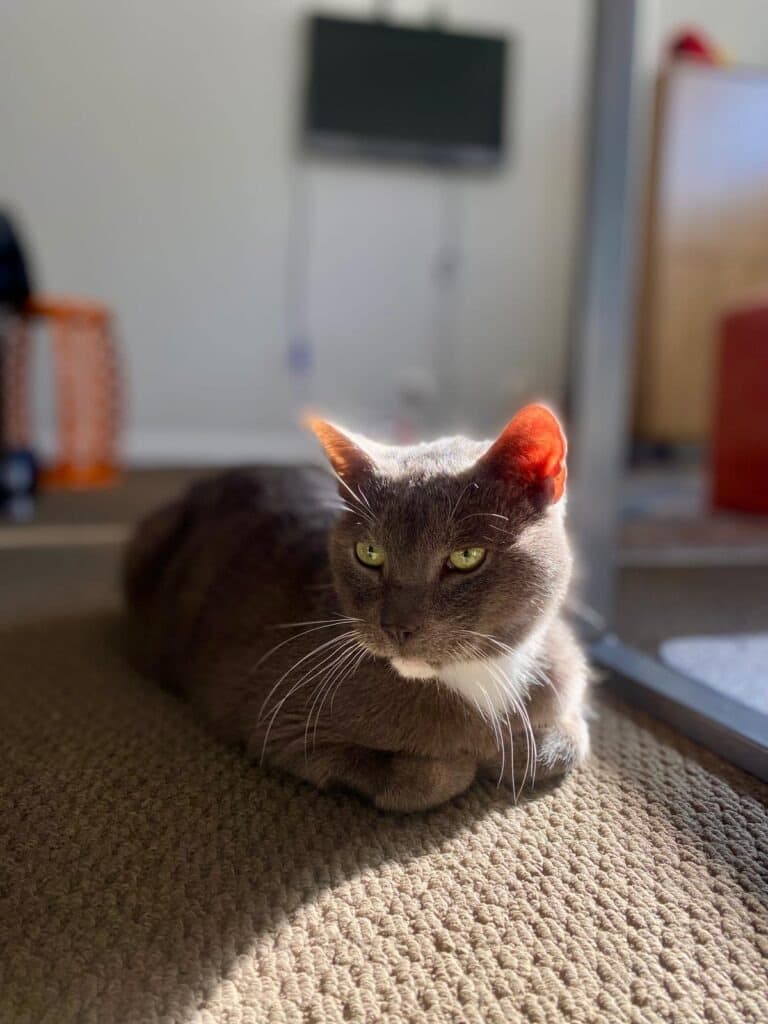 Prince HenryRussian Blue · 13 years 5 monthsMelbourne, VIC
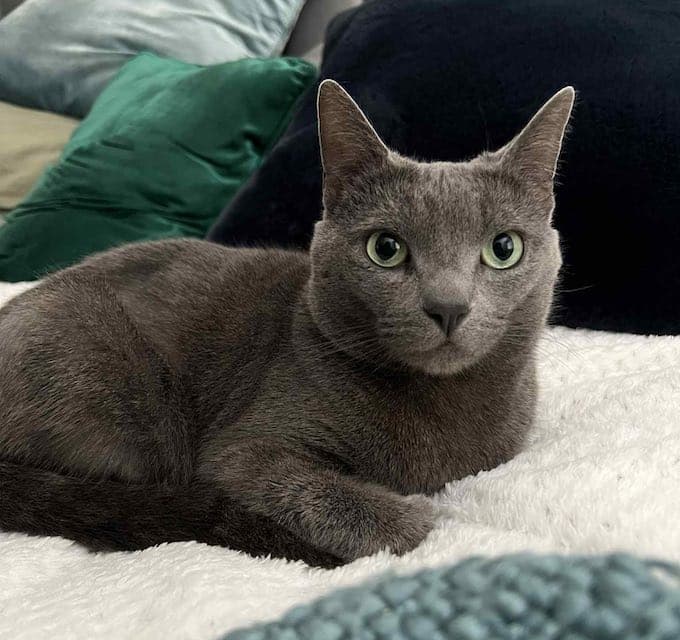 BubblesRussian Blue Domestic Short Hair mix · 5 yearsBrisbane, QLD
- VegasRussian Blue Cross · 2Yrs 1Mths (approx)Darwin, NT
Get notified when a Russian Blue is listed
We will email you when a Russian Blue or Russian Blue cross becomes available for adoption from a rescue across Sydney and NSW.
Similar breeds available in Sydney now
- British Shorthairs in Sydney (3 available)
Russian Blues are an elegant, refined breed with shimmering blue-grey coats and bright green eyes. The Cat Fanciers' Association describes them as graceful, playful and quiet, and says they may appear shy at first; the Russian Cat Council of Australia calls them intelligent, loyal and gentle, sometimes fairly reserved, and not fond of loud noises.
Most purebred Russian Blues are bought from breeders, and the Russian Cat Council of Australia points out that a blue coat alone does not make a cat a Russian. In rescue you are more likely to meet a grey domestic shorthair, and the individual cat's temperament matters more than the label.
RSPCA South Australia lists the Russian Blue among breeds considered hypoallergenic but says no animal is 100% allergen free, and the Australasian Society of Clinical Immunology and Allergy (ASCIA) says all cat breeds can cause allergies. Their coat is a short, plush double coat.
Russian Blues in Sydney rescue
Purebred Russian Blues are very rarely listed in NSW rescue. Across the rescues we track, the grey cats you will see are almost all domestic shorthairs, some of which look a lot like a Russian Blue. Shelter breed labels are usually a visual guess, so a cat listed as a Russian Blue may simply be a grey shorthair with a similar build.
For most adopters that is fine. What people usually want from a Russian Blue is a quiet, gentle cat that bonds closely with its people, and plenty of grey domestic shorthairs have exactly that temperament. Ask the foster carer how the cat behaves day to day rather than relying on the breed label.
Choosing on temperament, not coat colour
A quiet, reserved cat can take time to settle in a new home, so plan for a slow start in one room with its own litter tray, food and hiding spot. Many cats described as shy in a shelter are calm and affectionate a few weeks later, once they trust their new people.
- Most grey cats in NSW rescue are domestic shorthairs, not Russian Blues.
- Ask the carer about temperament: quiet, shy, social or playful.
- Give a reserved cat one quiet room and time to settle.
- If allergies are the reason you want this breed, spend time with the actual cat before you adopt.
Living with a Russian Blue in Sydney
The NSW health risk that catches new cat owners out is the paralysis tick, which is found along the NSW coast and in bushland and affects cats as well as dogs. RSPCA Australia says that "in the north, paralysis ticks may be found all year round, while in the more southern areas, the season generally begins in spring and finishes in late autumn", and that the season can start earlier after a mild winter (RSPCA Knowledgebase, kb.rspca.org.au, read 13 November 2026). It can be fatal. An indoor cat is far less exposed; if yours goes outside or lives near bush, ask your vet about a cat-safe tick product and never use a dog product on a cat.
Under the NSW Companion Animals Act your cat must be microchipped by 12 weeks of age, or before it is sold or given away, and registered for life on the NSW Pet Registry "either by 12 weeks of age or immediately upon transfer (whichever happens first)" (NSW Office of Local Government, checked 13 November 2026). Unlike Victoria there is no annual renewal, so it is a single lifetime fee, lower for a desexed cat, and a rescue cat comes to you already desexed and microchipped. Since July 2020 an annual permit applies to cats not desexed by four months, which is another reason a desexed rescue cat is the simplest path. Some NSW councils also declare cat prohibited areas to protect wildlife, so check your own council before you adopt.
If you ever see a cat advertised for sale or free in NSW, the ad must legally display an identification number, either the cat's microchip number or a rehoming-organisation or breeder identification number. Its absence is the clearest sign of a backyard breeder or an outright scam trading on a popular breed, and a good reason to adopt through a rescue instead, where the cat arrives desexed, vaccinated, microchipped and vet-checked.
Common Russian Blue health concerns
Breed-associated conditions worth asking any rescue about before you adopt. A good rescue will already know whether a cat has been assessed for these.
Urinary stones
The breed is among those flagged for urinary tract stone formation; diet and water intake matter.
Ask your vet about this before you adopt.
Dental disease
Periodontal disease is the most common health problem in domestic cats generally.
Ask your vet about this before you adopt.
Editorial summary for adopters, not medical advice. Ask the rescue about a specific cat's health, and consult your vet for individual guidance.
Breed and regulatory information cross-checked against NSW Pet Registry.
Need to rehome your Russian Blue cat?
If you can no longer keep your Russian Blue cat, you can list them for free on LocalPetFinder. Your cat stays at home until you find the right family, you screen who applies, and there is no fee to list. Not sure yet? Our guide to rehoming a cat for free walks through every option first.
List your cat for free →Russian Blue Adoption Guides
The pre-adoption reading list specific to Russian Blue cats in Sydney and NSW.
Russian Blue Adoption in Sydney
Where to adopt a Russian Blue or grey cross, why they are rare in rescue, and adopt versus breeder cost.
Russian Blue Health Issues
A hardy breed, but weight, urinary health and dental care still matter. What to plan for in Sydney.
Russian Blues & Allergies
What the reduced-allergen claim really means, why no cat is truly hypoallergenic, and how to test it.
Russian Blue Adoption FAQ
Tap a question to expand.
How many Russian Blues are available for adoption in Sydney?
No Russian Blues are listed in Sydney on LocalPetFinder right now. Availability turns over as cats are adopted and new ones arrive, so setting an alert is the most reliable way to catch one. Russian Blue crosses are worth considering too.
Where can I adopt a Russian Blue near me in Sydney?
LocalPetFinder lists Russian Blue cats available for adoption from rescues across Sydney and New South Wales, including the Inner West, Eastern Suburbs, Northern Beaches and Western Sydney. Cat-focused rescues include the Cat Protection Society of NSW in Newtown and Brighter Future Cat Rescue, alongside RSPCA NSW, Sydney Dogs and Cats Home and Animal Welfare League NSW. Listings update regularly, so browse the Russian Blue cats above and apply through the rescue.
Are there Russian Blue rescues near Sydney?
Yes. Sydney and NSW rescues that list Russian Blue cats and Russian Blue crosses include the Cat Protection Society of NSW, Brighter Future Cat Rescue, RSPCA NSW, Sydney Dogs and Cats Home and Maggie's Rescue. A dedicated single-breed cat rescue is not always active, so setting an alert on the general rescues is the fastest path. Use LocalPetFinder to see which rescues currently have Russian Blue cats available near you.
Where can I adopt a Russian Blue kitten in Sydney?
Purebred Russian Blue kittens are uncommon in Sydney rescue and are usually adopted very quickly, so setting an alert here and being ready to apply is the best approach. Most Russian Blue cats in rescue are adults or Russian Blue crosses, and an adult cat is often the easier choice, already litter-trained, desexed and with a known temperament. Kitten season over spring and summer brings far more kittens into rescue. RSPCA NSW lists $270 for a kitten under six months, desexed, vaccinated and microchipped (checked 9 November 2026), against more from a breeder. If you searched "russian blue kittens sydney" or "russian blue kittens for sale", browse the Russian Blue cats above and set an alert for new arrivals.
Are these Russian Blue cats for sale in Sydney?
Not for sale, for adoption, which is usually the better deal. Every cat here comes from a Sydney or NSW rescue, a shelter or an owner rehoming them. A rescue adoption fee already includes desexing, vaccination and microchipping. As a reference, RSPCA NSW lists $220 for an adult cat and $270 for a kitten, and Cat Protection Society of NSW $150 per cat or kitten (checked 9 November 2026; reference figures, not quotes), against far more from a breeder with none of the vet work done. If you searched "russian blue for sale sydney", adopting gets you a vetted cat for a fraction of the price.
Where can I buy a Russian Blue cat in Sydney, and should I?
You can buy from a registered breeder, but it is worth weighing against adoption first. A reputable breeder often charges well into four figures and may have a waitlist, while a rescue cat costs $100 to $300 fully vetted and may be available now. Be cautious of cheap "for sale" ads on classified sites and marketplaces, a known hotspot for deposit scams and backyard breeding. The ACCC Scamwatch has documented pet scams for animals that do not exist. For most Sydney homes, adopting is cheaper, safer and gives a cat in need a home.
Are Russian Blues hypoallergenic?
No cat breed is. The Australasian Society of Clinical Immunology and Allergy (ASCIA) says all cat breeds can cause allergies. RSPCA South Australia lists the Russian Blue among breeds considered hypoallergenic, but adds that no animal is 100% allergen free. Spend real time with the specific cat before you adopt.
Are Russian Blues good apartment cats?
Often, yes. The Cat Fanciers' Association describes the breed as quiet, and the Russian Cat Council of Australia says they dislike loud noises, so a calm home suits them. Give them a tall cat tree, scratching posts and daily play.
Do Russian Blues like other pets?
Many do, given time. The Russian Cat Council of Australia describes the breed as social but sometimes fairly reserved, so a calm household and slow, supervised introductions help. Ask the foster carer how this particular cat behaves with other animals.
How long do Russian Blues live?
The Russian Cat Council of Australia says Russians are renowned for their healthy constitution and live into their mid to late teens, though individual cats vary. Keep the cat at a healthy weight and see a vet for regular checks.
Can I find a purebred Russian Blue in rescue?
It is possible. Most grey cats in rescue are domestic shorthairs rather than purebred Russian Blues, and numbers change daily. If you want one, set an alert on this page. If what you want is a calm, gentle grey cat, a grey domestic shorthair is often just as good a match.
Is a grey domestic shorthair the same as a Russian Blue?
No. A Russian Blue is a pedigree breed, while a grey domestic shorthair is a mixed-breed cat that happens to have a grey coat. They can look similar in a photo, and temperament varies with the individual cat in both. Ask the shelter or foster carer about the cat's personality rather than going by the label.